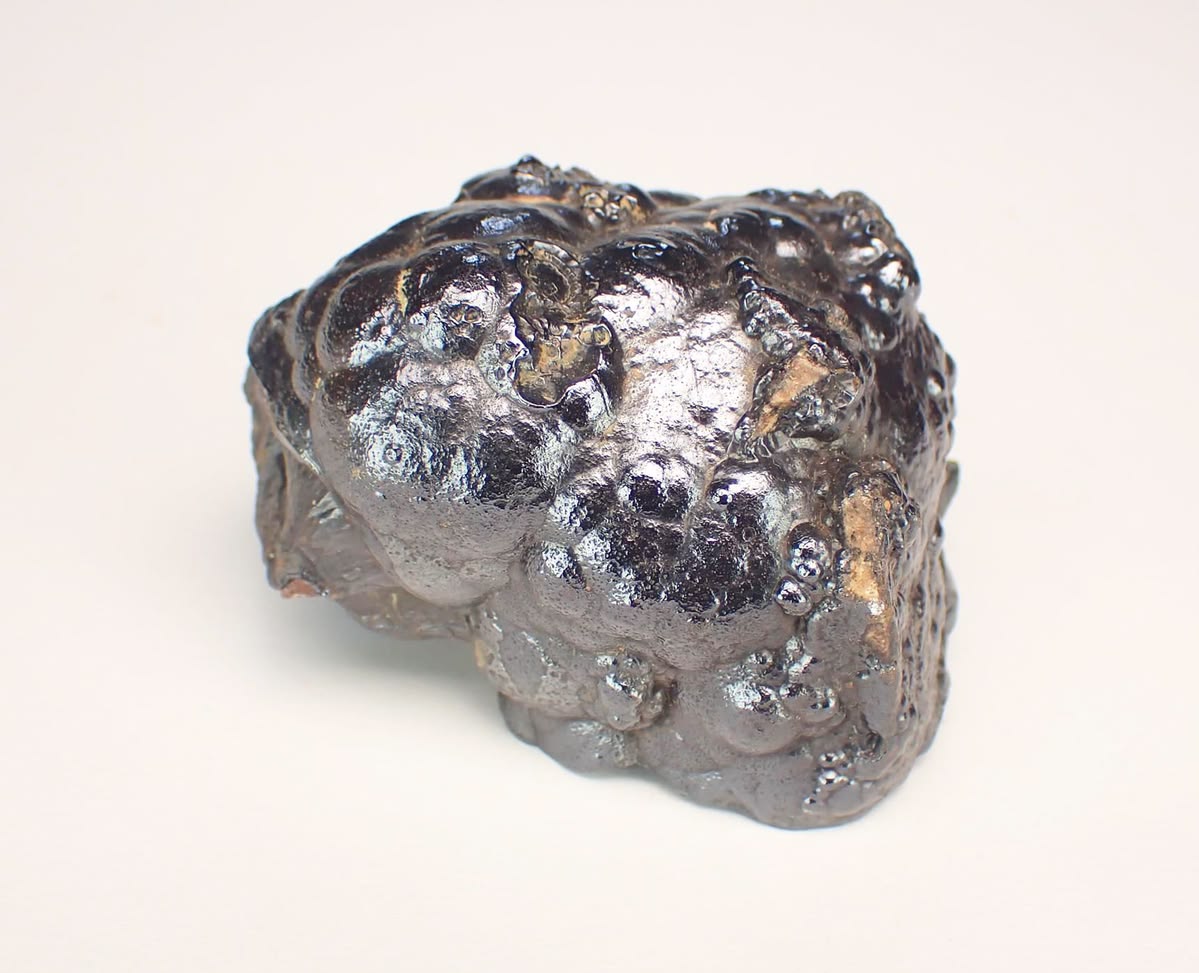
Hematite Crystal, Benefits and Meanings.
Named from the Greek 'haima' meaning blood, referencing its red streak. Hematite is widely linked with grounding, stability, and protective strength.
Metaphysical & Spiritual
Hematite has a steady, weighty feel. Good for times that call for a clear head and solid footing, especially when everything is loud or moving fast. The tone stays simple and practical. More like a nudge back into the body and back to basics. What is right in front of you. These traditional correspondences help name the mood Hematite reflects. Not rules.

Planet

Mars
Hematite matches Mars best in its quieter side, steady grit and firm edges, more endurance than show.
Element
Earth
Earth is the solid, plain, reliable lane, and Hematite sits there comfortably. It pulls attention back to structure and limits, the parts of life that can be counted on.

Crystal Pairings
Hematite pairs well with stones that keep things steady and clear. It has a firm, grounded feel, so calmer, braver, or cleaner notes help the mix feel more complete.
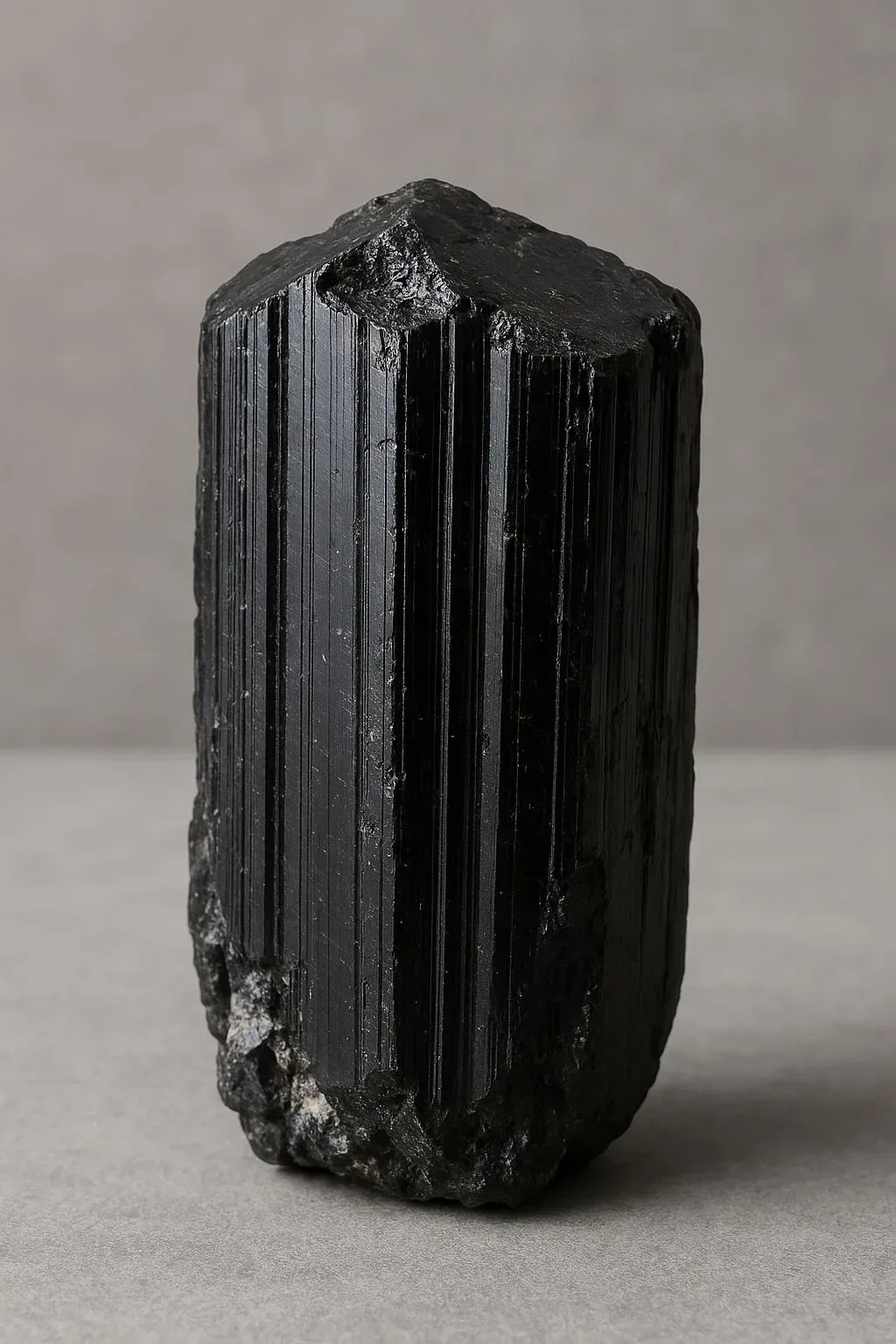
Black Tourmaline
Black Tourmaline and Hematite make a solid match for protection and grounding. Black Tourmaline feels closed-in and shield-like, Hematite adds weight and mental steadiness, so it stays strong without turning heavy.
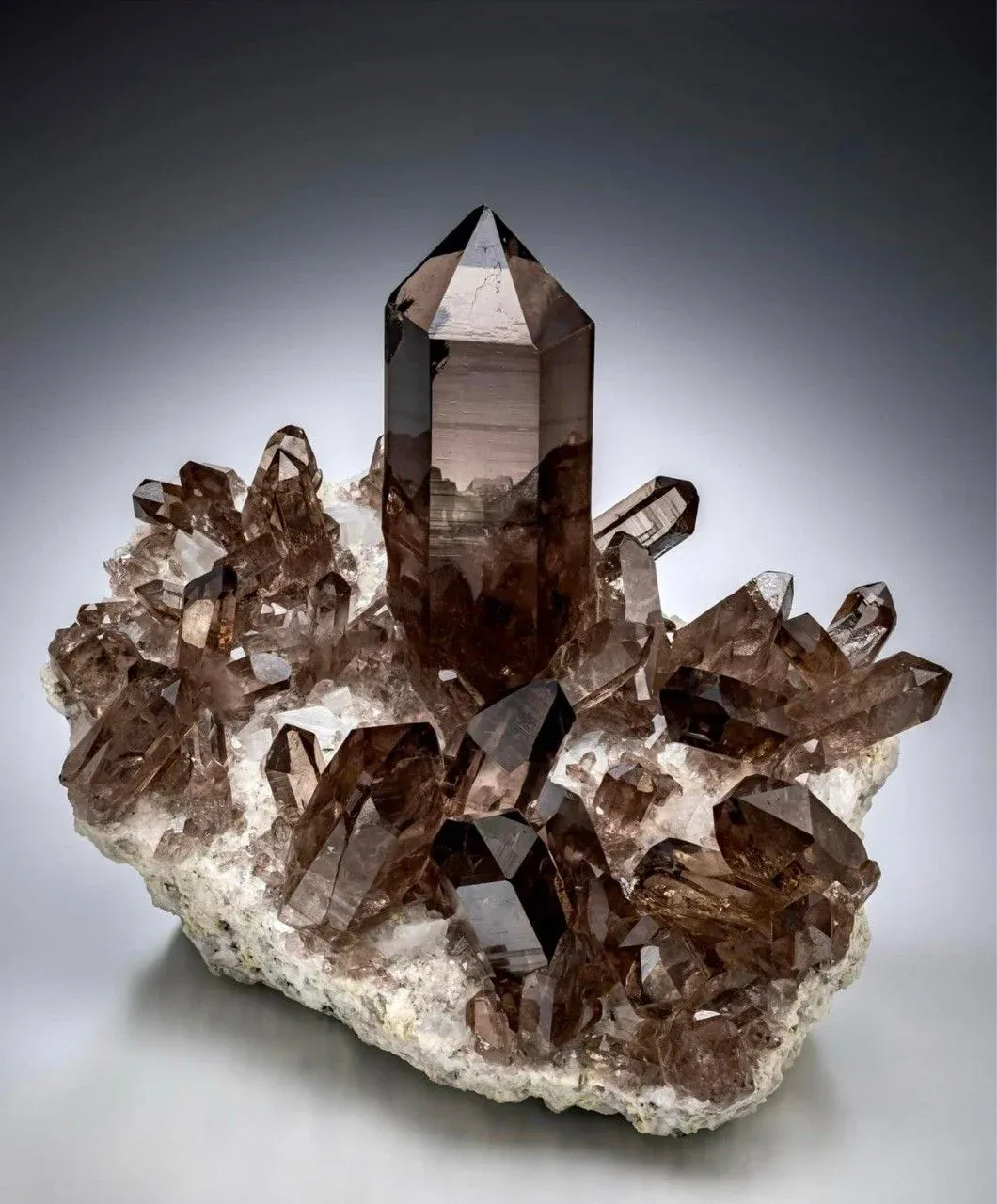
Smoky Quartz
Smoky Quartz softens Hematite and cools the tone down. Still earthy. Smoky Quartz brings a quiet clearing note, and Hematite holds the line with structure and resolve.
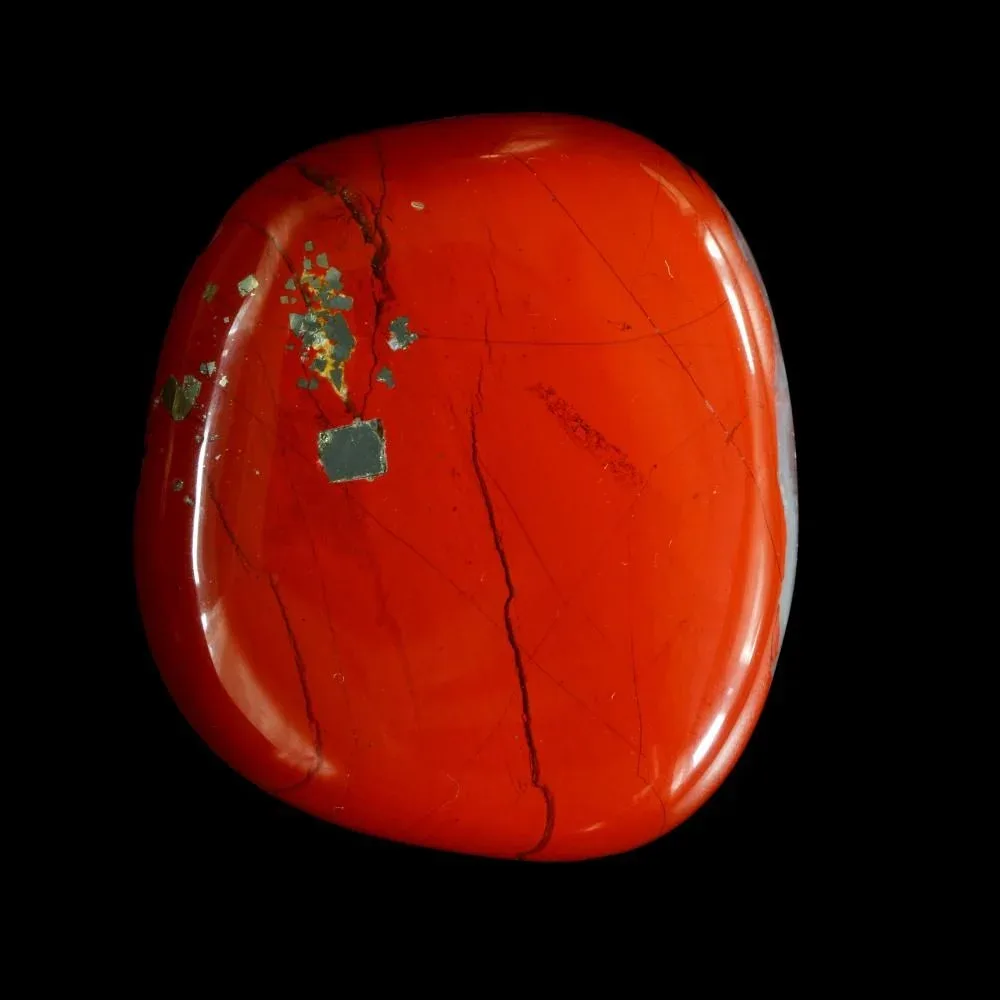
Red Jasper
Red Jasper with Hematite reads warm and steady. Hematite feels like firm boundaries and focus, and Red Jasper adds grounded courage that lasts.
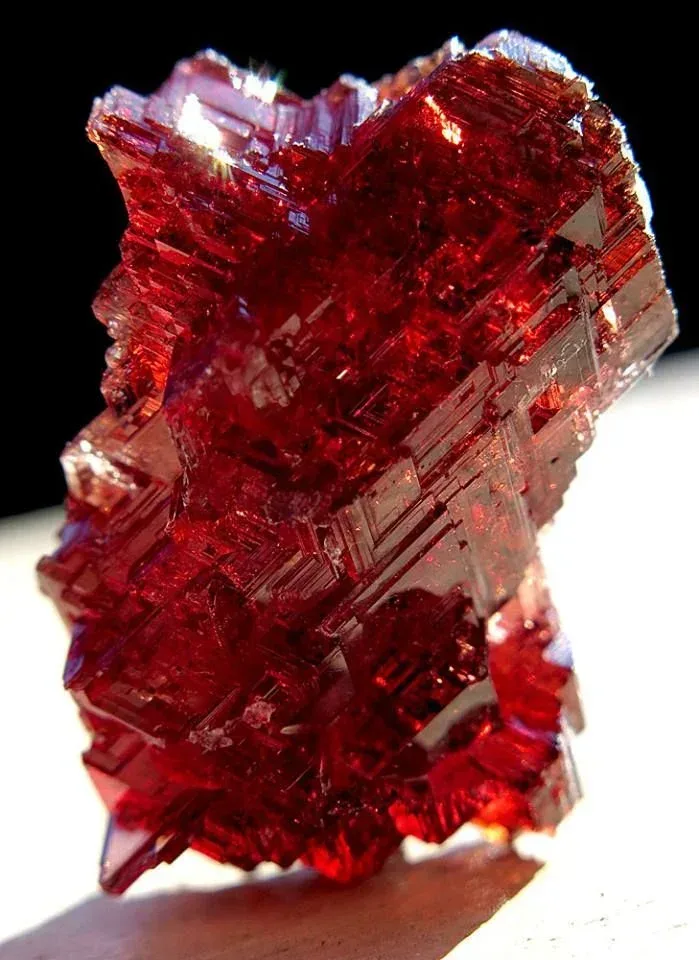
Garnet
Garnet adds drive and warmth to Hematite's grounded strength. The pairing stays confident, with enough stability underneath to keep the intensity in check.
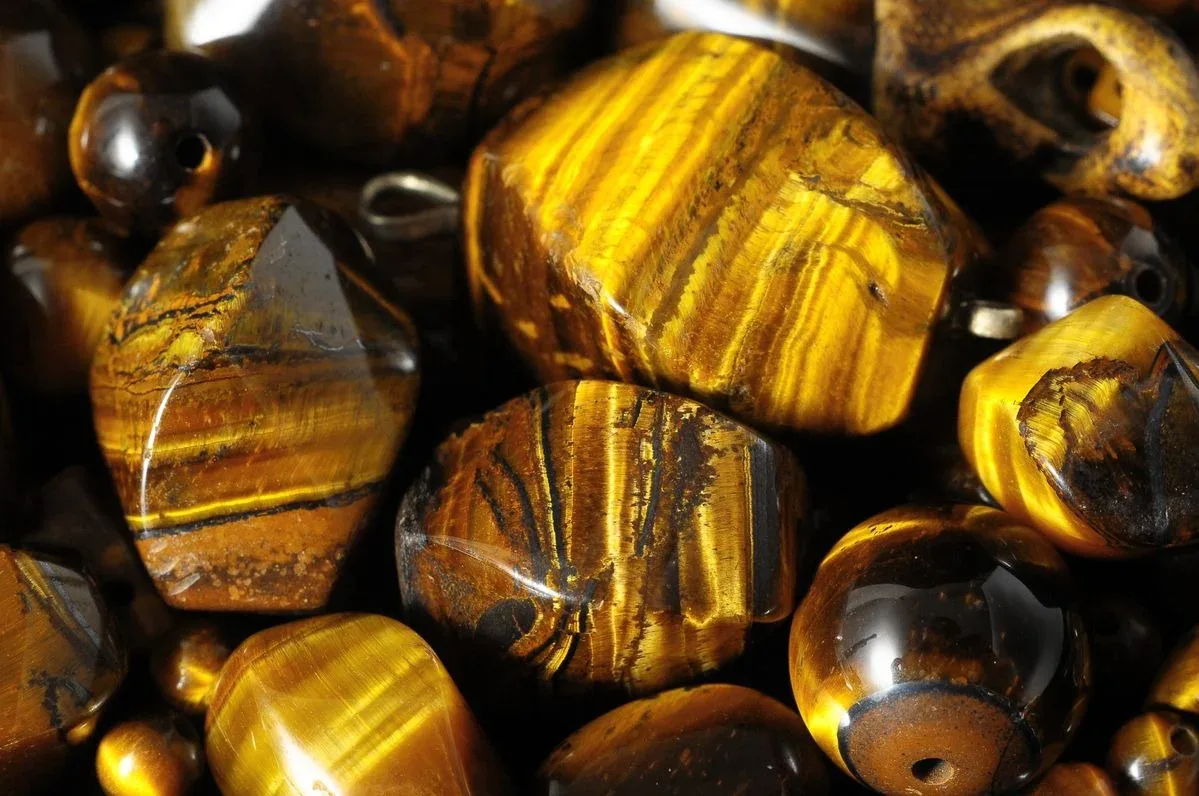
Tiger's Eye
Tiger's Eye and Hematite lean into practical confidence and clear direction. Tiger's Eye brings steady self-trust, and Hematite backs it up with discipline and focus, so it feels centered and decisive.
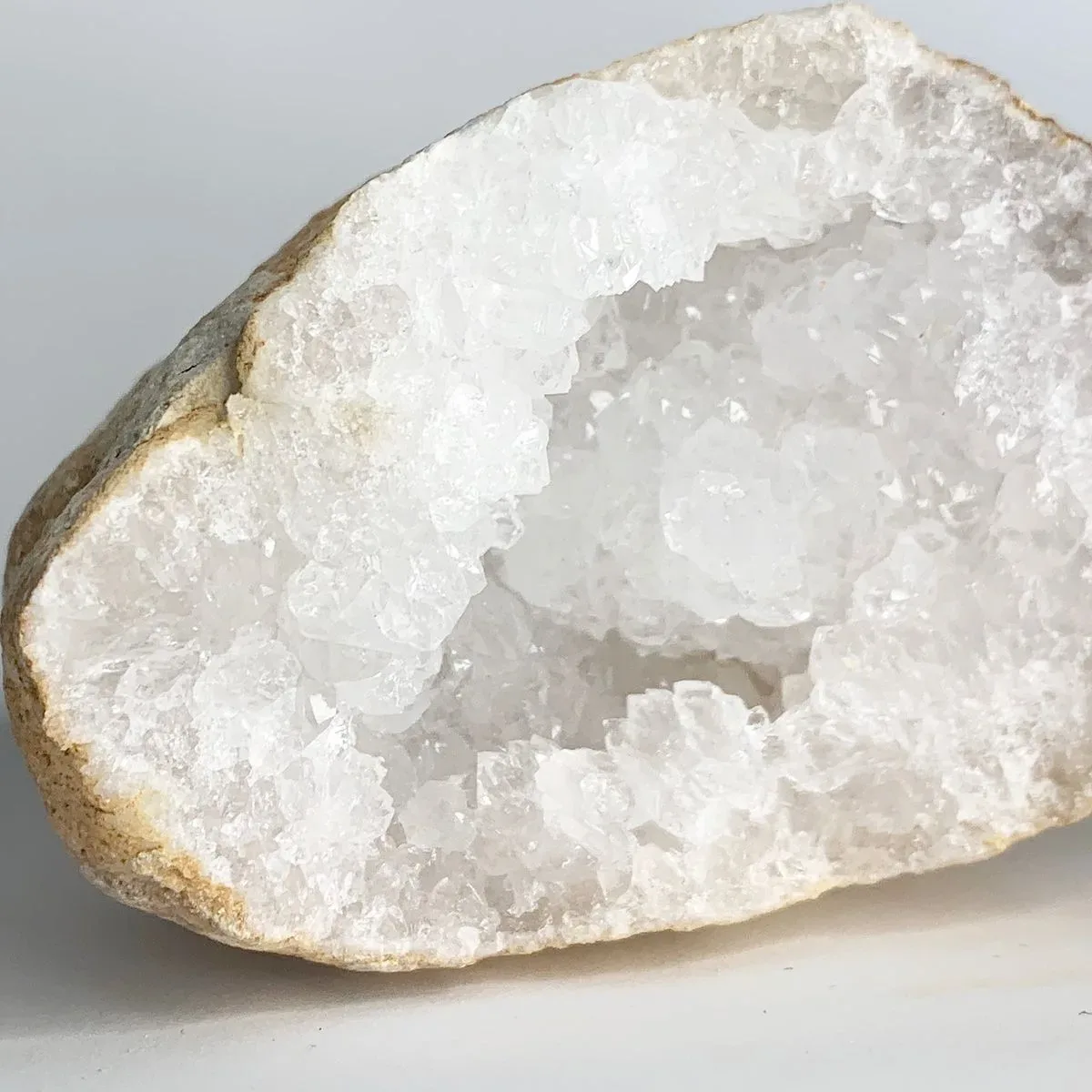
Clear Quartz
Clear Quartz lifts Hematite and makes the feel sharper and more defined. Hematite brings weight and steadiness, Clear Quartz adds clarity and openness, so it does not get dense.
Healing
Hematite is a solid pick when the day feels messy and attention keeps slipping. It is linked with grounding and feeling more at home in the body, handy when the schedule is packed or emotions run hot.
Keep it nearby as a cue to slow down and choose the next sensible step. Good for focus and firm boundaries, like replying to messages, making a call, or finishing the one task in front of you.
Affirmations
Affirmations work best when they sound like something that could be true today. Keep the words simple, and repeat them when starting work, commuting, or resetting after a tense moment.
If a line feels too strong, soften it. Change 'I am' to 'I am learning to' and keep going.
- I am grounded and steady.
- I trust myself to make practical choices.
- I protect my time and energy.
- I stay focused on what matters today.
- I move forward with calm confidence.
Intention Setting
Set one clear intention, then tie it to a real action. Hematite suits intentions that are practical, protective, and focused.
Keep it short enough to remember. A good intention can fit in one breath.
- Stay centered during a busy day.
- Finish what is already started.
- Make decisions with a clear head.
- Hold firm boundaries without guilt.
- Build steady confidence through action.
Manifesting
With Hematite, manifesting is less about big leaps and more about consistent follow-through. Think routines, habits, and small wins that add up.
Choose outcomes that can be supported with effort and structure, and track progress in a simple way.
- A steady routine that feels doable.
- More focus and fewer distractions.
- Clearer boundaries at work and at home.
- Confidence that comes from practice.
- Practical progress on a key goal.
Jewelry
Hematite jewelry keeps the theme close without turning it into a special occasion thing. Pick a piece that fits daily movement, subtle for workdays, heavier when extra resolve helps. Wipe it gently, dry it well, and keep the surface comfortable.
General benefits: Wearing Hematite as jewelry is an easy, everyday cue to stay steady. The cool, metallic feel can be a small reset during commutes, meetings, or training. It blends with most outfits, so it can stay in rotation without fuss.
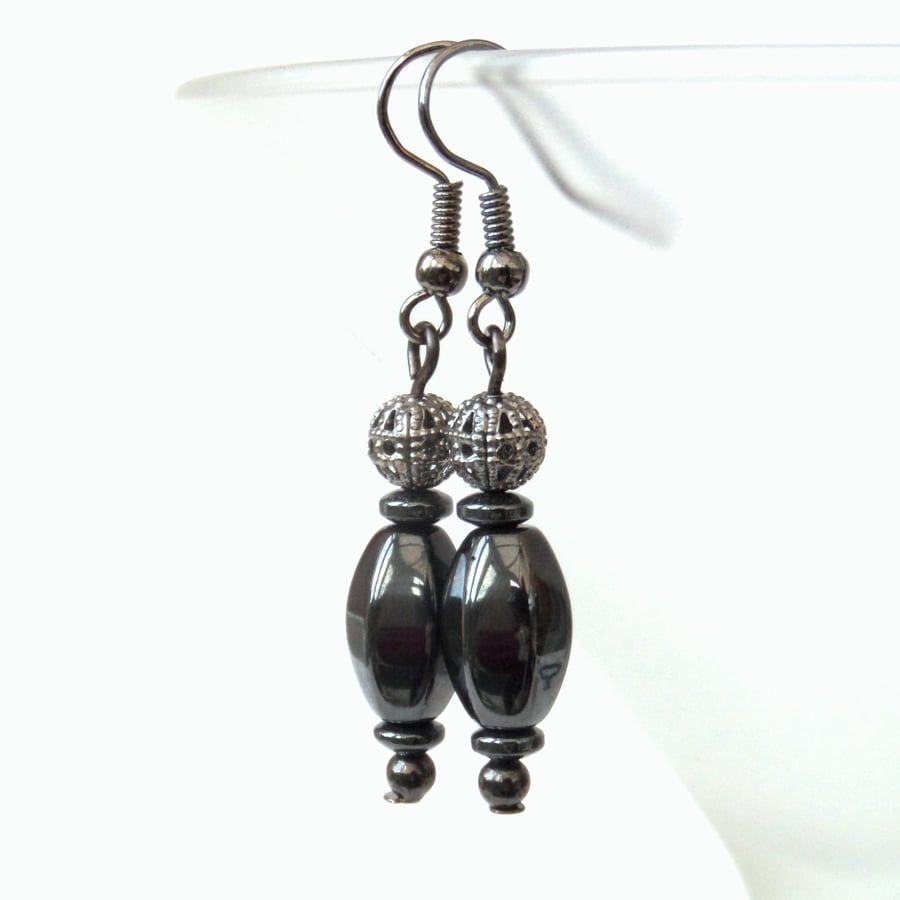
Earrings
Hematite earrings look clean and polished, with a dark shine that works for office wear or weekends. They stay out of the way, so they suit busy days and quick conversations. A small cue to stay composed and clear.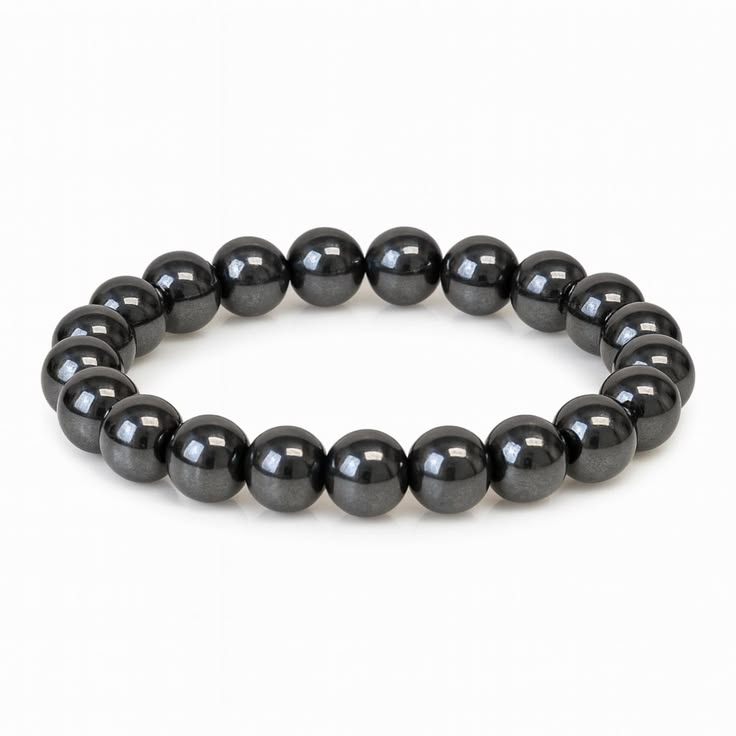
Bracelet
A Hematite bracelet is easy to grab when the goal is a steadier, more focused mood. The smooth weight on the wrist can feel reassuring during long stretches at a desk or on the move. Watch for knocks, polished Hematite can scratch.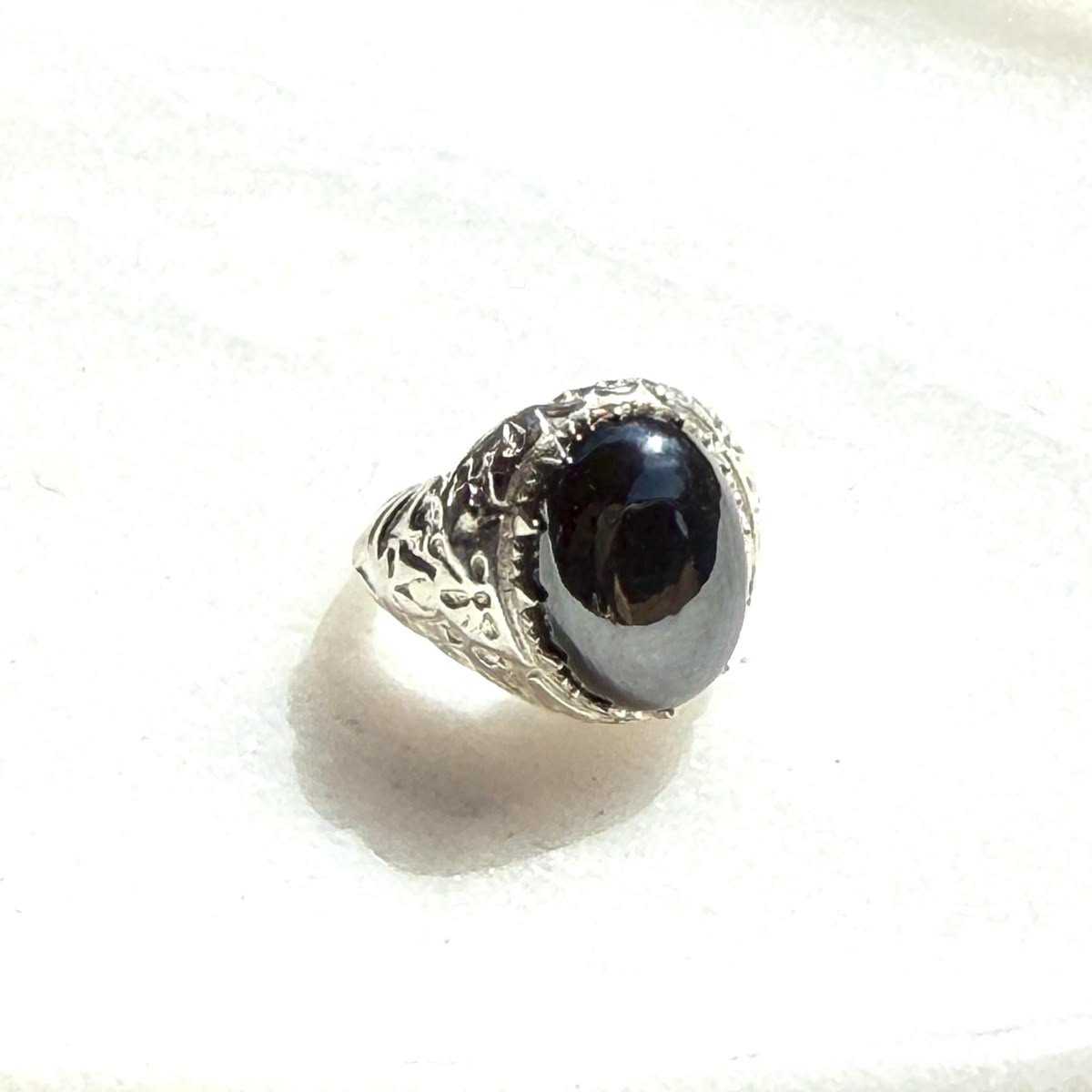
Ring
A Hematite ring stays in view, which helps as a simple reminder to stick with the plan. The dark, reflective finish looks sharp and minimal, and it suits everyday wear. Take it off for heavy lifting or wet work to protect the surface.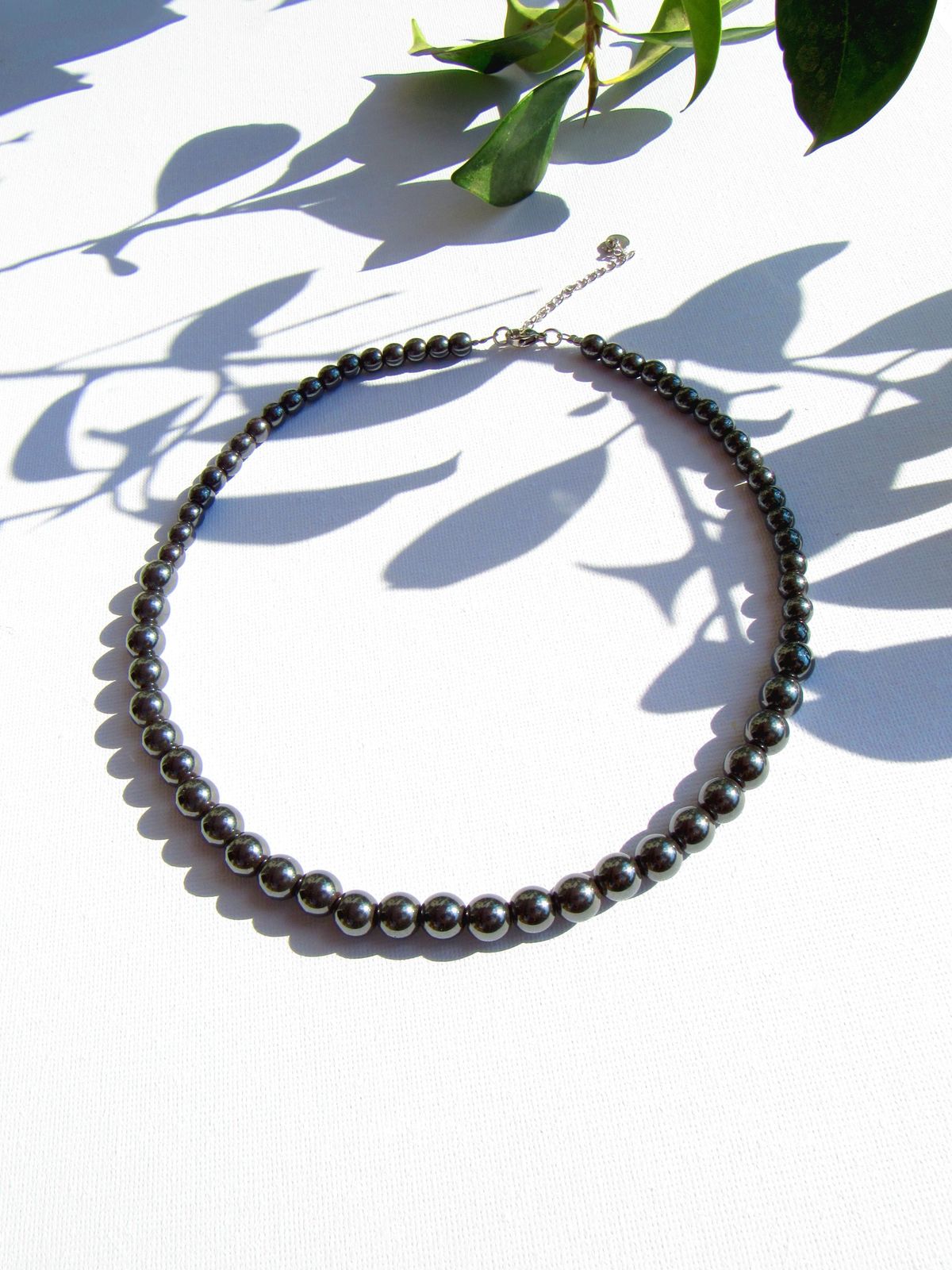
Necklace
A Hematite necklace sits near the center of the body and gives a steady, anchored look. It layers well with other chains and works with plain tops and knits. Choose a chain length that sits comfortably and store it separately to avoid scuffs.Forms
Each form below describes the look and feel of Hematite itself, rather than how or where to use it.
Rough
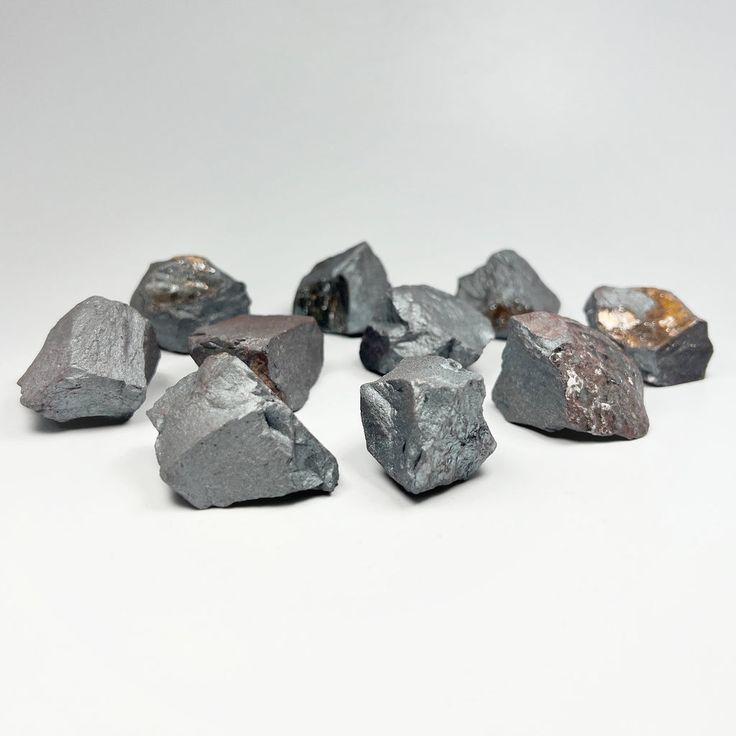
Rough Hematite has a raw, industrial look with a gritty texture and an earthy undertone. Depending on the piece, the surface can read matte and rugged or flash with tiny sparkles as it catches the light.
Point / Tower
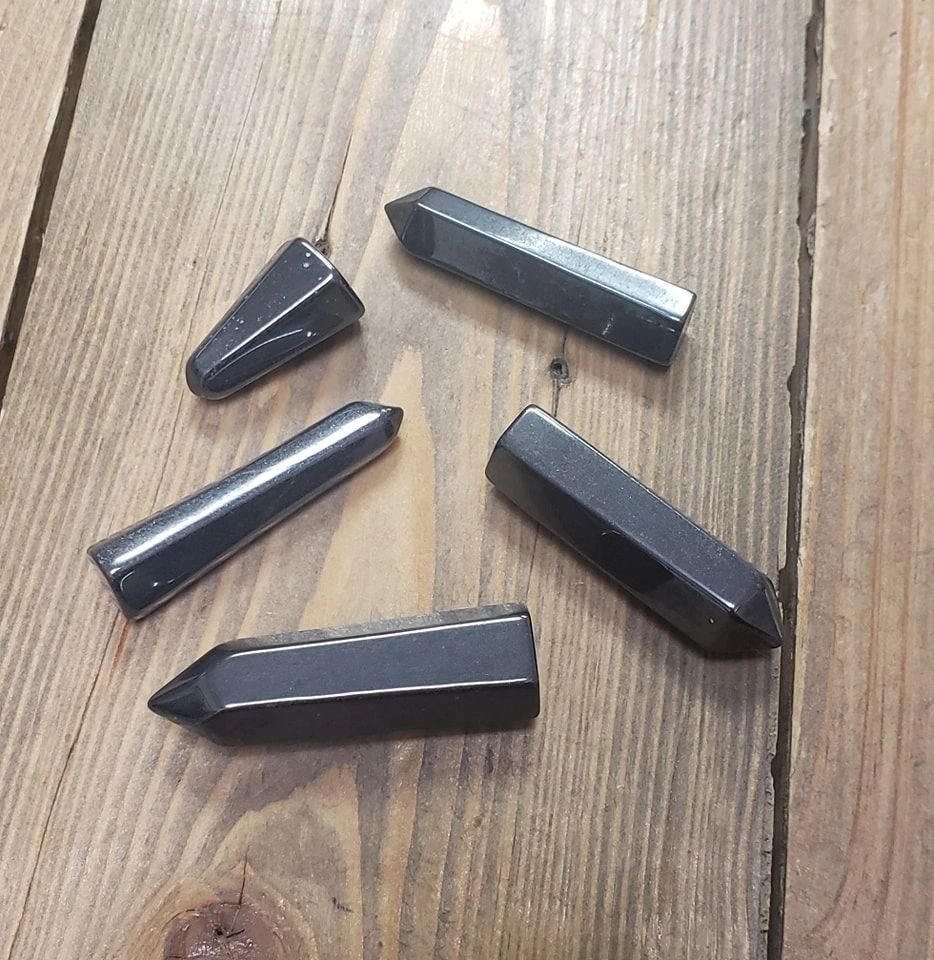
A Hematite point or tower looks crisp and intentional. Straight lines and sharp edges make the metallic sheen feel brighter, giving the stone a structured, no-nonsense presence.
Sphere
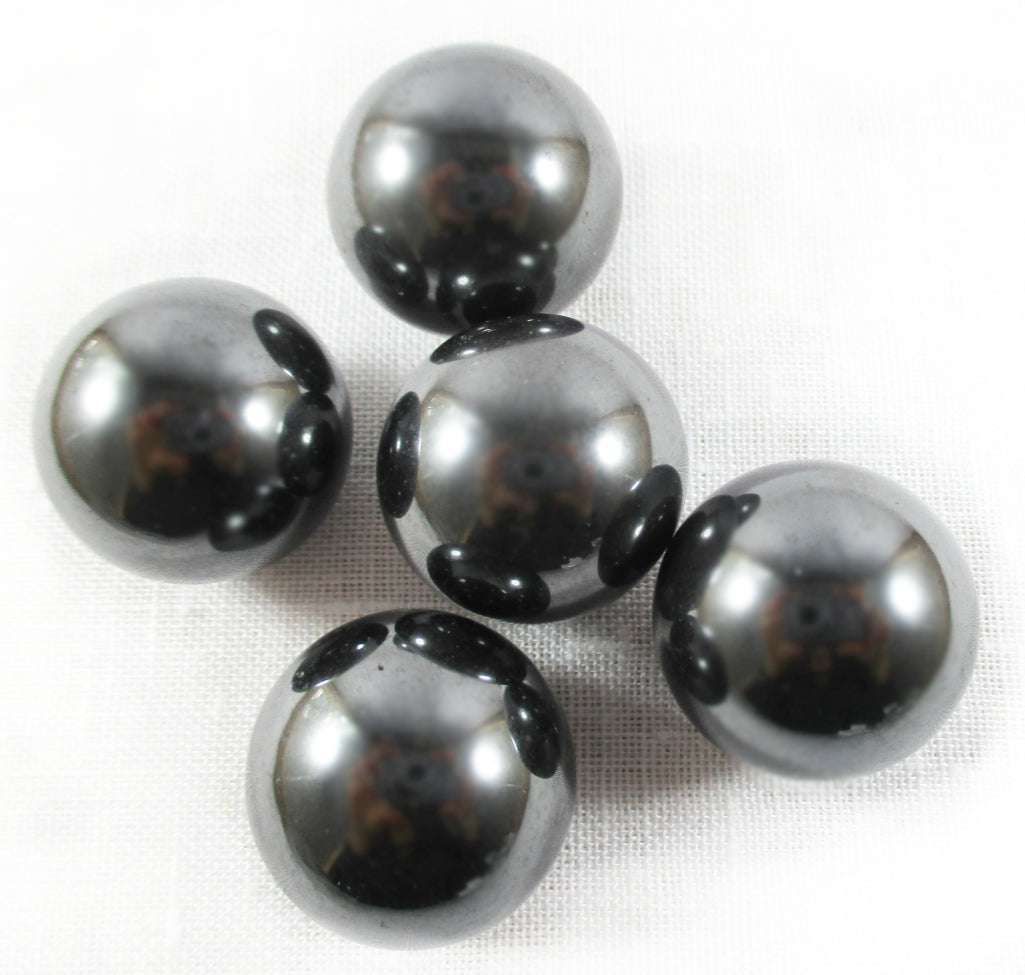
A Hematite sphere looks balanced and self-contained. The rounded form softens the stone's strong metallic character, and light moves across it in a quiet, mirror-like sweep.
Palm Stone
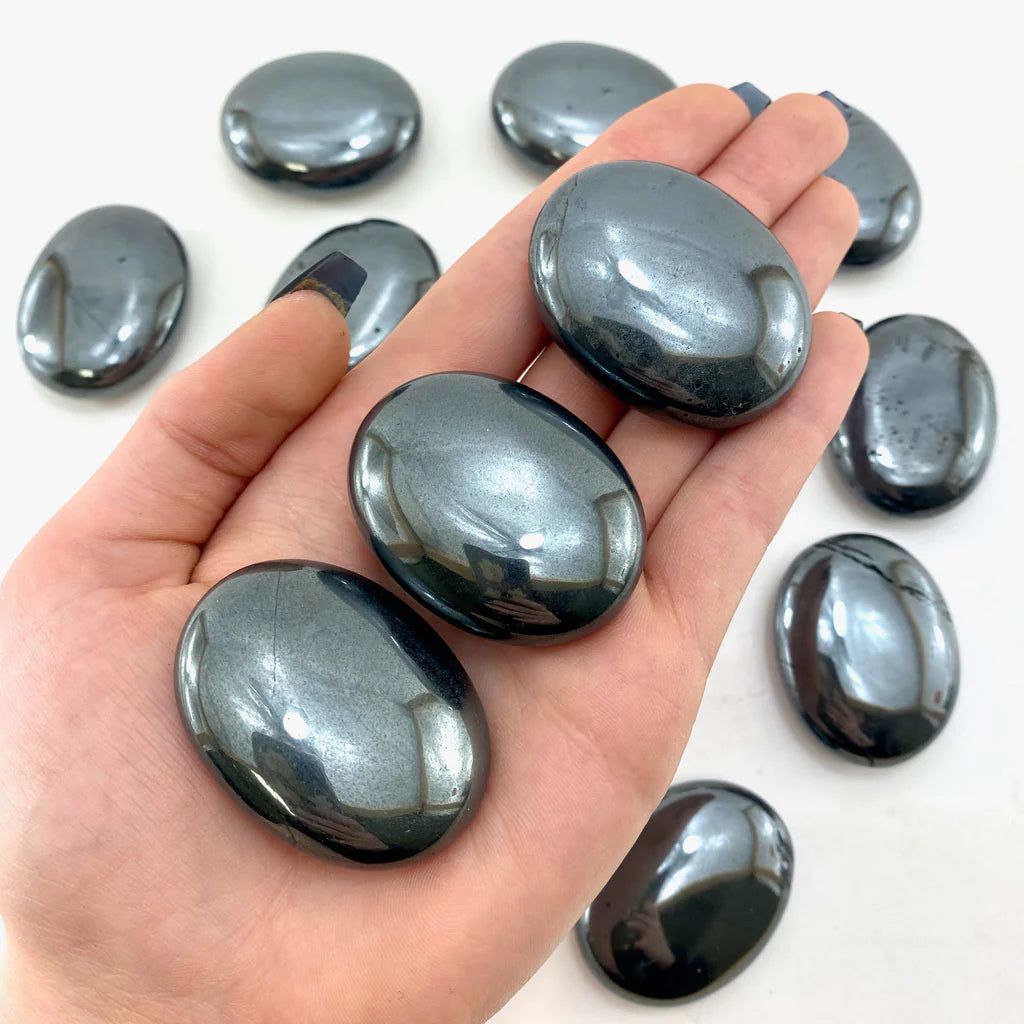
A Hematite palm stone reads smooth and approachable. The curved polish brings out a sleek finish, and gentle shifts in tone can show as the surface turns under the light.
Tumble Stone
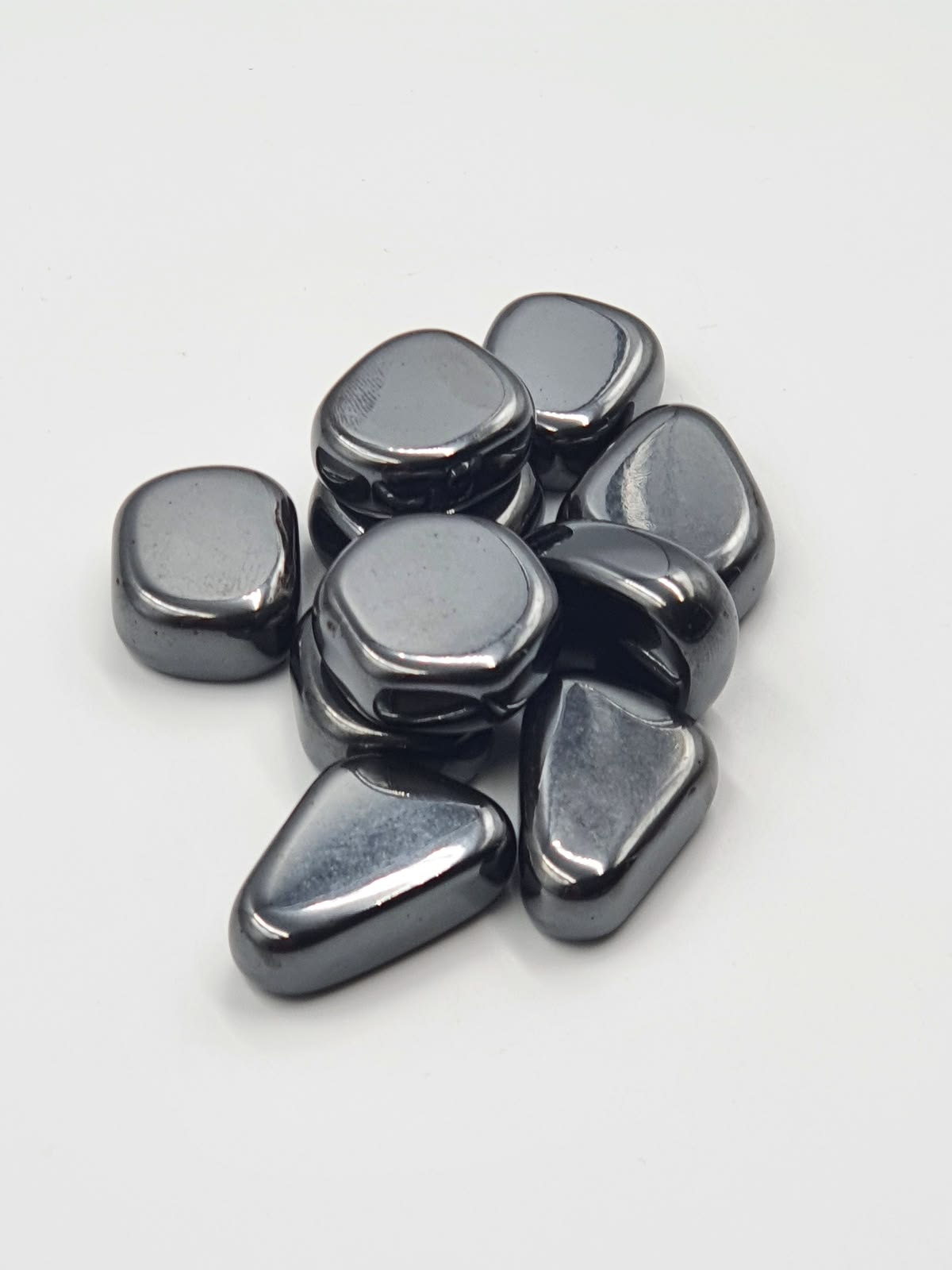
A tumbled Hematite has an everyday, pocket-sized look. Rounded edges make the shine feel softer and more casual, with each stone showing its own mix of dark tones and polish.
Figure
A Hematite figure gives the stone more personality. Carved lines stand out against the reflective surface, and the weighty, metallic look makes even simple shapes feel bold.
Heart
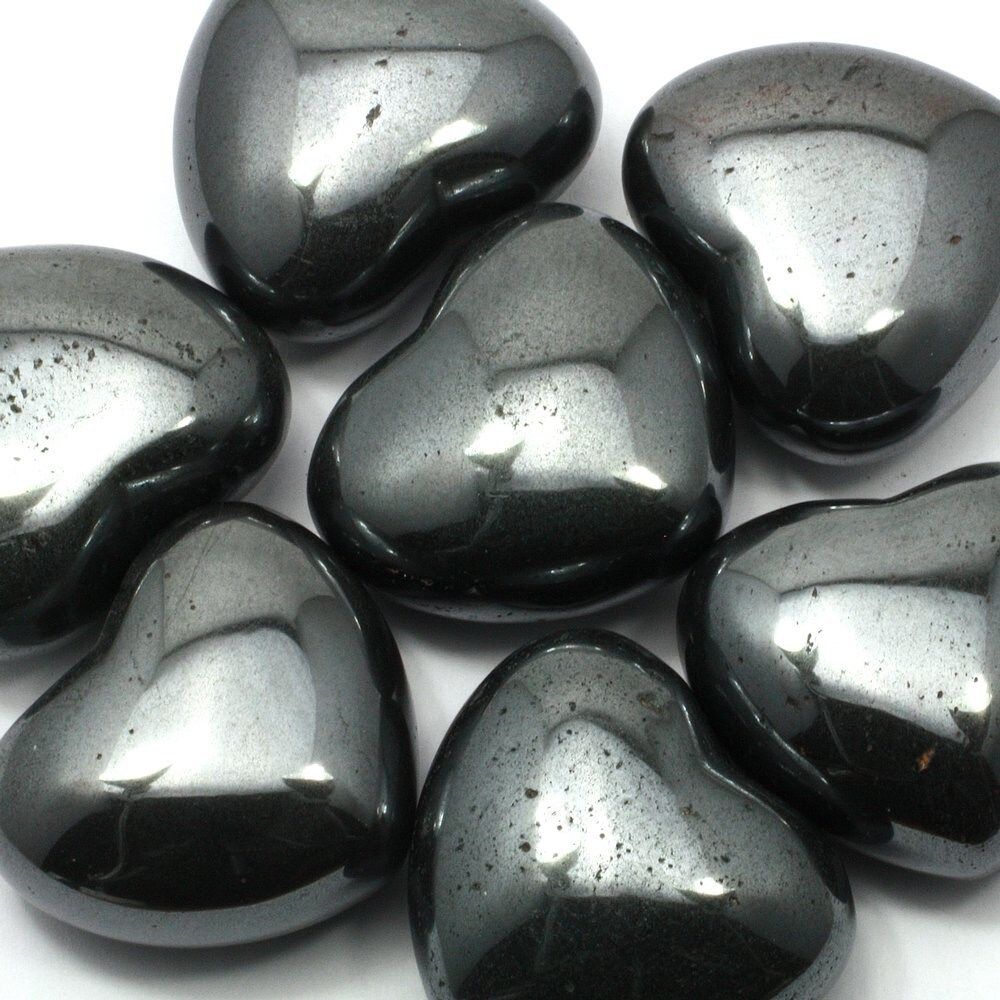
A Hematite heart mixes a warm shape with a strong, glossy finish. The high polish can look almost mirror-dark, giving the piece a bold look that still feels soft.
Cleansing & Charging
Hematite is often finished with a metallic polish, so keep care simple and gentle. Avoid long soaks, salt water, or harsh cleaners, and dry it well after wiping. If the piece is magnetic or plated, treat it with extra care.
How to cleanse Hematite
- Wipe with a soft, dry or slightly damp cloth, then dry fully.
- Use smoke cleansing if that fits the space and preference.
- Sound cleansing works well, for example a bell or singing bowl.
- Avoid salt water and long water soaks to protect the finish.
How to charge Hematite
- Place it in morning light for a short time, not harsh midday sun.
- Set it beside Clear Quartz to refresh the feel.
- Recharge through intention, hold it briefly and name what it is for.
Where to Use
Match the space to the outcome. In active areas, Hematite can feel like a reset button. In quieter areas, it can support a grounded, no-fuss mindset.
Office / study
Helpful for staying on task, especially with admin, studying, or decision-heavy work. It suits planning, prioritizing, and finishing what is already in progress, rather than starting five new things at once.
Entryway
A good fit for the threshold between outside stress and home time. It can support a simple routine of arriving, resetting, and leaving worries at the door, so the rest of the space feels calmer.
Meditation space
Supports a grounded style of practice that stays connected to the body and breath. It suits sessions focused on settling the mind, releasing tension, and ending with a clear next step for the day.
Gym / workout area
Pairs well with training that needs consistency and grit. It can suit warm-ups, strength work, and any session where focus and good form matter more than rushing or pushing past limits.
Science
Physical properties
- Mineral class
- Hematite
- Color
- Steel-gray to black; earthy red-brown
- Hardness
- 5.5 - 6.5
- Density
- ~5.26 g/cm3
- Durability
- Moderate
- Thermal stability
- High
Optical properties
- Transparency
- Opaque
- Lustre
- Metallic to earthy
- Refraction index
- N/A (opaque)
Chemical composition
- Class
- Oxide
- Formula
- Fe2O3
- Group
- Hematite group
- Magnetic
- Weakly magnetic; may become magnetic when heated or altered
Formation
Hematite forms where iron-rich material meets oxygen and conditions lock iron into stable oxides. In sedimentary settings it can precipitate from iron-bearing water in lakes and shallow seas, or grow in pore spaces between grains. Given time, it can build thick iron-ore layers, including banded iron formations.
It also turns up in igneous and metamorphic rocks when hot fluids move through fractures and react with iron-bearing minerals. Metamorphism can push older iron minerals to oxidize and recrystallise as pressure and temperature change. Platy or tabular crystals are common. So are massive, botryoidal crusts lining cavities. Even when the surface looks steel-gray, the streak is often red.
Locations
- Brazil
- South Africa
- Australia
- United States
- China
- Morocco
- Canada
History
Red ochre pigment from iron oxides
c. 3000, 1000 BCE
Iron-oxide minerals, including ochre that can be rich in hematite, were used as pigments in rock art, burials, and everyday coloring in many places. Older writing often calls it red ochre instead of naming hematite, even when hematite is in the mix.
Hematite as a pigment in ancient Egypt
c. 1550 BCE
Egyptian artefacts and texts show broad use of mineral pigments. Red colors made from iron oxides are well documented. Hematite is one likely source, though recipes and supply changed by place and period.
Greek naming linked to a blood-red streak
c. 700, 300 BCE
The name links to the Greek "haima" (blood), pointing to the red streak left when the stone is rubbed on a rough surface. A handy test. It helped tell it apart from other dark, metallic-looking stones.
Described in early natural history and lapidary writing
1st century CE
Classical writers described iron-bearing stones and red pigments, including materials that match what is now called hematite and red ochre. They usually focus on color, streak, and practical uses, not modern mineral labels.
Pigment use continues in manuscripts and painting
Middle Ages (c. 1100, 1500)
Iron-oxide reds stayed common in European art and craft. Records tend to name ochres and earth pigments. Those often include hematite, without spelling it out.
Mineralogy formalises identification and classification
18th, 19th centuries
As mineralogy took shape, hematite was more consistently described as an iron oxide (Fe2O3) with a clear red streak and many forms. This period also brought wider surveys and catalogs of iron-ore deposits.
Major iron-ore mining and industrial importance
19th, 20th centuries
Hematite became well known as an iron ore used in large-scale mining and steelmaking. Deposits and ore grades vary by region. The industrial role is well established.
Popular in jewelry and modern hematite culture
Late 20th century, present
Polished hematite is common in beads, tumbled stones, and small carvings. In modern spiritual and wellbeing settings it is often linked with grounding and protection. That reflects current practice, not one unbroken tradition.
Mythic and symbolic links to blood, iron, and Mars
Ongoing
The red streak and iron content make it a natural fit for symbols tied to strength, courage, and Mars in modern sources. Meanings shift across traditions. Best treated as cultural associations, not fixed historical facts.
Got questions?
We've got answers!
FAQ's
What is Hematite used for?
+×
Hematite is often used as a grounding stone when life feels scattered or busy. It is linked with feeling steady and protected, and sticking with practical next steps.
It is a common pick for work or study when attention matters. Also for confidence and follow-through. Some people keep it by a desk, carry it in a pocket, or use it in a short meditation to reset and refocus.
Which zodiac signs are connected to Hematite?
+×
Hematite is most often linked with Aries and Aquarius.
Anyone can use it, but these are the main traditional matches for its steady, action-focused feel.
What chakras does Hematite activate?
+×
Hematite is connected with the Root chakra.
It is typically used to feel more anchored in the body, supported in everyday routines.
Can Hematite help with stress and sleep?
+×
Hematite is often used as a calming, grounding support during stressful periods. It may help set a steadier bedtime routine by nudging a slower pace and clearer boundaries around screens, work, and worry.
It is not a medical treatment for stress or sleep issues. If sleep problems or anxiety feel persistent or severe, it is best to speak with a qualified health professional.