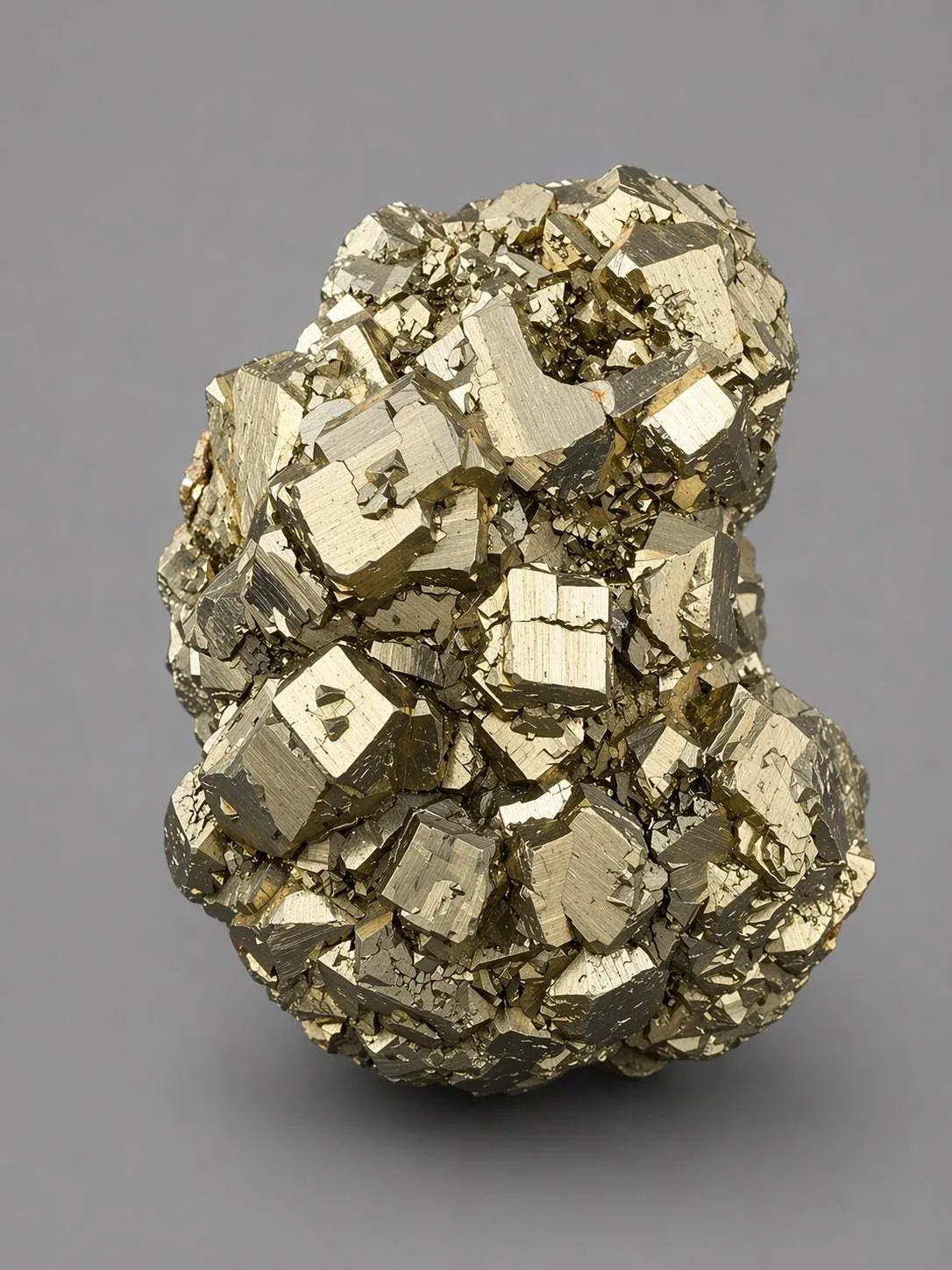
Pyrite Crystal, Benefits and Meanings.
Named from the Greek 'pyr' (fire) for the sparks it can produce when struck; commonly linked with confidence, protection, and prosperity.
Metaphysical & Spiritual
Pyrite has a bright, metallic feel that suits the point where a plan turns into a next step. It is often read as steady confidence, clean focus, and practical momentum. The tone linked with Pyrite stays grounded. It pulls attention to what matters now, what can be measured, and what can be finished. In symbolic protection work, it has a sharp, no-nonsense edge. Clearer boundaries. A calmer response under pressure, and fewer distractions getting fed.
Planet

Sun
Pyrite matches the Sun’s bright, centered feel, the part of life that is easy to stand behind. It points to purpose, personal authority, and clean motivation that moves straight into action.
Element
Fire
Fire is drive, heat, and the spark that starts movement. Pyrite keeps that energy useful, turning bold momentum into forward motion that can be aimed at real results.

Crystal Pairings
Pyrite is often picked for steady drive and a clear sense of direction. Pairing it with the right stone can brighten that ambition, sharpen it, or keep it balanced, so the energy feels purposeful rather than pushy.
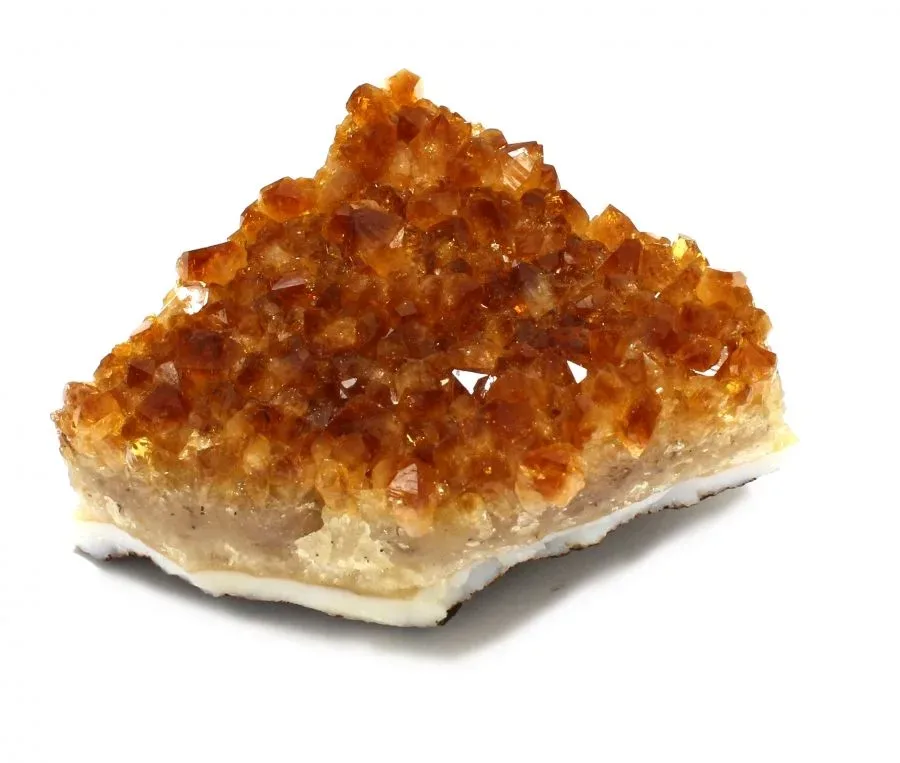
Citrine
Citrine brings a lighter, more open feel to Pyrite’s determined tone. Together it reads as warm confidence, ambitious but still easygoing.
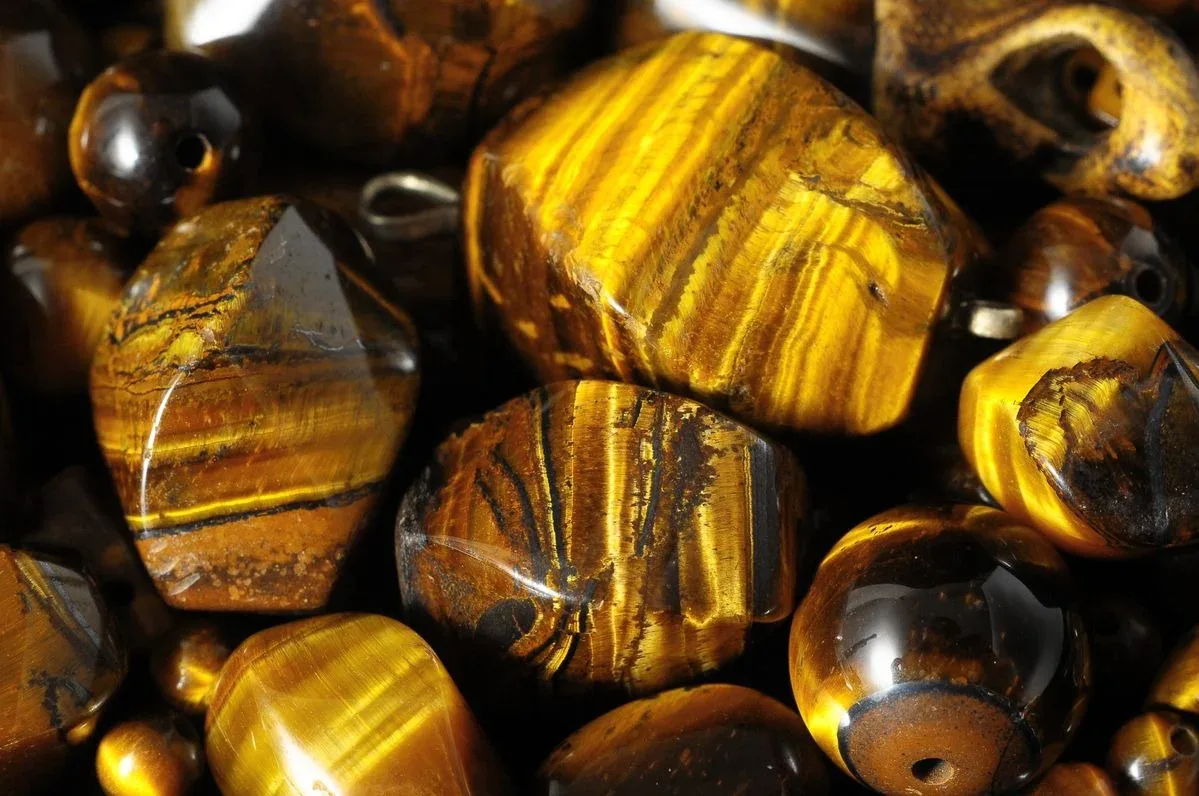
Tiger's Eye
Tiger's Eye and Pyrite share a bold, capable vibe, but they show it in different ways. Pyrite leans into commitment and follow-through, while Tiger's Eye adds steady nerve, so the mix feels brave and level-headed.
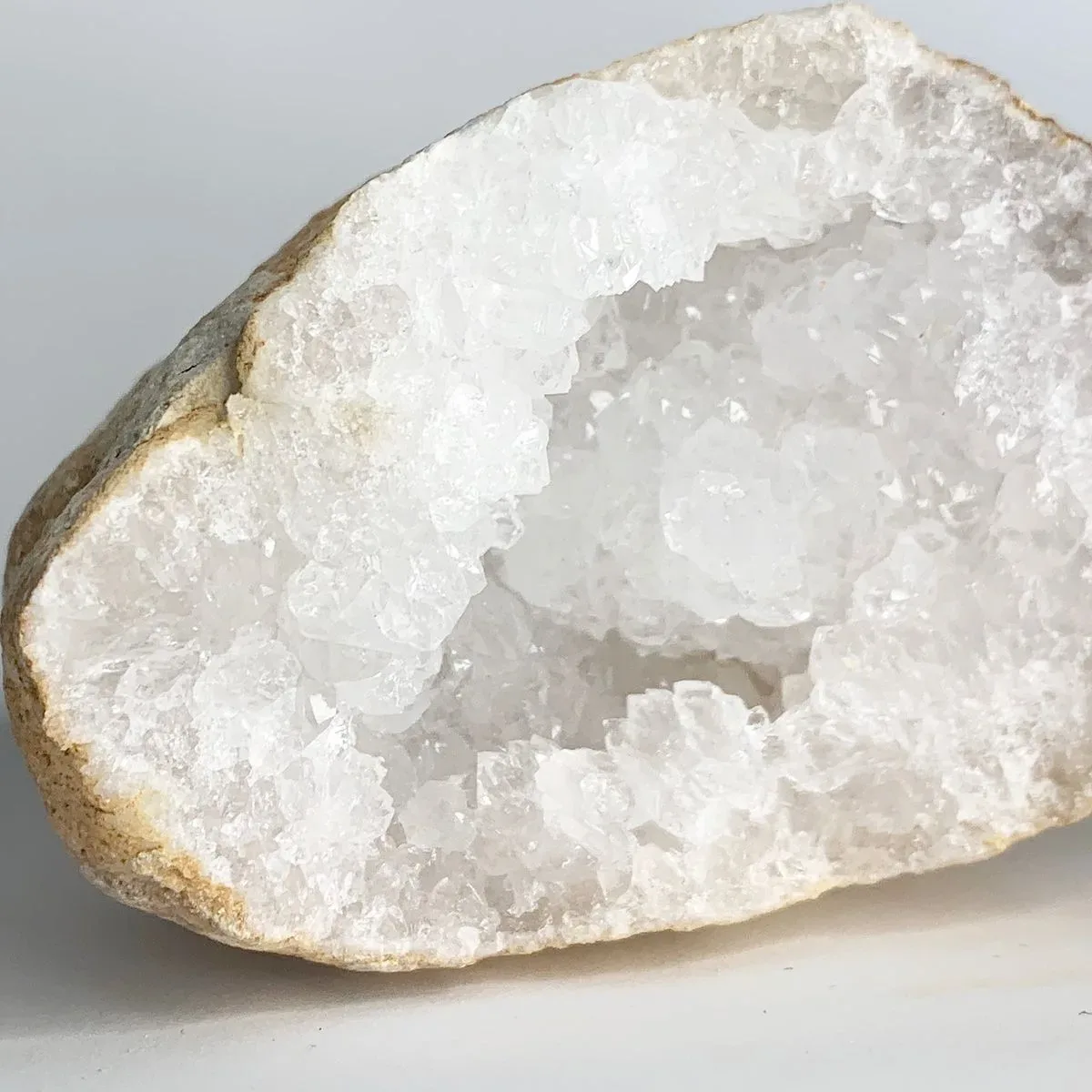
Clear Quartz
Clear Quartz gives Pyrite’s intention a cleaner outline. It shifts the feel from pure push to clear direction, the same ambition with a tidier focus.
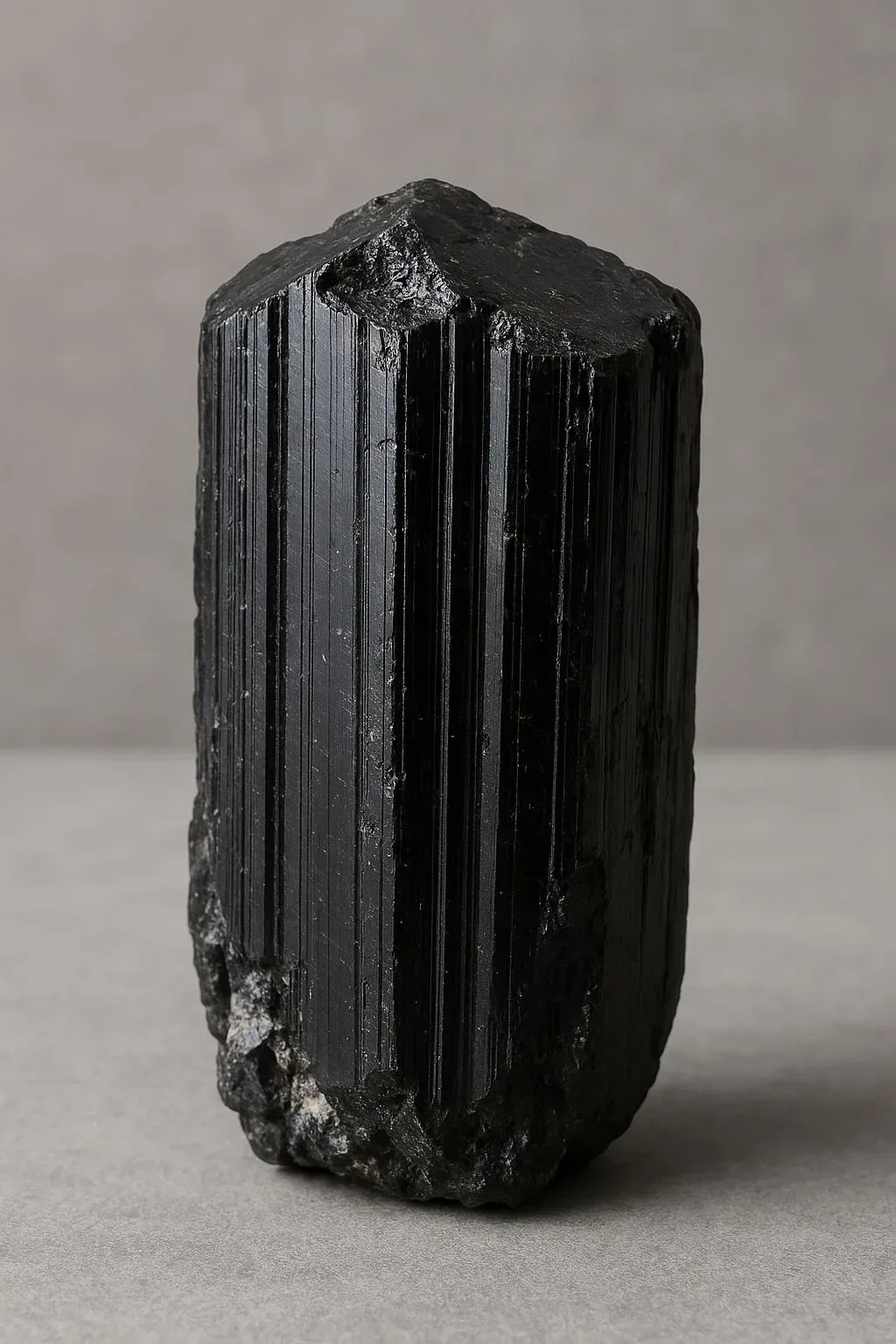
Black Tourmaline
Black Tourmaline puts a firmer edge around Pyrite’s forward energy. The tone stays strong and self-controlled, steady confidence that is hard to rattle.
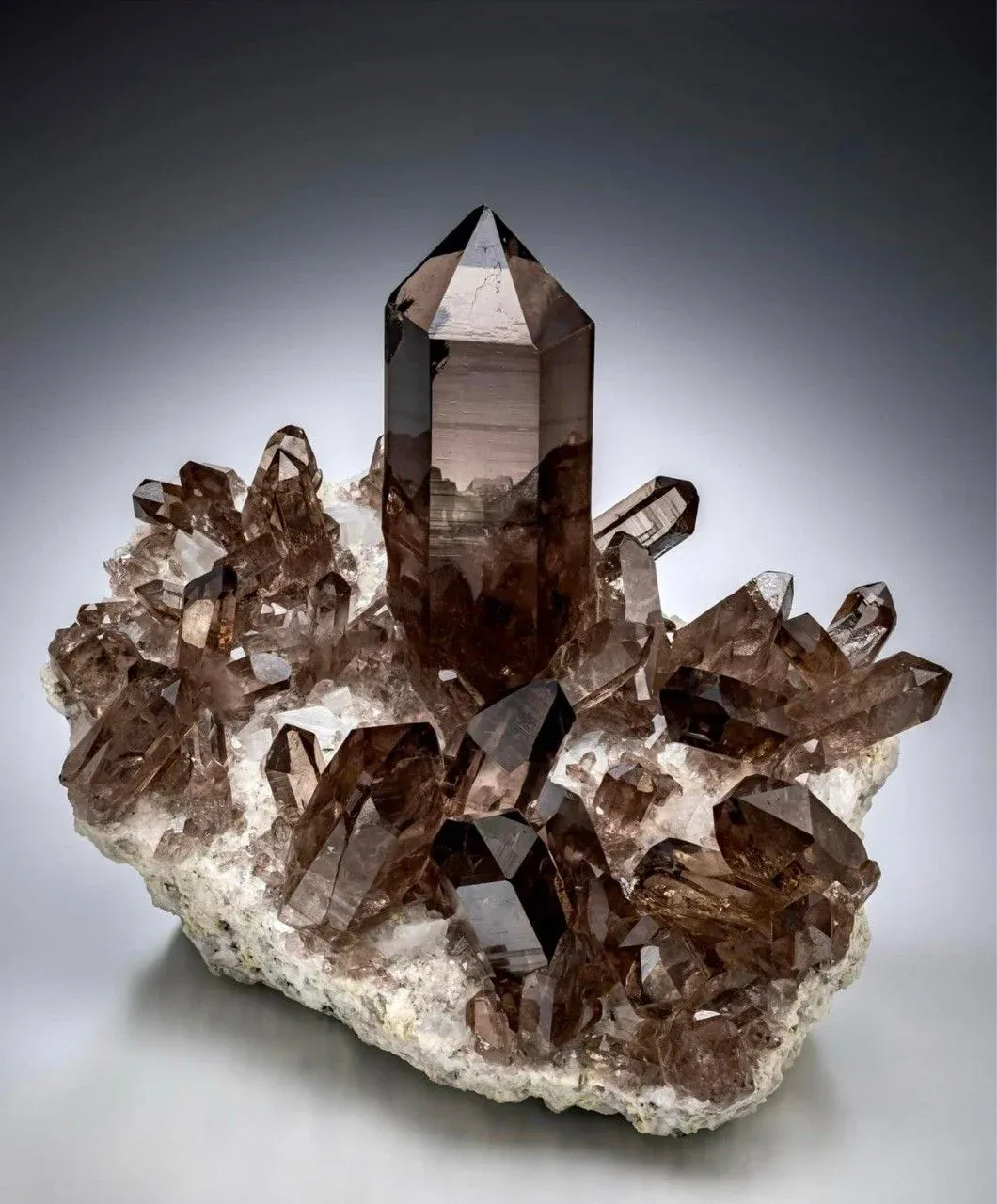
Smoky Quartz
Smoky Quartz smooths out Pyrite’s sharper side and settles the mood. Determination with room to breathe. Steady, not tight.
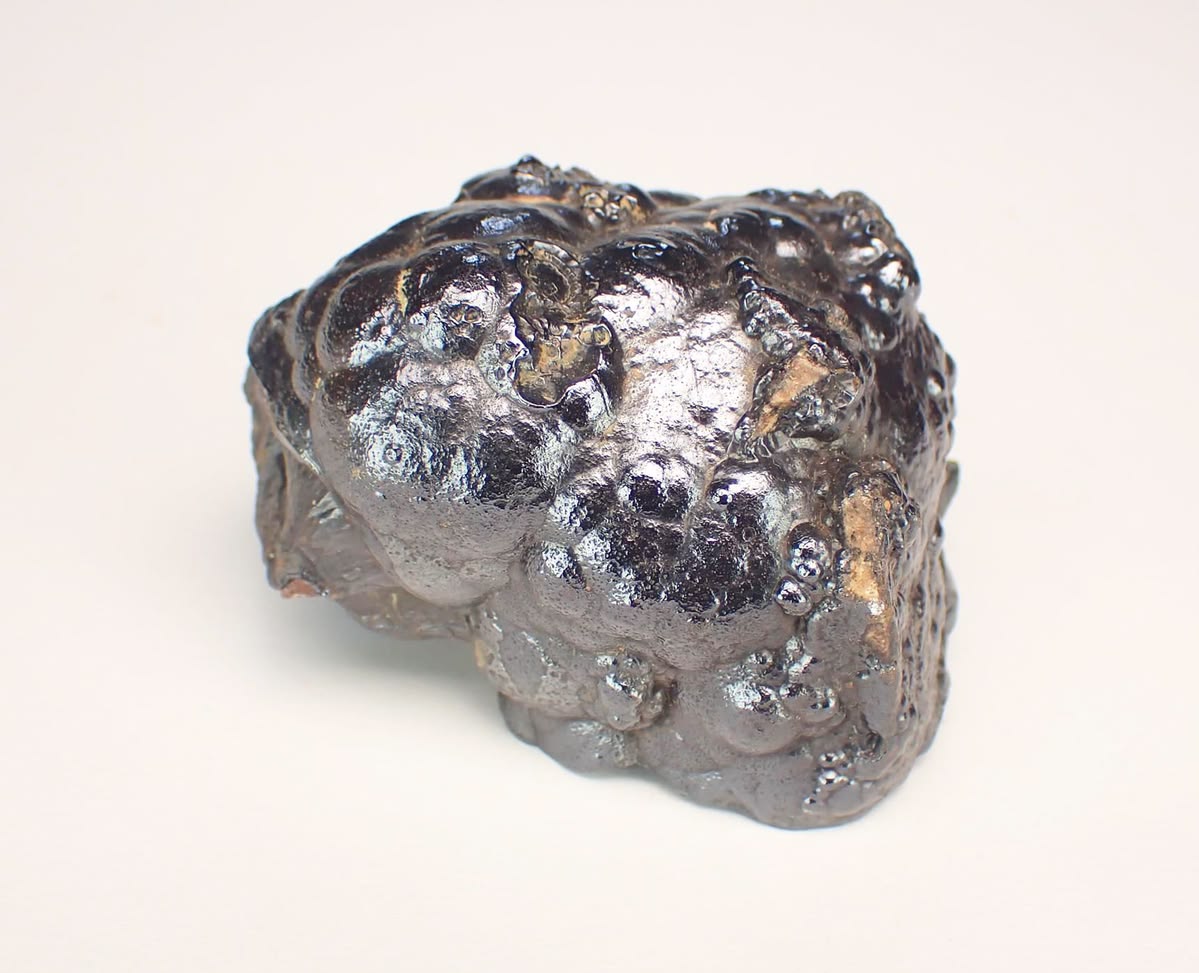
Hematite
Hematite matches Pyrite in a straightforward, no-nonsense way. Pyrite reads as drive and follow-through, Hematite adds structure and composure, so the pairing feels grounded and disciplined.
Healing
Pyrite fits days when attention jumps around and finishing feels harder than starting. It can serve as a steady cue to pick one priority, speak plainly, and keep goals realistic.
It also suits confidence that stays quiet and useful. When stress climbs, treat it as a prompt to slow down, sort the next step, and do the small piece that moves things forward.
Affirmations
Use these lines when starting work, making a decision, or resetting after a wobble. Keep the tone plain and believable.
Say one a few times, then take a small practical step that matches it. Consistency matters more than intensity.
- I trust myself to handle what is in front of me.
- I take clear steps and finish what I start.
- I protect my time and attention.
- I stay calm and focused under pressure.
- I welcome steady progress and good results.
Intention Setting
Pyrite pairs well with intentions that are specific and measurable. Pick one focus for the day, then decide what ‘done’ looks like.
Write the intention down, then choose one action that can be completed in under 20 minutes. Let that be the first move.
- Set a clear priority and stick to it.
- Speak with confidence and keep it respectful.
- Follow through on one important task today.
- Make a practical plan for money and work.
- Keep attention on what can be controlled.
Manifesting
For Pyrite, manifesting is about momentum and smart effort. Aim for outcomes that come from showing up, learning, and repeating good habits.
Keep it grounded, name the result, the timeline, and the next step. Let progress be visible, not just hoped for.
- A focused week with tasks completed on time.
- A confident conversation that leads to a clear decision.
- A practical opportunity that improves income or stability.
- Better boundaries around time, energy, and attention.
- A simple routine that supports consistent results.
Jewelry
Pyrite jewelry works best as a simple daily cue. Pick a piece that matches the way attention is used, near the ears for listening, on the wrist for action, on the hand for decisions, or close to the chest for steady confidence through the day.
General benefits: Wearing Pyrite as jewelry keeps its theme close, focus, willpower, and practical confidence. It can feel like a small nudge to stay on track, protect attention, and finish what was started. It suits days that call for clear choices and steady effort.
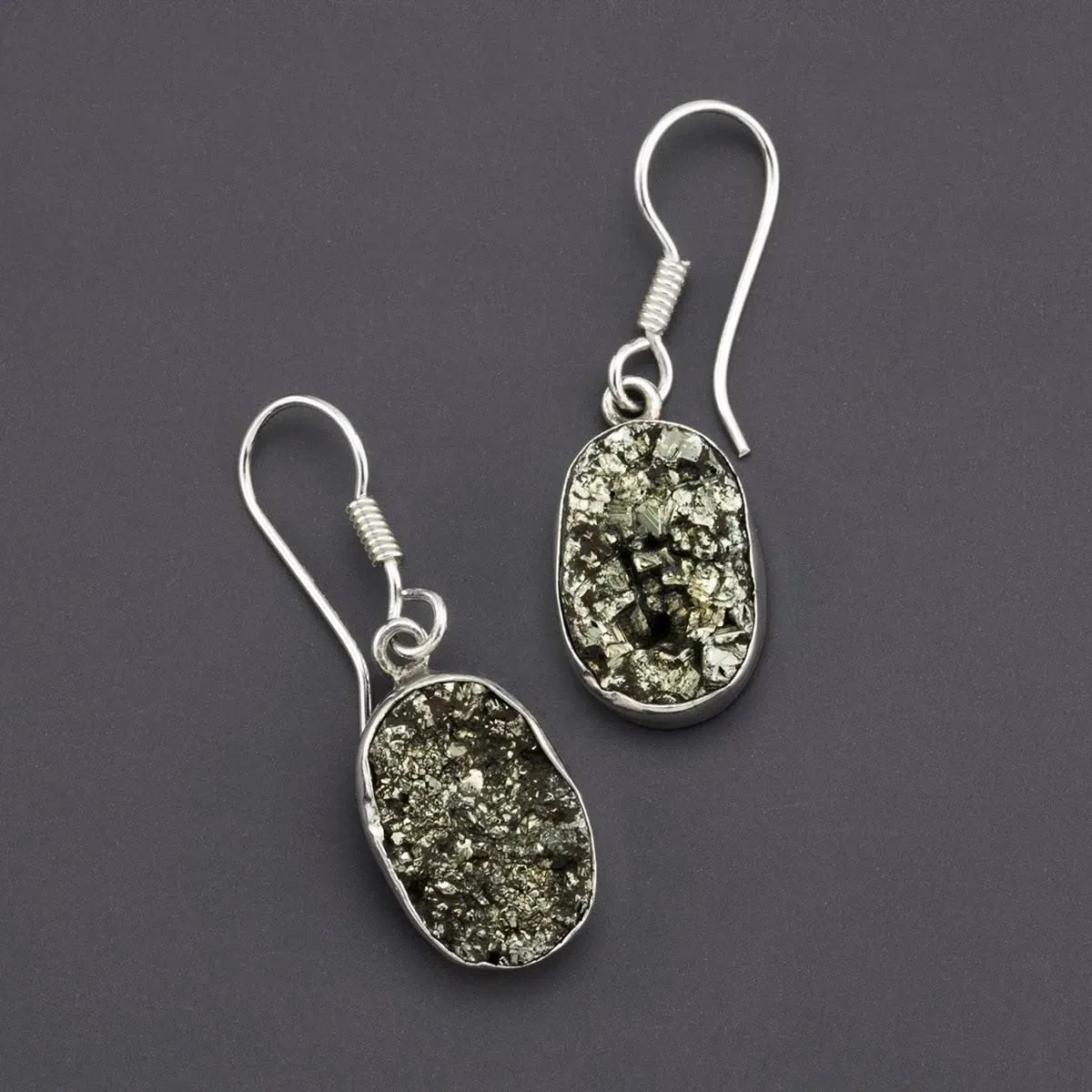
Earrings
Pyrite earrings suit days that call for sharp listening and quick, sensible choices. They can help keep attention on what is actually being said, not what is being assumed. They fit well with meetings, interviews, and study blocks, where staying present and catching details matters more than pushing harder.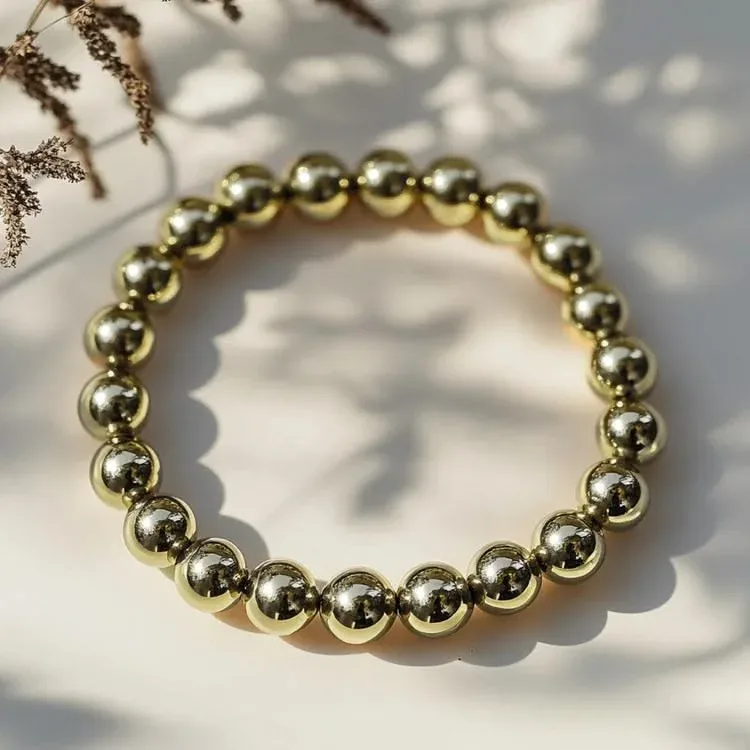
Bracelet
A Pyrite bracelet is a good match for habits and follow-through. A quick look at the wrist can act as a cue to return to the plan and take the next small step. It suits workdays, training, and admin tasks, anywhere steady effort beats a short burst of motivation and then a drop-off.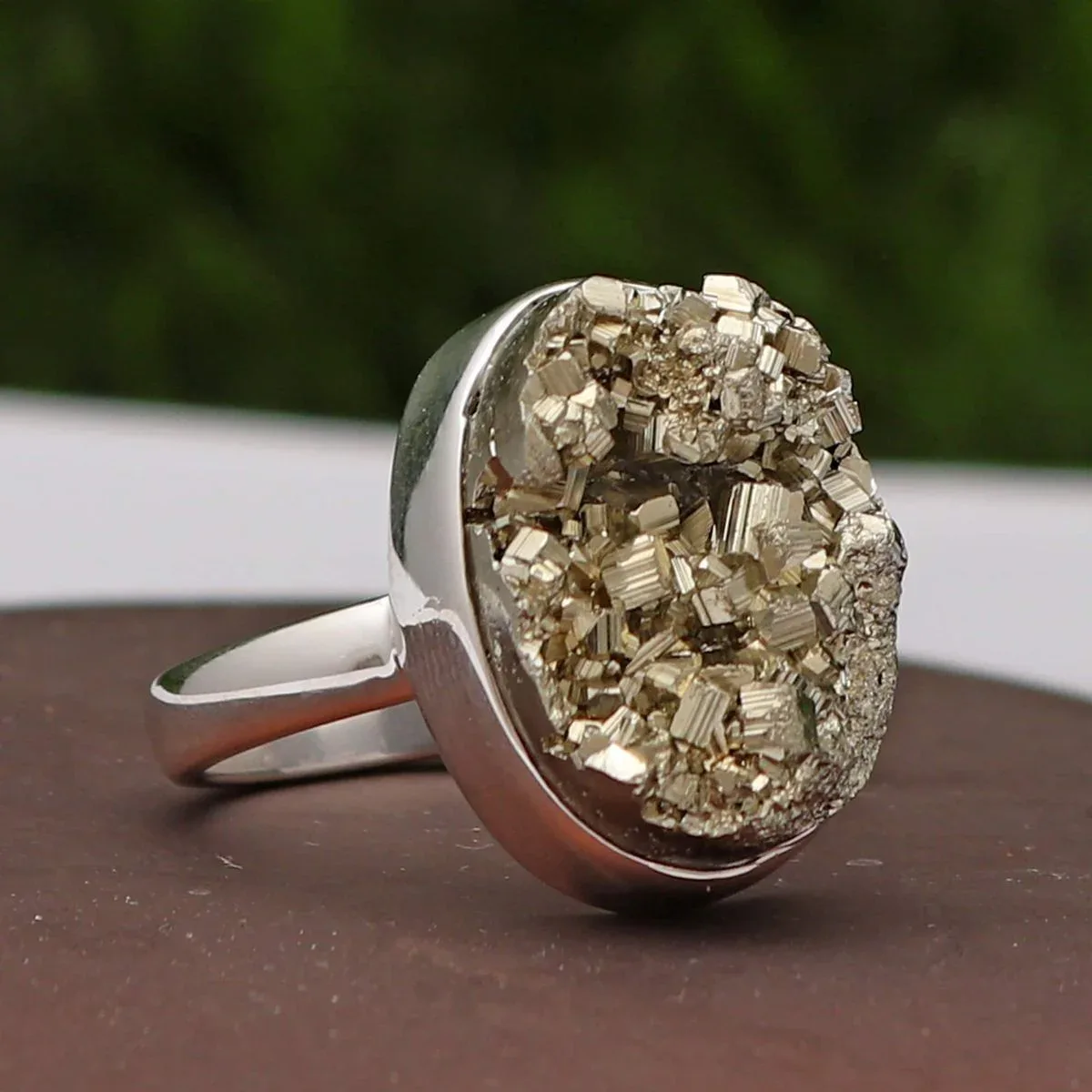
Ring
Pyrite rings pair well with decision-making and personal standards. It can be a clean reminder to choose what supports long-term goals, not short-term comfort. It also suits boundary moments, saying no, setting a price, asking for clarity, or sticking to a deadline without over-explaining.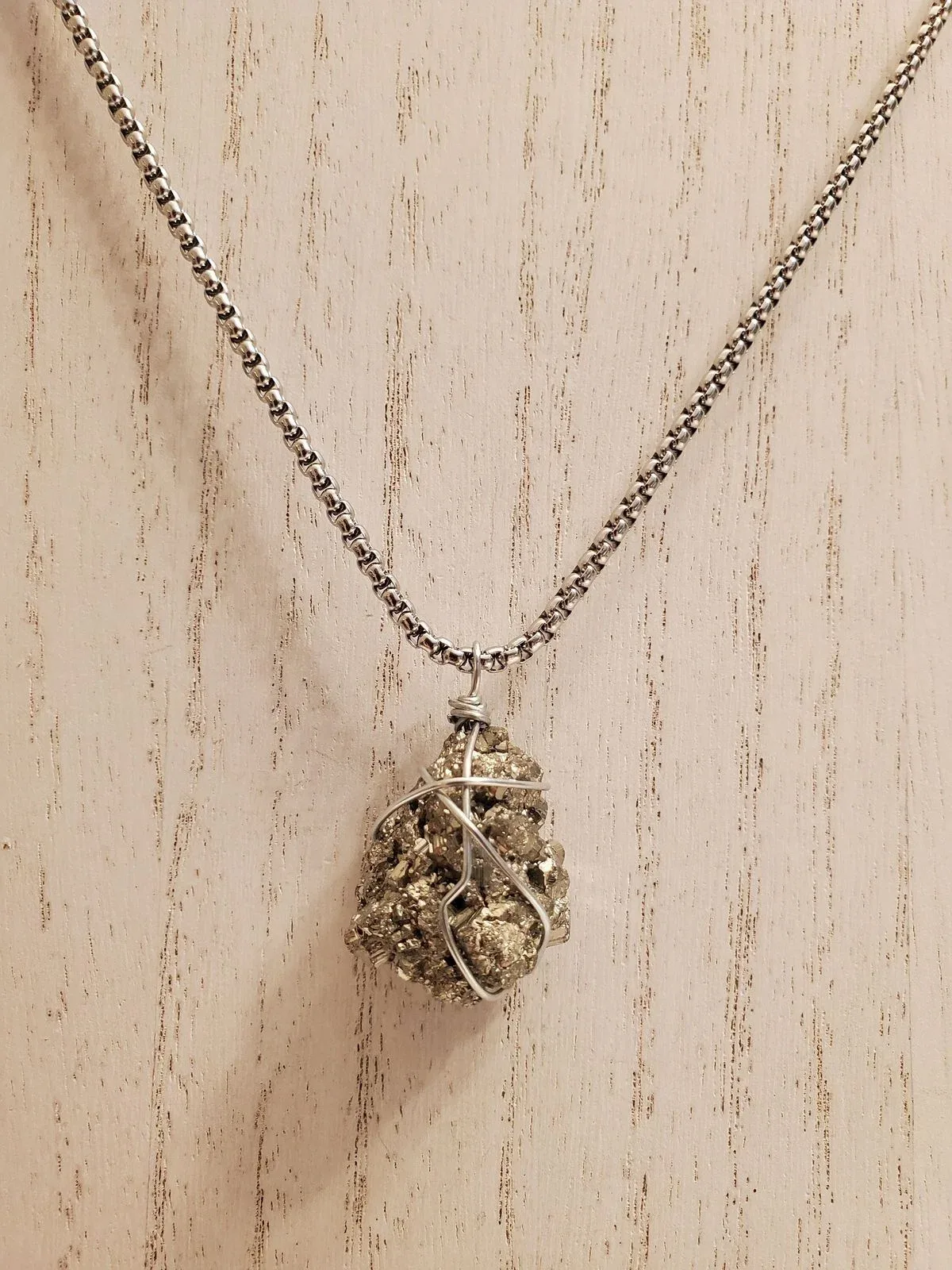
Necklace
A Pyrite necklace keeps the stone close on busy days. It can support a calm, capable tone, especially when speaking up, presenting, or taking the lead. It also suits times when confidence needs to feel private and steady, not performative, just clear, grounded, and consistent.Forms
Even with the same mineral, form shifts the impression. Some styles feel structured and directional, while others read as rounded, steady, and contained.
Rough
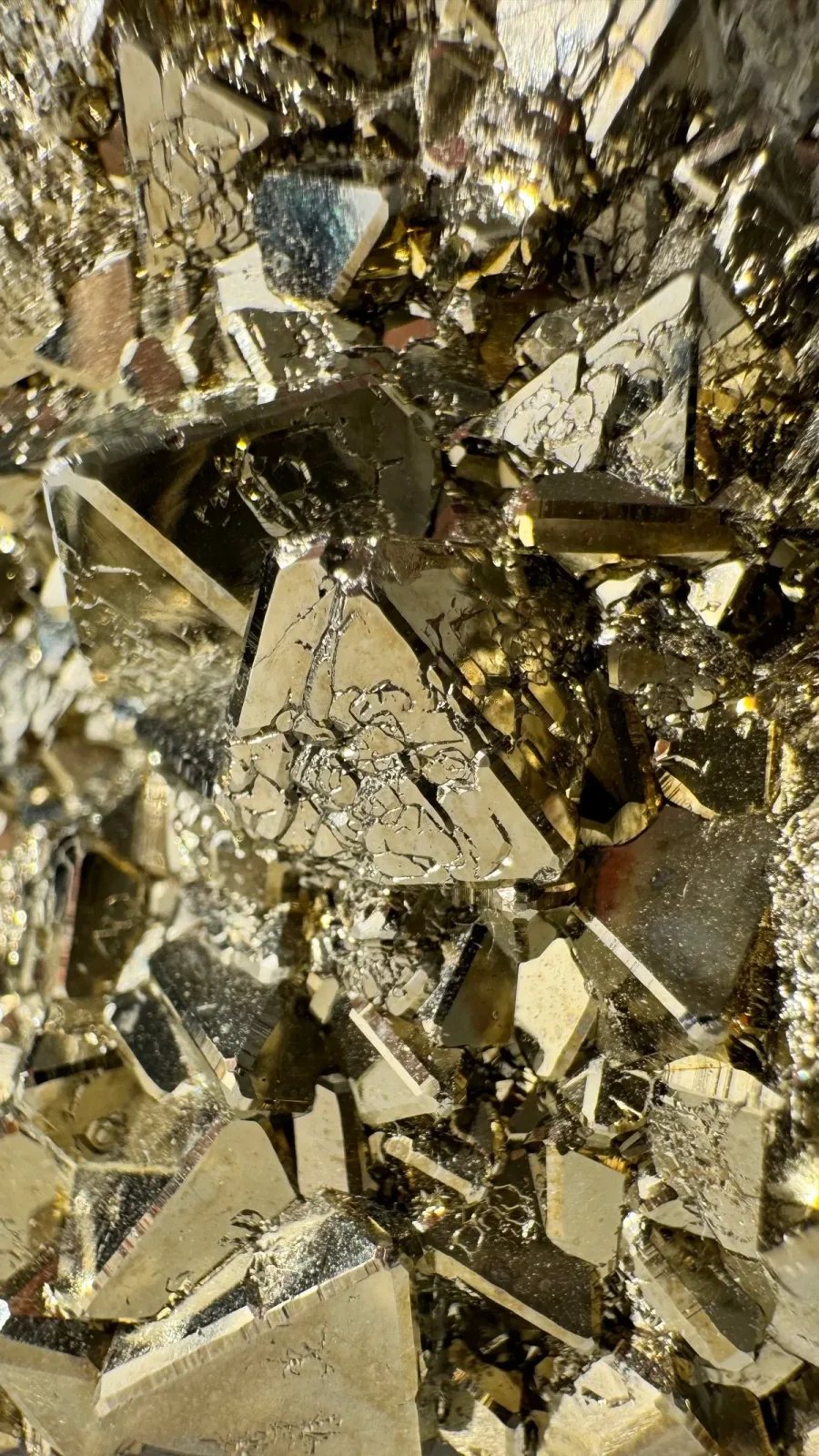
Rough Pyrite feels blunt and straight to the point. The natural edges and texture give it a tougher, more resilient feel, like a clear signal to cut distraction and get on with what matters. It tends to read as bold, grounded drive.
Point / Tower
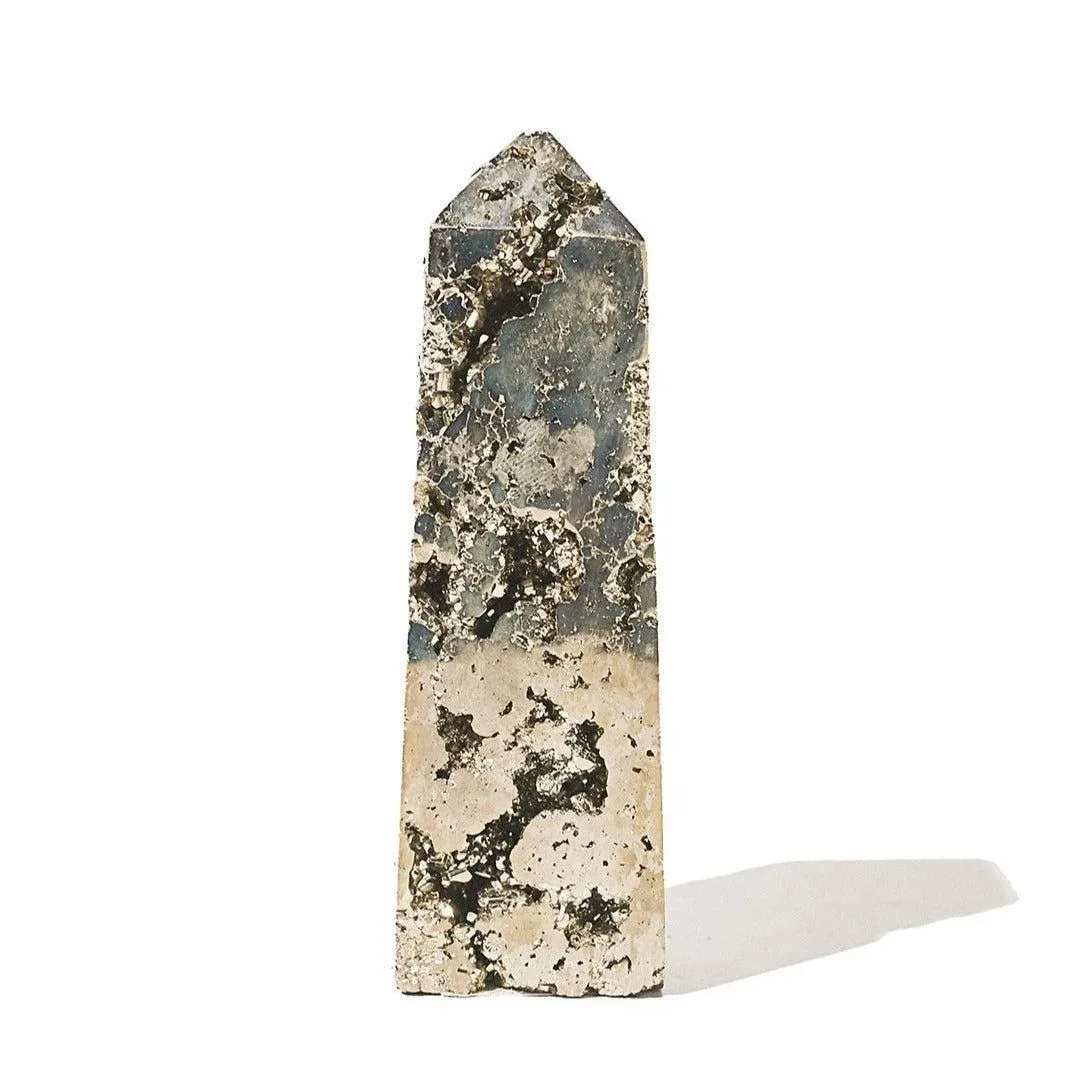
A Pyrite point or tower feels focused and goal-led. The lines pull attention forward, like a plan with a clear headline and a next step underneath it. This form often reads as firmer will and sharper focus, with less patience for detours.
Sphere
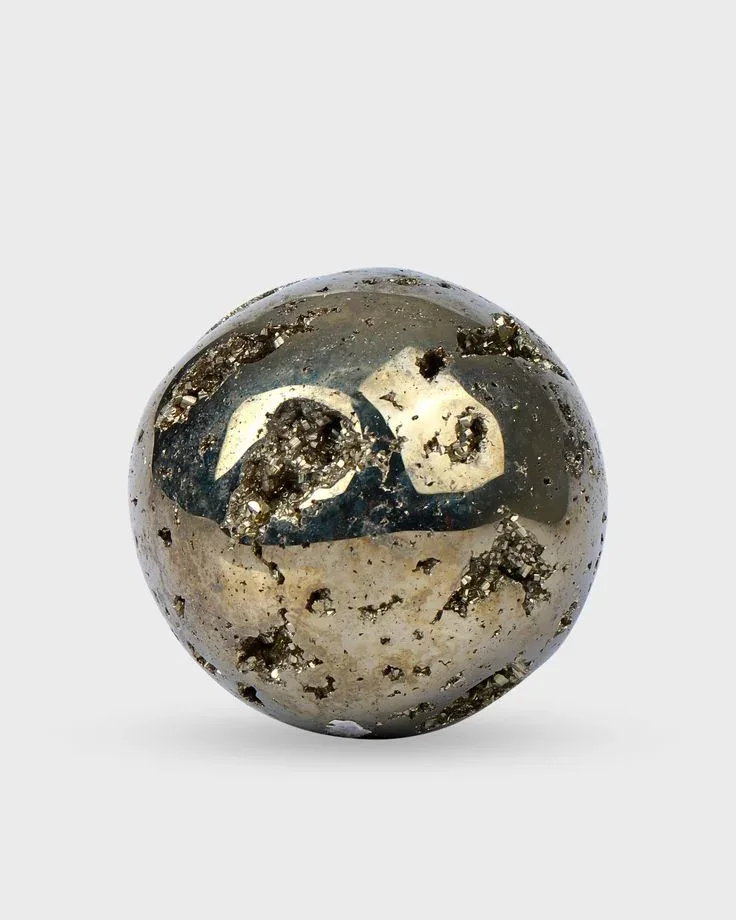
A Pyrite sphere feels even and contained. It reads like steady confidence that does not spike or crash, more like keeping a consistent pace. The rounded shape can soften Pyrite’s intensity, giving it a calmer, more composed presence.
Palm Stone
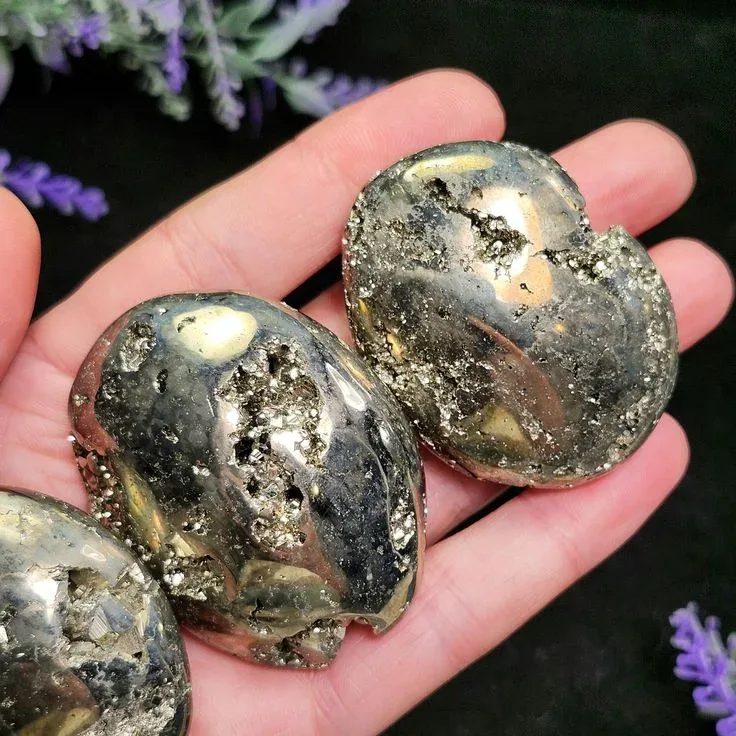
A Pyrite palm stone feels practical and reassuring. Its smooth finish reads as quiet competence, less about display and more about being useful. This form often carries a simple "keep going" tone, steady and settled rather than intense.
Tumble Stone
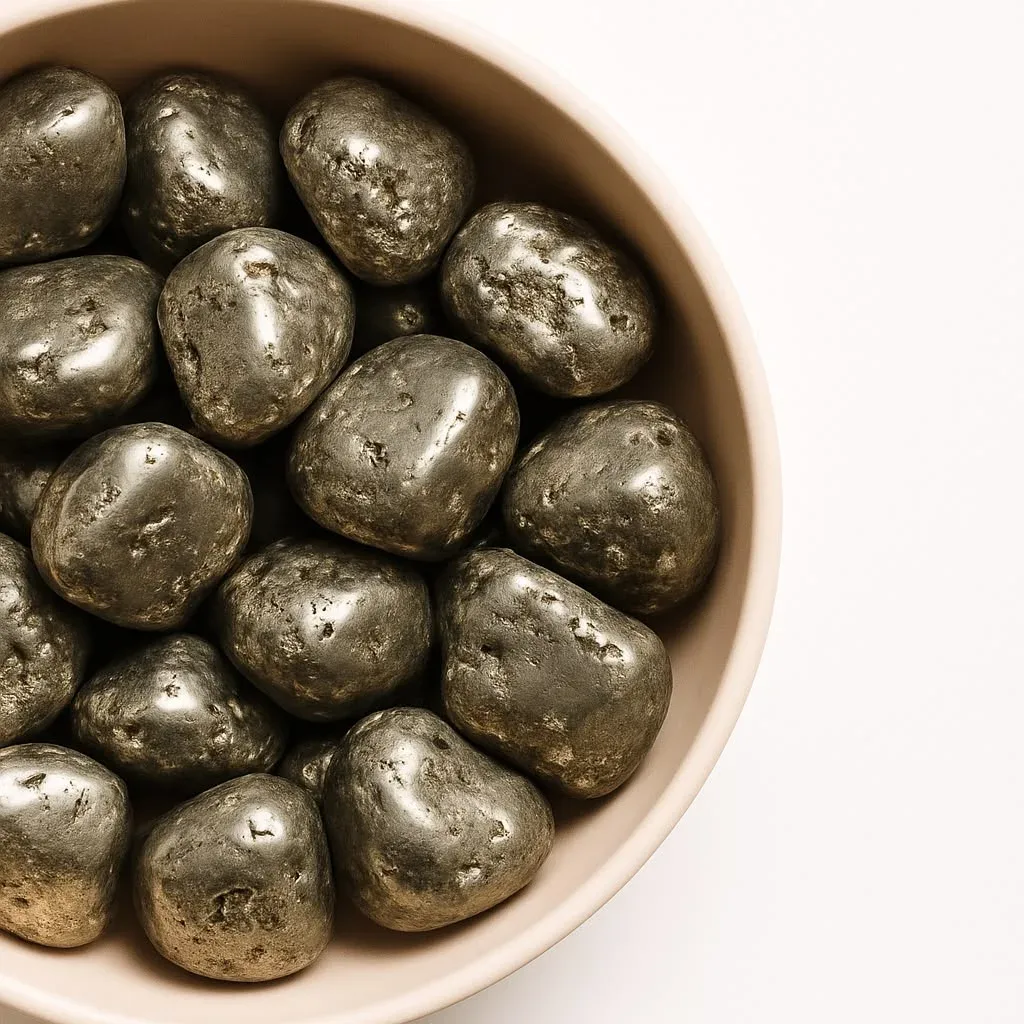
A tumbled Pyrite piece feels simple and approachable. It reads as everyday focus, small but consistent, like keeping priorities straight and returning to them when things drift. The polished edges can make the overall feel more adaptable and easygoing.
Figure
A Pyrite figure adds personality and a clear theme. Depending on the carving, it can read like discipline, leadership, or a chosen goal given a shape. This form often feels more personal, like a reminder linked to one specific aim.
Heart
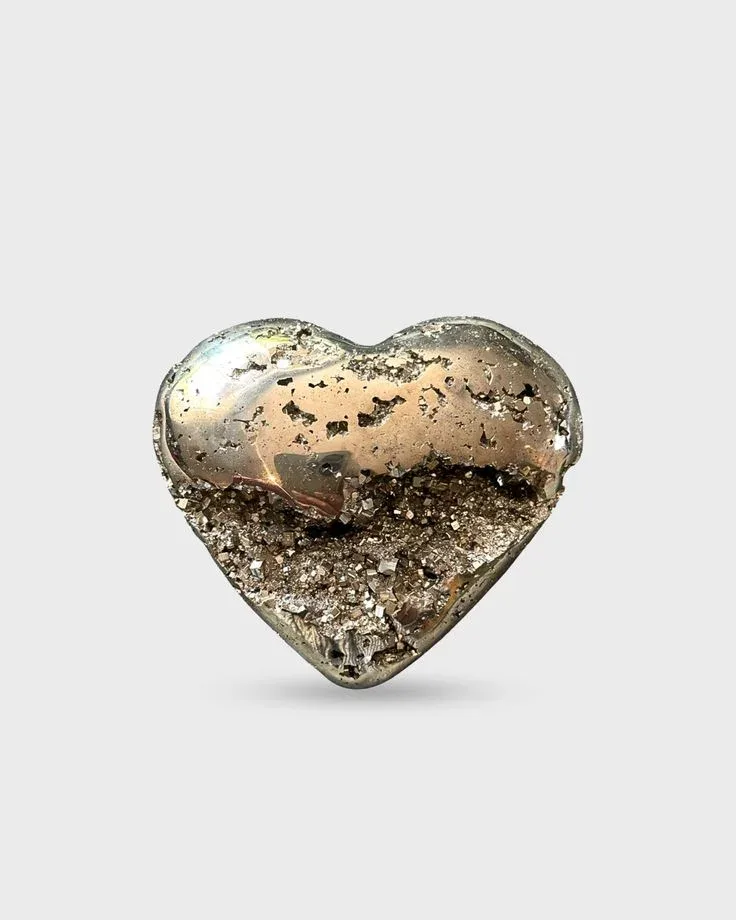
A Pyrite heart blends warmth with resolve. It reads as self-respect with a softer edge, boundaries that stay kind and clear. This form can make Pyrite feel more human and supportive, with courage that stays steady instead of sharp.
Cleansing & Charging
Pyrite is best kept dry and handled with care. If it needs a reset, use gentle methods and avoid soaking or saltwater, which can damage sulphides. Keep the process simple and consistent, especially after stressful days or heavy use.
How to cleanse Pyrite
- Use smoke cleansing briefly, then air it out.
- Place it near sound, like a bell or singing bowl, for a short reset.
- Use a dry, soft cloth to wipe away dust and fingerprints.
- Avoid water, salt, and harsh cleaners to protect the surface.
How to charge Pyrite
- Leave it in morning sunlight for a short time, then move it out of strong heat.
- Place it on a clear quartz cluster to refresh the feel.
- Set it beside a written goal to link it with steady effort.
Where to Use
Think of Pyrite as a reminder to stay organized and act on what matters. It can help keep attention on tasks, reduce distraction, and support confident decision-making in everyday spaces.
Office / study
Use Pyrite here as a cue to start, not procrastinate. It suits planning, revision, and paperwork, especially when motivation dips. Pair it with a clear to-do list so the space stays practical and not over-stimulating.
Workspace
In a workspace, Pyrite can support steady output and sensible pacing. It fits well with project work, making, or problem-solving, where small decisions add up. Let it remind the mind to finish one step before starting another.
Entryway
An entryway is about transitions. Pyrite can help mark a clean switch between outside noise and home focus. Use it as a prompt to drop distractions at the door, check keys or plans, and move into the next part of the day with intent.
Living room
In a living room, Pyrite can support confident conversation and relaxed structure. It suits evenings when plans are being made, budgets discussed, or goals shared. Keep the tone light, it is there to help keep things clear, not intense.
Science
Physical properties
- Mineral class
- Pyrite
- Color
- Pale brass-yellow to golden
- Hardness
- 6 - 6.5
- Density
- ~5.0 g/cm3
- Durability
- Moderate
- Thermal stability
- Moderate
Optical properties
- Transparency
- Opaque
- Lustre
- Metallic
- Refraction index
- N/A (opaque)
Chemical composition
- Class
- Sulfide
- Formula
- FeS2
- Group
- Pyrite group
- Magnetic
- Non-magnetic to weakly magnetic
Formation
Pyrite forms where iron and sulphur meet in the right conditions, often at low to moderate temperatures. Hydrothermal fluids are a common route. They move through cracks and faults, then cool and drop pyrite into veins and small pockets. Quartz and calcite often turn up in the same spaces, along with other sulphide minerals. Sometimes the crystals come out sharp and bright.
It also forms in sedimentary rocks. In oxygen-poor muds, sulphur made during early burial reacts with iron and builds pyrite as nodules or tight clusters of tiny grains. Metamorphism can rework older pyrite later on. It may recrystallise and gather into new textures in altered rock. Cubes and pyritohedra are common, but pyrite can also be massive and granular through the host.
Locations
- Spain
- Peru
- China
- United States
- Russia
- Italy
History
Early written descriptions of pyrite
c. 300 BCE
Ancient Greek writers described a stone that could strike sparks when hit with steel. This is often read as pyrite and similar sulphide minerals, but early texts do not always separate lookalike materials clearly.
Pyrite noted in Roman natural history
1st century CE
Roman-era natural histories mention spark-making stones used with metal to start fires. Later translators often link these passages to pyrite, but the terms used at the time can be broad and may include other minerals.
Fire-starting and early practical use in Europe
16th, 17th centuries
Before matches were widespread, spark-producing minerals were part of fire-lighting kits in parts of Europe. Pyrite is one material known to work well for this, even if surviving records do not always name the exact mineral.
Adoption of the name "pyrite" in mineralogy
18th century
As mineral classification became more standardized in Europe, "pyrite" came into regular scientific use for iron sulphide (FeS2). The name points to its spark-making link, not its color.
Industrial interest as a sulphur source
19th century
Pyrite became an important industrial mineral in some regions as a source of sulphur for making sulphuric acid. The scale and timing varied by country, depending on local deposits and other sulphur sources.
Collecting and decorative use of cubic crystals
20th century
Well-formed pyrite cubes and clusters became widely collected and sold as mineral specimens. Clean pyrite shapes suited display, and later turned up in decorative objects and jewelry accents.
Modern pyrite culture associations
Late 20th, 21st century
In contemporary pyrite and wellness circles, pyrite is commonly linked with confidence, protection, and prosperity. These are modern cultural meanings, and practices vary by community.
Got questions?
We've got answers!
FAQ's
What is Pyrite used for?
+×
Pyrite is often used as a practical support stone for confidence, focus, and motivation. It suits times when a clear plan matters, like study, job goals, or sorting finances.
It is also used as a symbolic protection stone. People place it in an entryway or workspace as a reminder to keep boundaries, stay on track, and not take on other people’s stress.
Which zodiac signs are connected to Pyrite?
+×
Pyrite is most closely connected with Leo. It is often chosen for Leo themes like self-assurance, leadership, and showing up with a bit more courage.
It can still be used by anyone, but Leo is the main zodiac link for Pyrite.
What chakras does Pyrite activate?
+×
Pyrite is linked with the Solar Plexus chakra. It is commonly used to support willpower, confidence, and taking action on clear goals.
A simple way to work with it is to hold it during a short intention-setting moment, then move straight into one small, doable next step.
Can Pyrite help with stress and sleep?
+×
Pyrite is often used to steady the mind when stress shows up, especially when the stress is tied to work, performance, or feeling behind. It can be a reminder to pause, pick one priority, and take the next practical step.
For sleep, it is not usually the first choice because its vibe is often described as energizing. If it feels too stimulating at night, keep it in a different room and choose a calmer bedtime routine instead. Pyrite is not a treatment for anxiety or sleep problems, and ongoing issues are best discussed with a qualified professional.