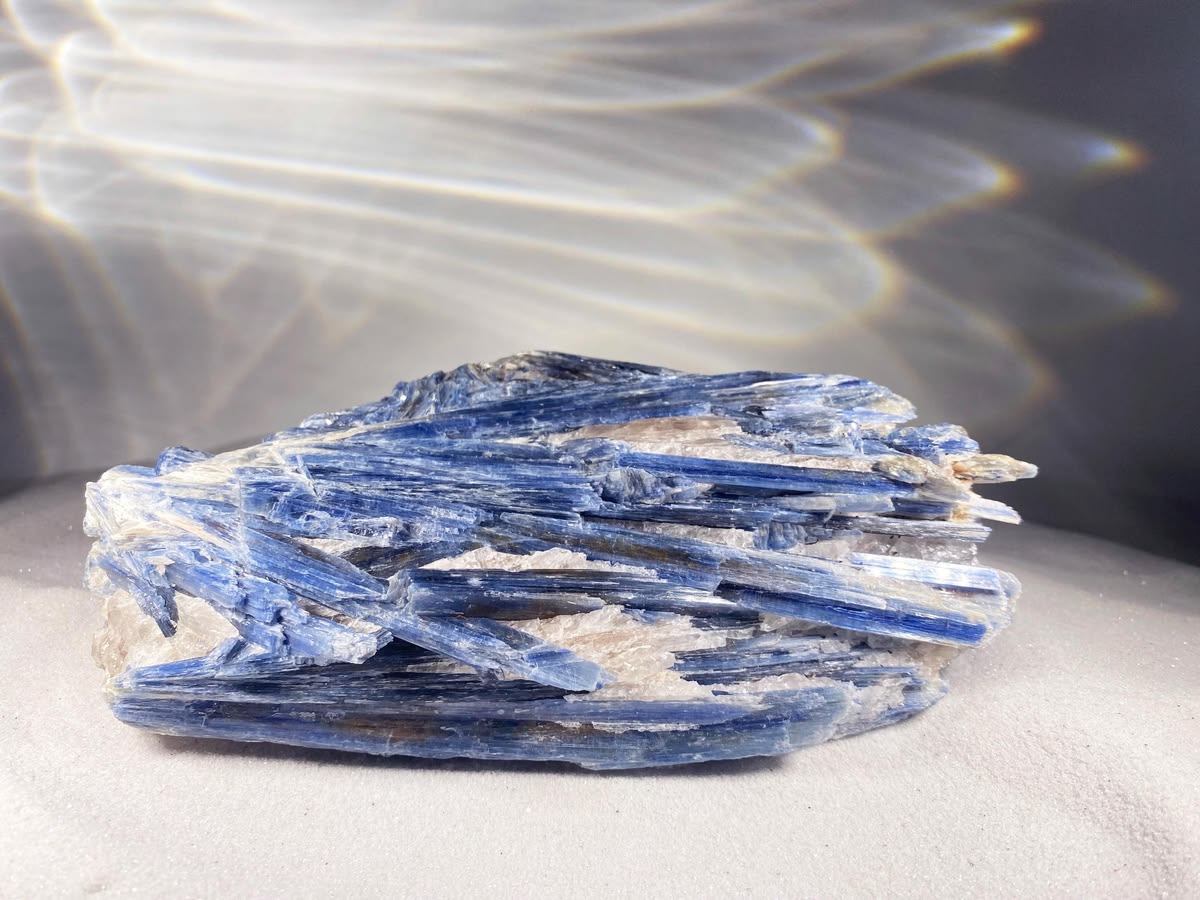
Blue Kyanite Crystal, Benefits and Meanings.
Blue Kyanite meaning centres on clear communication, mental clarity, and alignment between thought, feeling, and expression.
Metaphysical & Spiritual
Blue Kyanite works like a clean line through mental noise. It brings a crisp, arranging quality to the inner field, helping thoughts settle into order so speech, intuition, and decision-making can move in the same direction. It is often worked with when there is a need to say something plainly without losing sensitivity. The stone carries a disciplined kind of calm, one that keeps the voice from scattering and helps the mind stay with what is true. In spiritual practice, Blue Kyanite is valued for the way it holds alignment without force. It supports a person in noticing where energy has drifted, then bringing attention back to the present task, the present word, or the present boundary. Its presence is especially useful in quiet work, reflection, and any moment that asks for clean perception. Rather than pushing energy, it arranges it, making space for clearer listening, steadier expression, and a more direct line between inner knowing and outward action.

Planet

Mercury
Blue Kyanite works with Mercury through language, thought, and the movement of ideas. It sharpens the thread between listening and speaking, so communication feels more exact and less tangled.
Element
Air
Blue Kyanite carries Air energy in a focused, clarifying way. It helps thoughts move without drifting, and gives conversation a cleaner rhythm.


Crystal Pairings
Blue Kyanite pairings work best when the aim is to keep thought, speech, and intuition moving in the same direction. It brings a clean, ordered quality to spiritual work, while the right companion stone can soften the edges, deepen feeling, or add a steadier emotional base beneath its clear line.
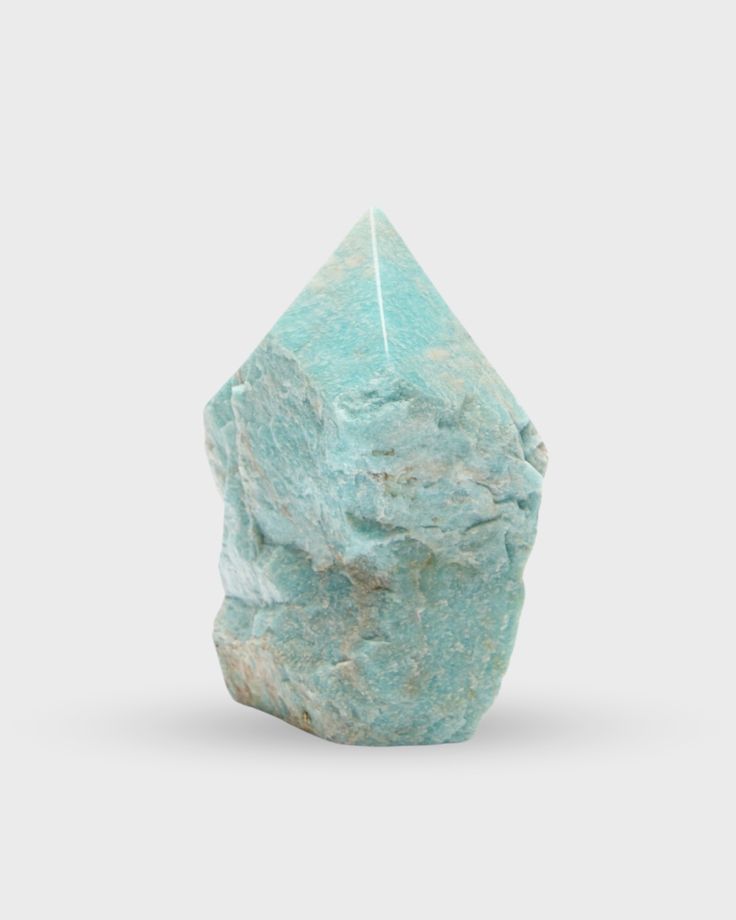
Amazonite
Amazonite and Blue Kyanite create a calm current for honest speech, with Amazonite easing the heart into a more open, less guarded state while Blue Kyanite keeps the message clear and direct. Together they support communication that feels truthful without becoming sharp.
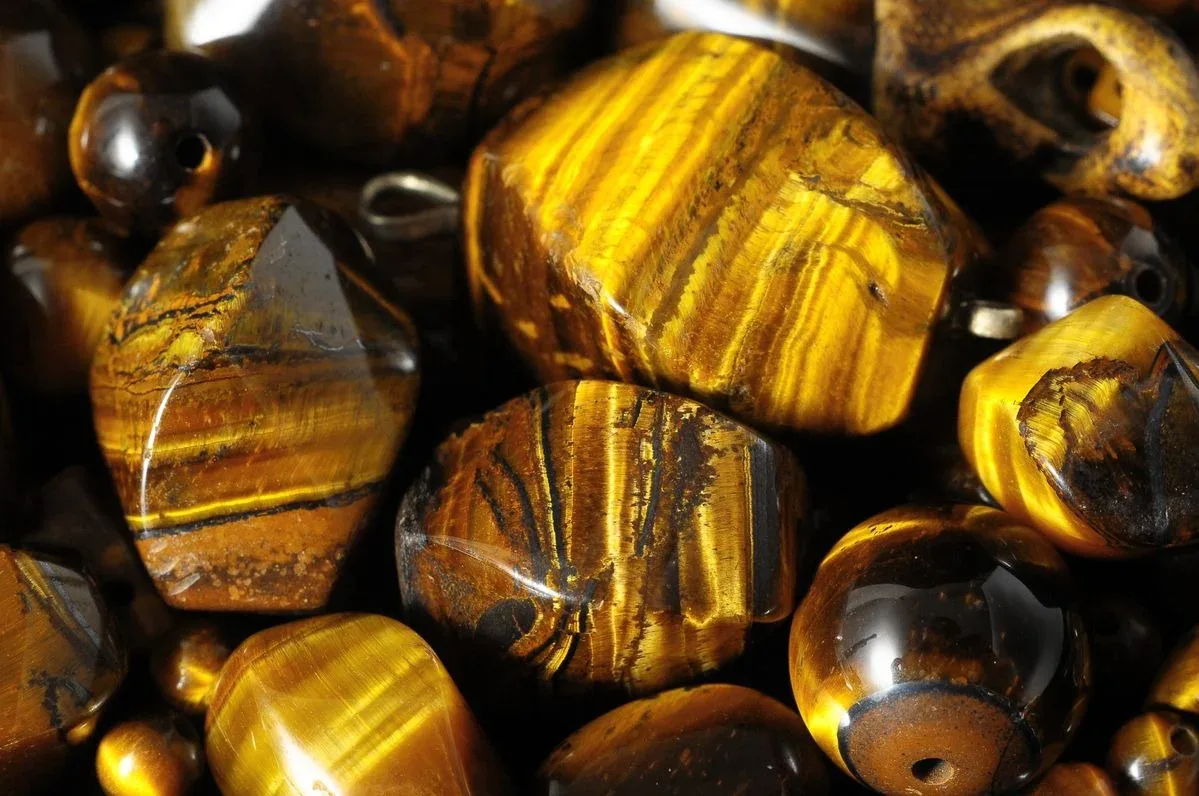
Blue Tiger's Eye
Blue Tiger's Eye adds focus and watchfulness beside Blue Kyanite, helping thoughts stay disciplined when there is pressure to decide, speak, or act quickly. The pairing works well for boundaries, measured judgement, and staying mentally present without scattering.
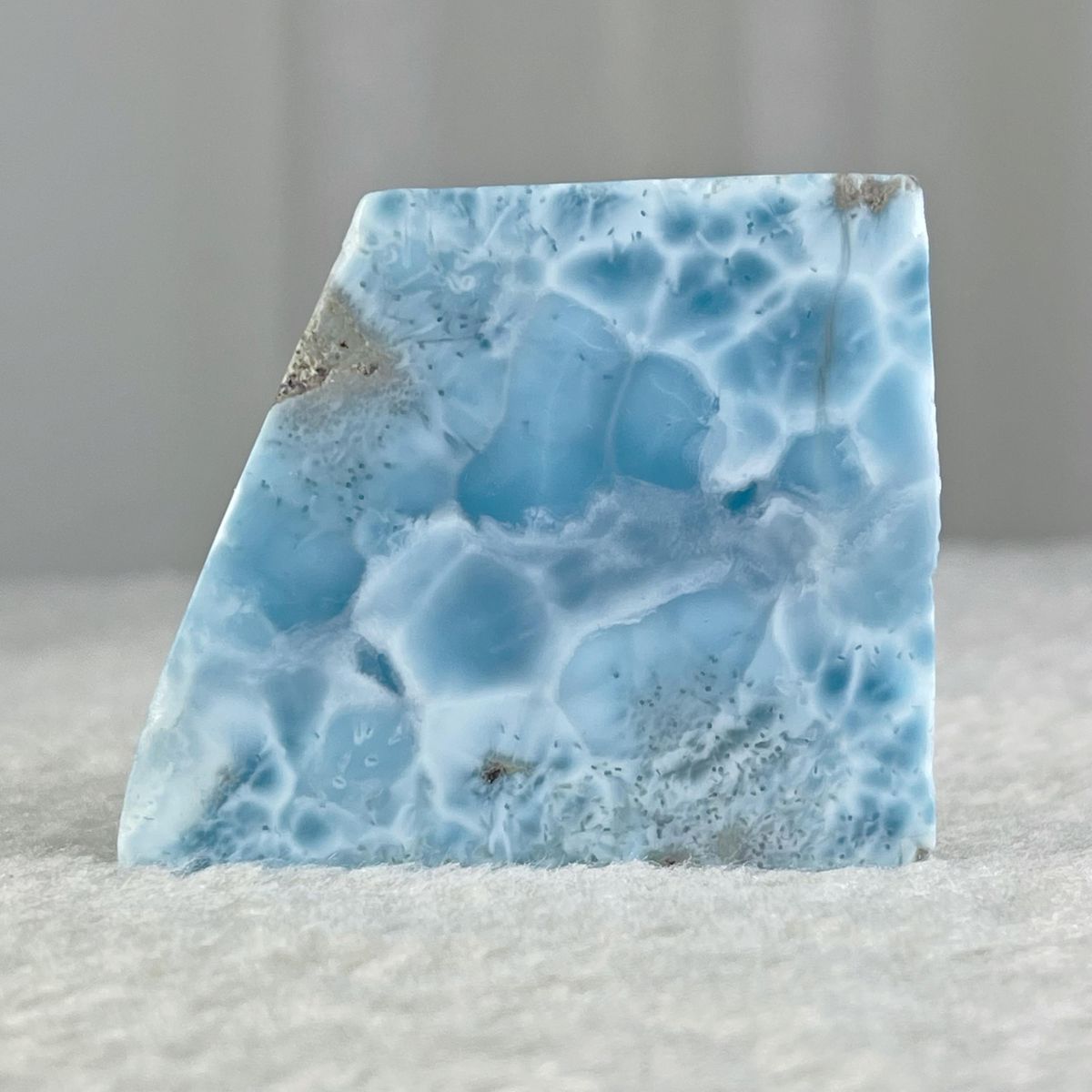
Larimar
Larimar softens Blue Kyanite's more exacting edge and brings a gentler emotional tide into the throat and heart. Used together, they support calm self-expression that feels compassionate, receptive, and less likely to tighten under stress.
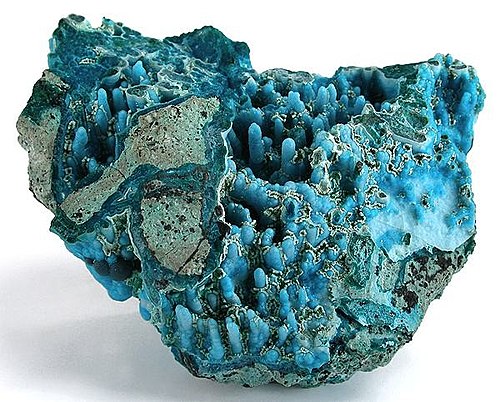
Chrysocolla
Chrysocolla deepens the emotional honesty of Blue Kyanite, encouraging words that come from lived feeling rather than from habit or defence. This pairing is often chosen when communication needs tenderness, patience, and a more heart-led rhythm.
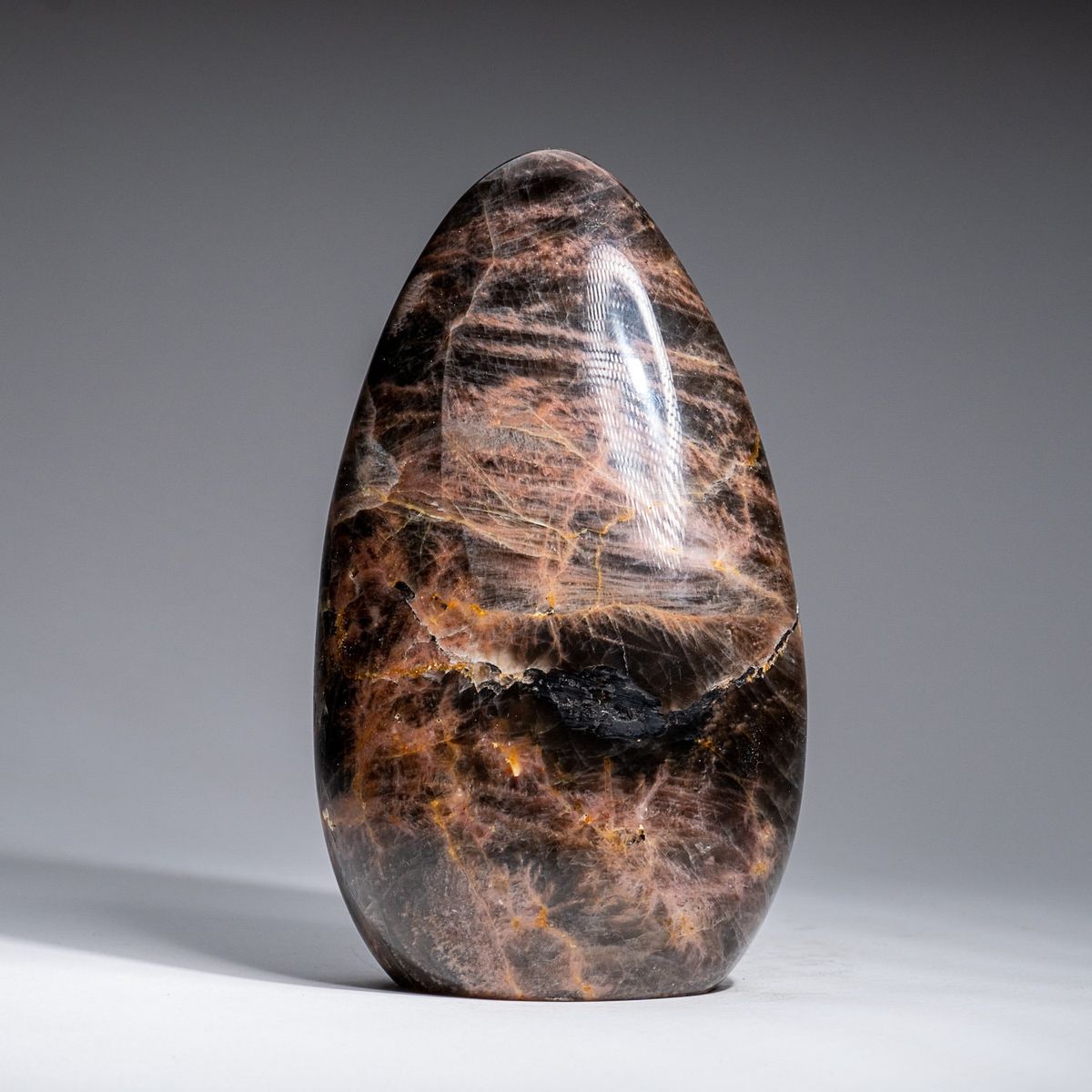
Black Moonstone
Black Moonstone grounds Blue Kyanite's airy clarity so insight does not drift away from the body or daily life. The combination supports quiet intuition, inner listening, and a steadier response when emotions are shifting beneath the surface.
Healing
Blue Kyanite is often reached for when thoughts feel crowded and the body is carrying more than it can easily name. It brings a cool, organising presence to moments of hesitation, helping the inner field settle enough for truth to be heard without force.
It is also chosen when a conversation, decision, or change needs a steadier centre. Blue Kyanite keeps attention on what is real in the moment, so feelings, intuition, and words can move with less strain and less overthinking.
Affirmations
Hold Blue Kyanite near the Throat or Third Eye area and choose an affirmation that matches the kind of clarity needed today.
Say it slowly a few times, then let the words shape one small action, such as speaking plainly, pausing before replying, or writing the next step down.
- I speak with calm truth
- I trust what I know
- I let my words stay clear
- I pause before I respond
- I honour what feels aligned
Intention Setting
Blue Kyanite can help set intentions that feel precise, calm, and inwardly honest.
It is useful when the aim is not to push harder, but to bring thought, feeling, and expression into the same direction.
- I choose clear and steady speech
- I trust my inner guidance
- I release confusion with ease
- I meet change with balance
- I act from quiet alignment
Manifesting
Blue Kyanite supports focused intention when the goal involves communication, discernment, or a cleaner relationship with personal truth.
It helps keep the mind from scattering into second-guessing, so plans can be held with more consistency and less noise.
- I move with clear purpose
- I welcome honest conversations
- I follow through with calm focus
- I hear my intuition clearly
- I stay aligned with what matters
Jewellery
Blue Kyanite jewellery places the reminder where it can meet the mind, the hands, or the heart before words are spoken. Each placement carries a slightly different tone, helping the wearer stay deliberate in conversation, decision-making, and self-talk.
General benefits: Wearing Blue Kyanite jewellery keeps its clear, aligning presence close through the day. It is a steady reminder to speak with care, listen properly, and return to centre before reacting. This is especially helpful on busy days, during difficult talks, or whenever change asks for a calmer inner pace.
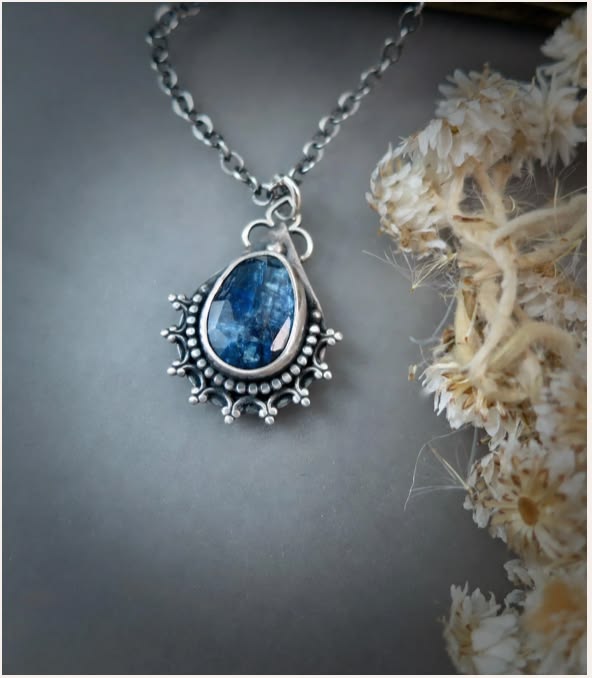
Necklace
A Blue Kyanite necklace rests close to the throat and can support clearer speech when feelings are close to the surface. It is a useful companion for honest conversations, presentations, or any moment when words need to land cleanly. Worn near the chest, it can also remind the wearer to breathe before answering. That pause often changes the whole tone of a difficult exchange.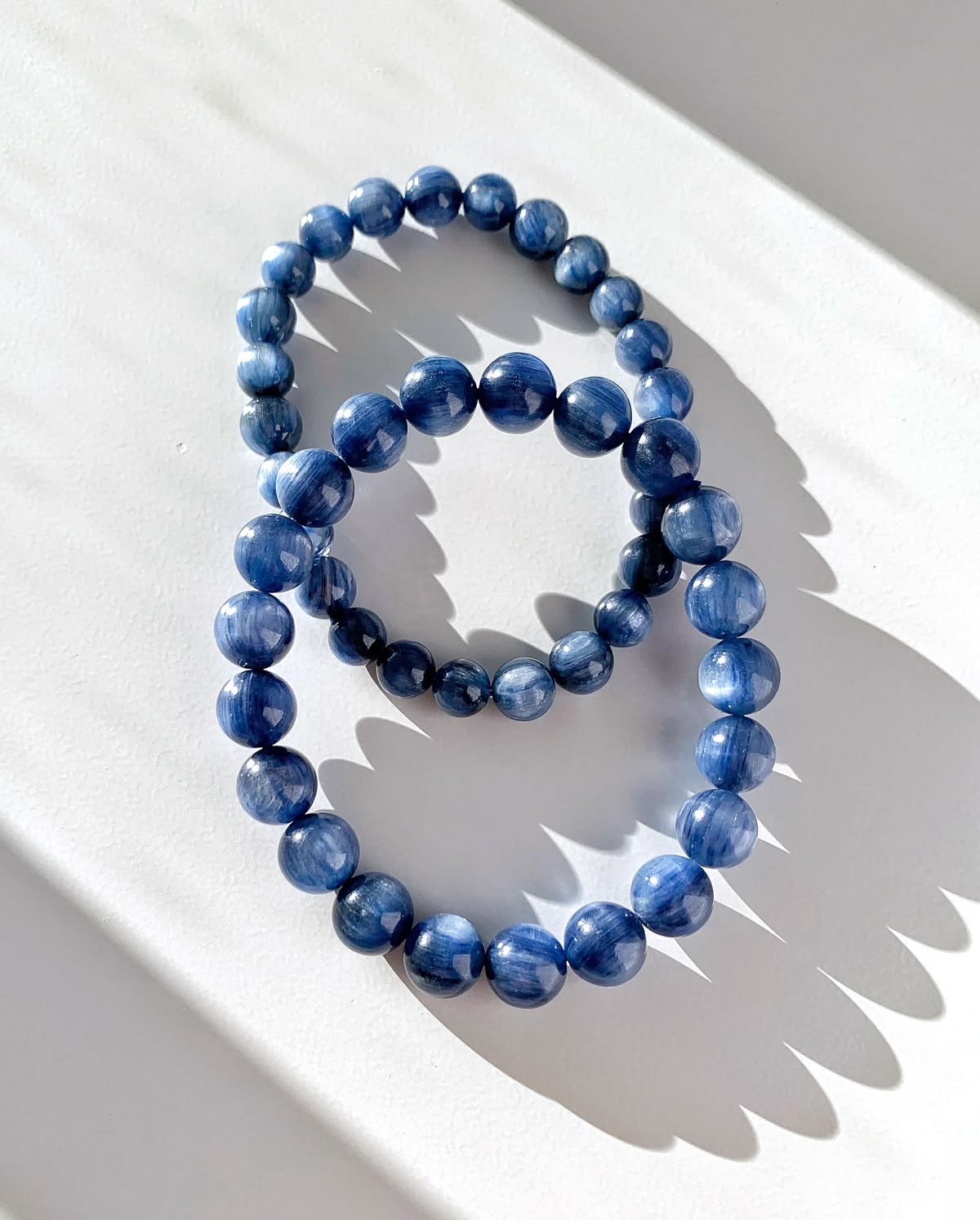
Bracelet
A Blue Kyanite bracelet brings the stone into the rhythm of the hands, where choices and habits are made. It can help keep actions measured when the day feels full or the mind wants to rush ahead. Each glance at the wrist becomes a small return to centre. That can be enough to soften reactivity and keep the next step aligned with intention.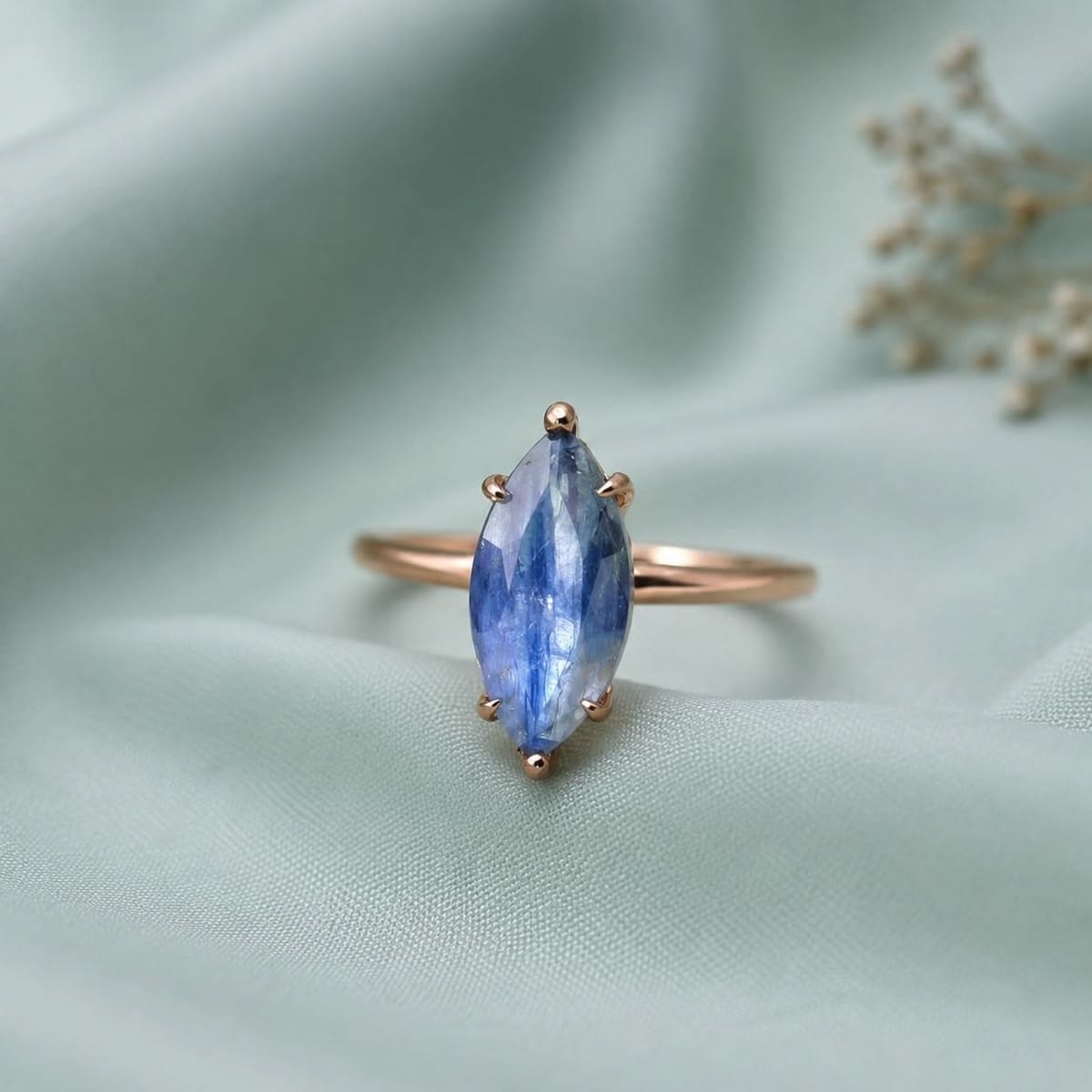
Ring
A Blue Kyanite ring stays in view during writing, speaking, and everyday decisions. It works well when self-talk needs to be kinder and more exact, rather than tangled or harsh. The ring can act as a quiet check-in before replying, signing, or committing. In that way, it supports a more conscious relationship with choice.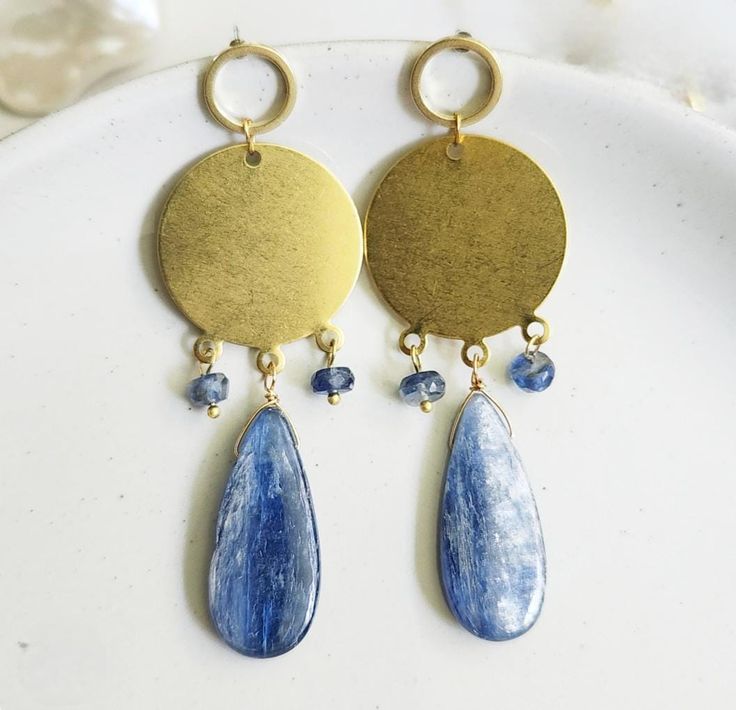
Earrings
Blue Kyanite earrings sit close to the head and can help keep thought clear during long conversations or mentally busy days. They are often chosen when listening matters as much as speaking. This placement can feel especially supportive in meetings, calls, or social settings where the mind needs to stay open and responsive. It helps the wearer stay present without absorbing every passing mood.Forms
Different Blue Kyanite forms shift how its energy is held, from direct and focused to soft and quietly balancing. Choose the form that matches the kind of inner order wanted, whether that is a sharper line of intention or a gentler sense of calm.
Rough
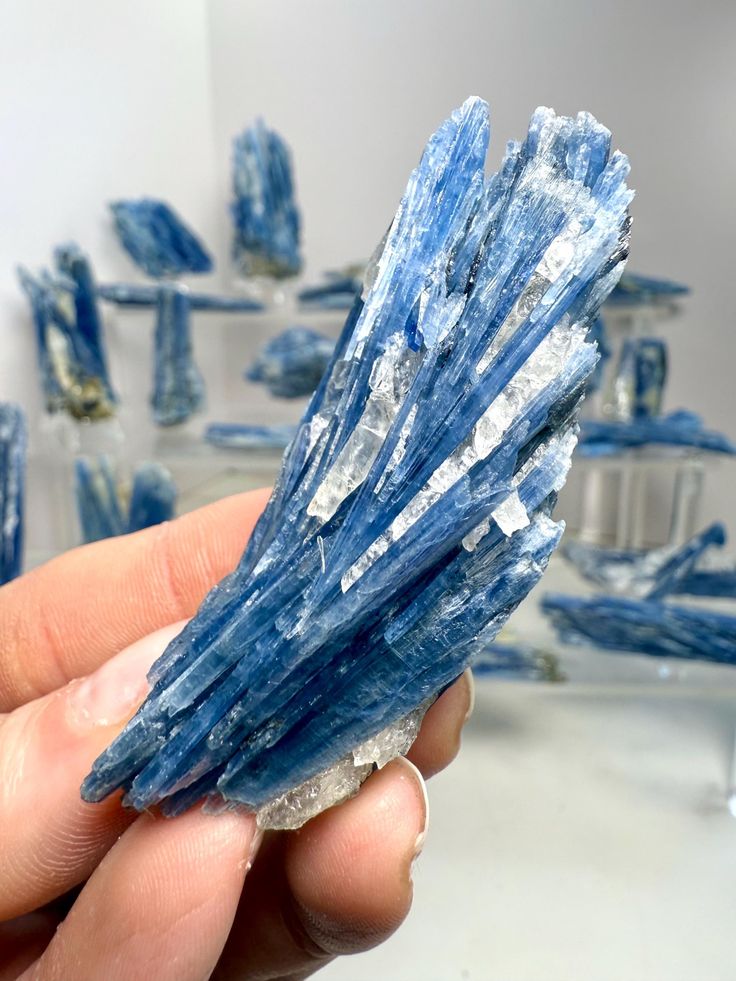
Rough Blue Kyanite feels immediate and unpolished, with a straightforward spiritual presence. It is useful for simple clarity and for keeping intention honest.
Point / Tower
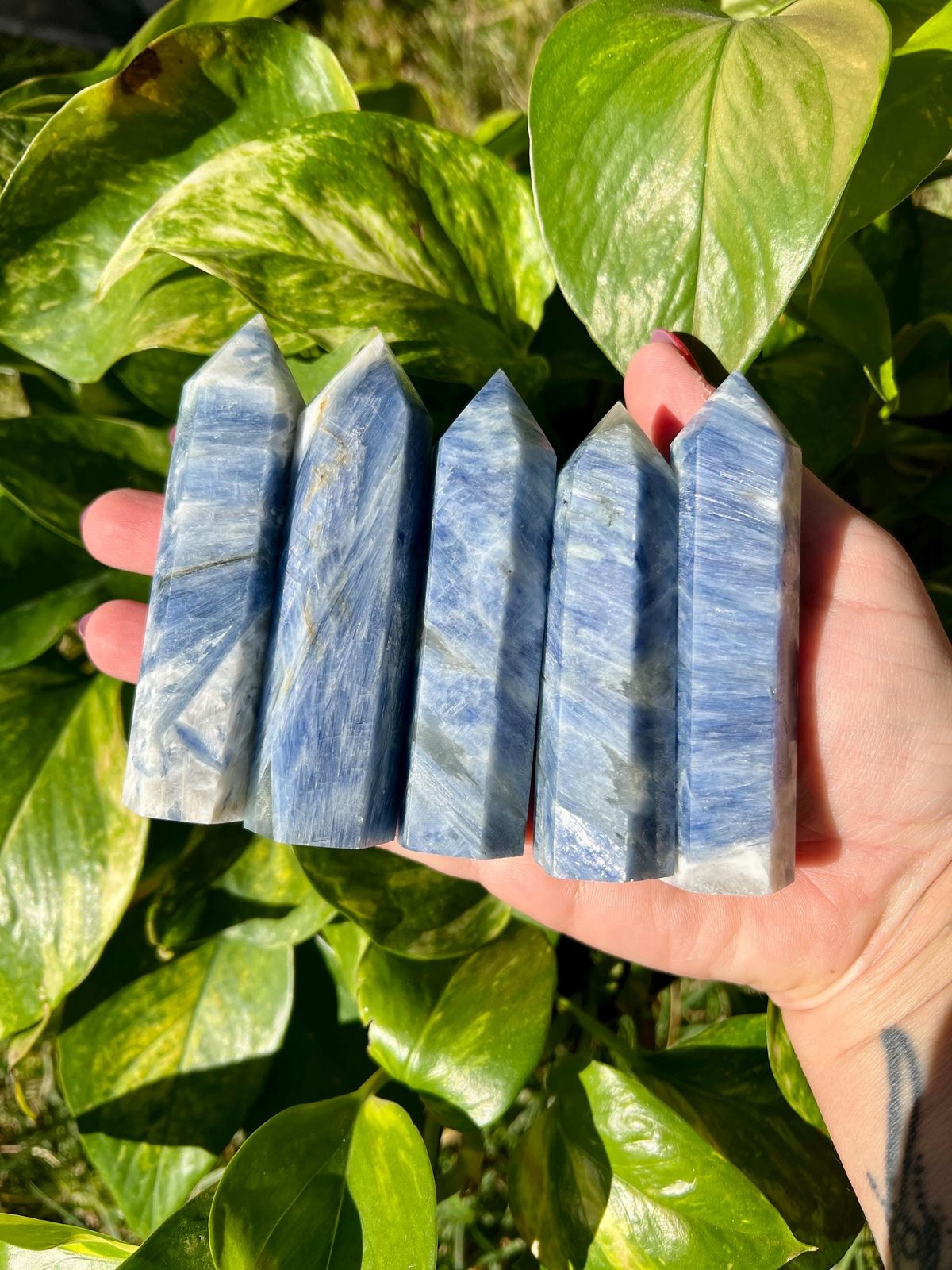
A point or tower gives Blue Kyanite a more directed feel. It helps gather scattered attention and send it towards one clear purpose.
Sphere
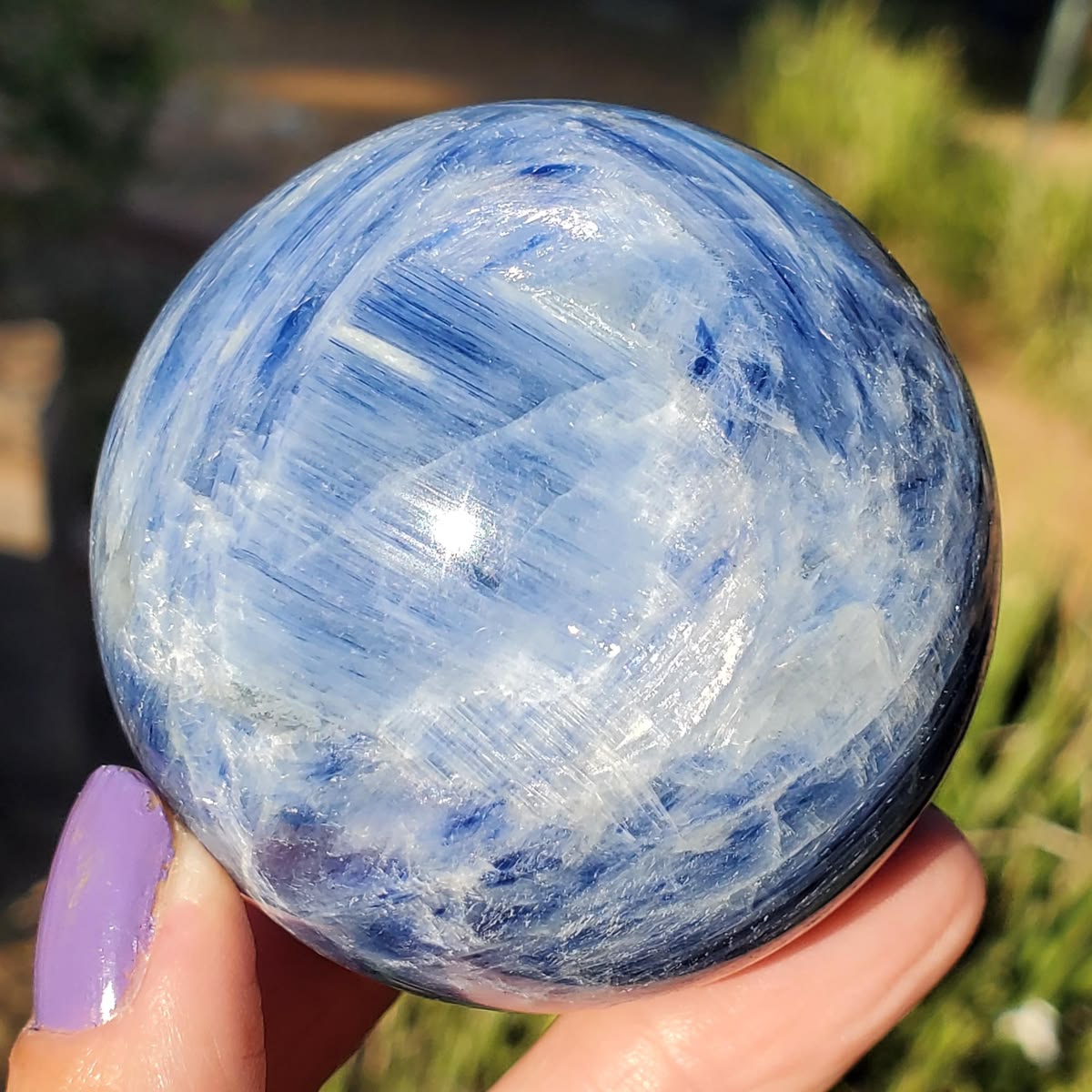
A sphere softens Blue Kyanite into a more even, surrounding field. It can help balance thought and feeling without pushing either one too hard.
Palm Stone
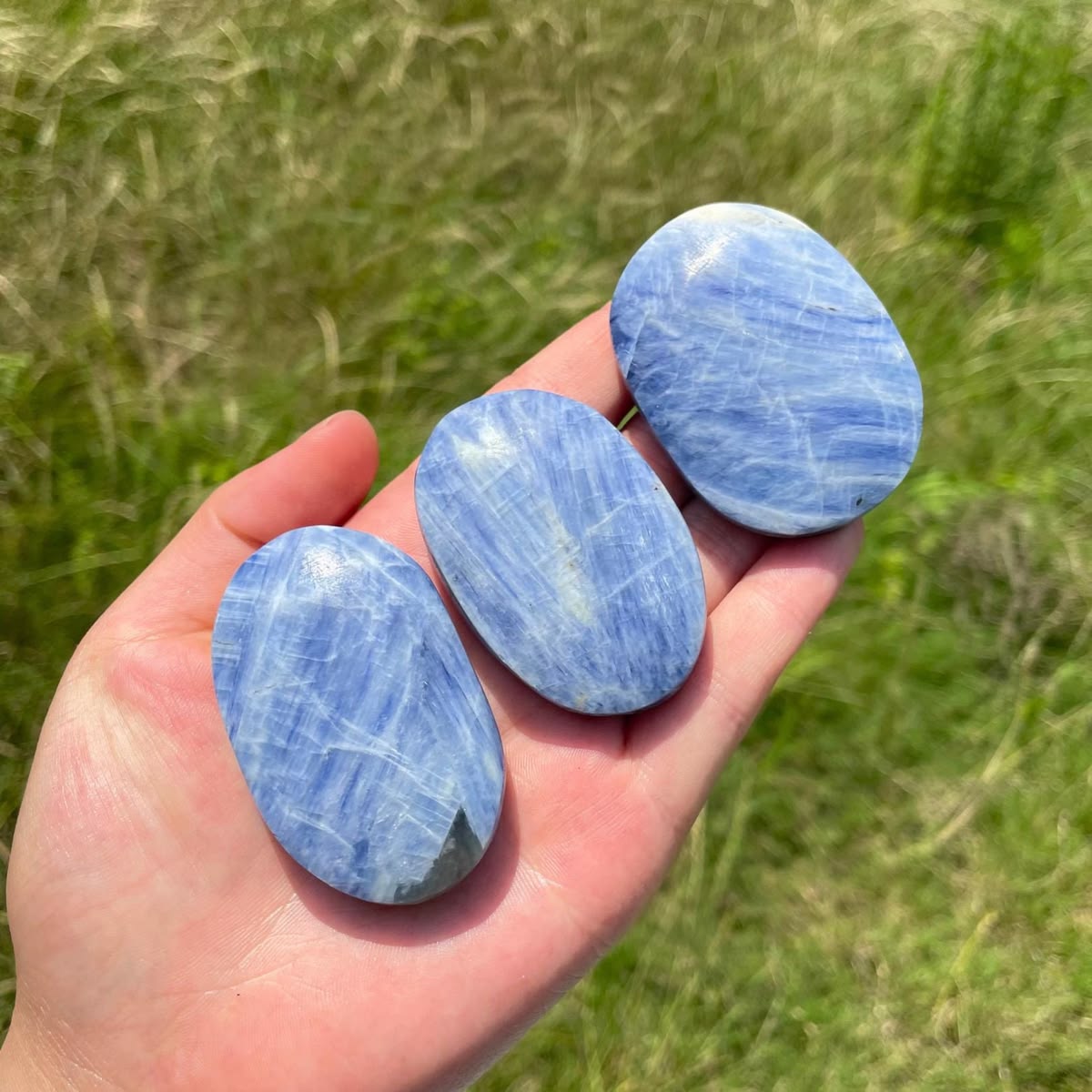
A palm stone offers a contained way to work with Blue Kyanite in quiet moments. It is well suited to short resets before speaking or deciding.
Tumble Stone
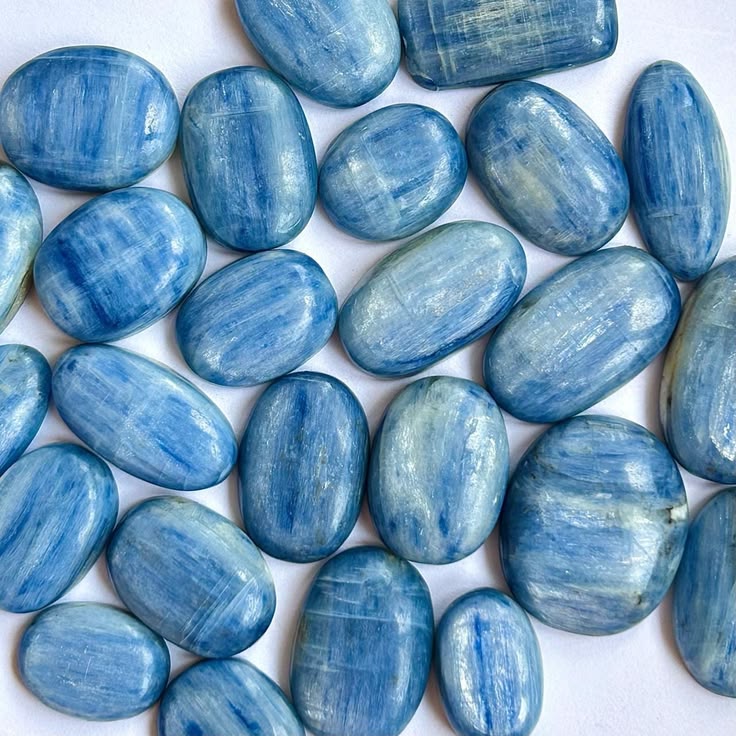
A tumble stone carries Blue Kyanite in a small, portable form for everyday use. It is easy to hold when a quick return to calm is needed.
Heart
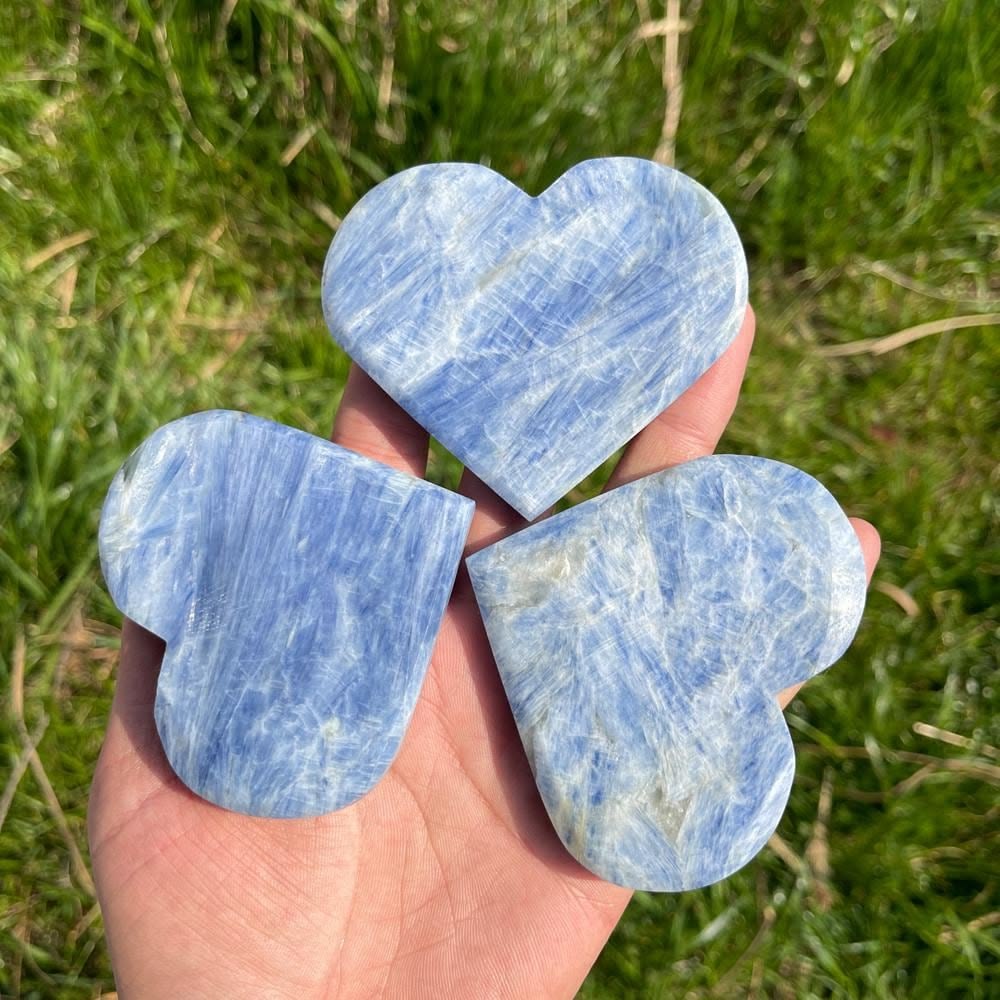
A heart form brings a softer emotional tone to Blue Kyanite. It can support honest speech that still stays kind and self-respecting.
Cleansing & Charging
Blue Kyanite benefits from regular cleansing after heavy conversations, intense thinking, or days when it has been handled often. Because the mineral is brittle and has perfect cleavage, it is best treated gently and kept away from soaking, salt water, steam, and rough cleaning methods.
How to cleanse Blue Kyanite
- Brush Blue Kyanite lightly with a soft dry brush to remove dust without stressing the blade.
- Pass it through gentle smoke from incense or sage for a brief cleanse when water is not appropriate.
- Set it beside selenite or clear quartz for a quiet reset without direct handling.
How to charge Blue Kyanite
- Place Blue Kyanite in brief indirect morning light, then bring it back indoors before the light grows strong.
- Leave it on a bed of selenite or near clear quartz overnight to refresh its feel gently.
- Rest it in moonlight in a dry location with a clear intention for calm speech and inner alignment.
Where to Use
Place Blue Kyanite where its calm, clarifying presence can meet everyday thought before it turns into speech or action.
Personal workspace
On a desk or work surface, Blue Kyanite can support clear thinking before emails, calls, or planning sessions. It helps keep the mind from scattering and can make priorities feel easier to sort. A small piece nearby can act as a quiet cue to answer with care rather than speed.
Reading area
In a reading area, Blue Kyanite brings a thoughtful, attentive tone that suits reflection and study. It can help the mind stay receptive without becoming overloaded, especially when information needs to be absorbed and then set in order. Keep it close when journalling, reviewing notes, or sitting with a difficult truth.
Creative studio
In a creative studio, Blue Kyanite supports expression that feels clean, intentional, and true to the idea underneath the work. It can help when inspiration is present but needs shape, structure, or a calmer route into form. Many people use it here to keep creative choices aligned with inner direction.
Front door
Near the front door, Blue Kyanite can serve as a threshold stone for leaving the house with clearer intention. It is a useful place for a final pause before stepping into conversations, errands, or crowded spaces. That small moment can help the day begin with more composure and less mental drag.
Science
Physical properties
- Mineral class
- Nesosilicate
- Color
- Pale blue to deep blue, blue-grey, blue-green, white, colourless, or unevenly zoned
- Hardness
- Approximately 4.5 - 5 parallel to the crystal length and 6.5 - 7 across it
- Density
- Approximately 3.53 - 3.67 g/cm3
- Durability
- Fair to low because of perfect cleavage, brittleness, and directional hardness
- Thermal stability
- Moderate
Optical properties
- Transparency
- Transparent to translucent
- Lustre
- Vitreous to pearly, especially on cleavage surfaces
- Refraction index
- Approximately 1.71 - 1.73
Chemical composition
- Class
- Aluminium silicate
- Formula
- Al2SiO5
- Group
- Kyanite species; polymorph of Andalusite and Sillimanite
- Magnetic
- Usually non-magnetic
Formation
Blue Kyanite is the blue colour variety of Kyanite, an aluminium silicate mineral in the Nesosilicate class. The colour name does not describe a separate mineral, and the species is known for its elongated, flattened blades with visible lengthwise striations. It commonly forms during regional metamorphism of aluminium-rich sedimentary rocks such as shale and clay-rich deposits, especially where pressure is relatively high.
Geologists use Blue Kyanite as an indicator of the pressure and temperature history of metamorphic rocks, since it is closely tied to mountain-building conditions. It often occurs in schist, gneiss, quartz-rich metamorphic rocks, and pegmatites that have interacted with aluminium-rich host rocks. Its blue colour is generally linked to iron-related electronic processes within the crystal structure, with titanium and iron oxidation state also influencing intensity and zoning.
Locations
- Jajarkot District, Nepal
- Minas Gerais, Brazil
- Ticino, Switzerland
- Himachal Pradesh, India
- North Carolina, United States
- Georgia, United States
- Kenya
- Tanzania
History
Kyanite formed during regional metamorphism
Ancient geological history
Blue Kyanite formed deep within mountain-building zones, where aluminium-rich sedimentary rocks were changed by heat and pressure over long periods. In schist, gneiss, and related metamorphic rocks, the mineral grew as bladed crystals that record the conditions of their formation. This geological setting is part of what makes Kyanite useful to geologists as a marker of metamorphic history.
Kyanite named for its blue colour
1789
In 1789, German geologist Abraham Gottlob Werner named the mineral from the Greek word kyanos, meaning dark blue. The name reflects the colour most strongly associated with the species, even though Kyanite can also appear in other shades. Blue Kyanite later became the colour variety most familiar in crystal collections and gem use.
Disthene used as an alternative mineral name
18th and 19th centuries
During the 18th and 19th centuries, the mineral was also known as Disthene, a name referring to its two strengths. This pointed to the unusual directional hardness of Kyanite, which scratches differently depending on the direction tested. The name captured a physical trait that set it apart from many other minerals studied at the time.
Relationship with Andalusite and Sillimanite established
19th century
Mineralogists in the 19th century recognised Kyanite, Andalusite, and Sillimanite as polymorphs. They share the same chemical composition, Al2SiO5, but form different crystal structures under different pressure and temperature conditions. This understanding helped place Kyanite more clearly within the broader study of metamorphic minerals.
Kyanite became an important refractory mineral
20th century
By the 20th century, Kyanite-rich rocks were being mined for industrial use because they could withstand high temperatures. The mineral found a place in ceramic, kiln, furnace, and foundry applications, where heat resistance mattered more than appearance. This practical role gave Kyanite a strong presence beyond the gem trade.
Nepalese gem-quality Kyanite gained recognition
Late 20th and early 21st centuries
In the late 20th and early 21st centuries, transparent blue Kyanite from Nepal gained recognition in the gem trade. Its strong colour drew attention, even though its cleavage and directional hardness make cutting difficult and require careful orientation. Nepalese material helped raise the profile of Blue Kyanite as a collector and jewellery stone.
Popular bladed mineral and jewellery stone
Present day
Today, Blue Kyanite is collected both as raw crystal blades and as cut stones for jewellery. Modern crystal traditions connect it with communication, clarity, intuition, and personal alignment, while mineral collectors value its striated blades and distinctive structure. Its presence now spans both spiritual practice and mineral appreciation.
Got questions?
We've got answers!
FAQ's
What is Blue Kyanite used for?
+×
Blue Kyanite is commonly chosen for communication, mental clarity, self-expression, intuition, and inner alignment. Its cool, bladed presence is often placed in a personal workspace, meditation space, reading area, or creative studio where clear thinking and careful words are needed.
It is also a popular stone for moments that call for a calmer response, such as writing, speaking, journalling, or preparing for an important conversation. Many crystal workers keep it nearby as a quiet reminder to pause, listen properly, and speak with intention.
What gives Blue Kyanite its colour?
+×
Blue Kyanite is the blue colour variety of Kyanite, an aluminium silicate mineral. Its colour is generally associated with iron-related electronic processes within the crystal structure, and titanium and variations in iron oxidation state may also influence the depth and zoning of the blue.
The stone can range from pale blue and sky blue to denim blue, royal blue, blue-grey, and blue-green. Strongly uniform transparent blue material is less common, so many pieces show natural zoning or streaks.
Why does Blue Kyanite have two hardness values?
+×
Blue Kyanite has directional hardness, which means it scratches differently depending on the direction tested. It is softer parallel to the crystal length and harder across it, a trait that gave rise to the historical name Disthene, meaning two strengths.
This is one reason the mineral is handled carefully. Its perfect cleavage and brittleness also mean that thin blades can split or break if dropped, pressed, or cut without the right orientation.
Which zodiac signs are connected to Blue Kyanite?
+×
Blue Kyanite is often linked with Aries, Taurus, and Libra. Aries may use it to temper quick instinct with clearer reflection, while Taurus may appreciate its steady, thoughtful pace.
For Libra, the stone is often associated with balance, fair listening, and more settled communication. These zodiac links are traditional crystal associations rather than fixed rules, so the most relevant connection is usually the one that feels most supportive in practice.
What chakras does Blue Kyanite work with?
+×
Blue Kyanite is most often associated with the Throat and Third Eye chakras. The Throat link reflects its reputation for honest expression, clear timing, and calmer speech, while the Third Eye connection supports insight, discernment, and mental clarity.
It is often used when thought, intuition, and words need to move in the same direction. A necklace, earrings, or a small palm stone can be a practical way to keep that focus close during the day.