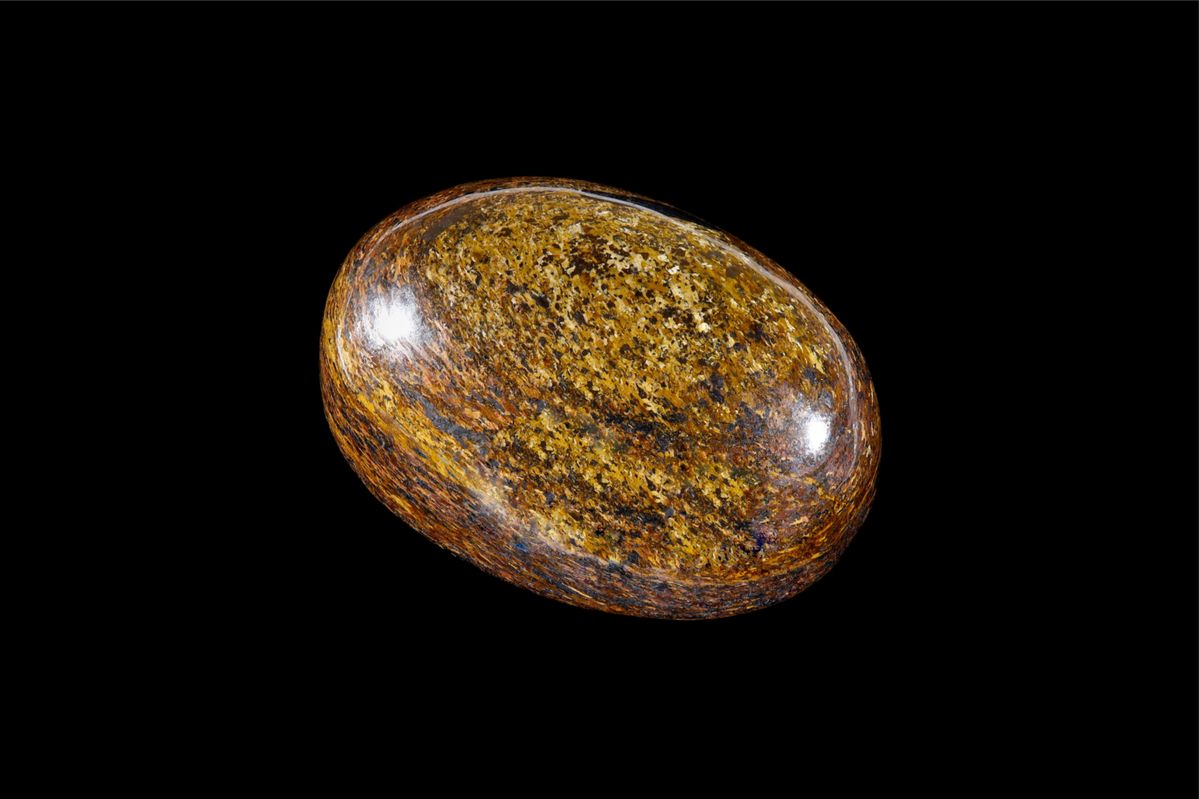
Bronzite Crystal, Benefits and Meanings.
Named for its bronze-like sheen, bronzite is an iron-bearing variety of enstatite long valued as a protective stone linked with grounded confidence and steady action.
Metaphysical & Spiritual
Bronzite is known for a calm, steady feel. It suits moments when life needs a bit more backbone and a bit less noise. Its bronze sheen is a simple reminder to stay practical. Clear boundaries, grounded confidence, and doing what needs doing without forcing it. As a protective stone, Bronzite is linked with staying centered while dealing with pressure. Quiet courage, then consistent follow-through.
Planet

Mars
Bronzite keeps Mars drive firm and contained. It points to clean intent, clear boundaries, and forward motion without getting pulled into drama.
Element
Earth
Earth energy is slow and solid, and Bronzite fits that pace. It leans into stability, patience, and the basics, bringing attention back to what can be built step by step.


Crystal Pairings
Bronzite pairs well with stones that keep energy grounded and clear, while adding a bit of drive and focus. These combinations lean into steady confidence, clean boundaries, and practical courage, without tipping into intensity.
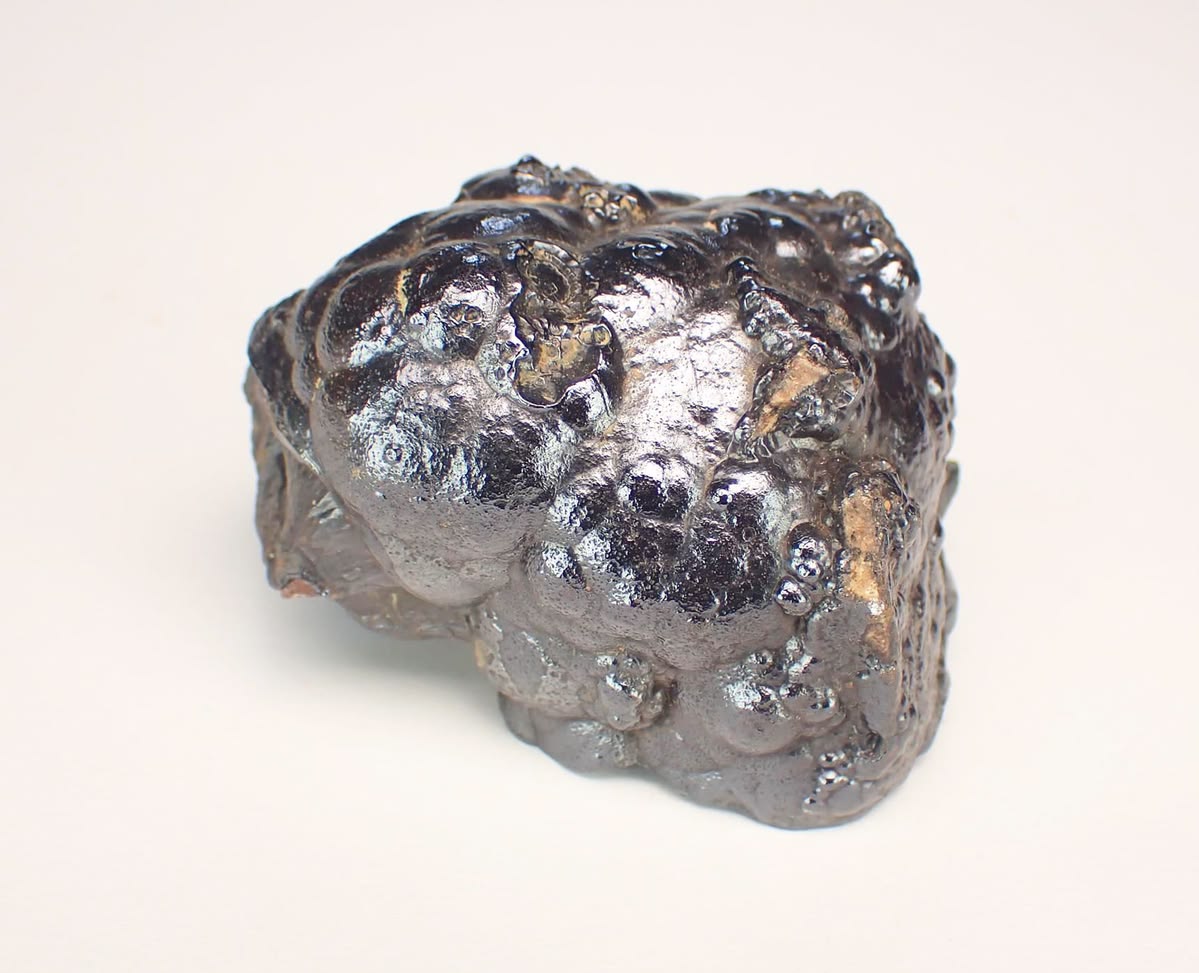
Hematite
Hematite and Bronzite feel steady and straightforward. Hematite brings weight and stability, and Bronzite adds calm confidence and self-control. Grounded, but still moving forward.
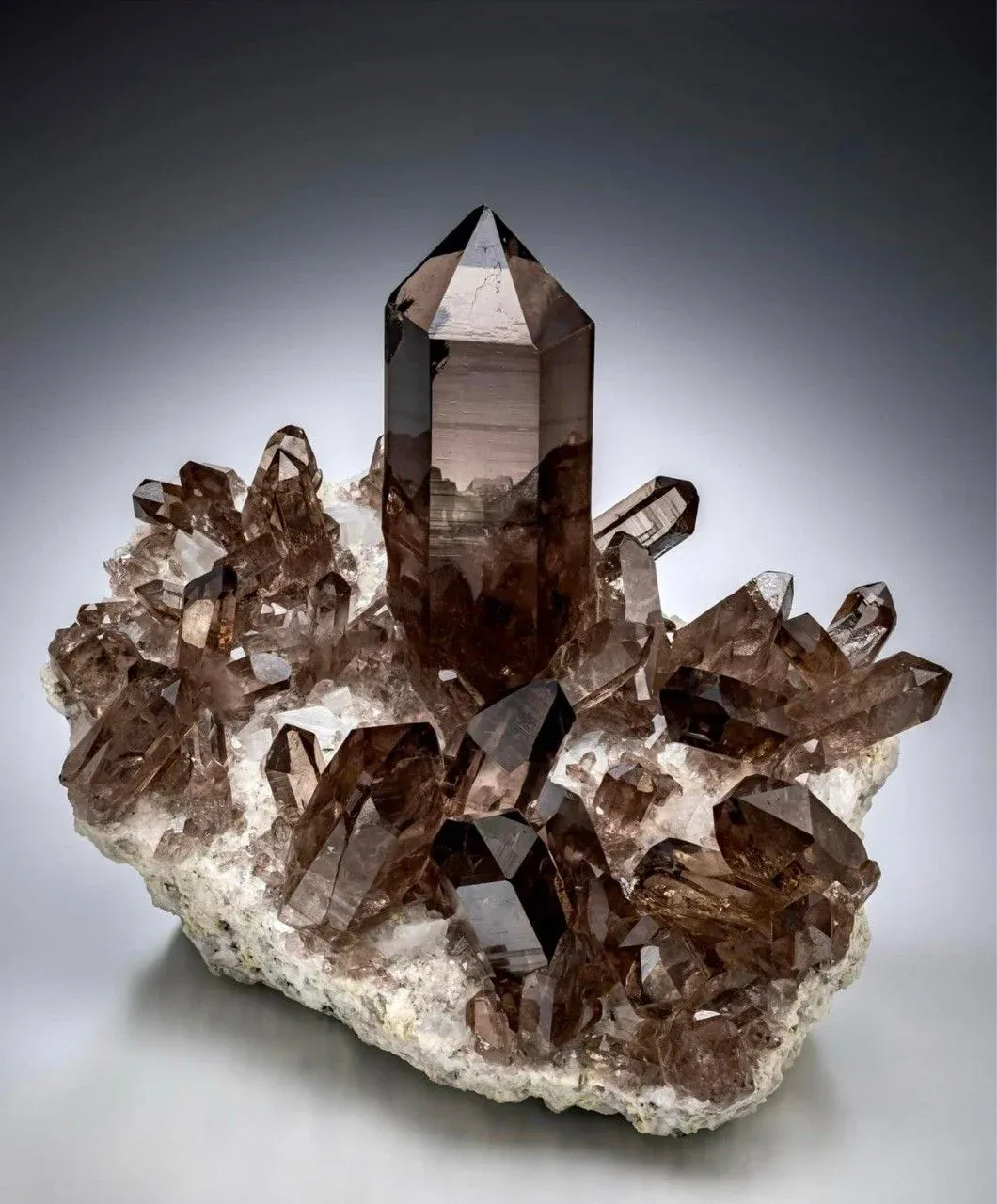
Smoky Quartz
Smoky Quartz and Bronzite keep the tone clear and down-to-earth. Smoky Quartz has that clean, clearing feel, and Bronzite adds steady resolve, so things stay composed instead of reactive.
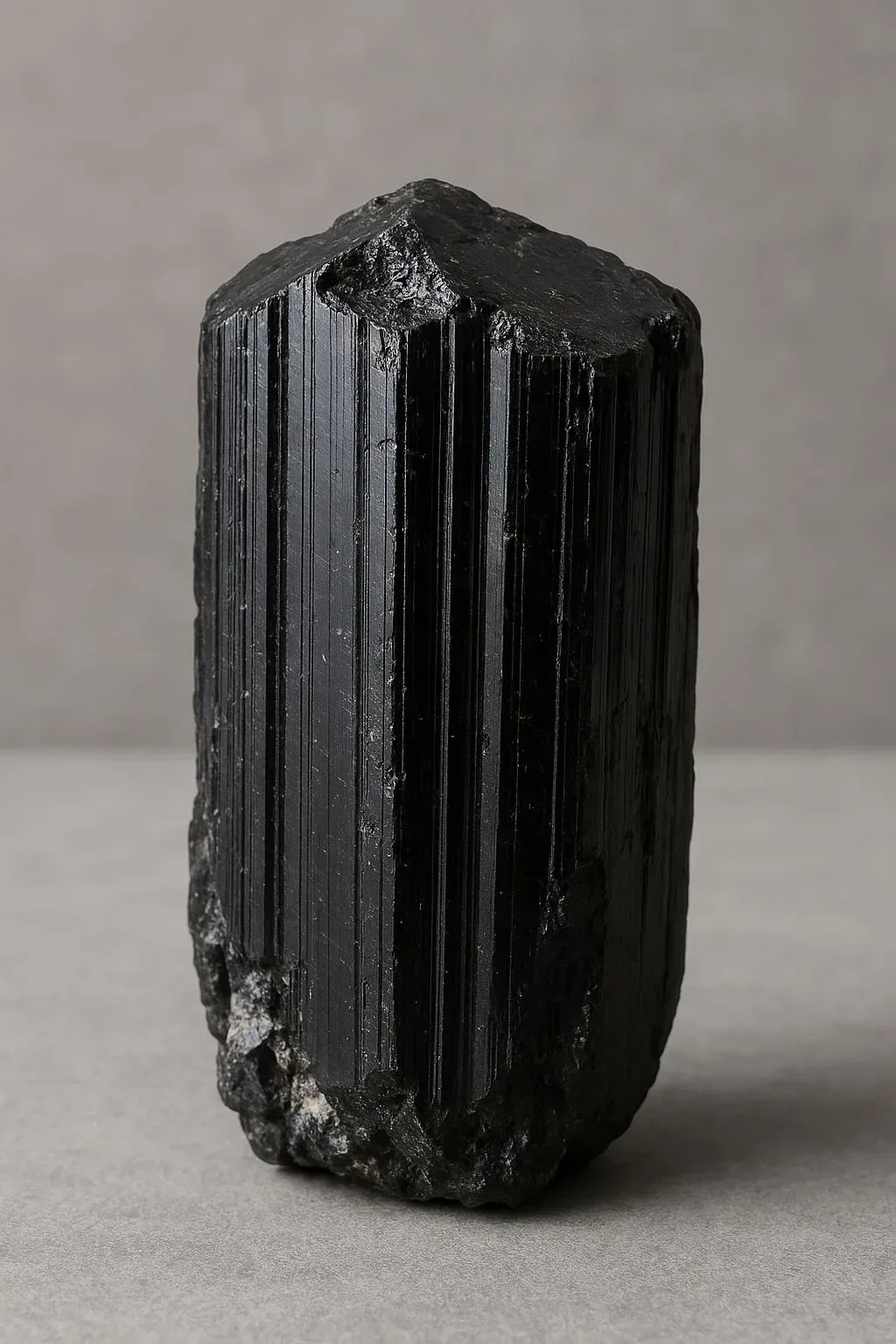
Black Tourmaline
Black Tourmaline and Bronzite suit firm, clean boundaries. Black Tourmaline feels protective and direct. Bronzite adds centered, practical confidence, no pushing, no proving.
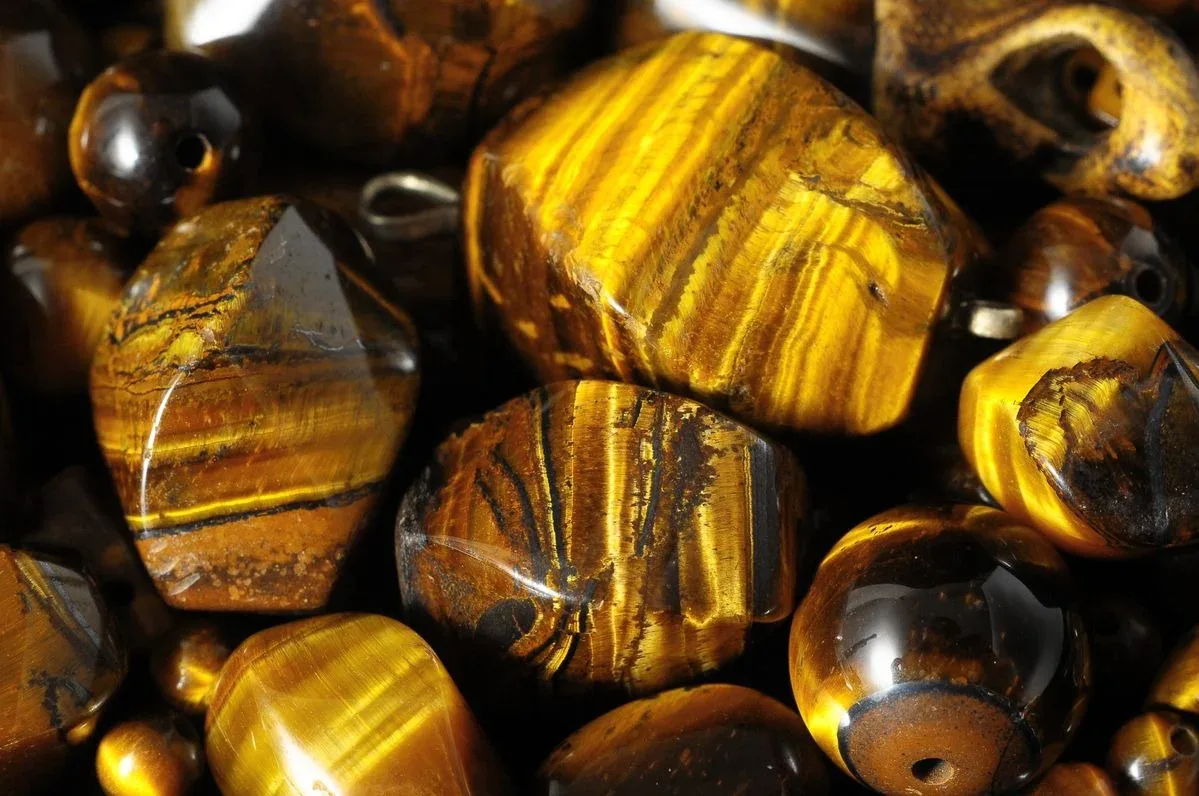
Tiger's Eye
Tiger's Eye with Bronzite reads as grounded confidence with sharper focus. Tiger's Eye brings a bold, forward feel, and Bronzite keeps it measured. Brave, but sensible.
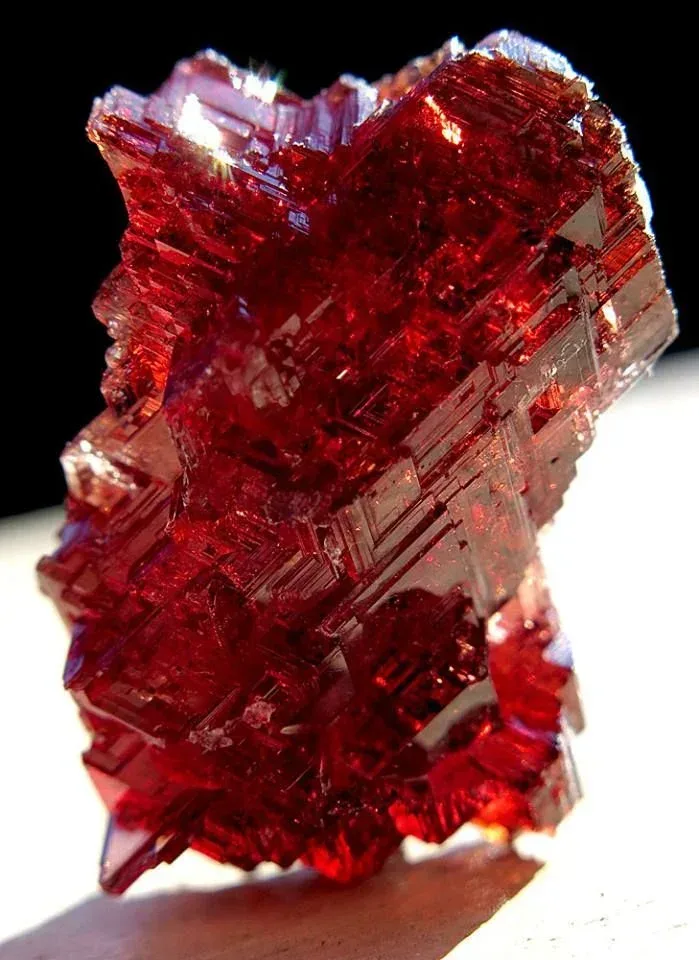
Garnet
Garnet and Bronzite blend steady control with stronger drive. Bronzite keeps things practical and contained, while Garnet adds determination and follow-through, like picking a direction and staying with it.
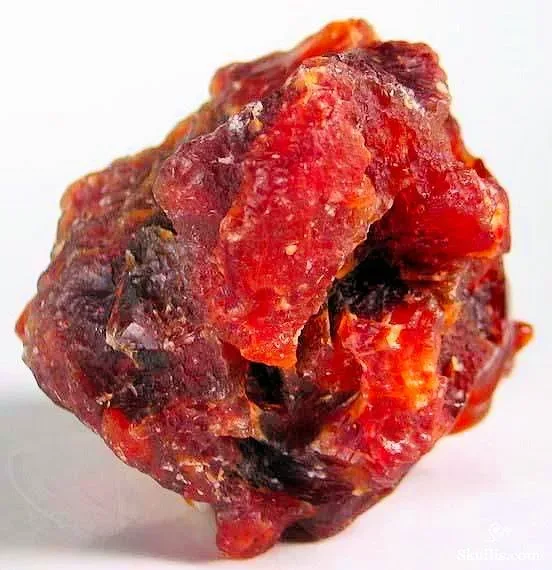
Carnelian
Carnelian and Bronzite balance warmth with stability. Carnelian adds momentum and a lively edge, and Bronzite keeps it anchored, so it stays confident and active without turning scattered.
Healing
Bronzite suits days that need steadiness. It can help when confidence dips, when the next step is obvious but hard to begin, or when other people's energy feels loud.
Use it as a simple cue to slow down and stay practical. Pause, name what matters, check the facts, then take one clear action instead of reacting on autopilot.
Affirmations
Affirmations work best when they sound like something that could be true today. Keep the words simple and repeat them when focus slips.
Try one line at a time. Say it before a meeting, during a commute, or whenever the mind starts running ahead.
- I am grounded and present.
- I trust myself to choose clearly.
- I act with calm confidence.
- I protect my time and energy.
- I follow through, one step at a time.
Intention Setting
Intention setting gives the day a direction. Bronzite pairs well with intentions that are practical and measurable.
Pick one intention, then name a small action that proves it, even if it takes two minutes.
- Stay calm under pressure.
- Speak up with respect.
- Make a clear decision today.
- Hold a firm boundary.
- Finish what was started.
Manifesting
Manifesting here means lining up mindset and action. Bronzite is a good match for goals that need patience and steady effort.
Write a goal in plain words, then choose the next sensible step. Keep it realistic and repeatable.
- A steady routine that supports my goals.
- Clear choices and fewer second-guesses.
- Confidence in meetings and conversations.
- Better boundaries with my time.
- Progress on one important task each day.
Jewelry
Bronzite jewelry makes it easy to keep the stone in reach all day. Different pieces feel different in use, light and subtle, or more direct and noticeable. Choose what fits the day, and how often a small reminder is needed to pause and reset.
General benefits: Wearing Bronzite keeps a grounded reminder close during busy hours. The warm bronze tones suit everyday clothes and do not feel flashy. It is often picked as a quiet cue to stay centered, keep personal space, and respond with steady confidence when things get tense.
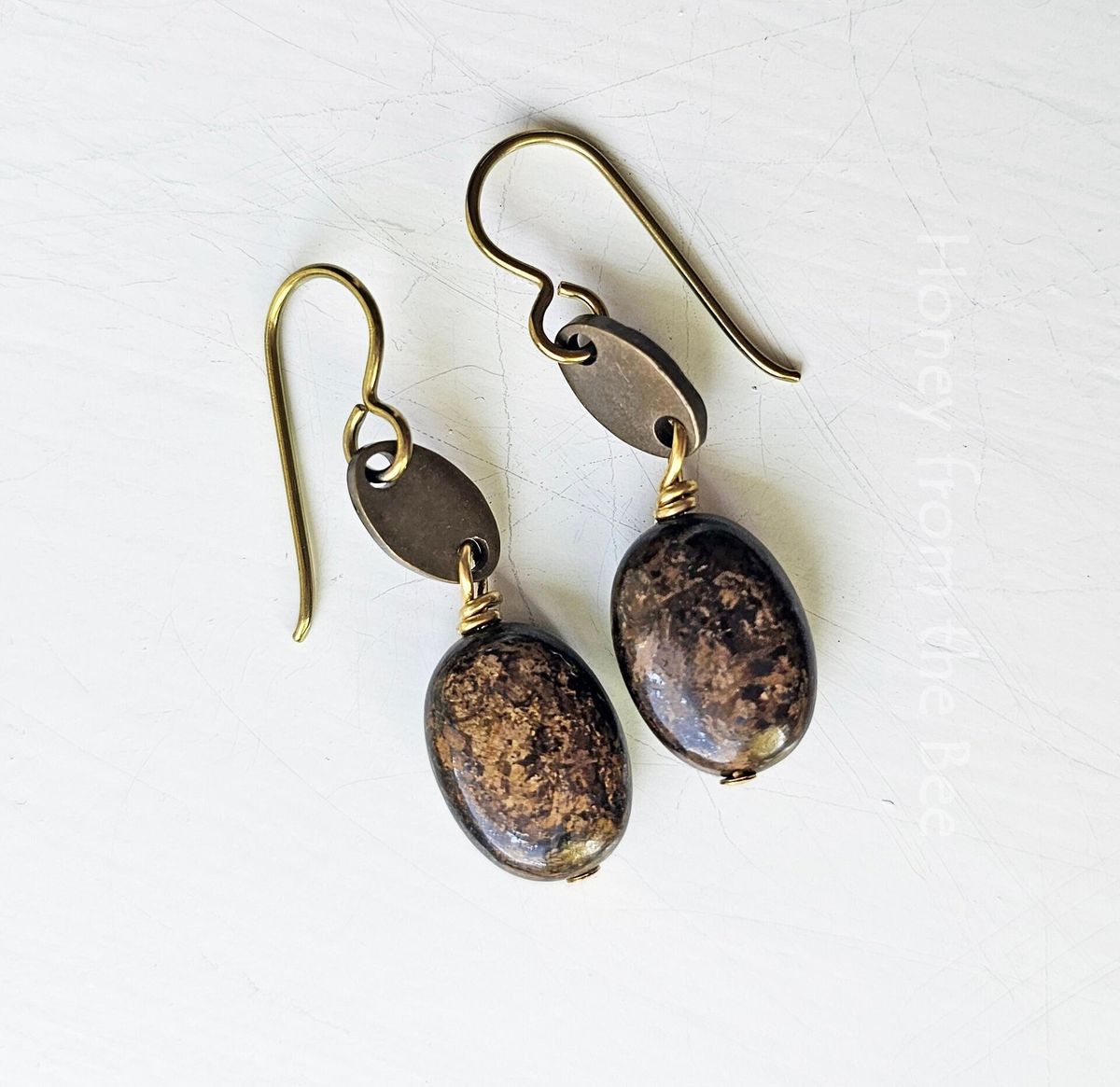
Earrings
Bronzite earrings feel light and steady. They suit days with lots of talking, listening, and quick choices, when it helps to stay composed. The soft bronze sheen adds a calm edge, and the piece stays out of the way while still being present.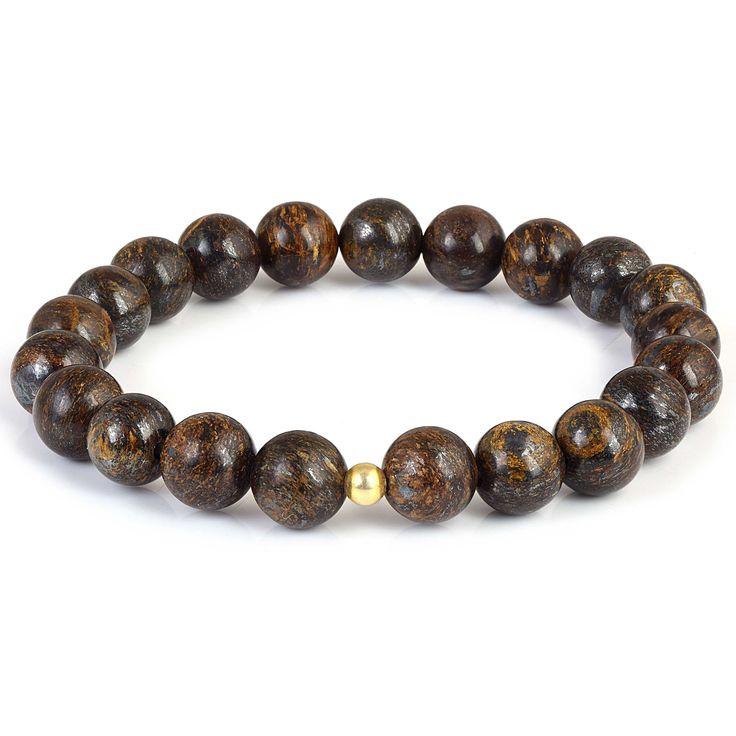
Bracelet
A Bronzite bracelet is practical because it stays in view while working, typing, or moving around. A glance at the wrist can be a prompt to unclench the jaw, take one breath, and choose the next step on purpose, not out of pressure.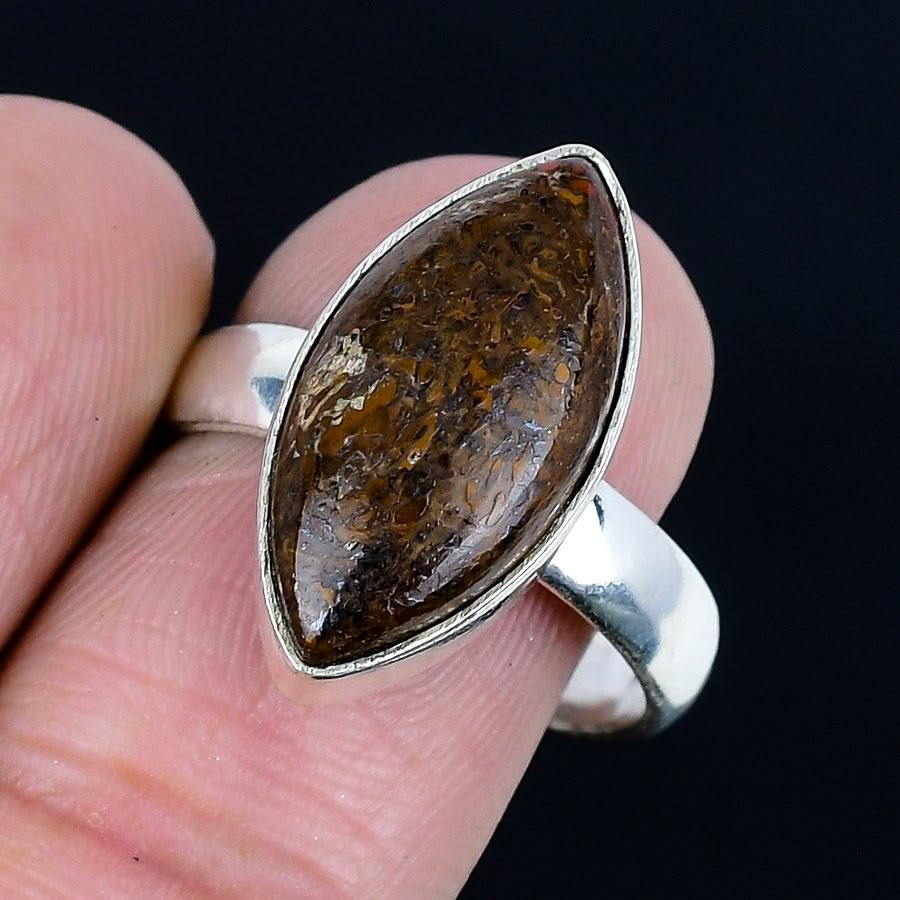
Ring
A Bronzite ring feels direct. It fits moments that call for resolve, like saying no, making a clean decision, or sticking to a plan. The earthy shine reads as quietly bold, a small signal to act with calm strength instead of urgency.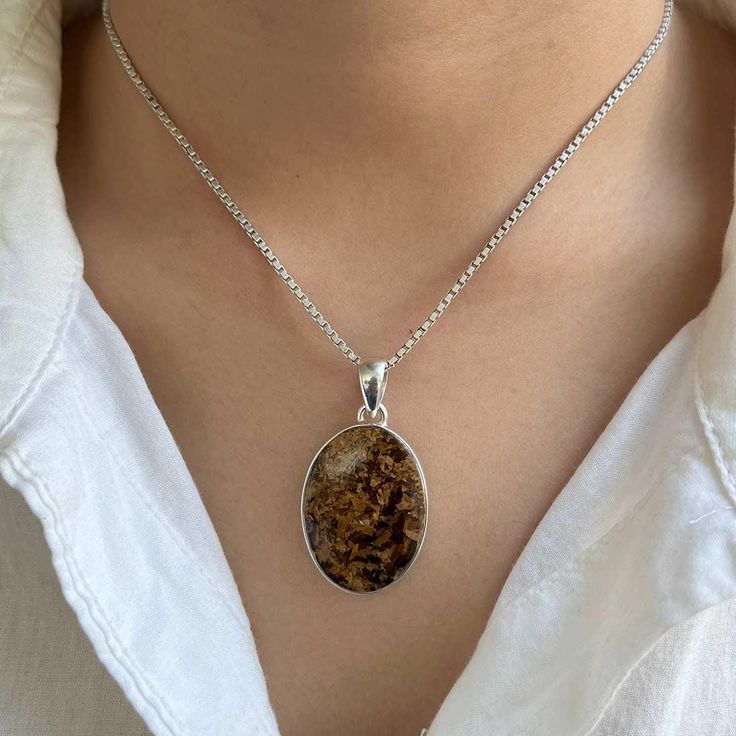
Necklace
A Bronzite necklace sits close to the chest, which can feel centring through a changeable day. It works well when routines are off and the mind wants to race ahead. The brown and bronze colors pair easily with warm, neutral, and dark tones.Forms
The same grounded character shows up in every form, but the finish changes how it looks and how it reads at a glance.
Rough
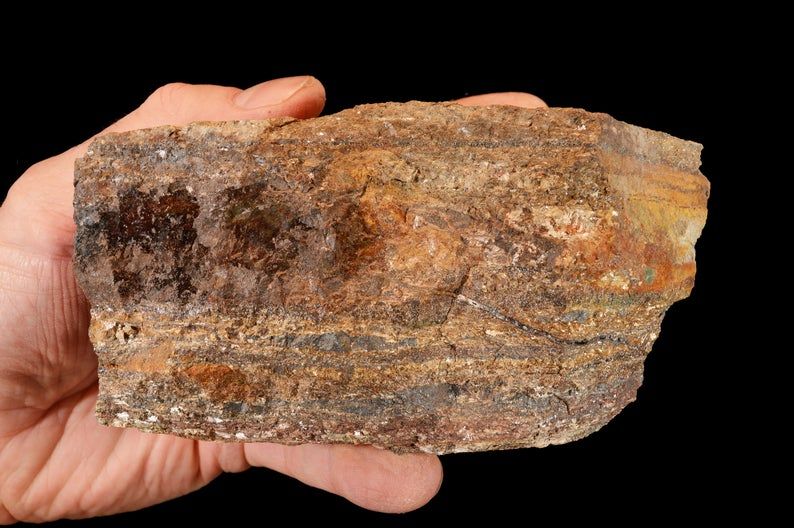
Rough Bronzite has a rugged, natural look. The texture feels straightforward, more about what is real than what is polished. Any shimmer tends to show up in quick flashes as the surface catches the light.
Palm Stone
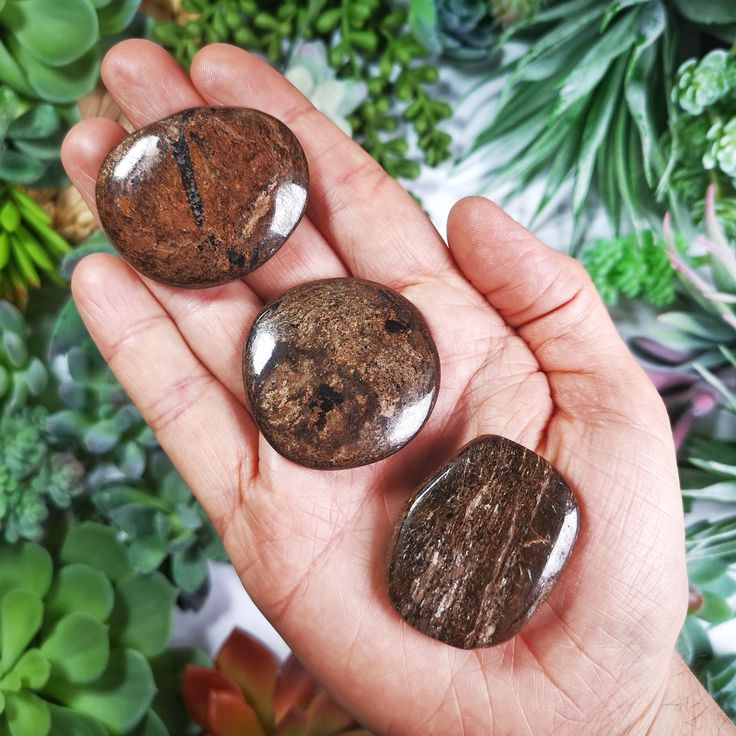
A Bronzite palm stone is smooth and reassuring. The polish brings out warm browns and bronze tones, giving it a practical, comforting look. It reads like a simple anchor, solid, steady, and easy on the eyes.
Tumble Stone
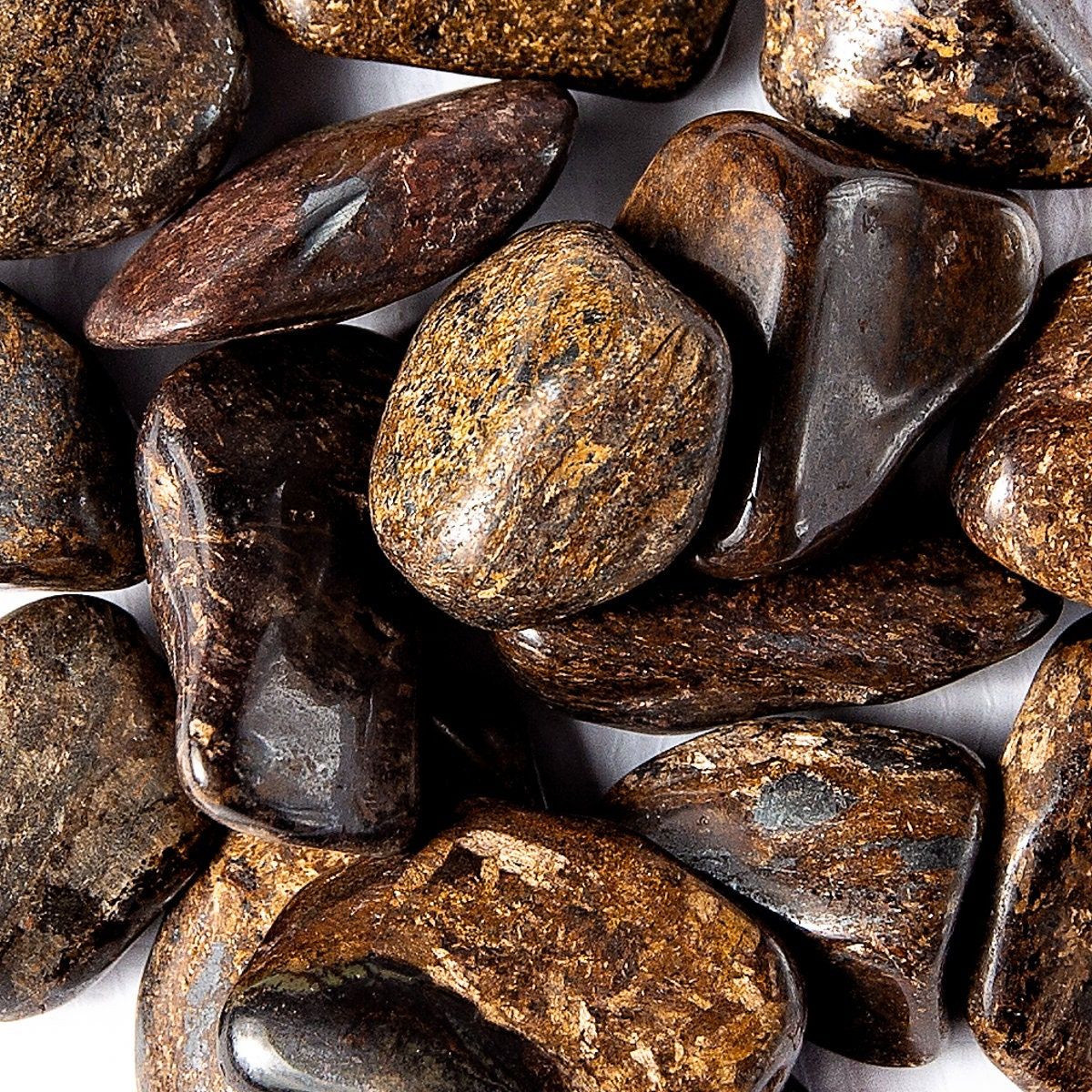
A tumbled Bronzite is small, smooth, and low-key. The finish highlights subtle color shifts and tiny flashes without looking showy. It has an everyday feel, durable-looking, neat, and quietly confident.
Heart
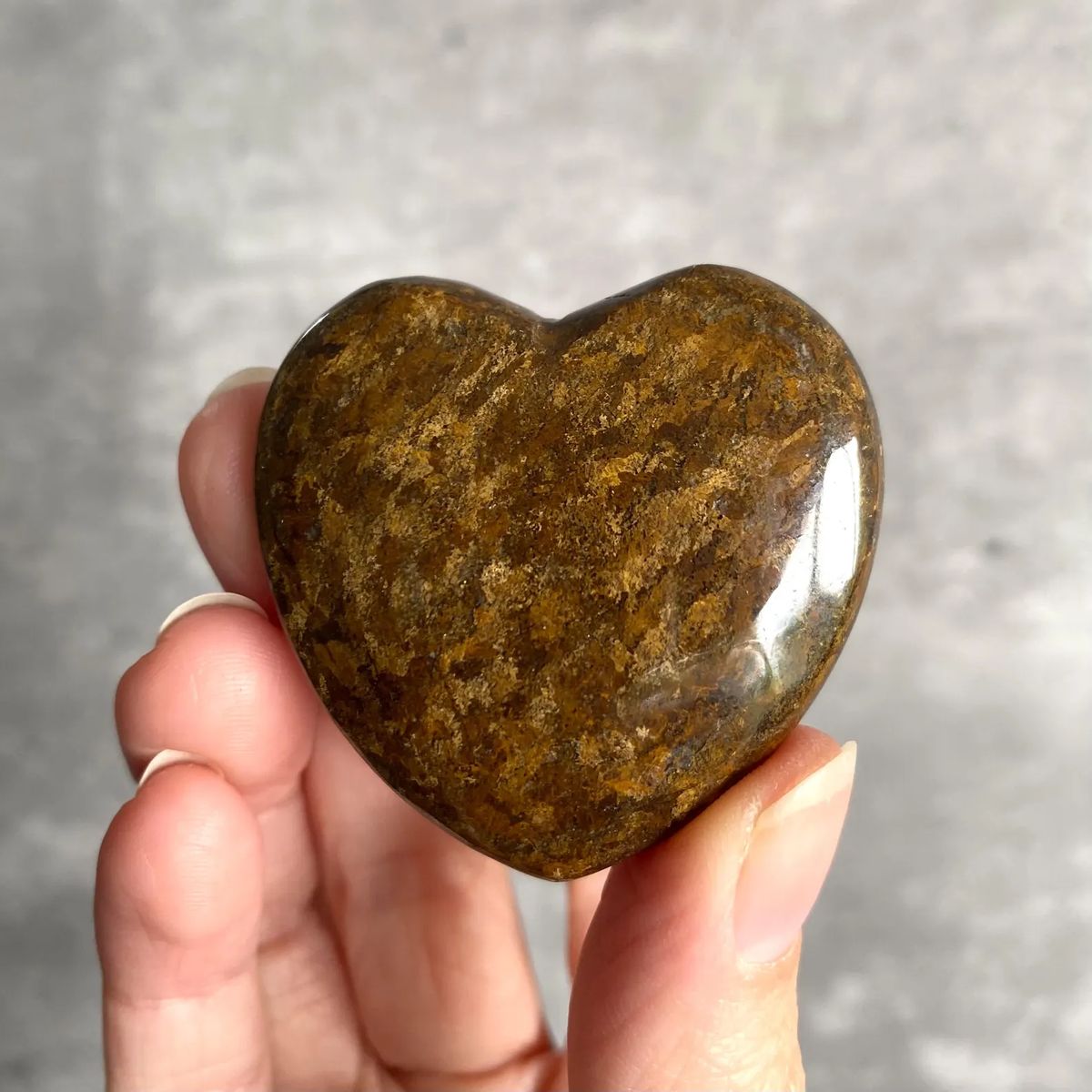
A Bronzite heart mixes firmness with warmth. The heart shape softens the stone's guarded feel into something more supportive, without losing its grounded edge. The bronze-brown palette suits the message, steady care rather than big emotion.
Cleansing & Charging
Bronzite is fairly hardy, but it still benefits from gentle care. Cleanse it when it feels dull, after stressful days, or when it has been handled a lot. Charge it in a way that suits the stone's earthy, steady nature, and avoid harsh methods that could scratch the surface.
How to cleanse Bronzite
- Wipe with a soft, dry cloth to remove oils and dust.
- Rinse briefly in lukewarm water, then dry well, avoid long soaks.
- Use smoke cleansing if that fits the space, keep it light and brief.
- Place it on a larger grounding stone like Hematite or Smoky Quartz for a reset.
How to charge Bronzite
- Leave it in gentle morning light for a short time, not harsh midday sun.
- Set it on a windowsill overnight to pick up a calm, steady feel.
- Rest it on a clean, natural surface like wood or stone for a few hours.
Where to Use
Match the area to the kind of support needed. In busy spaces, aim for steadiness and clear limits. In quieter spaces, focus on grounding and a practical reset.
Office / study
Use Bronzite here when focus needs to stay steady and distractions are high. It fits well with planning, problem-solving, and finishing tasks without rushing. It can also be a reminder to keep boundaries around time and attention.
Entryway
An entryway is a natural boundary zone. Bronzite suits this spot when the aim is to leave outside stress at the door and come in feeling more centered. It also works well for setting a clear tone for the home, calm and grounded.
Meditation space
Bronzite works well in a meditation space when the goal is to settle the body and quiet the urge to overthink. It suits simple practices that focus on breath, posture, and staying present, especially on days that feel busy or reactive.
Living room
In a shared room, Bronzite can support a steady atmosphere. It suits evenings when the aim is to unwind without drifting into tension or noise. It can also help keep conversations practical and respectful when different moods are in the mix.
Science
Physical properties
- Mineral class
- Pyroxene
- Color
- Bronze-brown to greenish-brown with a metallic sheen
- Hardness
- 5 - 6
- Density
- ~3.2 - 3.4 g/cm3
- Durability
- Moderate
- Thermal stability
- High
Optical properties
- Transparency
- Opaque to translucent
- Lustre
- Vitreous to submetallic
- Refraction index
- ~1.65 - 1.67
Chemical composition
- Class
- Silicate
- Formula
- (Mg,Fe)2Si2O6
- Group
- Orthopyroxene
- Magnetic
- Non-magnetic
Formation
Bronzite is an iron-bearing variety within the enstatite, orthopyroxene series. It commonly forms in mafic to ultramafic igneous rocks, where magnesium-rich minerals crystallize from hot, low-silica magma. Peridotite and norite are typical host rocks. In these bodies it can occur as chunky, massive pieces, or as granular aggregates scattered through the rock.
Slow cooling can leave thin lamellae and tiny inclusions inside the crystals. Those features reflect light and give the bronze schiller on polished surfaces. Bronzite also turns up in high-grade metamorphic settings, where earlier pyroxenes stay stable under heat and pressure. As the host rock weathers, tougher bronzite-rich material can break free as durable fragments that take a cut and polish well.
Locations
- Brazil
- South Africa
- Madagascar
- Austria
- United States
- India
History
Bronzite becomes a recognized mineral name
1800s
The name "bronzite" caught on in 19th-century mineralogy for bronze-sheened orthopyroxene, often described as an iron-bearing form of enstatite. Testing improved, and the label shifted with it. Today it is usually treated as a variety or trade name within the enstatite, orthopyroxene group, not a separate mineral species.
Petrology links bronzite to mafic and ultramafic rocks
Late 1800s to early 1900s
As petrology developed, studies started noting bronzite in mafic and ultramafic rocks, especially peridotites, norites, and related bodies. The writing stayed practical. Where it turns up, and what drives the bronze "schiller" look. Fine inclusions and exsolution textures are often pointed to as the cause of the sheen.
Lapidary use grows alongside decorative stone markets
1900s
Bronzite's toughness and clean polish made it a solid pick for lapidary work. Cabochons, beads, small carvings. The metallic shimmer is the main draw. Supply in jewelry and decorative stone markets is often linked to producing regions such as Brazil, South Africa, and Madagascar.
Modern bronzite culture adopts bronzite for grounding and protection themes
Late 1900s to present
In modern bronzite and wellness circles, bronzite is commonly presented around grounded confidence and practical protection. These ideas sit within contemporary metaphysical practice, not older, well-documented traditions. Specific ancient lineages are not consistently evidenced in reliable sources.
Got questions?
We've got answers!
FAQ's
What is Bronzite used for?
+×
Bronzite is often used as a grounding and protective stone when focus and steady follow-through are needed.
It fits easily into daily life. Keep it on a desk, carry it in a pocket, or place it near an entryway. A simple cue to stay calm, hold clear boundaries, and act with confidence.
Which zodiac signs are connected to Bronzite?
+×
Bronzite is most closely linked with Leo.
It is also associated with Mars, so it is often chosen when motivation and courage need a practical outlet. Steady, controlled, not rushed.
What chakras does Bronzite activate?
+×
Bronzite is most often connected with the Root chakra and the Sacral chakra.
In bronzite practice, it is used to support feeling more settled in the body, then turning that steadiness into clear, purposeful action.
Can Bronzite help with stress and sleep?
+×
Bronzite may be used as a calming, grounding support during stressful periods, especially when the mind feels busy or reactive.
For sleep, it can be part of a wind-down routine, for example placed on a bedside table or held for a few slow breaths. It is not a treatment for stress or sleep problems, and persistent issues are best discussed with a qualified professional.