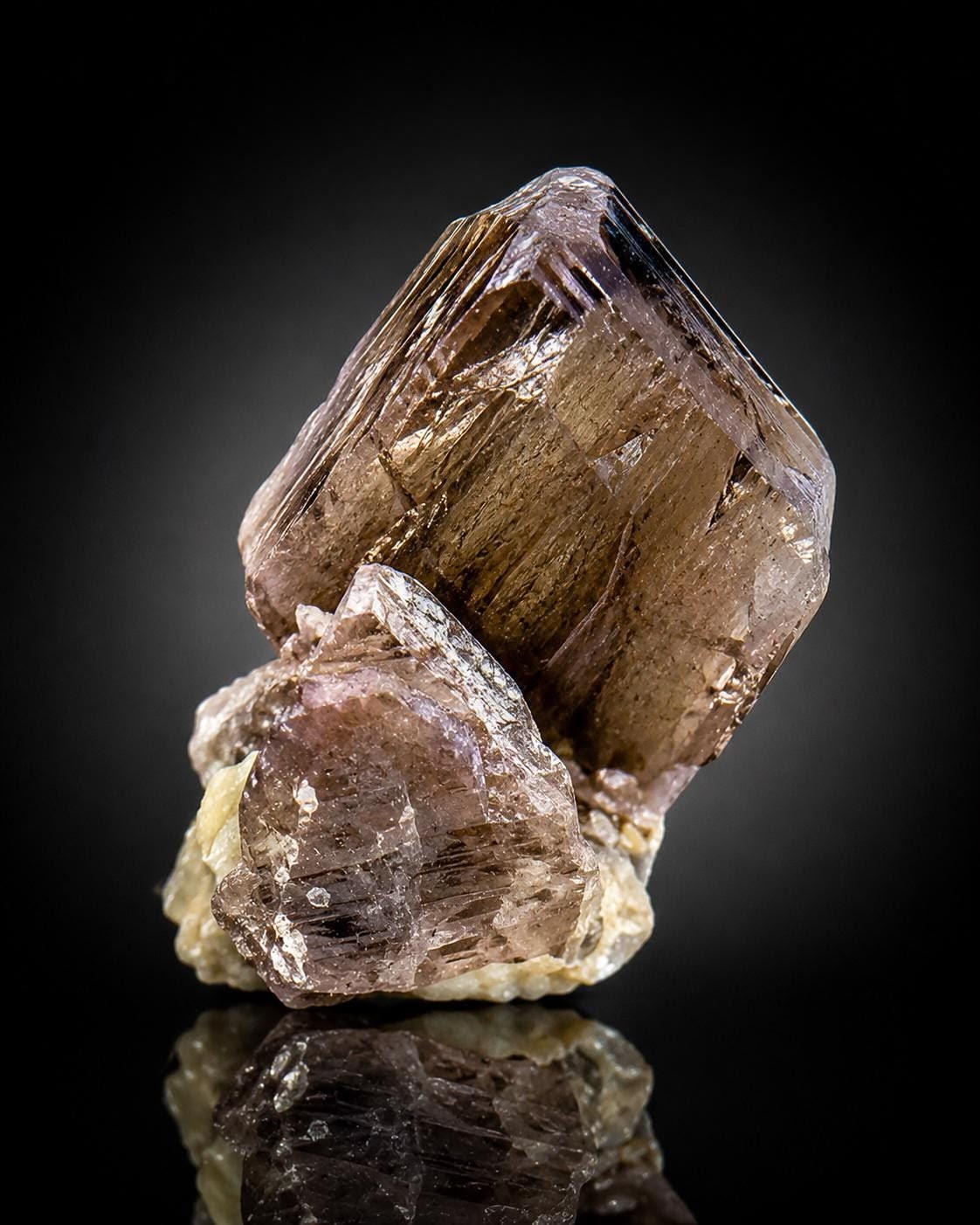
Axinite Crystal, Benefits and Meanings.
Axinite meaning centers on grounded momentum, creative force, and emotional steadiness.
Metaphysical & Spiritual
Axinite works with the lower centers in a way that feels purposeful rather than noisy. It gathers scattered drive into a steadier current, helping intention take shape through the body instead of staying as a thought alone. Its energy carries a practical heat that can be useful when momentum has gone flat or emotions have become tangled with hesitation. Axinite brings a sense of inner traction, so choices feel more grounded, and creative effort has somewhere solid to land. This crystal also holds a disciplined quality that keeps energy from spilling in too many directions at once. It supports the kind of emotional steadiness that lets a person stay present with pressure, then act without losing contact with what matters. When worked with quietly, Axinite can feel like a reminder to move from the center rather than from urgency. It connects with effort that is both embodied and deliberate, which makes it especially useful for work that needs courage, follow-through, and a clear sense of direction.

Planet

Mars
Axinite carries Mars energy in a grounded form, giving drive a more deliberate edge. It helps direct force into action that is focused, practical, and less likely to burn out quickly.
Element
Earth
Axinite works with Earth by settling energy into the body and the everyday world. It brings a sense of traction, making plans feel more real and easier to follow through.


Crystal Pairings
Axinite pairs well with stones that help direct its grounded force into softer emotional movement, clearer boundaries, and more deliberate action. These combinations keep its earthy momentum from feeling blunt, and instead shape it into something steadier, more responsive, and easier to carry through daily life.
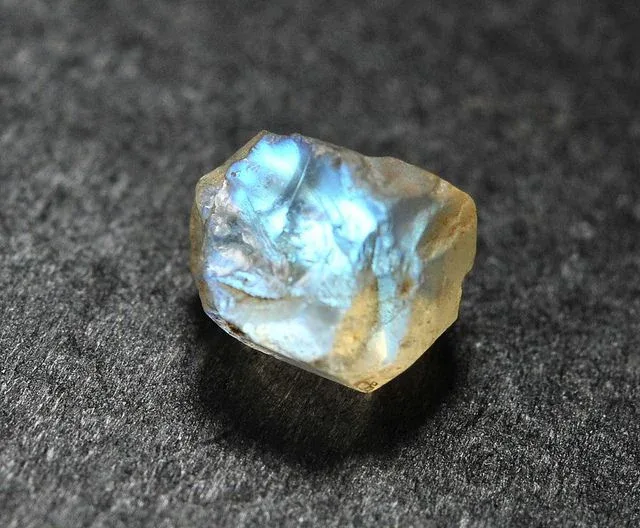
Peach Moonstone
Peach Moonstone softens Axinite's firm, driving tone and brings a gentler emotional rhythm to the mix. Together they support steady movement without pushing feelings aside, which is useful when action needs to stay heart-led and unforced.

Orca Agate
Orca Agate gives Axinite a deeper stillness to rest into, helping the energy settle before it moves. This pairing works well for honest self-reflection, where truth needs to be met with patience rather than pressure.
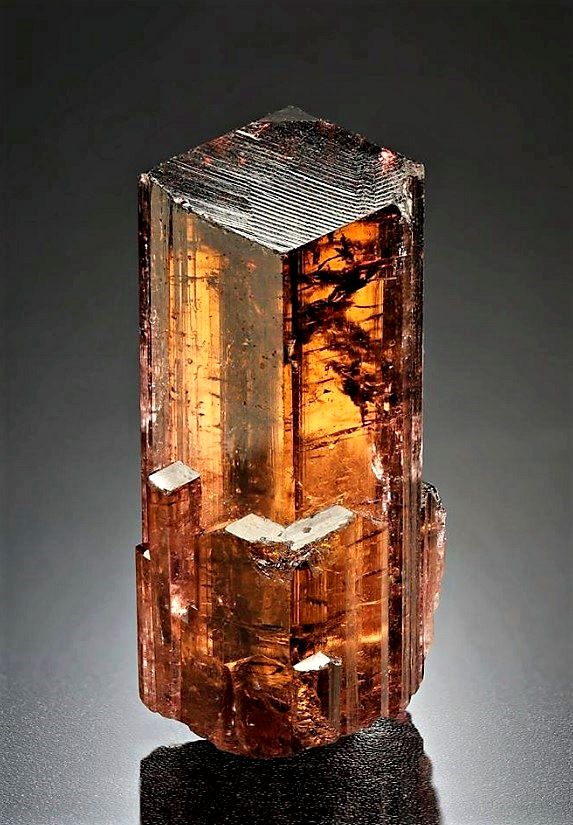
Dravite
Dravite strengthens Axinite's grounding and keeps its motivation anchored in practical reality. The two stones create a contained, disciplined feel that supports boundaries, follow-through, and calm endurance when life asks for persistence.
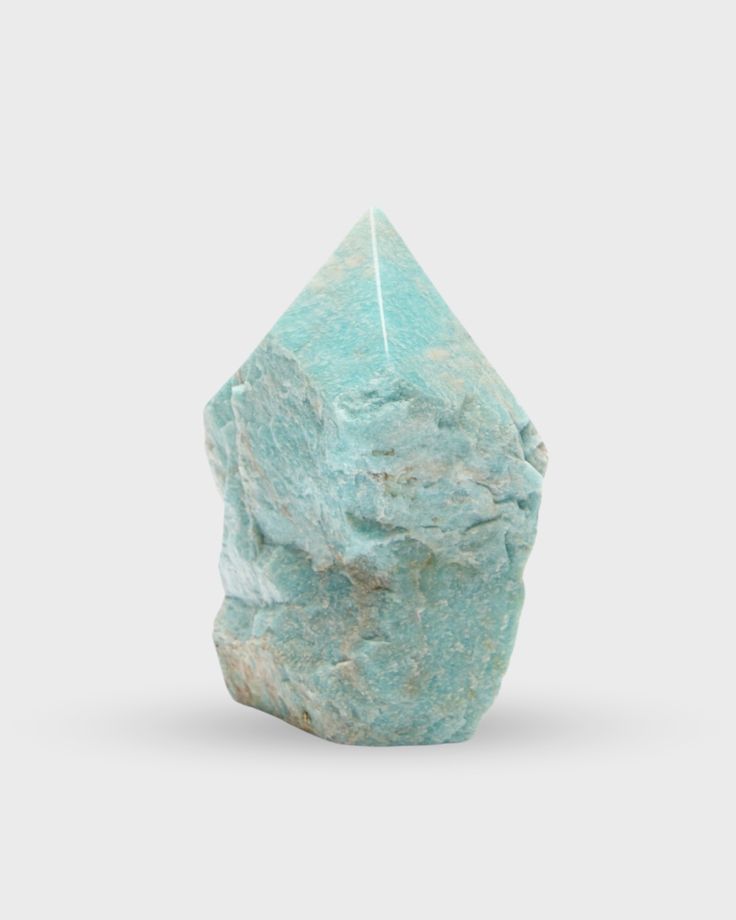
Amazonite
Amazonite brings a clear, truthful current to Axinite, especially where words, limits, or decisions need to be handled with care. Together they help steady the throat and lower the emotional heat around communication, so expression feels more direct and less reactive.
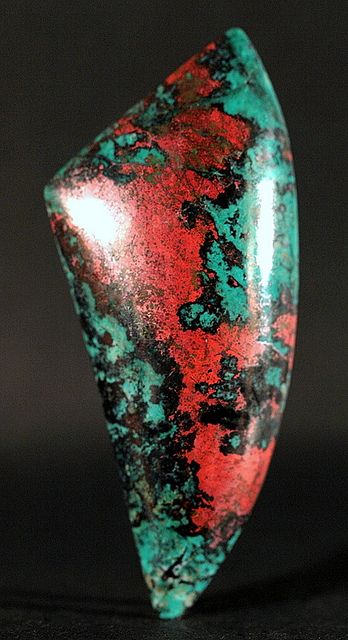
Sonora Sunrise
Sonora Sunrise adds a vivid life-force to Axinite and keeps its creative current moving with confidence. This pairing is often chosen when inspiration needs to become action, especially for work that asks for courage, initiative, and a stronger sense of purpose.
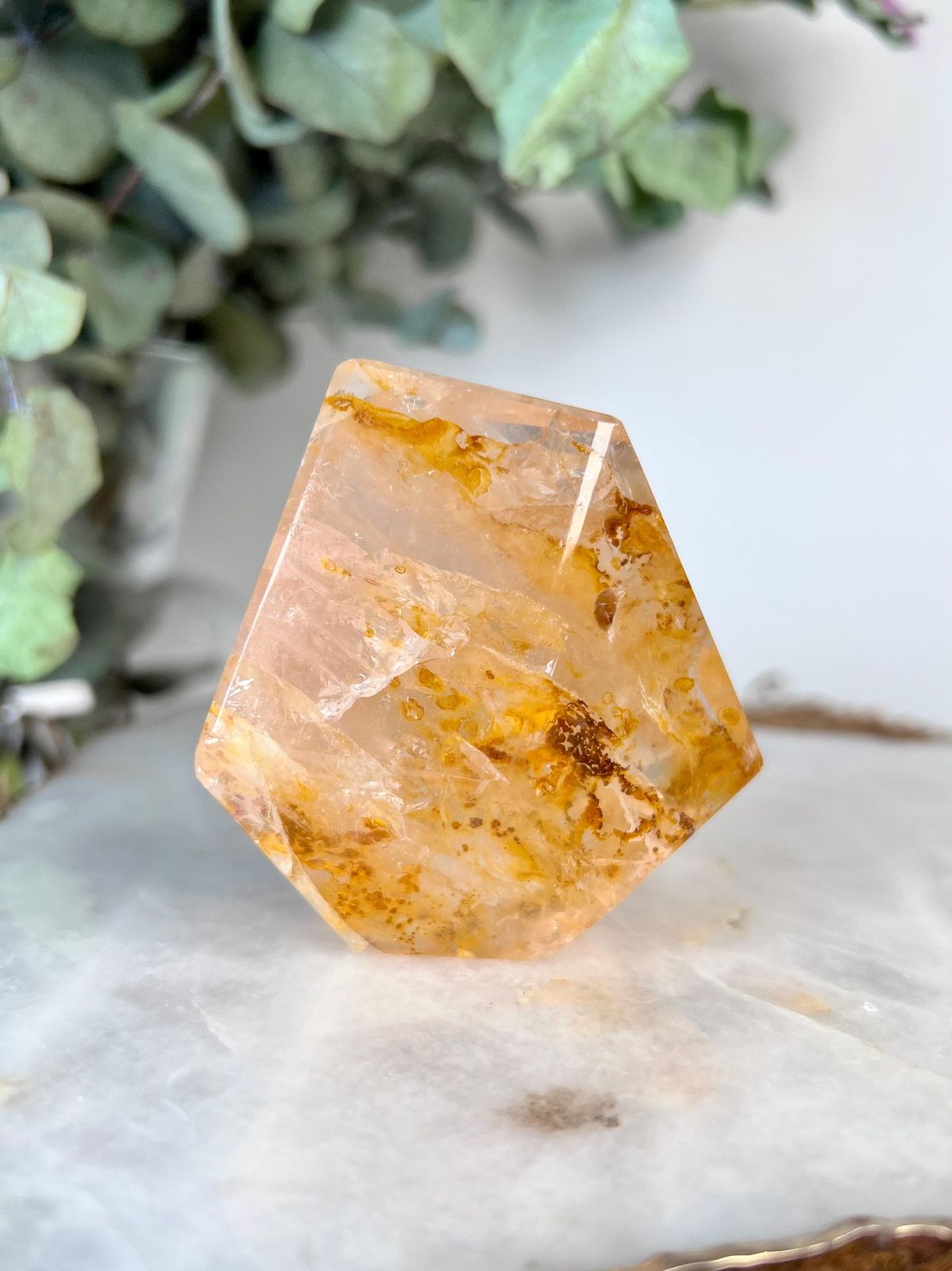
Golden Healer Quartz
Golden Healer Quartz lifts Axinite into a broader, more integrated field, helping the stone's earthy drive feel guided rather than heavy. Together they support renewal, clear intention, and a sense that effort is part of a larger healing rhythm.
Healing
Axinite connects with moments when the body feels braced and the mind keeps reaching ahead of itself. It is often chosen when there is work to do, but the inner field needs to stay steady enough to meet it without scattering.
It also works with the quieter strain of holding many responsibilities at once. In that kind of space, Axinite reads as a reminder to keep moving with purpose, while staying in touch with what is real, immediate, and manageable.
Affirmations
Hold Axinite at the Root or Sacral area and choose an affirmation that matches the pace of the day.
Repeat it slowly, then let one grounded action follow so the words settle into practice.
- I move with steady purpose
- I trust my next step
- I stay calm under pressure
- I honor my energy
- I act with clear intention
Intention Setting
Axinite can help set intentions that feel practical, focused, and quietly energizing.
It is useful when a fresh start needs structure, or when a decision asks for courage without haste.
- I move forward with steady focus
- I use my energy wisely
- I meet change with calm strength
- I choose what supports my growth
- I keep my attention on what matters
Manifesting
Axinite supports manifesting that depends on follow-through, not just enthusiasm. It helps keep attention on the next workable step, especially when motivation rises and falls through the day.
It also brings a disciplined tone to creative aims, so ideas are shaped into something usable. That makes it a strong companion for goals that need both drive and patience.
- I follow through with calm momentum
- I build what is worth keeping
- I welcome steady progress
- I trust my creative force
- I stay committed to my path
Jewelry
Axinite jewelry works through placement as much as intention. Near the head it can support clearer self-talk, at the wrist it keeps the reminder in the hands, and close to the chest or throat it can help words and feelings meet with more honesty.
General benefits: Wearing Axinite jewelry keeps its steady, purposeful tone close when the day asks for stamina and clear judgement. It can remind the wearer to breathe before reacting, stay with the task in front of them, and keep energy from leaking into worry or overthinking. On busy days, during change, or in conversations that need a firm but calm presence, Axinite jewelry helps the inner pace stay measured.

Necklace
An Axinite necklace sits close to the chest and can support a steadier emotional rhythm through the day. It is useful when the heart needs to stay open without losing its footing, especially in conversations that ask for patience and honesty.Bracelet
An Axinite bracelet keeps the reminder in the hands, where choices and actions begin. It can help the wearer pause before rushing, then move with more deliberate energy through tasks, messages, and small daily commitments.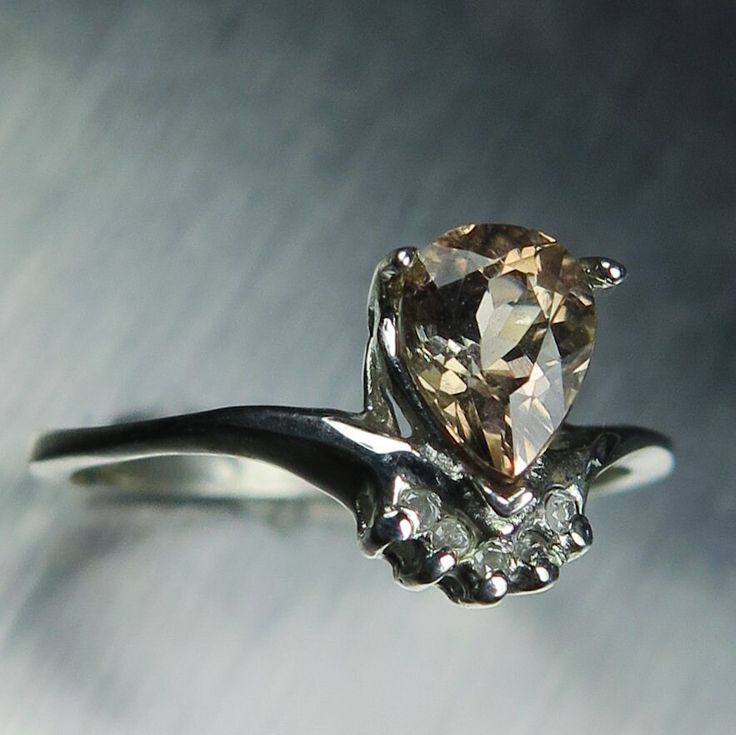
Ring
An Axinite ring brings the stone into view during moments of decision and self-talk. It is a quiet anchor for times when confidence needs to be practical, not loud, and when a clear yes or no has to be felt in the body.Earrings
Axinite earrings sit close to the mind and can support a more centered way of listening and replying. They are especially helpful in meetings, calls, or tricky exchanges where the tone needs to stay composed while the message stays direct.Forms
Different Axinite forms shift how the stone is held and how its energy is met. Some feel more direct and focused, while others bring a gentler, more contained rhythm for daily use.
Rough
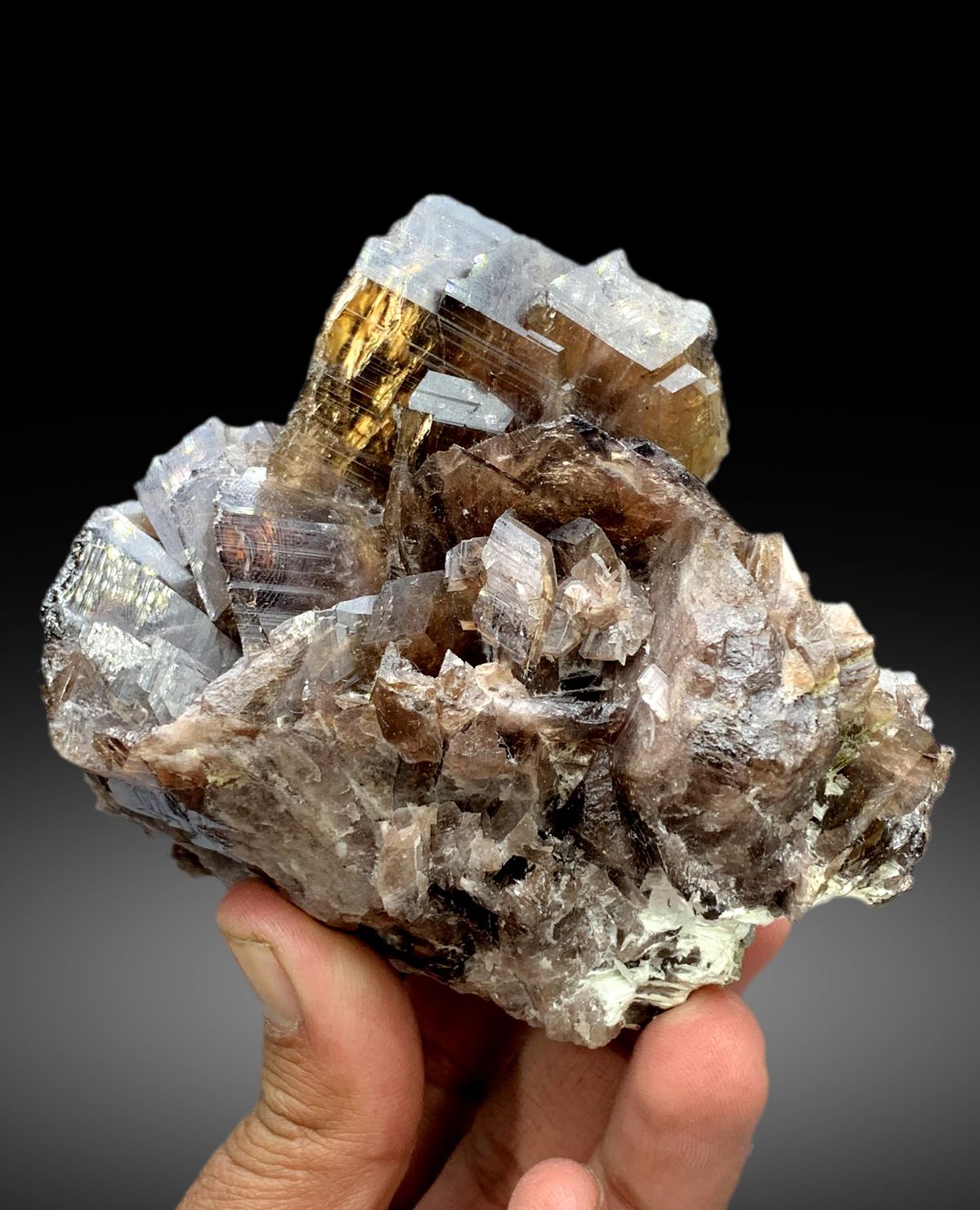
Rough Axinite feels immediate and unpolished. It works well when the aim is simple grounding and a direct return to what matters.
Point / Tower
A point or tower gives Axinite a more directed feel. It helps gather scattered effort into one clear line of intention.
Sphere
A sphere softens Axinite into a more even field. It can help the energy feel balanced and less task-driven.
Palm Stone
A palm stone gives Axinite a contained, hand-held presence for short resets. It is useful when the body needs a moment to settle before acting.
Tumble Stone
A tumble stone carries Axinite in a compact form for pockets or travel. It suits quick pauses when steadiness needs to be restored on the move.
Figure
A carved figure makes Axinite feel more intentional and companion-like. It can support focused work with a clear purpose or a specific goal.
Heart
A heart form brings a warmer, more caring tone to Axinite. It is a good choice when strength needs to stay kind and self-respectful.
Cleansing & Charging
Cleansing Axinite can help clear the residue of pressure, overuse, or too many competing demands. Because it is brittle and can have thin edges, gentle methods keep the stone physically safe as well as energetically fresh.
How to cleanse Axinite
- Pass Axinite through sound from a singing bowl, chime, or steady voice for a brief reset.
- Waft clean smoke around the stone for a light cleansing, keeping the exposure short and gentle.
- Place it beside selenite or clear quartz overnight to let the energy settle without handling it roughly.
How to charge Axinite
- Set Axinite in brief indirect morning light, then bring it back indoors before the light grows strong.
- Leave it in moonlight in a dry place for a calm, low-pressure charge.
- Rest it near clear quartz or selenite while holding a clear intention for steady momentum.
Where to Use
Match Axinite to spaces where its steady, motivating current can support action without strain.
Personal workspace
In a personal workspace, Axinite helps keep attention on the task in front of you when the mind wants to jump ahead. It can be placed near notes, plans, or tools as a quiet reminder to work in a measured rhythm. When pressure rises, hold it for a few breaths before returning to the page or screen.
Creative studio
In a creative studio, Axinite supports the moment when inspiration needs shape and structure. It can help carry ideas from impulse into form, especially when a project needs both imagination and follow-through. Keep it nearby when starting, revising, or finishing work that asks for persistence.
Personal altar
On a personal altar, Axinite brings a grounded tone to intention work and daily devotion. It can be placed with candles, written aims, or other stones that support discipline and courage. Return to it when you want to renew commitment without forcing the pace.
In a pocket, Axinite becomes a discreet companion for days that feel demanding or changeable. Touching it can interrupt spirals of doubt and bring attention back to the next practical step. It is useful before meetings, errands, or any moment that asks for calm momentum.
Science
Physical properties
- Mineral class
- Sorosilicate
- Color
- Violet-brown, reddish brown, honey brown, yellow, yellow-green, green, pale blue, gray, or lilac
- Hardness
- Approximately 6 - 7
- Density
- Approximately 3.18 - 3.37 g/cm3, depending on the dominant Axinite species
- Durability
- Moderate because of good cleavage, brittleness, thin crystal edges, and frequent internal fractures
- Thermal stability
- Moderate
Optical properties
- Transparency
- Transparent to translucent
- Lustre
- Vitreous
- Refraction index
- Approximately 1.65 - 1.70, varying by species and composition
Chemical composition
- Class
- Calcium aluminum borosilicate mineral group
- Formula
- Variable by species; Axinite-(Fe) is ideally Ca2Fe2+Al2(BO3)Si4O12(OH)
- Group
- Axinite Group
- Magnetic
- Usually non-magnetic to weakly magnetic, with possible variation in iron-rich specimens
Formation
Axinite is the collective name for a group of calcium aluminum borosilicate minerals rather than one chemically uniform species. The principal members are Axinite-(Fe), Axinite-(Mn), Axinite-(Mg), and Tinzenite, all of which crystallize in the triclinic system and commonly grow in flattened, bladed, tabular, wedge-shaped forms with thin acute edges. Its geology is tied to boron-rich hydrothermal and metamorphic fluids reacting with calcium-rich rocks, especially in skarns, veins, Alpine-type fissures, and altered igneous or sedimentary settings.
Because the chemistry shifts between species, color and appearance can vary widely across the Axinite Group. Iron-rich material is usually the most familiar under the general name Axinite, while manganese-rich specimens can show yellow, orange-brown, reddish, or violet tones, and magnesium-rich crystals may appear paler, sometimes blue, gray, or greenish. Strong pleochroism is common, so the color can change with viewing direction, and reliable identification often needs chemical or crystallographic testing rather than color alone.
Locations
- Bourg d'Oisans, Isère, France
- Dalnegorsk, Russia
- Northern Areas, Pakistan
- New Jersey and California, United States
- Baja California, Mexico
- Obira Mine, Japan
- Merelani Hills, Tanzania
- Swiss Alps, Switzerland
History
Axinite formed during metamorphism and mineral-rich fluid activity
Ancient geological history
Axinite formed deep within mountain belts and intrusive complexes where boron-rich fluids moved through calcium-, aluminum-, iron-, manganese-, or magnesium-bearing rocks. These reactions created crystals in skarns, veins, altered rocks, and Alpine-type fissures, giving the mineral its long geological story before it was ever named. Its presence reflects active change in the Earth, where heat, pressure, and fluid movement work together to build sharp, distinctive forms.
Distinctive crystals attracted early mineral collectors
18th century
Sharp, flattened brown and violet-brown crystals from Alpine localities and France drew the attention of European collectors. Their unusual wedge-like habit made them stand out among other specimens, even before the Axinite Group was understood chemically. These early finds helped establish Axinite as a mineral of interest for both form and composition.
The name Axinite was introduced
1787
The mineral name Axinite was introduced in Europe in 1787. It comes from a Greek word meaning axe, a direct reference to the acute, wedge-shaped edges that define many of its crystals. The name captured the mineral's most recognizable habit and has remained closely tied to its identity ever since.
Chemical variation within Axinite became clearer
19th century
During the 19th century, mineralogists began to recognise that specimens sold or described as Axinite were not chemically identical. Differences in iron, manganese, magnesium, calcium, and other components became clearer through study, showing that the name covered a broader family of related minerals. This understanding laid the groundwork for separating the group into distinct species.
Different Axinite species were formally distinguished
20th century
In the 20th century, detailed chemical and crystallographic research separated the iron-, manganese-, and magnesium-dominant members of the Axinite Group. Tinzenite was also recognized as a related species with its own manganese- and calcium-bearing composition. This period brought greater precision to Axinite classification and made species-level identification more reliable.
Species names were standardized
Late 20th and early 21st centuries
As mineral naming became more consistent, historical labels such as Ferroaxinite, Manganaxinite, and Magnesioaxinite were gradually replaced by the standardized names Axinite-(Fe), Axinite-(Mn), and Axinite-(Mg). This shift reflected a clearer scientific framework for the group and reduced confusion between older and newer naming systems. The standardization also helped collectors and researchers speak about Axinite with greater accuracy.
Collected as both a mineral specimen and gemstone
Present day
Today, Axinite is valued both as a collector's mineral and, when transparent enough, as a faceted gemstone. Well-formed natural crystals are especially prized for their sharp wedge-like shapes, while modern crystal traditions associate the stone with grounding, motivation, creativity, and physical vitality. Its appeal rests in the meeting of geology, rarity, and distinctive crystal habit.
Got questions?
We've got answers!
FAQ's
What is Axinite used for?
+×
Axinite is often chosen as a grounding stone for moments that call for focus, motivation, and emotional steadiness. Its earthy, wedge-shaped presence suits practical settings such as a personal workspace, creative studio, meditation space, or personal altar.
In crystal traditions, it is commonly used when energy feels scattered or delayed. Many people keep it nearby for follow-through on projects, calm decision-making, or creative work that needs structure as well as inspiration.
Is Axinite a single mineral?
+×
Axinite is not one chemically uniform mineral, but a group of related minerals known as the Axinite Group. The main members include Axinite-(Fe), Axinite-(Mn), Axinite-(Mg), and Tinzenite.
This is why specimens can vary in color, density, and appearance. Iron-rich material is the most commonly encountered under the general name Axinite, while other members may show paler, greener, bluish, or more violet tones.
What chakras and zodiac signs are linked with Axinite?
+×
Axinite is associated with the Root and Sacral chakras, which suits its themes of grounding, vitality, creativity, and emotional stability. It is often worked with when a steadier base is needed before action or expression.
The crystal is also linked with Aries and Taurus. Aries may connect with its focused momentum, while Taurus may appreciate its calm, rooted pace and practical sense of endurance.
What colors can Axinite be?
+×
Axinite can appear in violet-brown, reddish brown, honey brown, yellow, yellow-green, green, pale blue, gray, or lilac tones. Color often varies with the dominant chemistry of the specimen, so two pieces may look quite different.
Strong pleochroism is common, which means the color can seem to shift when the crystal is viewed from different directions. This is a normal feature of the mineral and can make polished or faceted pieces especially striking.
How should Axinite be cared for and cleansed?
+×
Axinite is reasonably hard, but it is also brittle and can have thin, sharp edges, so it should be handled gently. Finished pieces can be cleaned with lukewarm water, mild soap, and a soft cloth, then dried carefully. Harsh chemicals, acids, bleach, ultrasonic cleaning, steam cleaning, strong heat, and sudden temperature changes should be avoided.
For energetic cleansing, sound, smoke, moonlight in a dry location, or resting it beside selenite or clear quartz are all suitable choices. Brief indirect morning light can be used for charging, but strong sun is best avoided.