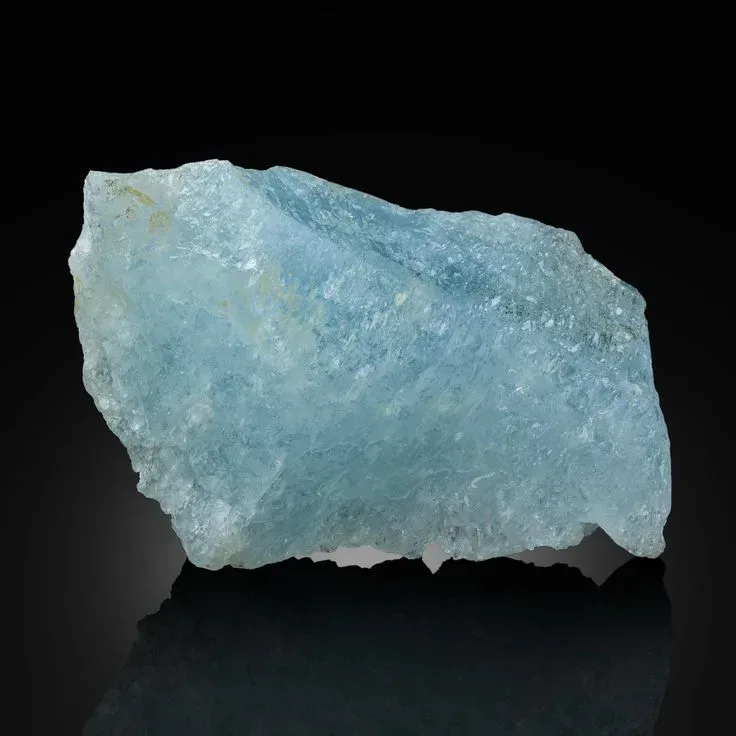
Aquamarine pairings
Aquamarine's sea-toned calm can feel wonderfully steady on its own, but pairing it thoughtfully helps shape the mood, whether the aim is clearer self-expression, softer emotional balance, or a more centered sense of ease.
Layering works best when Aquamarine remains the anchor and the supporting stone adds a clear secondary focus, such as grounding scattered thoughts, brightening intention, or gently opening the heart, without overwhelming Aquamarine's quiet, fluid character.
Crystals that combine well with Aquamarine
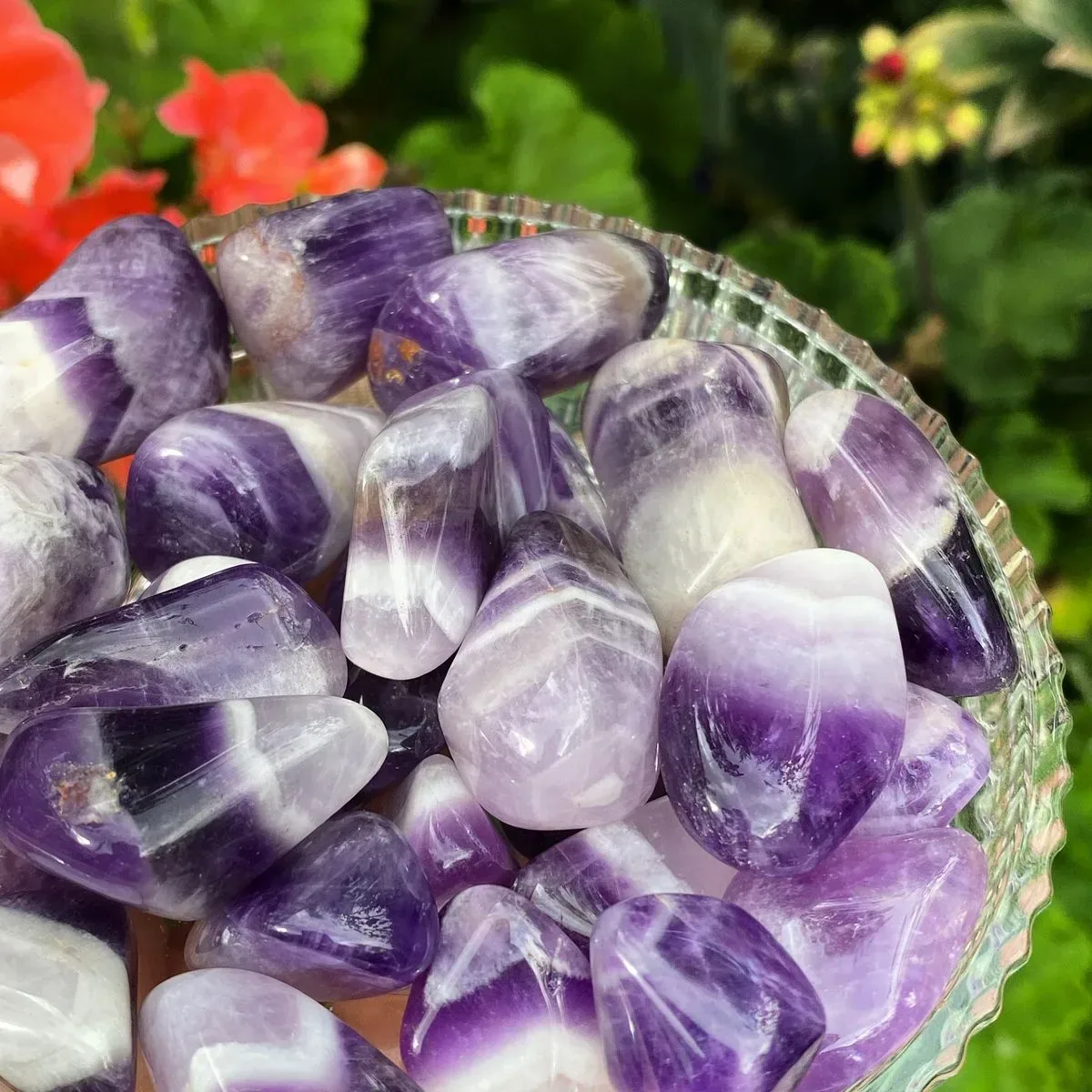
Amethyst brings a quiet, steady focus that works well with Aquamarine's clear calm. A good mix for careful words and a softer emotional tone.
For a quick reset, rest Aquamarine at the throat area and Amethyst at the brow, then take slow breaths. Set one plain intention, like "speak clearly, listen fully". Sit for a few minutes. Notice where words feel tight, or where the mind wants to rush.
Keep both stones on a bedside table to help the evening slow down. Before sleep, write one conversation to handle with more patience tomorrow, then place Aquamarine closest to you and Amethyst just behind it. A small cue to pause before replying.
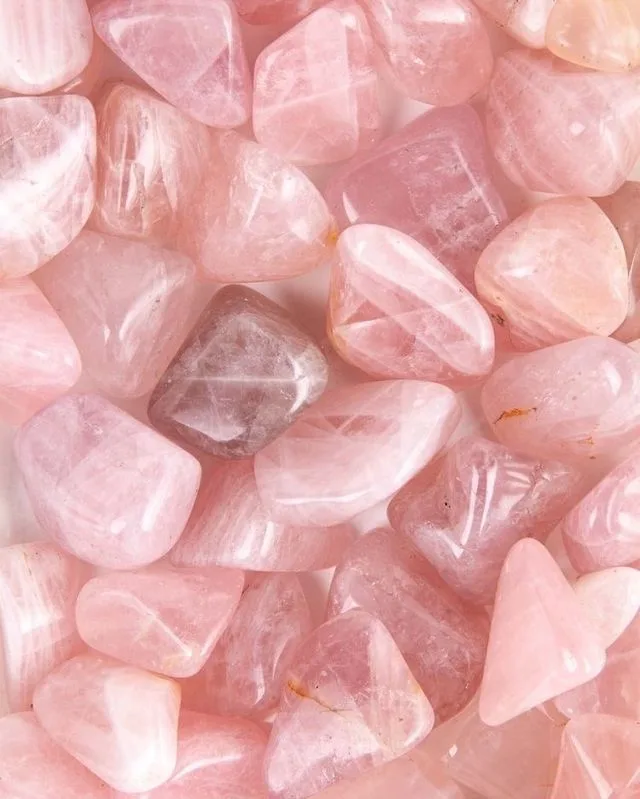
Rose Quartz adds warmth to Aquamarine's clear tone. Useful for honest conversations that still land gently.
Use this pair for a short journaling check-in. Place Rose Quartz over the heart area and hold Aquamarine in hand. Write a few lines that start with "What needs to be said with care is...". Then pick one gentle sentence to carry into the day.
In shared spaces, set the stones together where conversations usually happen, like the living room. Once a week, tidy the area and name the tone wanted at home, such as "gentle honesty" or "calm understanding".
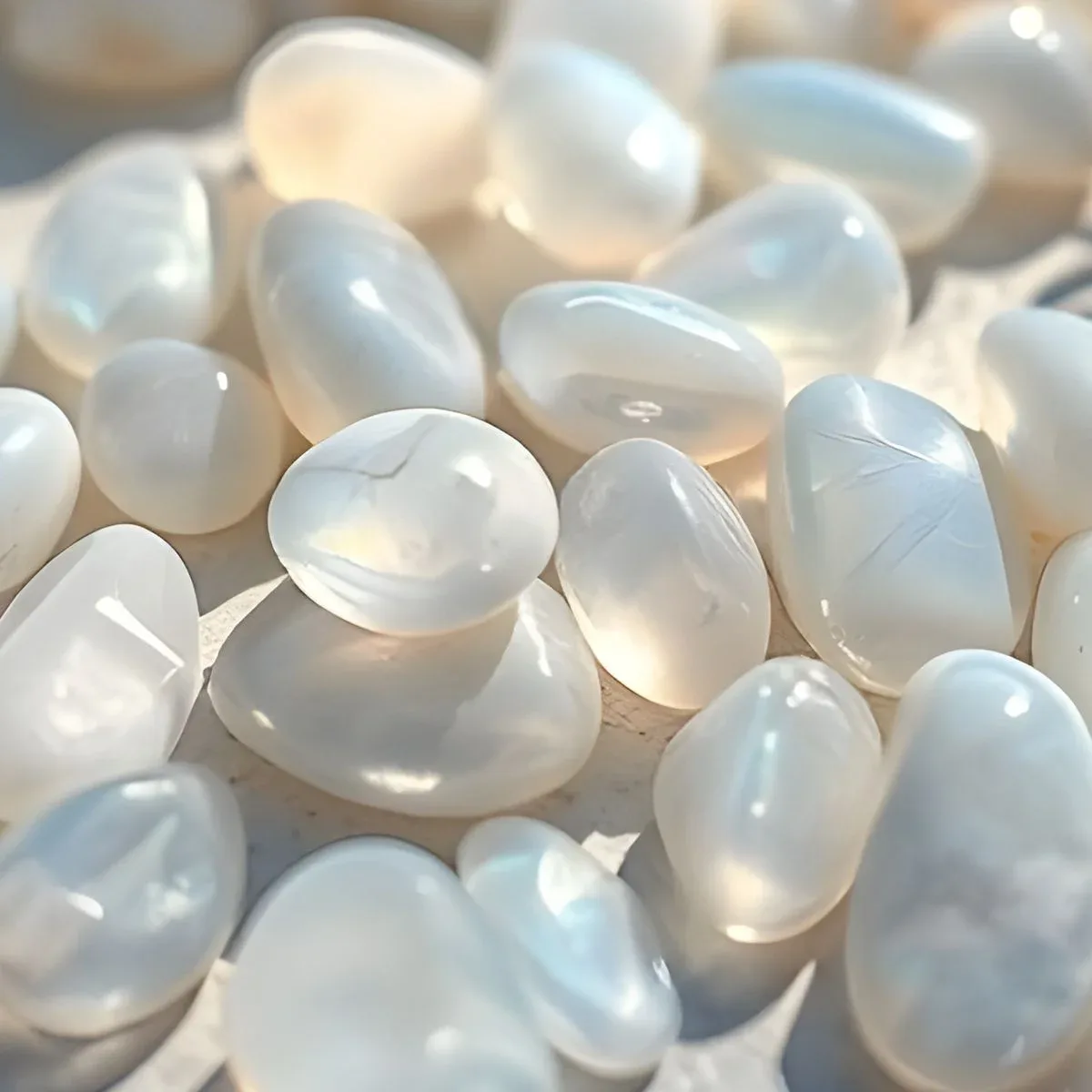
Moonstone has a reflective, inward feel that sits neatly with Aquamarine's clarity. It helps feelings get noticed first, then put into simple words.
Try an evening check-in. Hold Moonstone in the non-dominant hand and Aquamarine in the dominant hand, then scan the day for moments that stirred emotion. Name the feeling quietly. Choose one clear, small way to say it tomorrow.
Carry both in a pouch on days with shifting plans or moods. When pulled in two directions, pause, touch the pouch, and ask one steadying question: "What is the next kind, clear step?"

Labradorite supports inner focus during change, which pairs well with Aquamarine's calm communication. Handy for boundaries and staying steady in what needs to be said.
For a pre-meeting routine, place Aquamarine near a glass of water and keep Labradorite on the desk. Take two minutes to write three points to say clearly, then add one short, polite boundary line to help stay on track.
Use the stones for a weekly reset. Sit with Labradorite near the chest and Aquamarine near the throat, then review where energy felt overextended. Write one boundary to practice, and leave the stones by the journal. Check in again midweek.
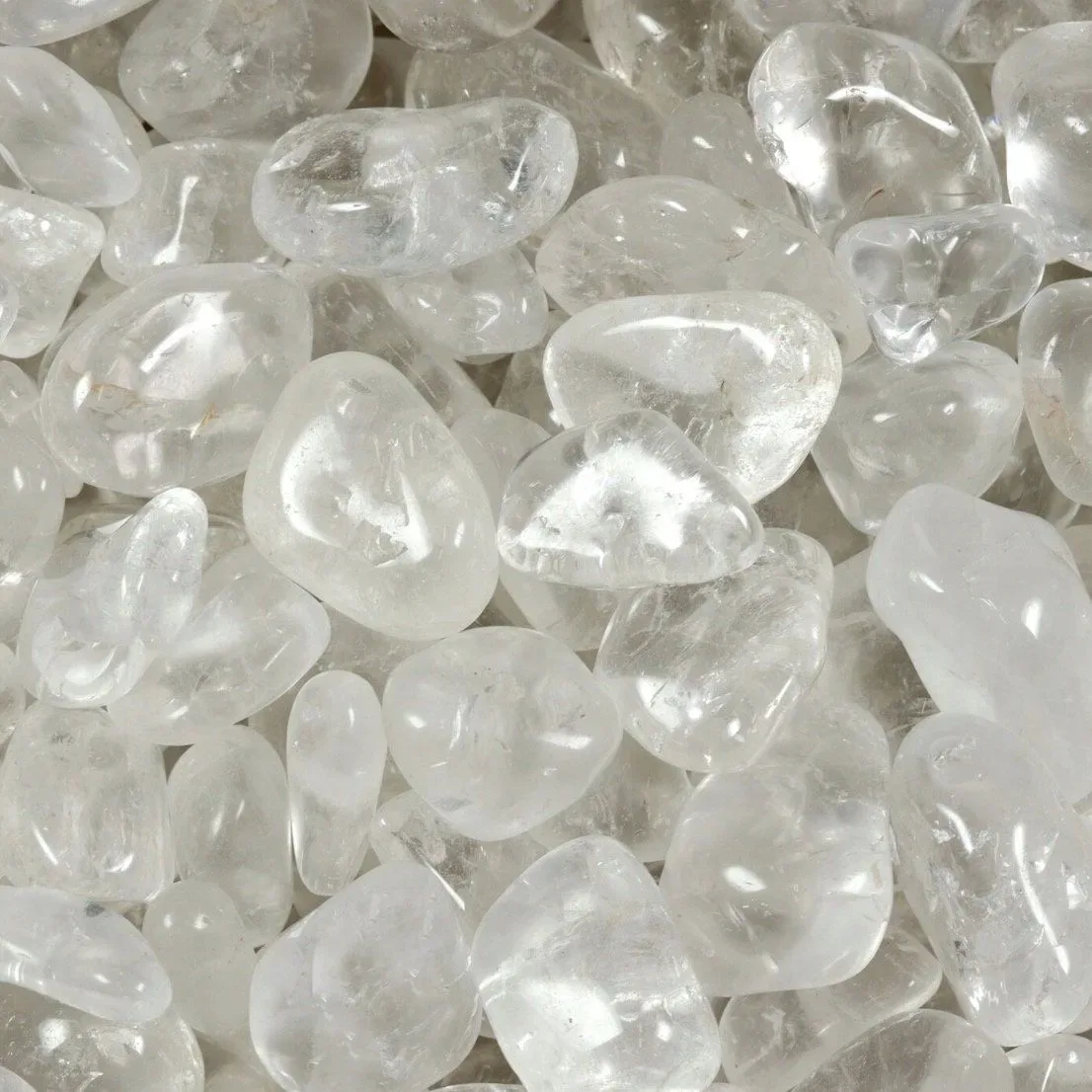
Clear Quartz helps sharpen and organise an intention, which makes Aquamarine's calm clarity easier to use. A practical pairing for routines and straightforward communication.
Set a simple intention. Hold Clear Quartz between both palms and keep Aquamarine nearby, then say one specific goal, like "clear communication in one key conversation". Sit for a few minutes, returning to the phrase whenever attention drifts.
For an easy setup, keep the pair near a planner or calendar. At the start of the week, place Aquamarine on the page for the most important conversation, and rest Clear Quartz beside it. A cue to keep plans and words simple and direct.
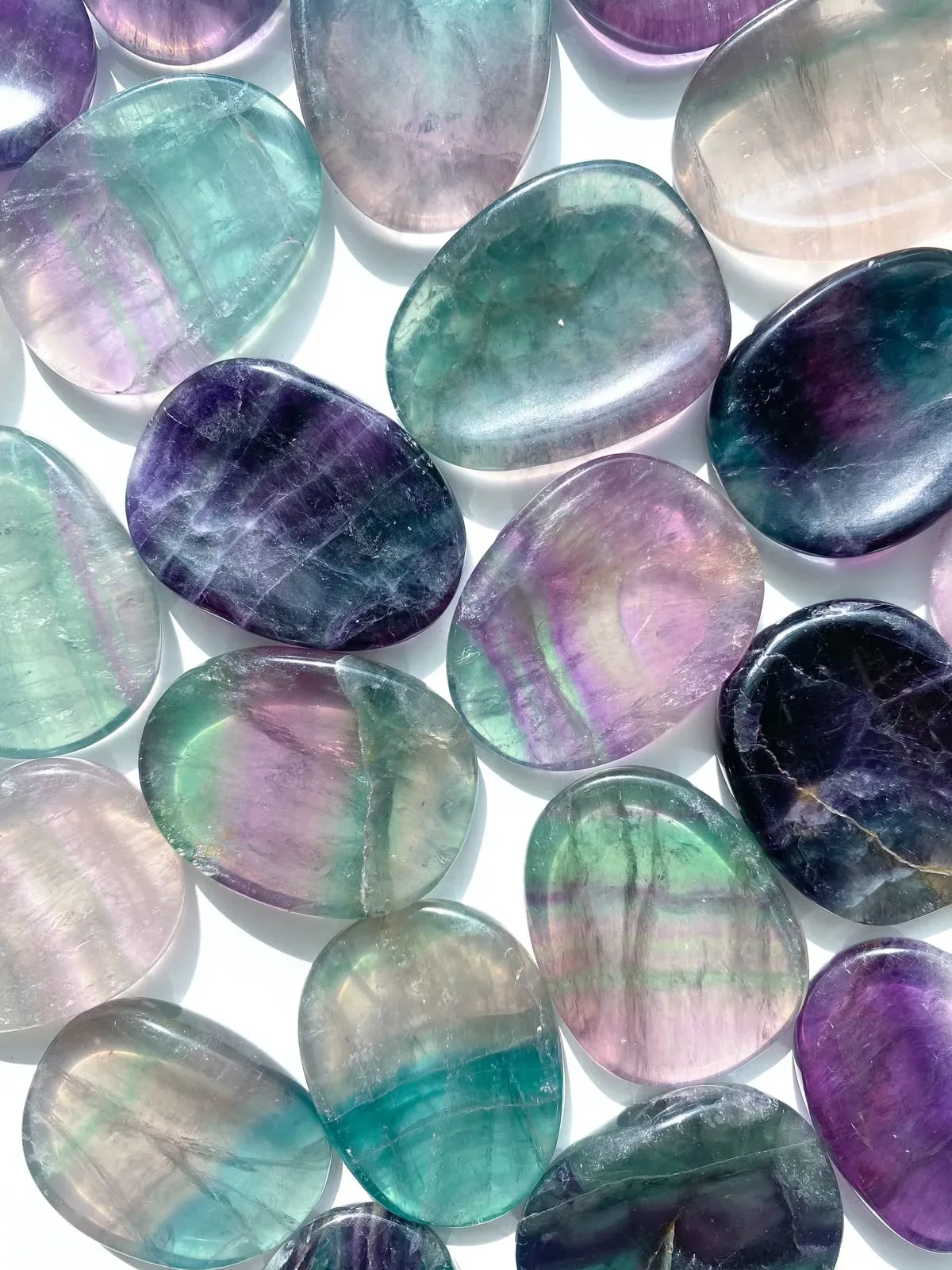
Fluorite brings a sorting, structured feel that matches Aquamarine's soothing clarity. Good for calmer thinking and cleaner choices when the mind feels busy.
Use this duo before study or planning. Place Fluorite on the workspace and hold Aquamarine for a few slow breaths, then write a three-step plan for the next hour. Keep the stones in view. Simple and steady.
Try a quick "clear the mind" refresh. Set both stones near a bowl or tray, then do a fast desk reset by removing clutter and closing open tabs. Choose one priority, place Aquamarine closest to you, and set Fluorite slightly to the side as a cue for organized attention.
Jewelry pairings that work well together
Aquamarine sits beautifully with stones that either soften its sea-blue clarity or sharpen its cool, watery finish. Pale, translucent companions keep the look airy and refined, while darker flashes or gentle lilac tones add definition without losing the calm feel.
Aquamarine & Amethyst
The light blue of Aquamarine sits neatly beside Amethyst's soft violet, creating a cool, restful contrast with a polished finish. Both stones suit a clean, translucent look, so the pairing feels balanced rather than busy. A slim ear climber in alternating Aquamarine and Amethyst stones gives the colors a gentle upward sweep along the ear. It works especially well with swept-back hair and a simple neckline.
Aquamarine & Rose Quartz
Aquamarine's clear sea tone is lifted by Rose Quartz's milky blush, making the pairing feel tender and bright. The contrast is gentle, with Aquamarine bringing freshness and Rose Quartz adding a soft, opaque warmth. A wide cuff with small inlaid stones suits this combination well, especially when the two colors are set in a repeating pattern. It creates a calm, wearable statement without feeling too formal.
Aquamarine & Moonstone
Both stones share a luminous, watery quality, but Moonstone's pearly sheen adds a softer glow beside Aquamarine's cooler transparency. The result is subtle and reflective, with very little hard contrast. A single pendant in a fine bezel setting lets the two stones read as one quiet focal point. This works well on a short chain over crisp shirts or fine knitwear.
Aquamarine & Labradorite
Aquamarine's pale blue-green clarity is sharpened by Labradorite's darker body color and shifting flash. The pairing has more depth and edge, with the luminous blue tones standing out against the stone's smoky base. A signet ring with one Aquamarine center stone and a slim Labradorite accent on the shoulders gives the look a modern structure. It is a strong choice for everyday wear when you want the colors to feel composed rather than delicate.
Aquamarine & Clear Quartz
Clear Quartz keeps the palette bright and open, allowing Aquamarine's color to remain the main feature. The two stones share a clean translucence, so the finish feels crisp, glass-like, and easy to layer. A tennis-style line bracelet in alternating stones makes a neat, continuous band of light on the wrist. It pairs well with tailored sleeves and other simple metal pieces.
What not to pair with Aquamarine
Aquamarine works best when its calm, clear current stays easy to hear. Pairings that are too fiery, forceful, or activating can blur its gentle communication focus and make the overall field feel less settled.
Bumblebee Jasper
Its vivid, busy energy can pull Aquamarine away from quiet clarity and into a more stimulated register. That can make the throat-centered calm feel less spacious and more mentally crowded.
Carnelian
Carnelian's drive and heat can press Aquamarine towards action when the aim is ease and measured expression. The contrast may feel like urgency sitting over a calm tide, which can muddy Aquamarine's soft balance.
Fire Agate
Fire Agate can bring a protective, sparking intensity that is stronger than Aquamarine's fluid composure. Instead of smoothing communication, the pairing may feel edgy and over-alert, closing down the crystal's peaceful tone.
Garnet
Garnet's deep, activating pull can add weight and intensity to Aquamarine's lighter emotional field. That can shift the focus from calm clarity into a denser, more insistent mood that is harder to keep balanced.
Ruby
Ruby can be powerfully energizing, which may overpower Aquamarine's gentle, reflective nature. The result can feel too charged for a stone whose role is to keep expression clear, steady, and unforced.
Moldavite
Moldavite's swift, transformative pressure can be too abrupt for Aquamarine's soothing rhythm. Rather than supporting calm communication, it may create a restless, unsettled field that makes Aquamarine's clarity harder to settle into.
Got questions?
We've got answers!
FAQ's
Can I wear Aquamarine with more than one companion stone at once?
+×
Yes. Aquamarine layers well when the other stones match its quiet, clean look. Keep the palette cool and the focus simple, for example Aquamarine with Clear Quartz and Amethyst.
For comfort, stick to two companion stones at a time. Similar sizes help. Let Aquamarine lead. If the stack starts to feel busy or distracting, drop back to one pairing for a week, then add a second stone again once it feels settled.
Do Aquamarine and Amethyst need to touch in a pairing?
+×
No. They do not need to touch for the pairing to work. Touching can make jewelry feel more like a set, but it is not required.
Keep it straightforward. Wear Aquamarine as the main piece and keep Amethyst nearby, like a small stone in a pocket or a separate ring. In a room, place them in the same area, such as a bedside table or a desk, so the pairing stays part of one routine without direct contact.
Is Aquamarine and Rose Quartz a good pairing?
+×
Yes. Aquamarine and Rose Quartz make a gentle pairing with a supportive tone. Aquamarine reads clear and steady, Rose Quartz brings softness. Useful for calmer, less reactive conversations.
In jewelry, it suits minimal designs. Pale pink and blue look clean together in silver or white gold, and beaded stacks work best when kept light. For day to day use, set one plain intention, speak with care and stay open to the other side. Keep the pairing steady for a few days instead of switching stones daily.
What crystals should not be paired with Aquamarine?
+×
There are no absolute rules, but Aquamarine tends to do best in calm, uncluttered combinations. Pairings can feel off when they pull the mood in a different direction or visually overpower Aquamarine.
Examples that can clash include Amber, which can read too warm next to Aquamarine's cool tone, Amazonite, which can blur a clear communication theme, and Angel Aura Quartz, whose high-shine finish can dominate the look. If a pairing feels noisy or distracting, simplify.
How do I use Aquamarine and Amethyst together in a ritual?
+×
Keep it short and repeatable. Use Aquamarine as a cue for clear expression and Amethyst as a cue for calm focus.
1) Set the space: place Aquamarine and Amethyst on a clean surface, add a glass of water nearby, and take three slow breaths. 2) Choose one prompt: write one sentence in a journal about what needs to be said, and what needs to be understood. 3) Anchor the intention: hold Aquamarine for a minute and read the sentence once. Hold Amethyst for a minute and read it again more slowly, editing for simplicity and kindness. 4) Close: place both stones on the page for five minutes, then move them to where the next conversation will happen, like by a phone, on a desk, or near the front door. Keep the same pairing for a day or two so the routine stays consistent.