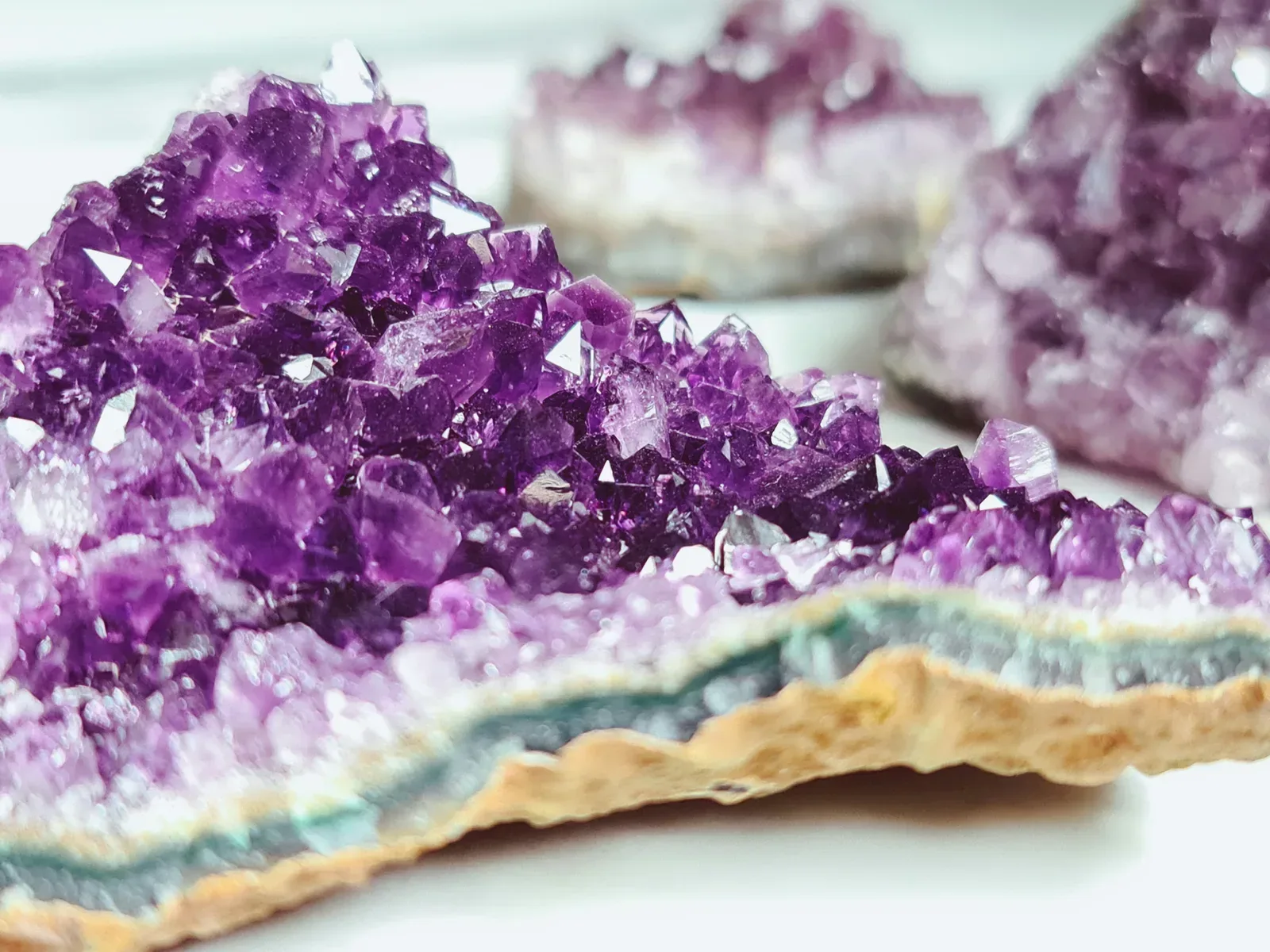
Amethyst Crystal, Benefits and Meanings.
Known for its rich purple color and its long link to clarity and calm. The name comes from the Greek word "amethystos", meaning "not intoxicated".
Metaphysical & Spiritual
Amethyst feels calm and steady. It is often picked when the mind is busy and attention keeps hopping. Clear thinking, without forcing it. In spiritual work, Amethyst leans toward insight and a wider view. It shows up in different systems because it sits where thought, feeling, and meaning meet. Crown and Third Eye themes suit Amethyst's quieter style. Less about big moments, more about reflection, pattern-spotting, and letting things click in their own time.

Planet

Jupiter
Jupiter leans toward learning and perspective, and Amethyst follows that line by favouring wisdom over noise and the bigger pattern over the small swirl.

Neptune
In Neptune's dream-and-imagination space, Amethyst brings a cleaner signal, helping intuition stay useful rather than hazy.
Element
Air
Amethyst reads as Air when thoughts move fast, words stack up, and attention starts to fray, cool, clear, and a bit more organized.
Water
Water is the emotional undercurrent, and Amethyst keeps that sensitivity readable so feeling stays steady instead of flooding everything.


Crystal Pairings
Amethyst is often paired with stones that either sharpen its reflective feel or soften it into something more tender. These combinations are usually described in terms of tone, symbolism, and the kind of mental space they evoke together.
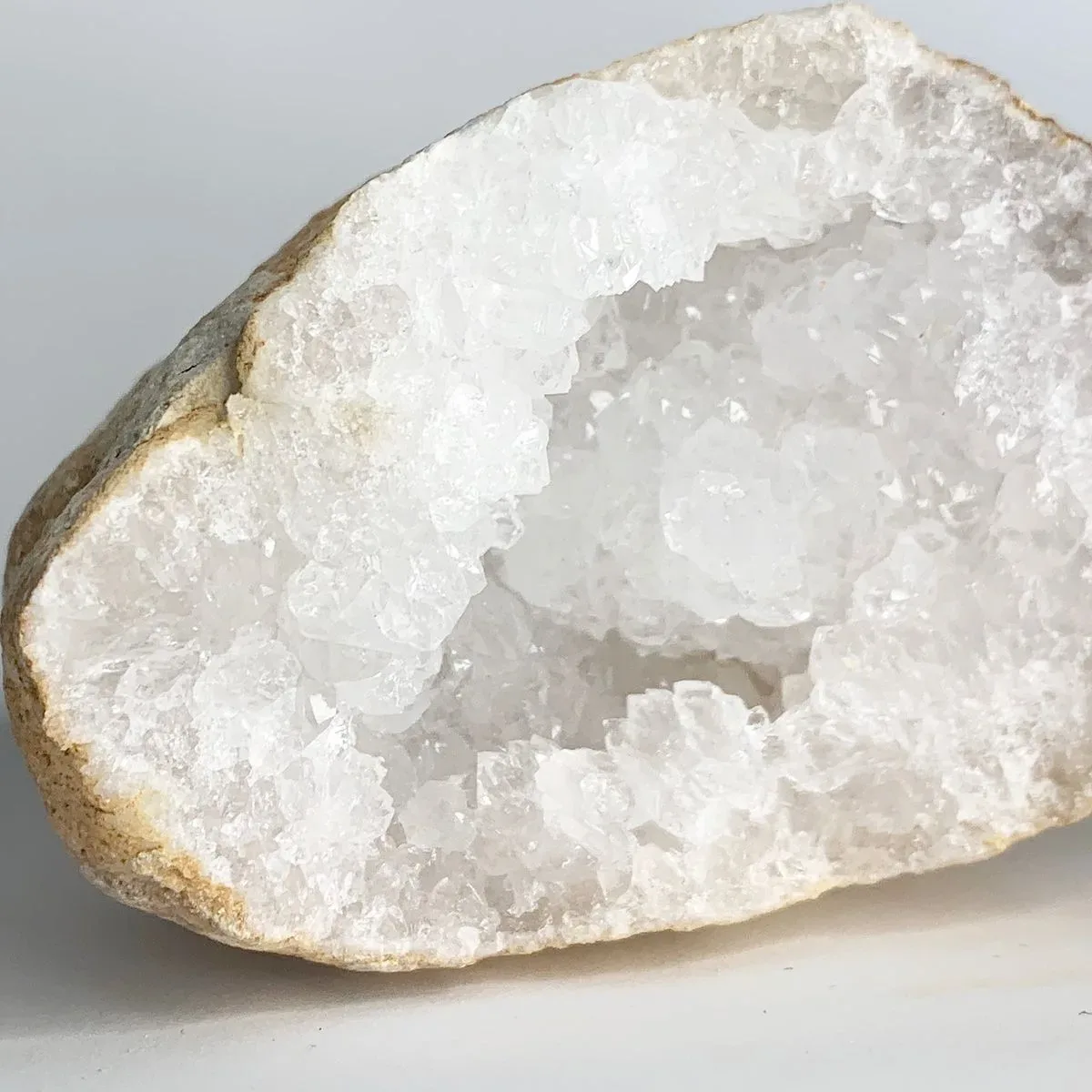
Clear Quartz
Clear Quartz reads as a clean, bright counterpoint to Amethyst's deeper purple. Together it feels like clear thinking with depth, simple but not flat.
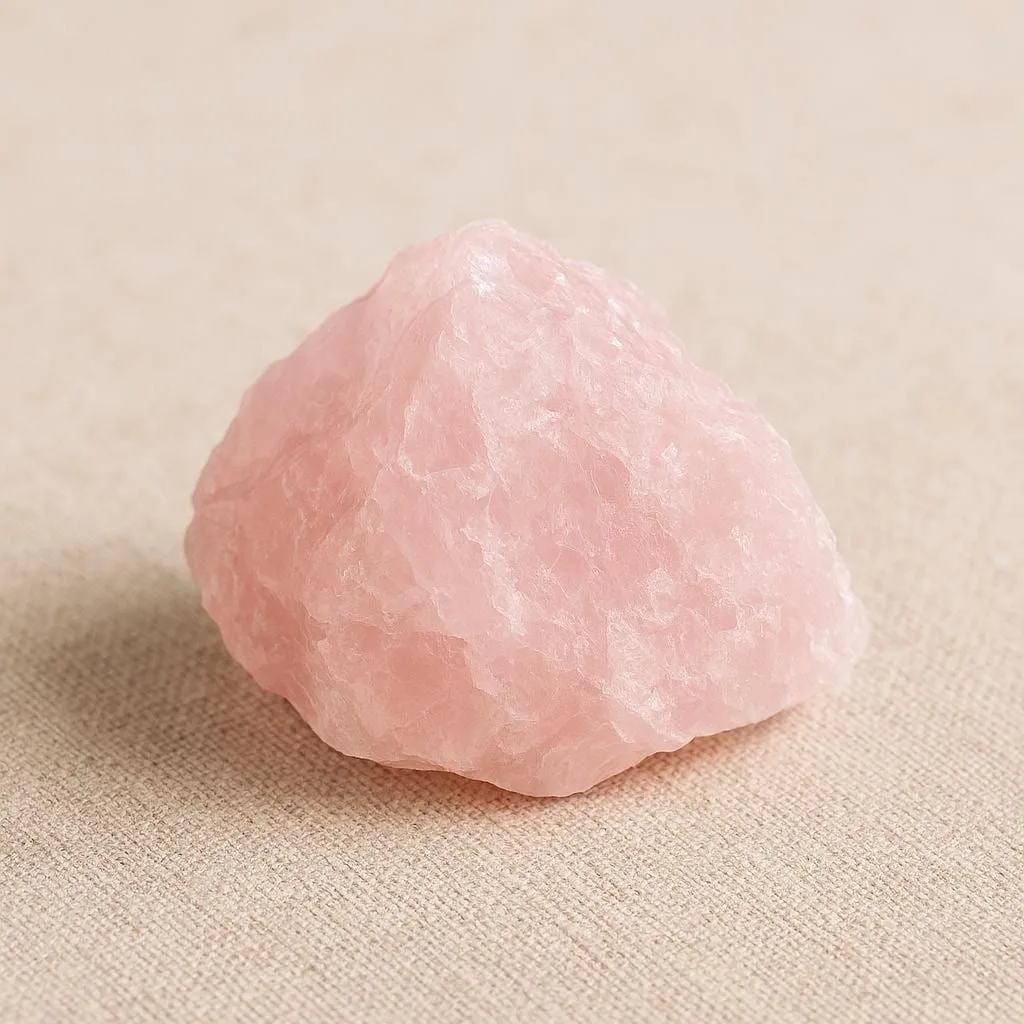
Rose Quartz
Rose Quartz adds warmth to Amethyst's cooler, inward tone. Together it lands as care with perspective, softening the mood without losing clarity.
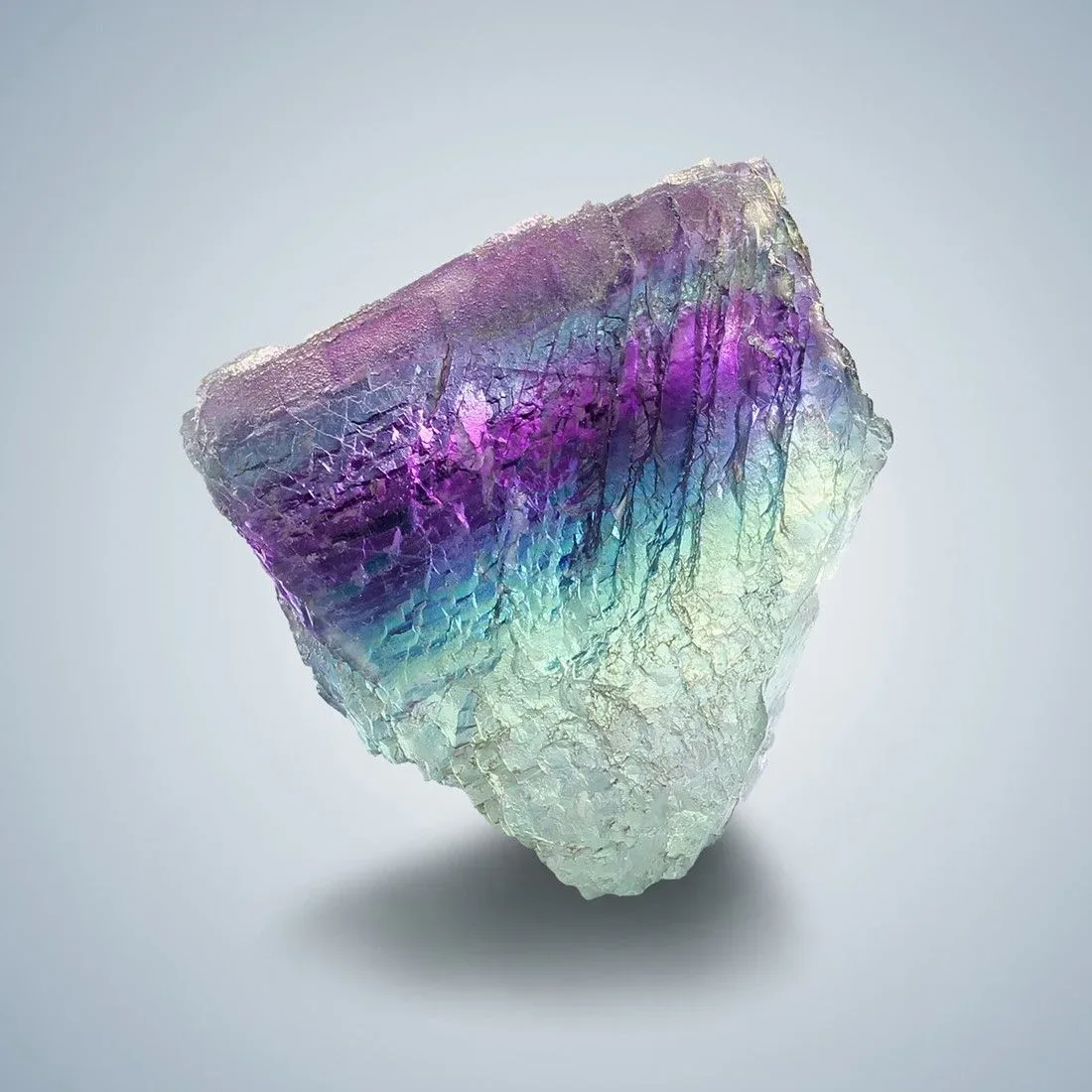
Fluorite
Fluorite is commonly linked with order and focus, a neat match for Amethyst's reflective feel. Together it suggests a mind that can sort through noise and stay steady.
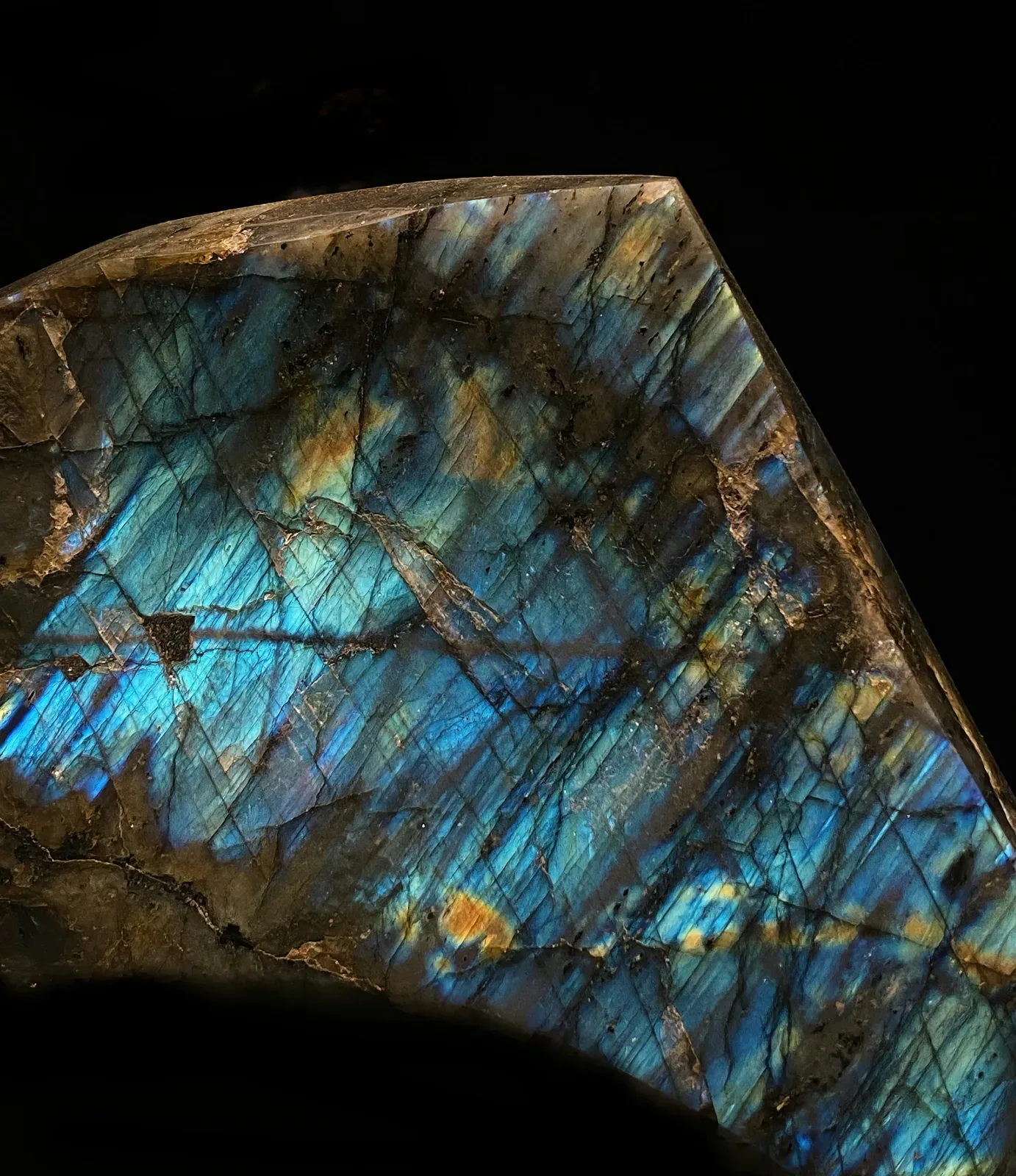
Labradorite
Labradorite brings shifting light and a touch of mystery that suits Amethyst's quiet, thoughtful tone. Together it reads as imagination with discernment, curious but grounded.
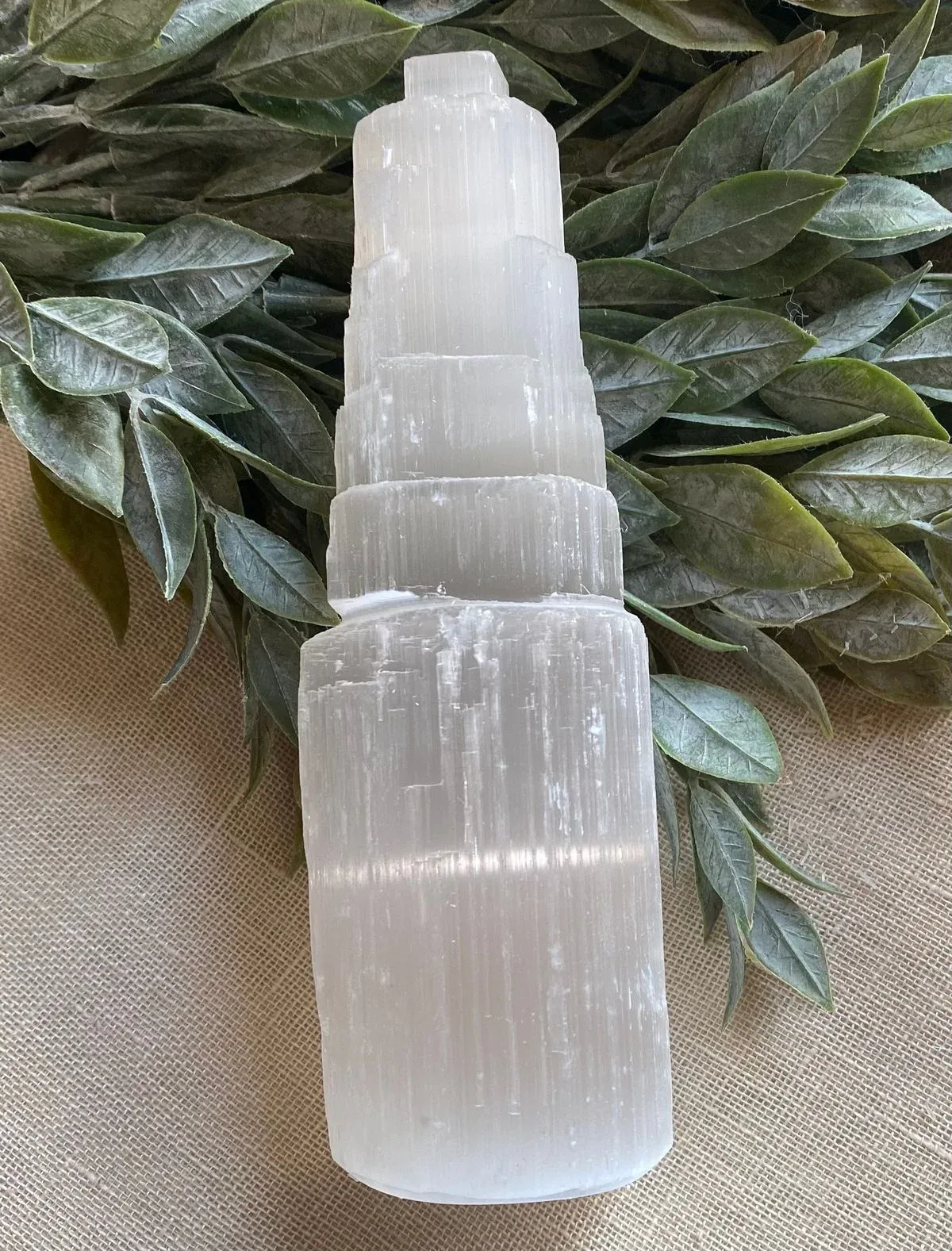
Selenite
Selenite's pale, airy look contrasts with Amethyst's richer color. The pair comes across as clean simplicity next to quiet depth, like open sky over still water.
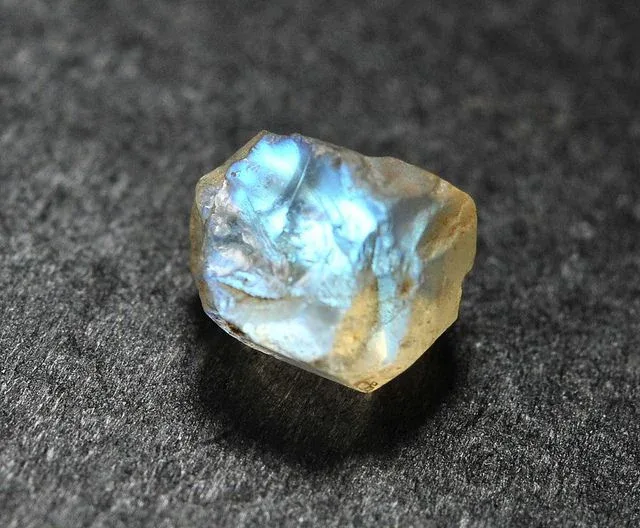
Moonstone
Moonstone has a soft, changeable feel that complements Amethyst's steadier presence. Together it suggests emotional movement held inside a calmer, more centered tone.
Healing
Amethyst is handy when the mind will not slow down. It suits rumination, stress, and evenings where the body is tired but thoughts keep looping.
It can take the edge off big reactions, so choices feel less rushed. The aim is a steadier mood and a calmer pace, which can make rest come easier. It is also used as a cue to pause when impulsive habits show up.
Affirmations
Hold Amethyst at the Third Eye or Crown, or simply rest it in the hand, then pick one line that fits the day.
Say it slowly a few times. Keep the words simple and let the body catch up, rather than forcing a big feeling.
- I trust my intuition
- I am spiritually guided and supported
- I am clear, calm and protected
- My mind is aligned with my highest self
- I will be spiritually guided to the truth
Intention Setting
Amethyst can be useful when setting intentions that need a steady head and a quieter inner pace.
It helps keep the focus on what matters, so choices feel more deliberate and less reactive.
- I set intentions from a place of clarity
- I welcome spiritual awareness into my life
- I release negative thought patterns
- I choose calm, focused decision making
- I align my actions with higher understanding
Manifesting
Amethyst supports a calmer focus, which can make visualization and ritual feel less scattered.
It suits goals that depend on consistency, patience, and a clear sense of direction, rather than intensity.
- I manifest with clarity and purpose
- I attract peace, wisdom, and protection
- I open myself to spiritual growth
- I trust the guidance I receive
- I manifest from my highest self
Jewelry
Amethyst jewelry is an easy way to stay with a clear, settled headspace. Each style sits in a different spot, so the effect can feel more mental or more steadying. The main thing is the pause it prompts when the day starts to speed up.
General benefits: Wearing Amethyst as jewelry keeps its calm tone close through the day. It is a small reminder to slow the breath and unclench the jaw. Handy in busy places. It also keeps the stone near the head and upper body without needing to carry it.
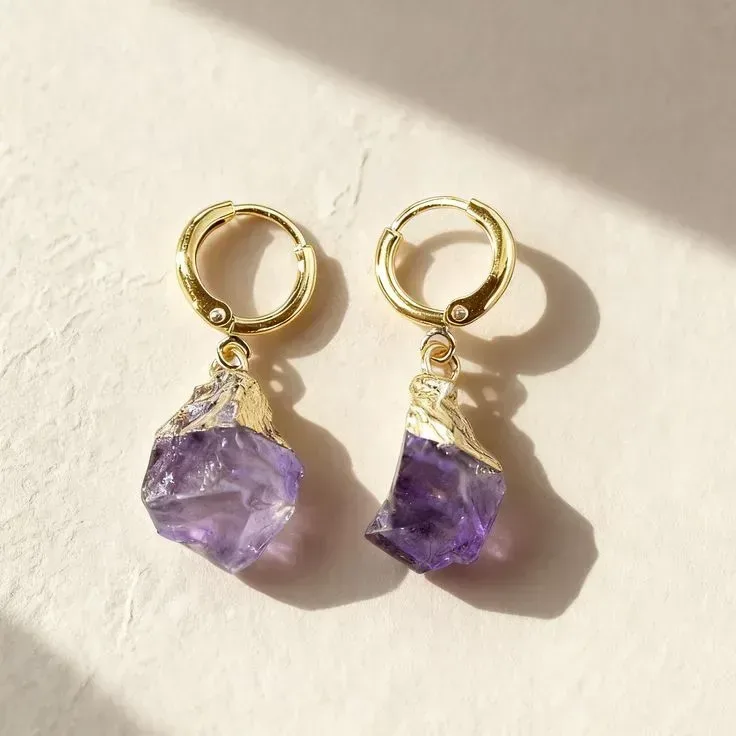
Earrings
Amethyst earrings sit close to the temples, so the stone reads crisp and reflective. Good for days full of talking, listening, and quick calls. The gentle movement can be a cue to slow down, keep words measured, and stay even when things get tense.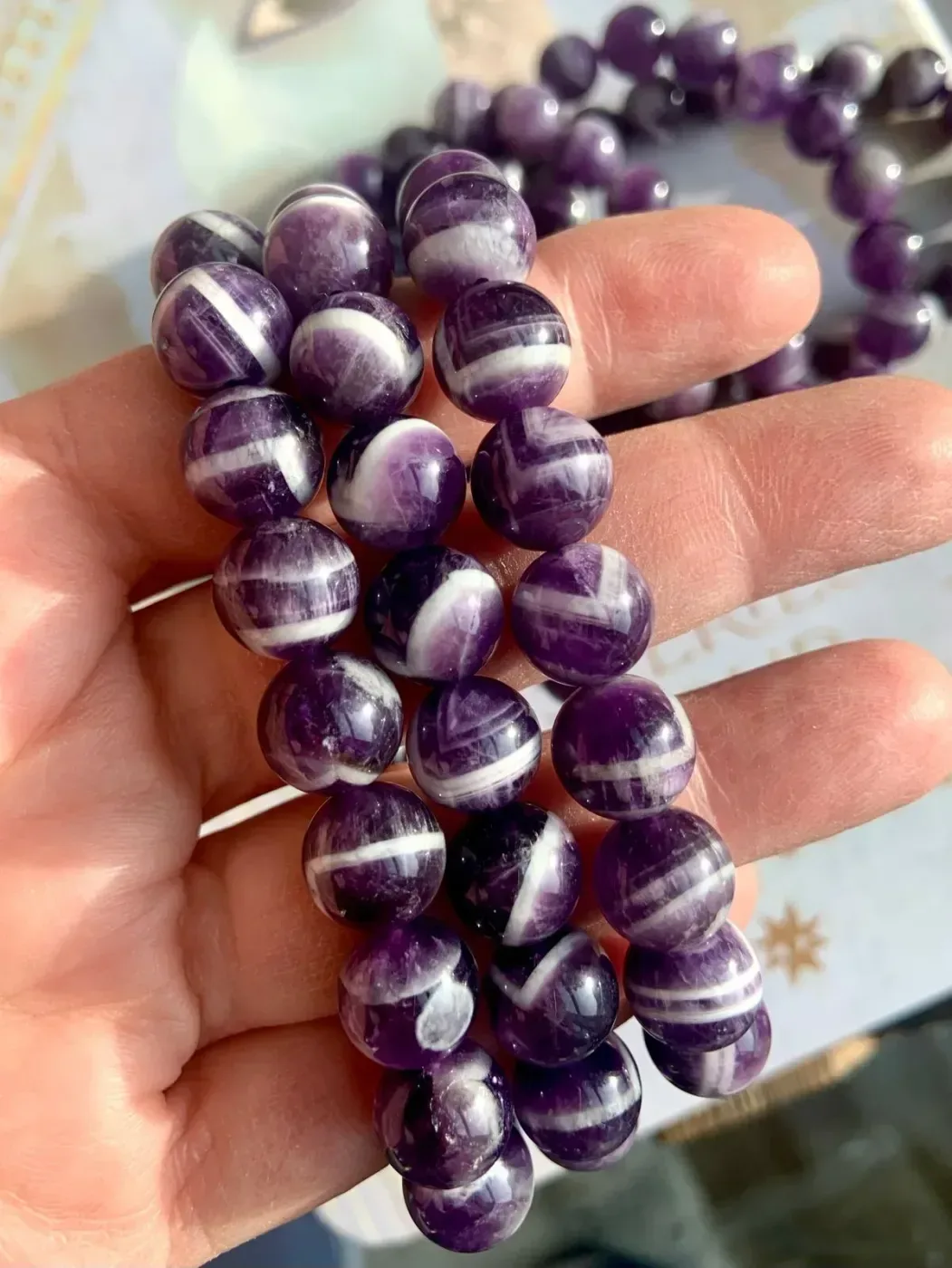
Bracelet
An Amethyst bracelet stays in view, which makes it useful for quick check-ins. It can nudge awareness back to the hands and breath before a sharp reply lands. Traditionally, the left wrist is for receiving and the right for giving, if that helps.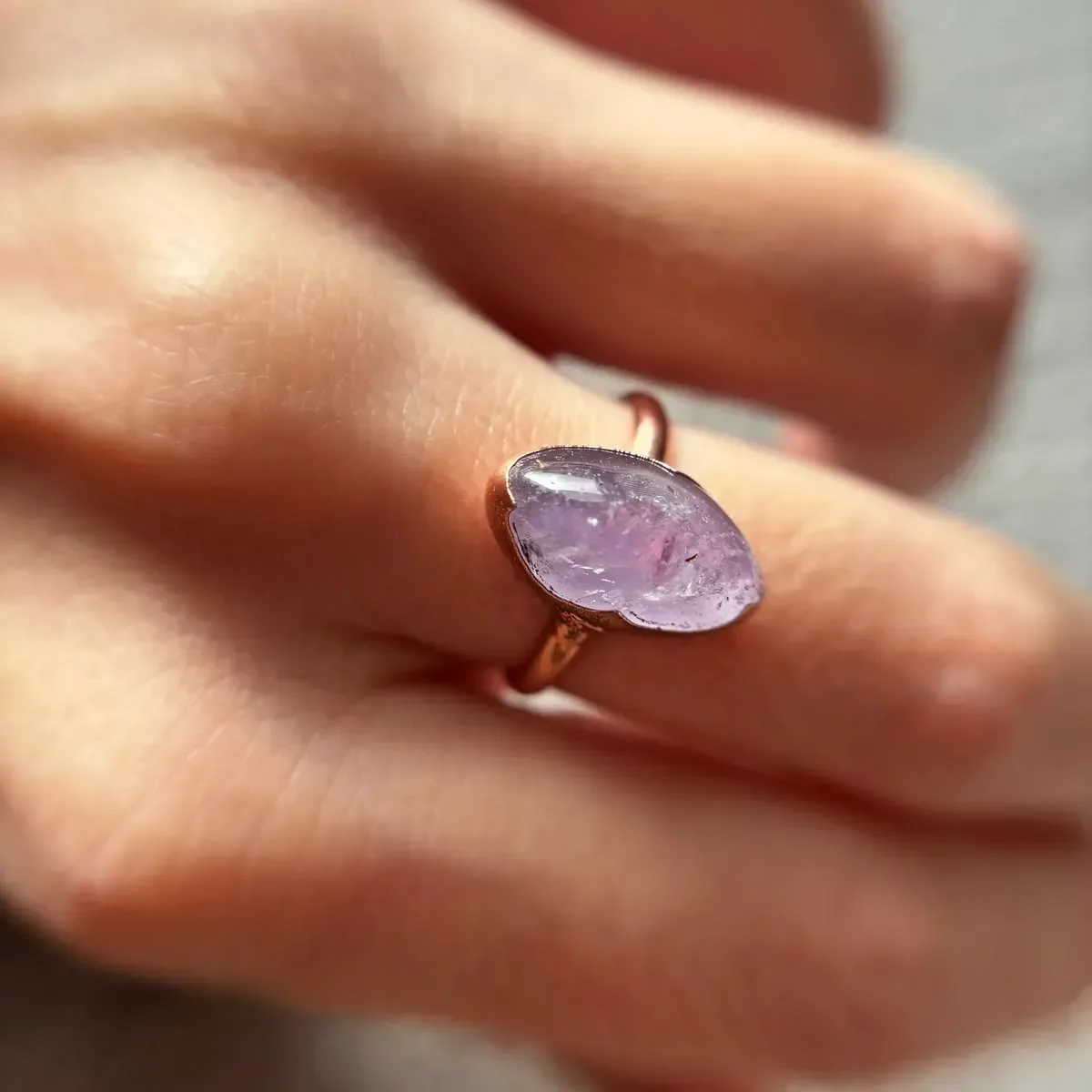
Ring
An Amethyst ring keeps the stone in constant, practical contact. It suits intention work around self-control and steadier choices, since the hand is always in use. Simple prompt. When old patterns show up, it can buy a second to pause first.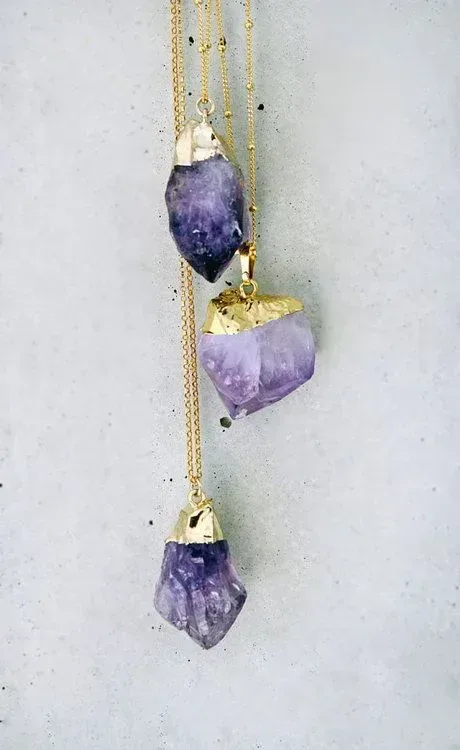
Necklace
A necklace keeps Amethyst close to the throat and upper chest, where it can feel quietly steady on busy days. It is a good pick when a calm presence is wanted without fidgeting. It just sits there, a soft reminder to keep things simple.Forms
Amethyst can feel different depending on the form, from crisp and defined to soft and ambient. Cut and polish change how the color shows up. That shifts the mood, even before anything else does.
Rough
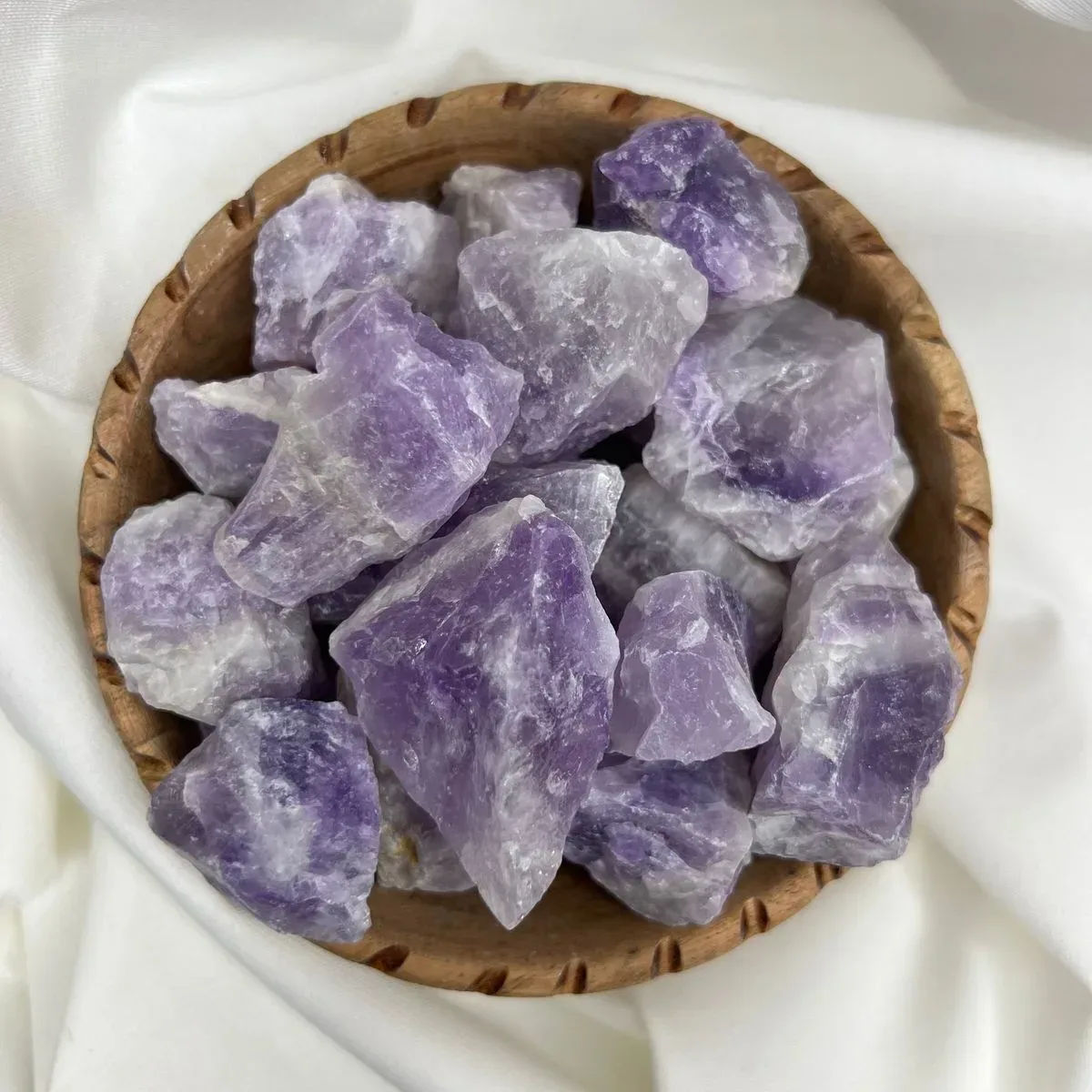
Rough Amethyst feels raw and direct. Natural points and uneven faces make the purple look deeper and more textured, with a strong, unfiltered character. It reads bold and honest, like the stone is showing its true shape without trying to look neat.
Point / Tower
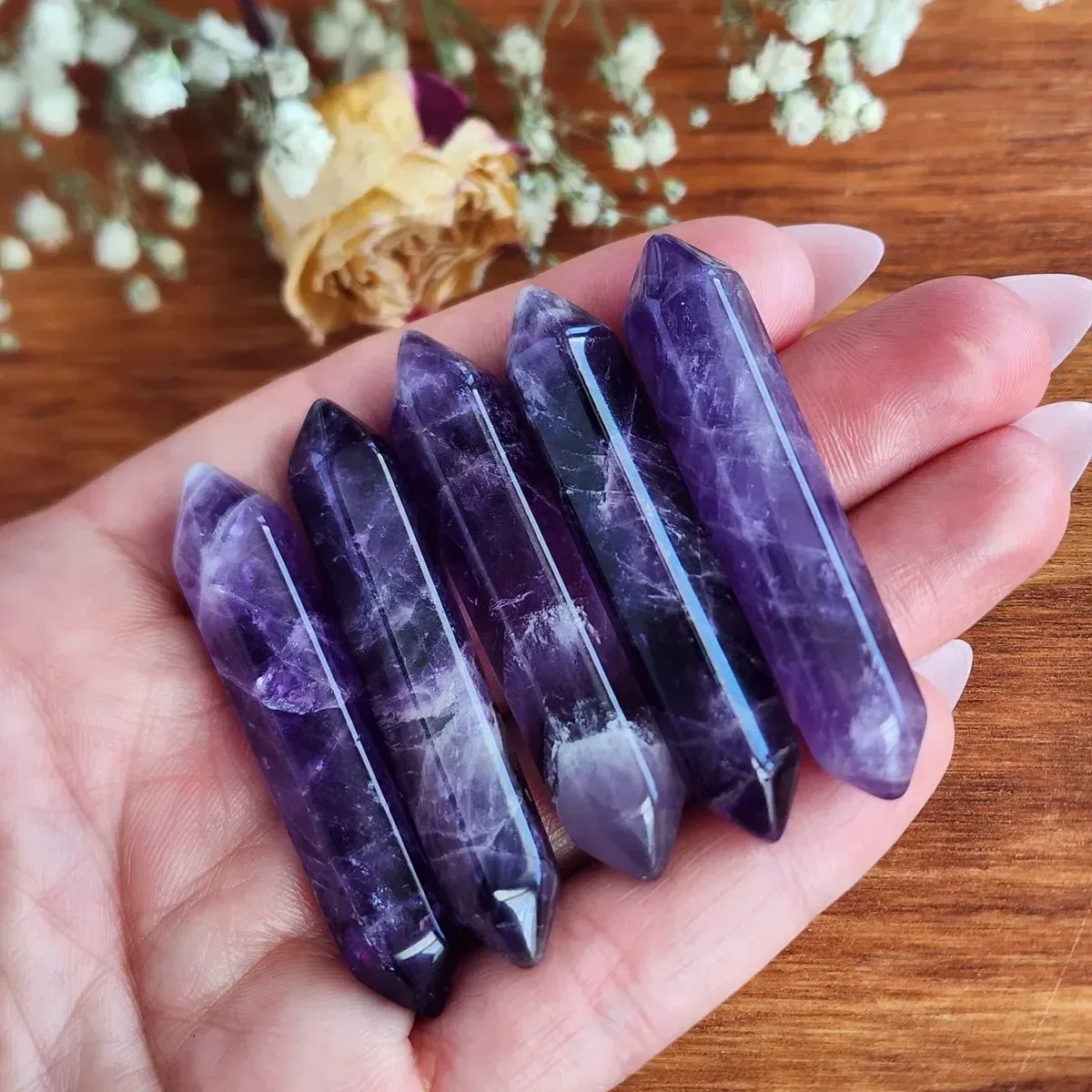
A point or tower looks focused and upright. With Amethyst, it gives a clean, organized feel, like attention has been gathered into one line. The edges add definition, so the stone reads clear and purposeful rather than soft or drifting.
Sphere
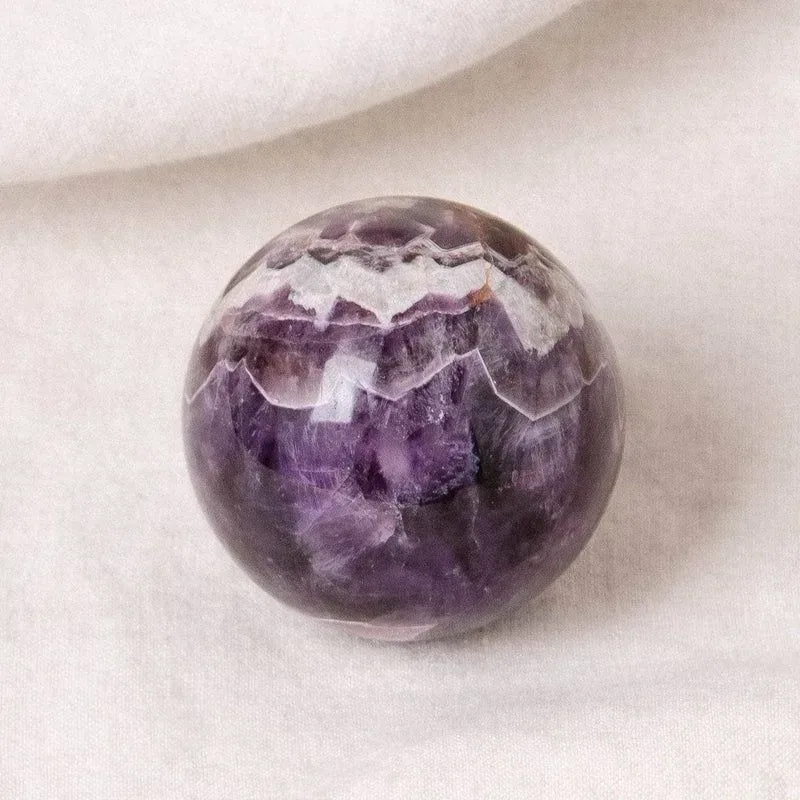
A sphere gives Amethyst an even, rounded presence. Light moves smoothly across the surface, so the color feels gentle and consistent. It reads balanced and calming, with a steady mood that feels surrounding rather than sharp or directional.
Palm Stone
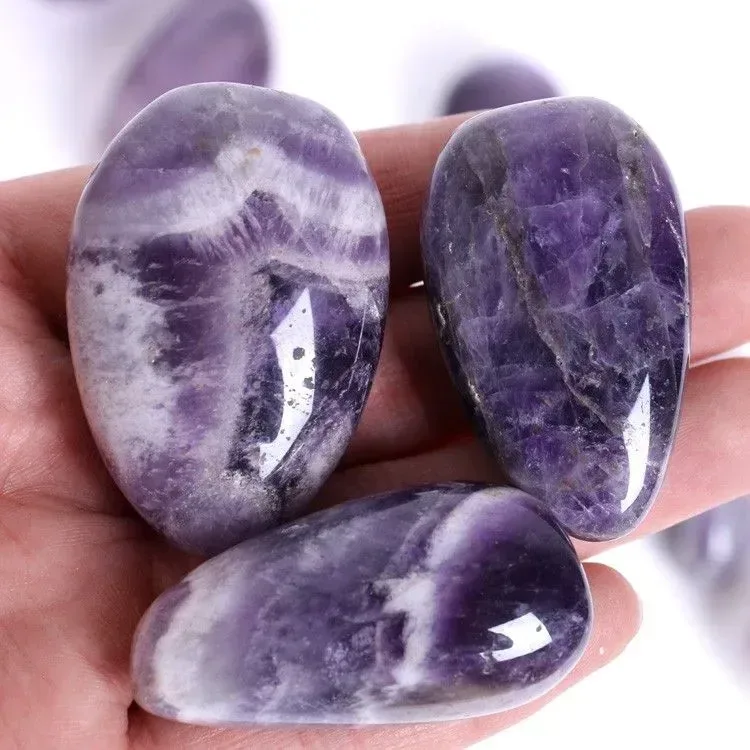
A palm stone feels personal and comforting. The smooth finish makes Amethyst look softer and more approachable, with a quiet, soothing character. It suggests simple steadiness, like calm that is practical, familiar, and easy to return to.
Tumble Stone
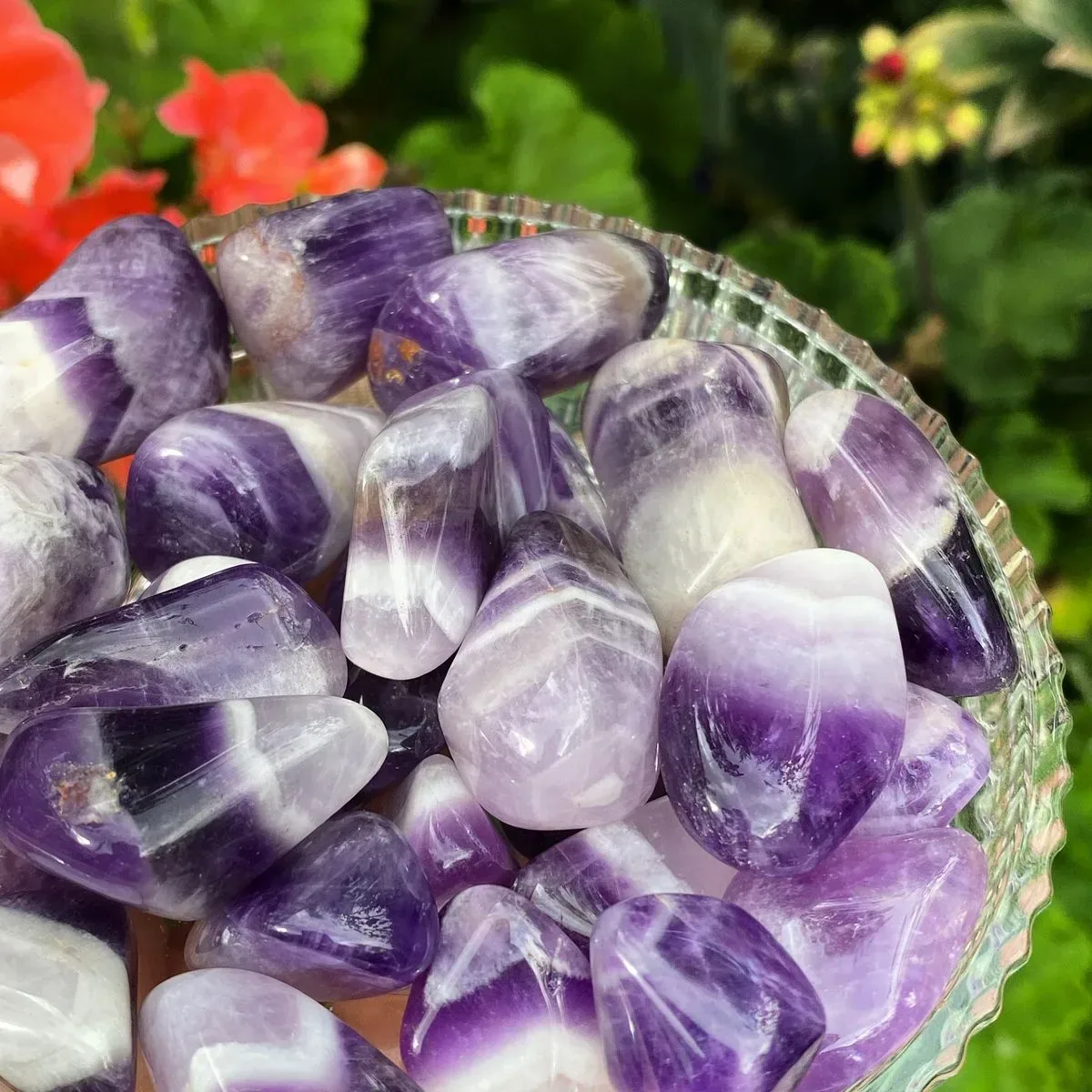
A tumble stone has an everyday, uncomplicated feel. Rounded edges and small size make Amethyst seem light and casual, less formal than bigger pieces. It reads as simple emotional steadiness, like a small piece of calm with no fuss.
Figure
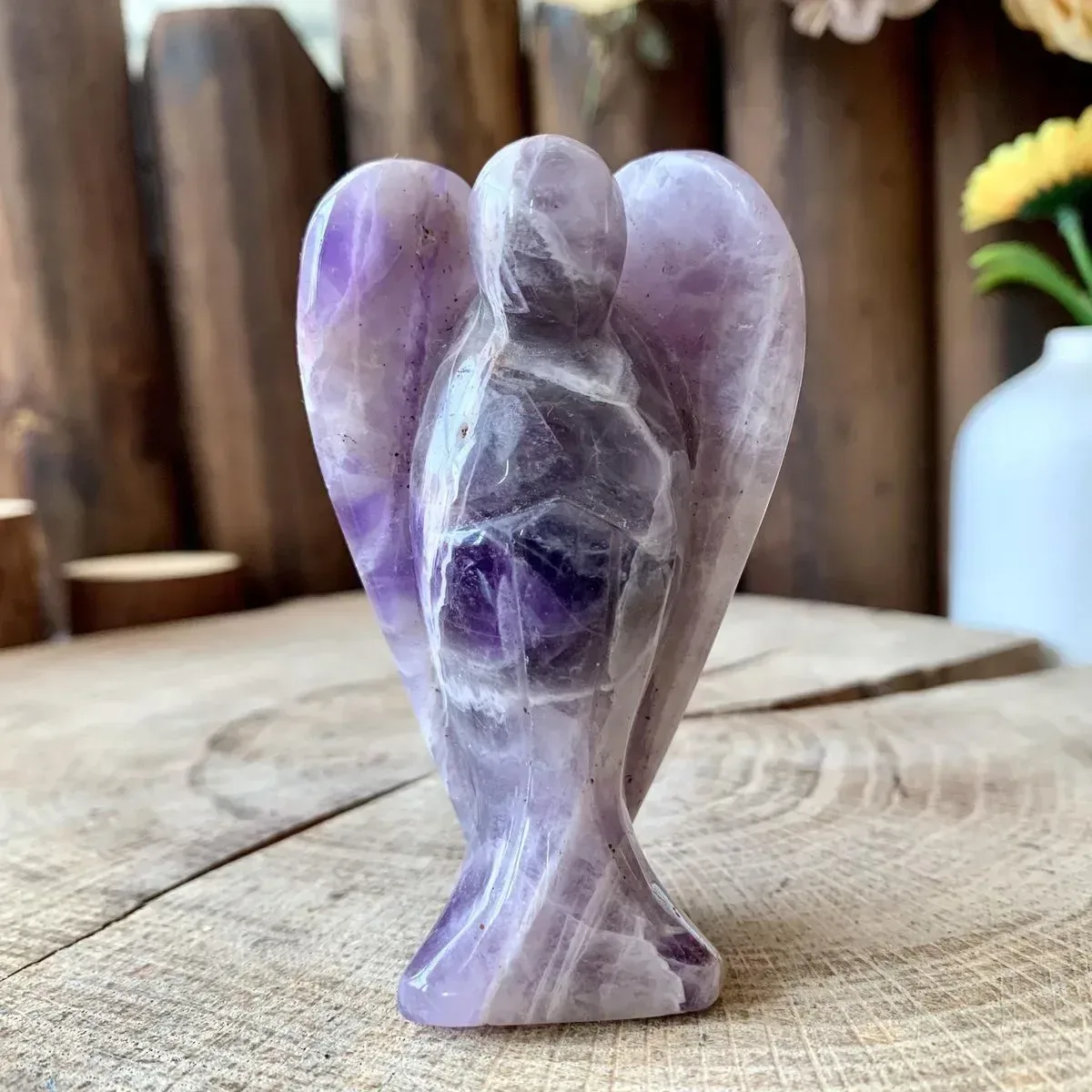
An Amethyst figure adds a clear visual identity. The carving turns the stone into a symbol, which can make it feel more intentional and story-like. Details in the shape pull the eye in, giving the piece focus beyond color alone.
Heart
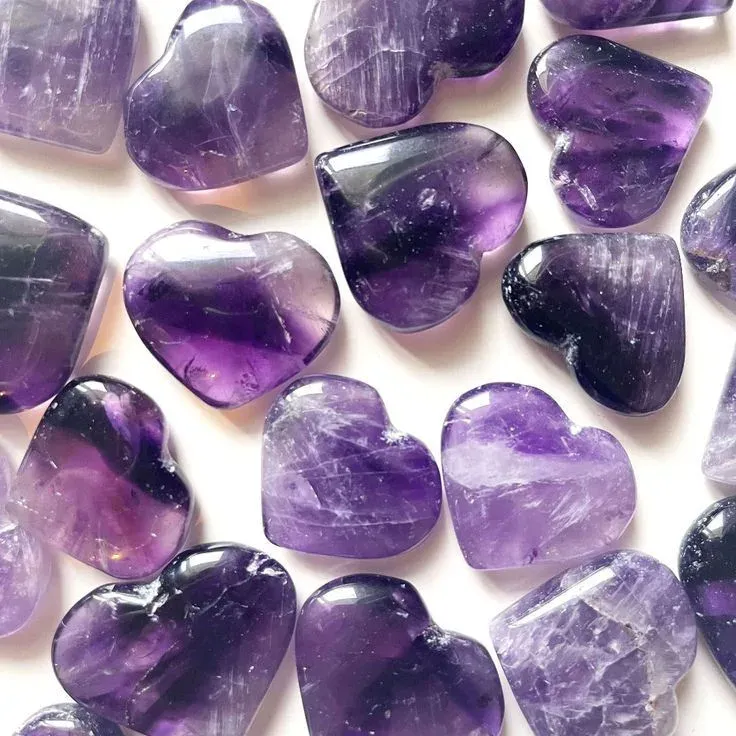
A heart form brings warmth to Amethyst's naturally clear look. Curved lines soften the feel, so the purple reads gentle and caring rather than sharp. It suggests tenderness and self-kindness, while still keeping that settled, tidy sense of calm.
Cleansing & Charging
It helps to cleanse Amethyst before charging it, especially if it has been handled a lot or used during stressful periods. A simple, regular routine keeps the stone feeling fresh and consistent.
How to cleanse Amethyst
- Moonlight (gentle, easy)
- Water (rinse under running water)
- Sound (voice, music, chimes)
- Smoke (sage, incense)
How to charge Amethyst
- Moonlight: (best on a full moon)
- Selenite or clear quartz (bowl, plate, wand)
- Sunlight (rarely, as can fade)
Where to Use
Choosing the right place for Amethyst helps it support the mood of that space, whether the goal is calmer rest, smoother conversation, or steadier focus.
Bedroom
In the bedroom, Amethyst suits winding down and switching off mental noise. Keep it nearby during the evening routine to encourage a calmer mood before sleep. If dreams feel intense, it can be used as a gentle anchor for a more settled night.
Living room
In a living room, Amethyst can support a calmer atmosphere when people are talking, relaxing, or sharing space. It suits homes where the energy can get a bit tense, helping the room feel more measured and less reactive during conversations.
Office / study
In an office or study, Amethyst fits tasks that need focus without pressure. It can help keep attention steady during reading, planning, or problem-solving. It also suits moments where decisions need to be clear, especially when stress is running high.
Science
Physical properties
- Mineral class
- Quartz
- Color
- Purple to violet
- Hardness
- 7
- Density
- ~2.65 g/cm3
- Durability
- High
- Thermal stability
- High
Optical properties
- Transparency
- Transparent to translucent
- Lustre
- Vitreous
- Refraction index
- ~1.54 - 1.55
Chemical composition
- Class
- Silicate
- Formula
- SiO2
- Group
- Quartz
- Magnetic
- Non-magnetic
Formation
Amethyst grows as a purple variety of quartz when silica-rich fluids move through cracks and open pockets in rock. It commonly forms in cavities and geodes in volcanic rocks, where gas bubbles and fractures leave space for crystals. As the fluids cool and conditions stay fairly steady, quartz crystallizes on the cavity walls. Slow growth. Pointed crystals build inward and can line the whole chamber over time.
The purple color comes from trace iron in the quartz structure. Natural irradiation in the surrounding rock can shift iron-related defects, which helps bring out violet tones. Small changes in temperature, fluid flow, and trace elements can leave color zoning. One geode can show bands from pale lilac to deep purple.
Locations
- Brazil
- Uruguay
- Zambia
- Madagascar
- Russia
- India
History
Origin of the name Amethystos
Ancient Greece
Amethyst gets its name from the Greek word "amethystos", meaning "not intoxicated". Ancient Greek writers linked the stone with clear judgement and restraint. It also turned up in drinking customs and vessels.
Dionysus and the purple stone
Greek mythology
Later Greek stories link amethyst with Dionysus and wine. They are not historical records. Still, they helped cement the long-running link with sobriety and a steady mind.
Amulets and protective use
Ancient Egypt
In Ancient Egypt, amethyst was used in jewelry and amulets. Surviving pieces suggest it was valued for its color, and for the protective meaning carried in personal adornment.
Jewelry and carved gems
Roman era
In the Roman world, amethyst showed up in rings, beads, and carved gems. It sat within the wider trade in colored stones used for status, decoration, and signet-style carving.
Church use and symbols of authority
Middle Ages
In medieval Europe, amethyst was used in church objects and worn in rings by bishops. It is often treated as a sign of restraint and spiritual leadership. Practices varied by place and period.
A prized stone among elites
Renaissance to early modern period
Before major new sources were opened up, amethyst could be priced alongside other high-status gems. Deep color mattered. It was used in fine jewelry for courts and wealthy patrons.
New deposits and wider availability
18th, 19th centuries
Large deposits developed from the 18th century onwards, especially in South America, increased supply. Over time this made amethyst easier to get beyond royal and religious circles. It stayed popular in jewelry and decorative objects.
Modern jewelry, collecting, and decorative pieces
20th, 21st centuries
Today amethyst is widely used in jewelry and as mineral specimens, including geodes and clusters. It is also common in contemporary wellness and decorative settings, where older symbolism gets reused in a modern way.
Got questions?
We've got answers!
FAQ's
What is Amethyst used for?
+×
Amethyst is often used as a steadying stone when the mind feels busy. It is a popular choice for quiet reflection, meditation, and getting clear on what matters.
It is also used as a simple reminder to slow down before reacting. Handy during journalling, studying, or decisions that go better with a calmer head.
Which zodiac signs are connected to Amethyst?
+×
Amethyst is most closely linked with Pisces and Aquarius.
It can be used as a personal touchstone for those signs. It also suits their themes, like imagination, perspective, and staying true to personal values.
What chakras does Amethyst activate?
+×
Amethyst is commonly connected with the Crown chakra and the Third Eye chakra.
In practice, it is often used during meditation or quiet time to support reflection and a wider view of a situation, rather than pushing for quick answers.
Can Amethyst help with stress and sleep?
+×
Amethyst is widely used to support relaxation, especially when stress shows up as a busy mind at bedtime. A gentle cue to wind down.
Try placing it on a bedside table or using it as part of an evening routine, like reading or breathing exercises. It is not a substitute for medical care, but it can be a calming part of a sleep-friendly space.