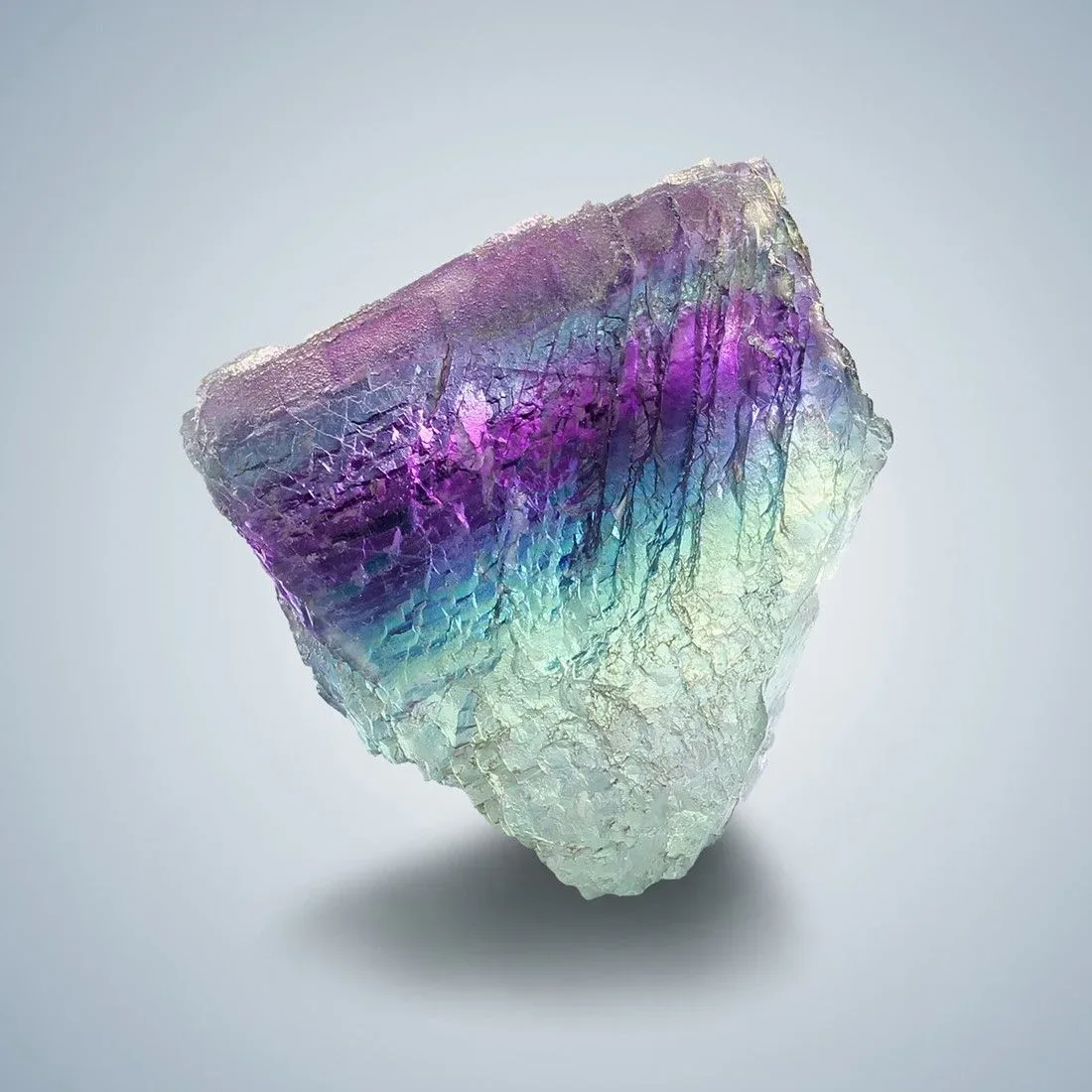
Fluorite Crystal, Benefits and Meanings.
Fluorite comes in a wide range of colors and often has a clear, glassy look. It is commonly linked with focus and mental clarity. The name comes from the Latin "fluere", meaning "to flow".
Metaphysical & Spiritual
Fluorite has a steady, organizing feel. It suits days when the mind is busy and a cleaner order would help. No two pieces look quite the same. That makes it a good symbol for sorting what is mixed and finding the pattern, with gentle structure, not force. The links below are traditional pairings. Use them as a simple lens, keep what fits, drop what does not.

Planet

Mercury
Under Mercury, Fluorite reads as clean thinking and clearer wording, especially when ideas move fast and signals can get crossed.

Neptune
Neptune is the dreamy, subtle end of perception. Fluorite keeps that space calm and a touch more discerning, without snapping the mood shut.
Element
Air
Air runs on ideas and mental motion, and Fluorite reflects the lighter side of it, thoughts with direction instead of drift.
Water
With Water, the focus is emotion and change. Fluorite brings a balancing note, making feelings easier to name and place while keeping their depth.


Crystal Pairings
Fluorite is often linked with a steady, tidy kind of focus. Pairing it with other stones can shift the feel, sometimes making things more grounded, more soothing, or more intuitive, while keeping that organized tone.
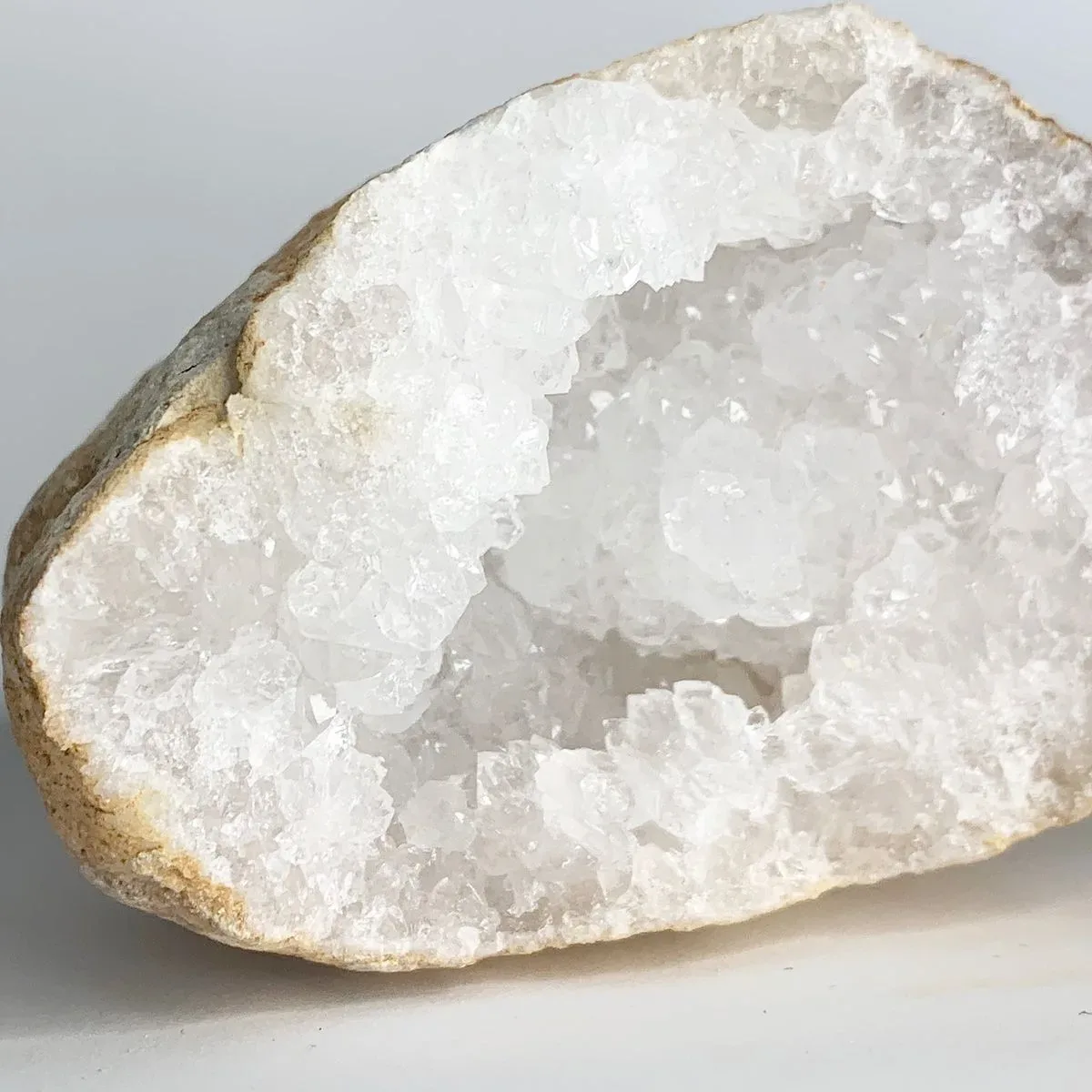
Clear Quartz
Clear Quartz keeps Fluorite crisp and direct. Together it feels like a clean signal and a well-ordered mind, bright and easy to track.
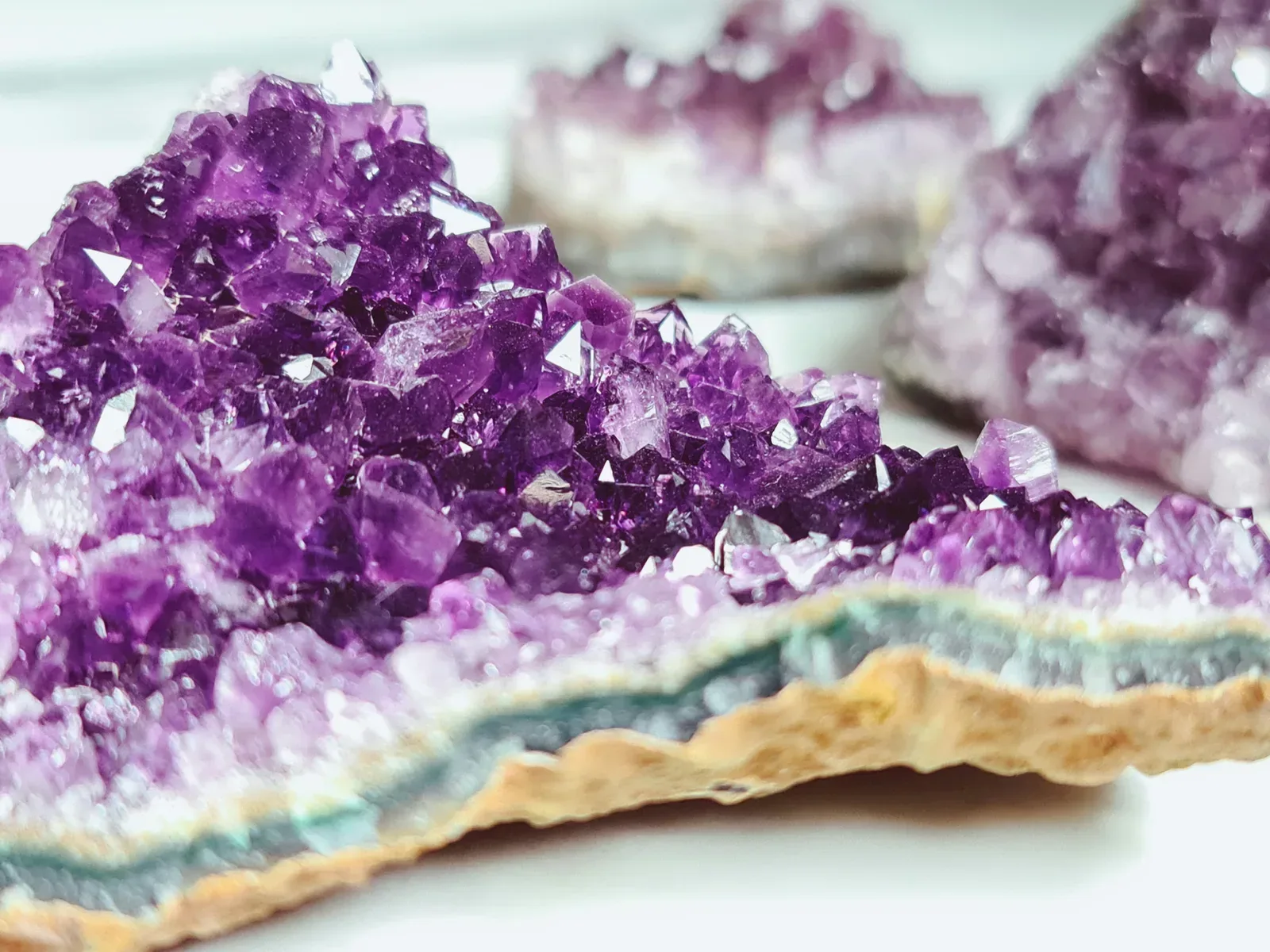
Amethyst
Amethyst softens Fluorite's sharper, analytical edge. The overall tone stays organized, but it lands quieter, calmer, more reflective.
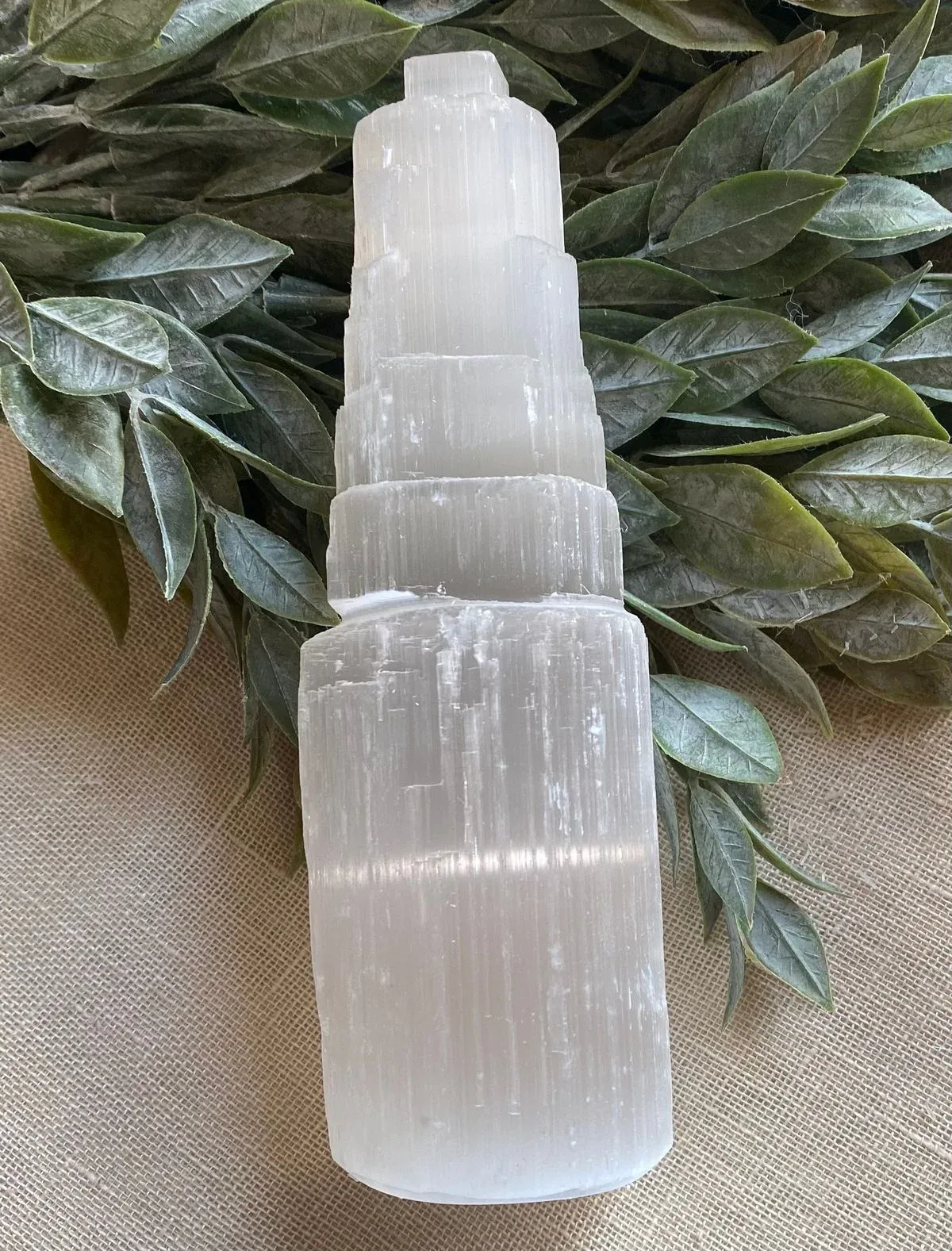
Selenite
Selenite gives Fluorite a lighter touch. More space, less clutter, like a room that can finally breathe.
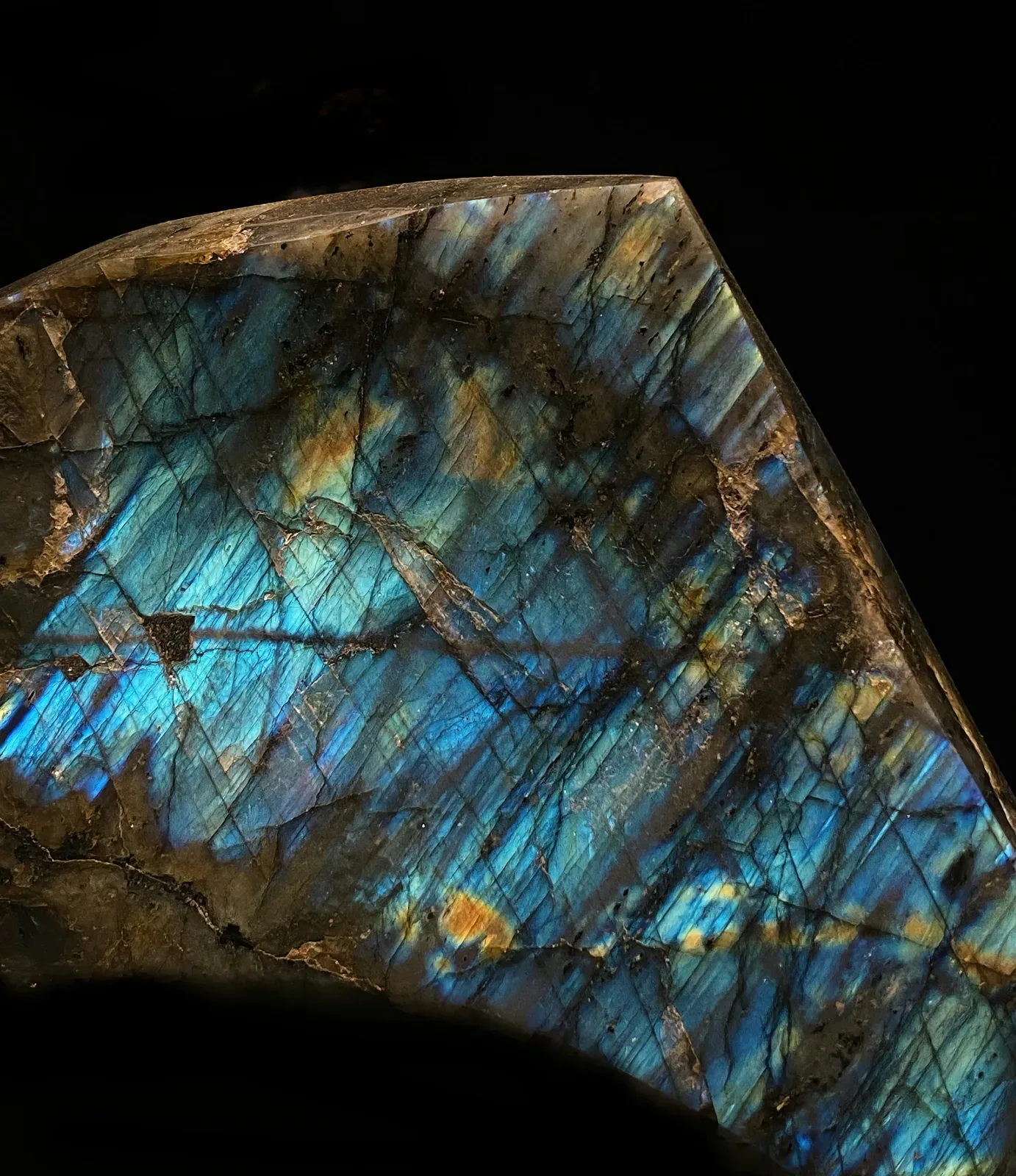
Labradorite
Labradorite adds depth to Fluorite's structured feel. It keeps the pattern-finding, but brings more imagination into the mix.
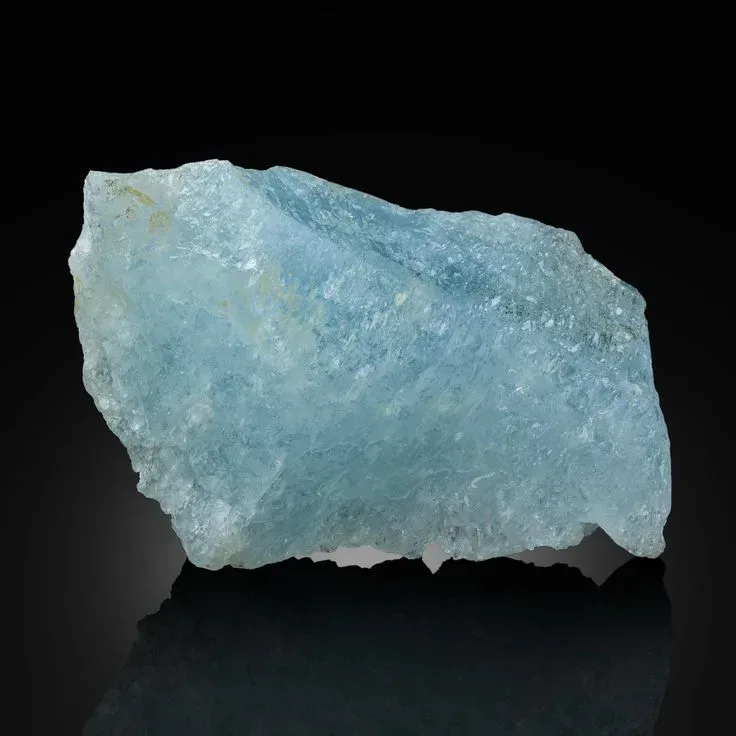
Aquamarine
Aquamarine smooths out Fluorite's tidy clarity. It reads as clear communication with a calm undertone, steady rather than intense.
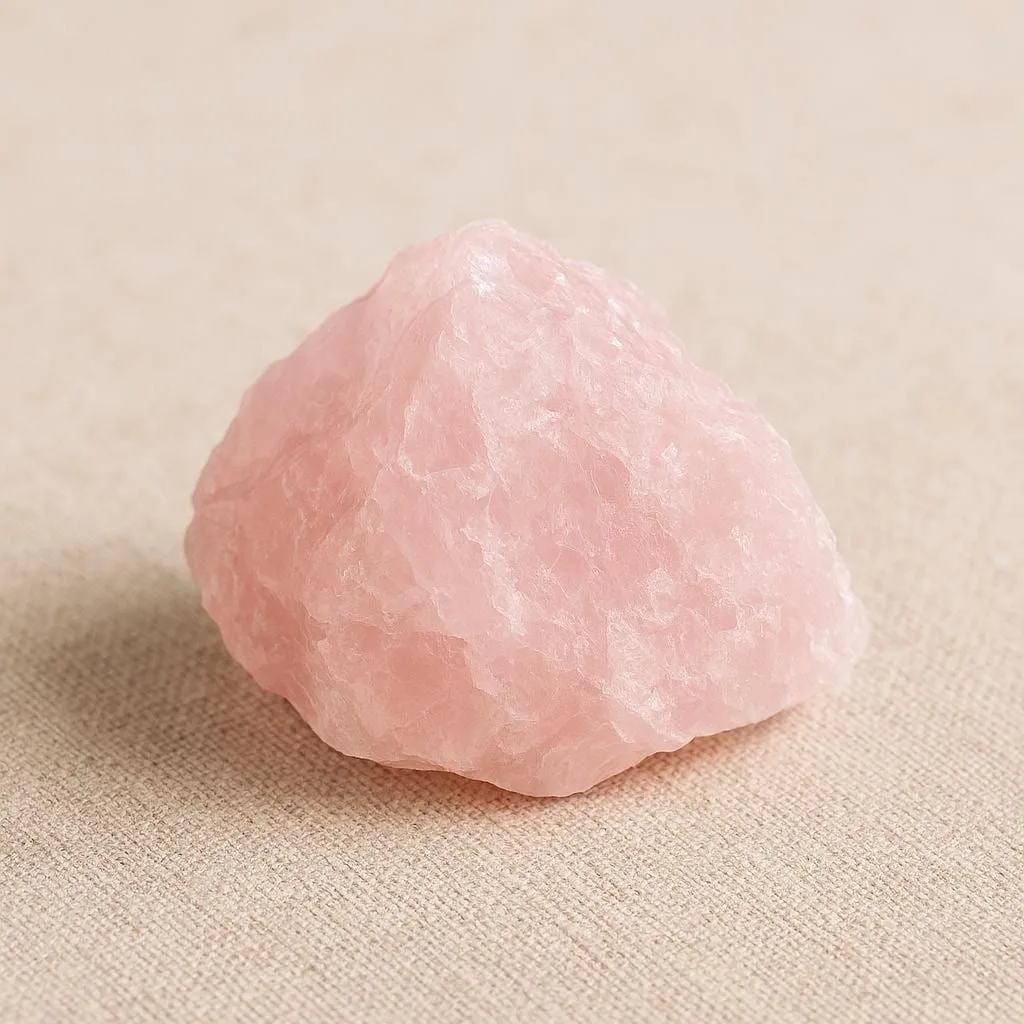
Rose Quartz
Rose Quartz warms Fluorite's cool, logical mood. Clear thinking, but with a kinder edge, less harshness in the background.
Healing
Fluorite suits days when thoughts feel loud and it is hard to tell what matters. It points attention back to the main thing and helps the pace feel steadier, so work and chores seem less tangled.
It is a useful cue for study, planning, and decisions. Keep it nearby when making a list or sorting notes. Pause, notice the pattern, then choose one clear next step and start there.
Affirmations
Use these lines when attention drifts or tasks feel scattered. Pick one that fits the moment and keep it simple.
Repeat it while starting work, switching tasks, or winding down. A few steady repeats can help the day feel more organized.
- My mind can slow down and focus.
- I choose one clear next step.
- I can sort what matters from what can wait.
- I trust myself to make a calm decision.
- I return to balance when things feel busy.
Intention Setting
Intentions work best when they stay practical. Choose one for today, then link it to a small action that can be done in ten minutes.
Keep it flexible. If the day changes, the intention can change too, without turning into a failure story.
- Set a simple plan for the day and follow it.
- Finish one task before starting another.
- Create a calm routine for study or admin.
- Speak and act with steady focus.
- Make decisions based on what matters most.
Manifesting
This is about direction, not forcing an outcome. Focus on the kind of day that makes the goal easier to reach.
Name what is wanted, then watch for small choices that support it, a cleaner schedule, fewer tabs, or a calmer yes or no.
- A clear head for planning and problem-solving.
- Better follow-through on the tasks already chosen.
- A calmer response when plans change.
- More order in routines and priorities.
- Decisions that feel steady and considered.
Jewelry
Fluorite jewelry keeps the focus-and-balance theme in everyday reach. Pick a piece that fits real life, light earrings for busy days, a bracelet that is easy to notice, a ring for hands-on moments, or a necklace that sits close and personal.
General benefits: Wearing Fluorite as jewelry keeps its tidy, steady vibe close through the day. It suits times that need focus and clearer boundaries around attention. It can also act as a small cue to slow down, clean up the plan, and keep moving without rushing.
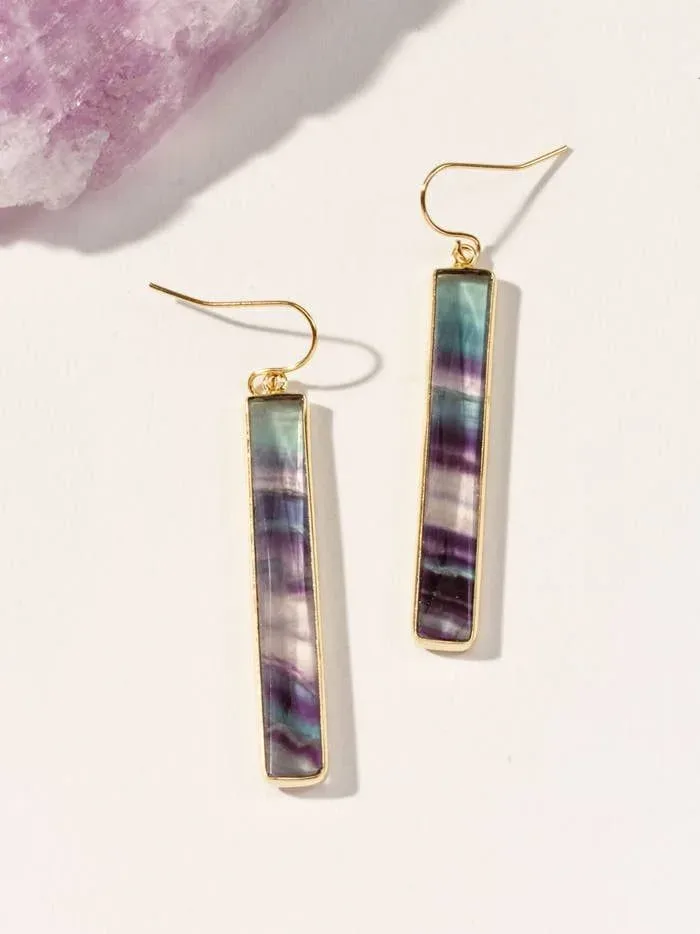
Earrings
Fluorite earrings suit days that need a lighter touch. Sitting near the head, they can feel like a quiet nudge to listen, pause, and take in what is being said. They fit meetings, study, and conversations where it helps to stay present without getting pulled into every detail.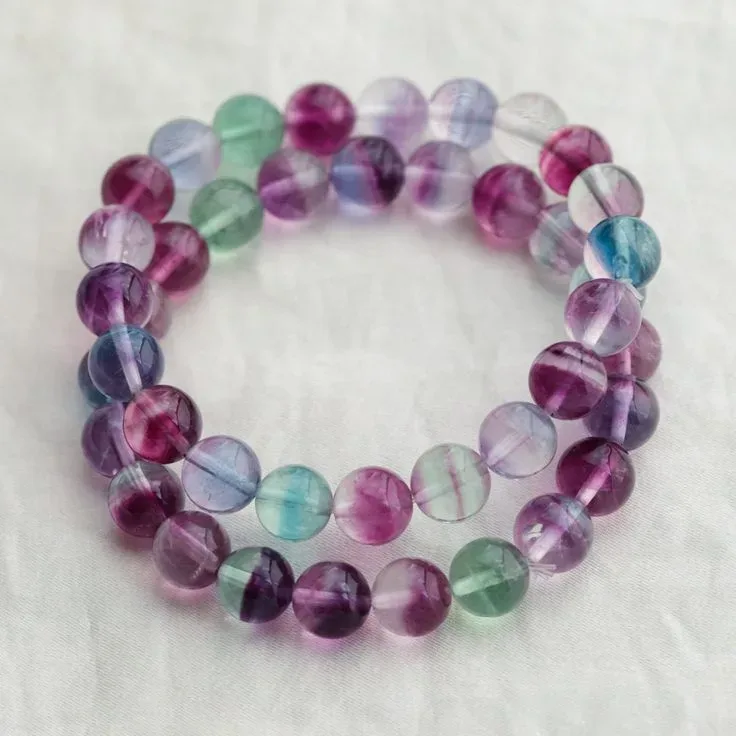
Bracelet
A Fluorite bracelet feels steady and practical, like a gentle anchor for routines. It is easy to spot when typing, writing, or reaching for a phone, which makes it a simple reminder to return to the plan. It suits work blocks and admin tasks, especially when the mind wants to hop between jobs.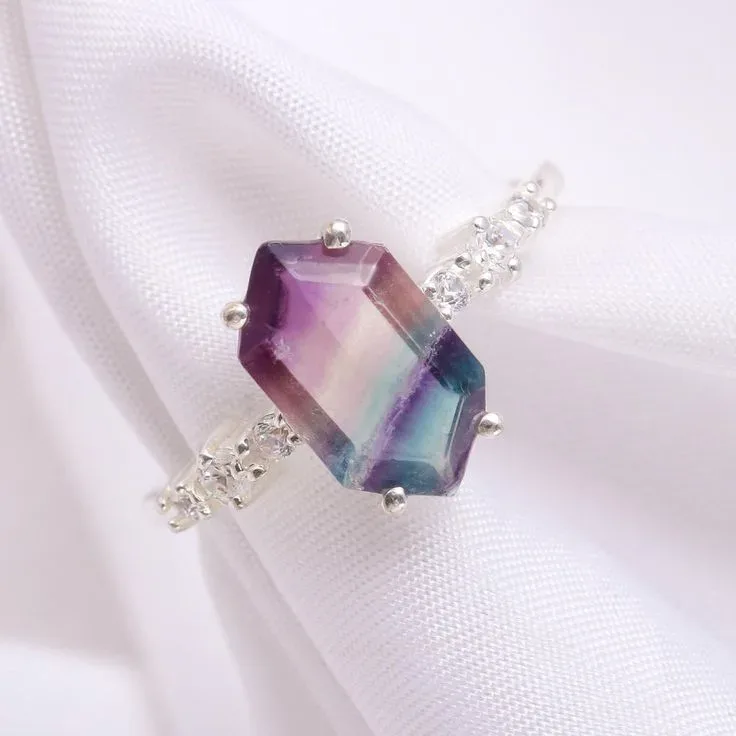
Ring
A Fluorite ring is a hands-on reminder when choices are being made in real time. Noticing it can prompt a quick reset, slow down, name the priority, then act. It pairs well with planning, writing, and problem-solving, the kind of moments where one clear decision matters more than speed.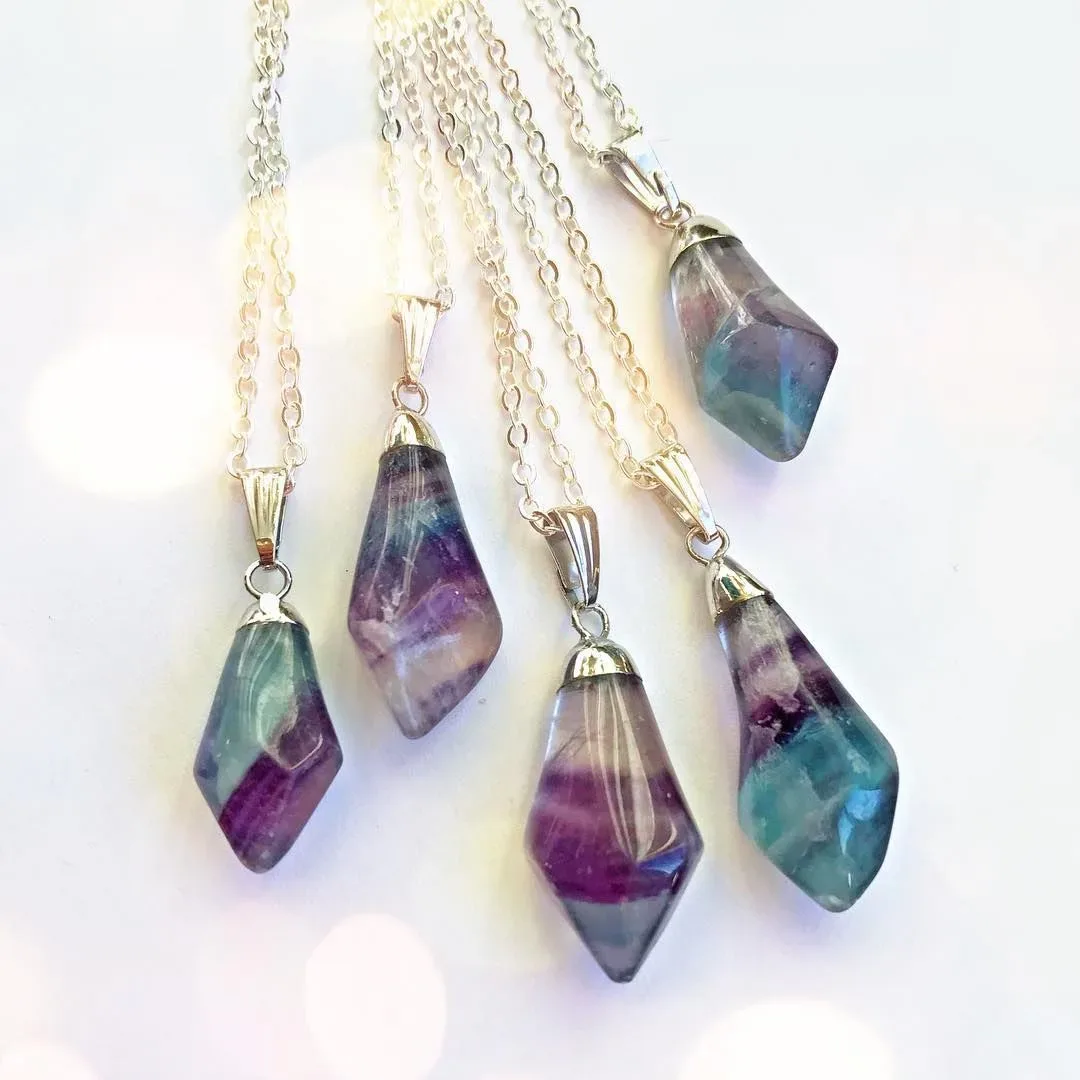
Necklace
A Fluorite necklace keeps the theme close and personal through long days. It can feel supportive when feelings and thoughts start to blur together, helping the mood stay more even. It suits busy social time or long commutes, when it helps to stay settled and not take on too much at once.Forms
These are all Fluorite, but the cut and polish change the first impression.
Rough
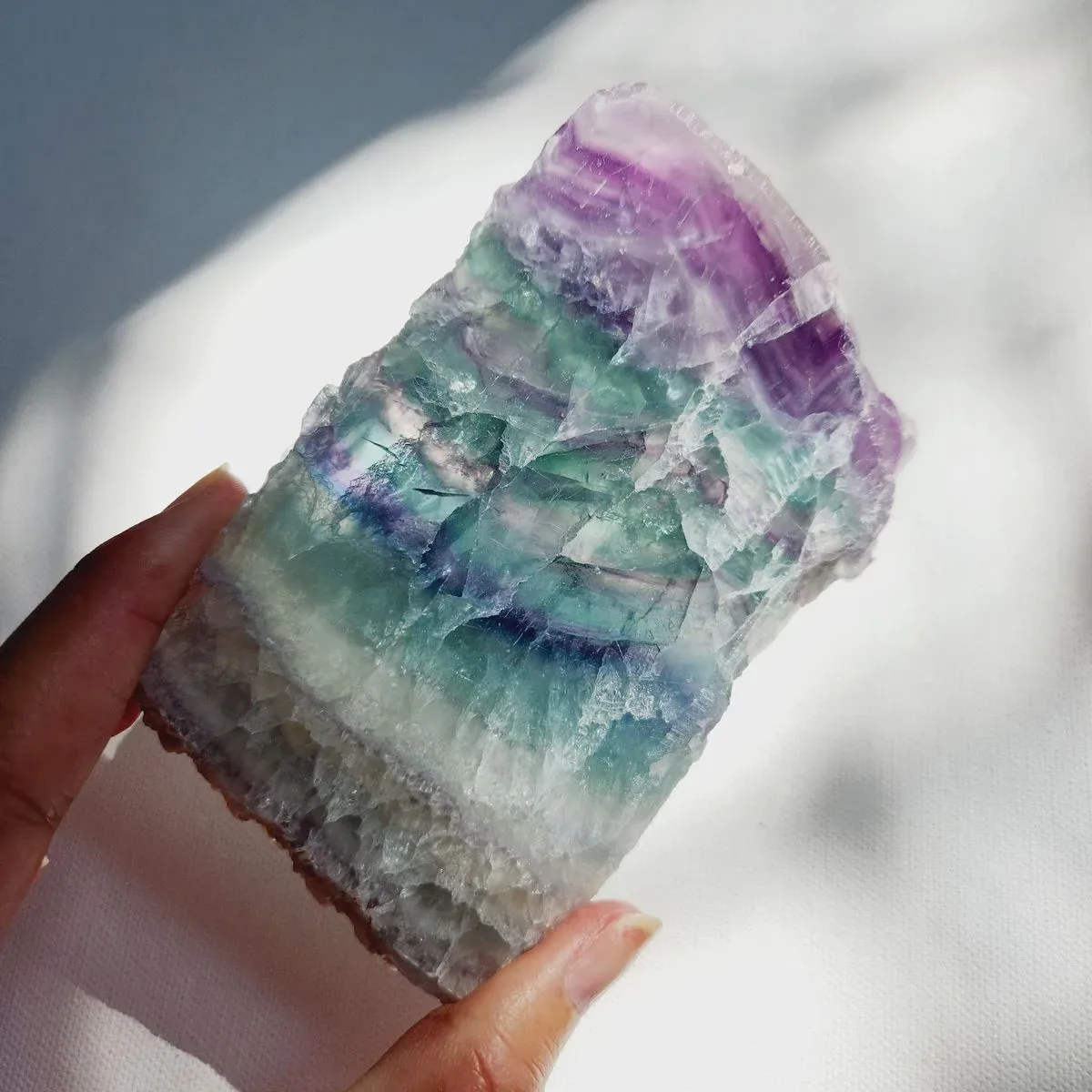
Rough Fluorite feels raw and natural. Uneven faces and edges make the color zoning look layered and complex, with little surprises as it catches the light. It reads practical and direct, more texture than shine.
Point / Tower
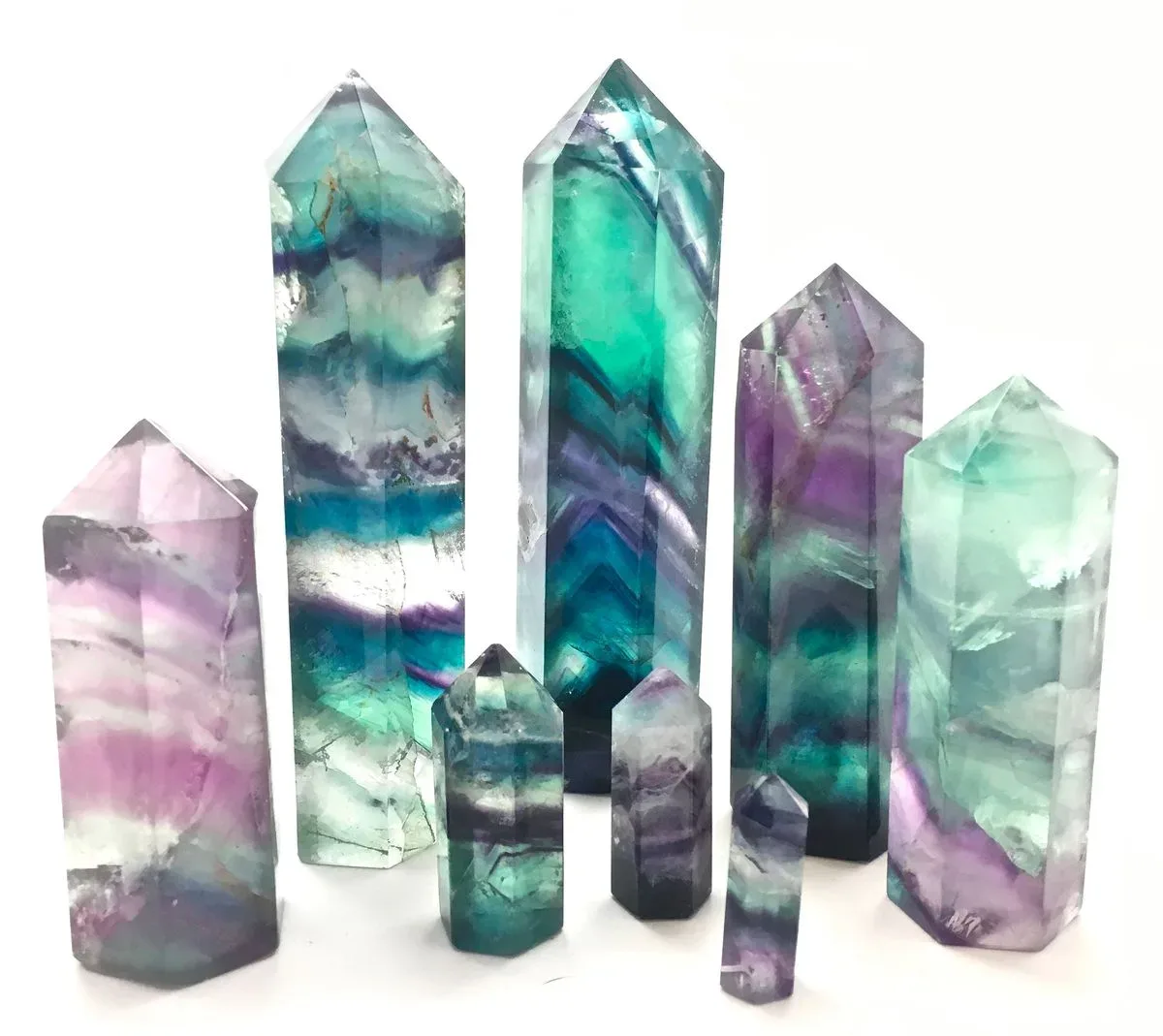
A point or tower gives Fluorite a clean, focused look. Straight lines can make the banding feel sharper and more directional. It reads structured and intentional, like a neat visual cue for order.
Sphere
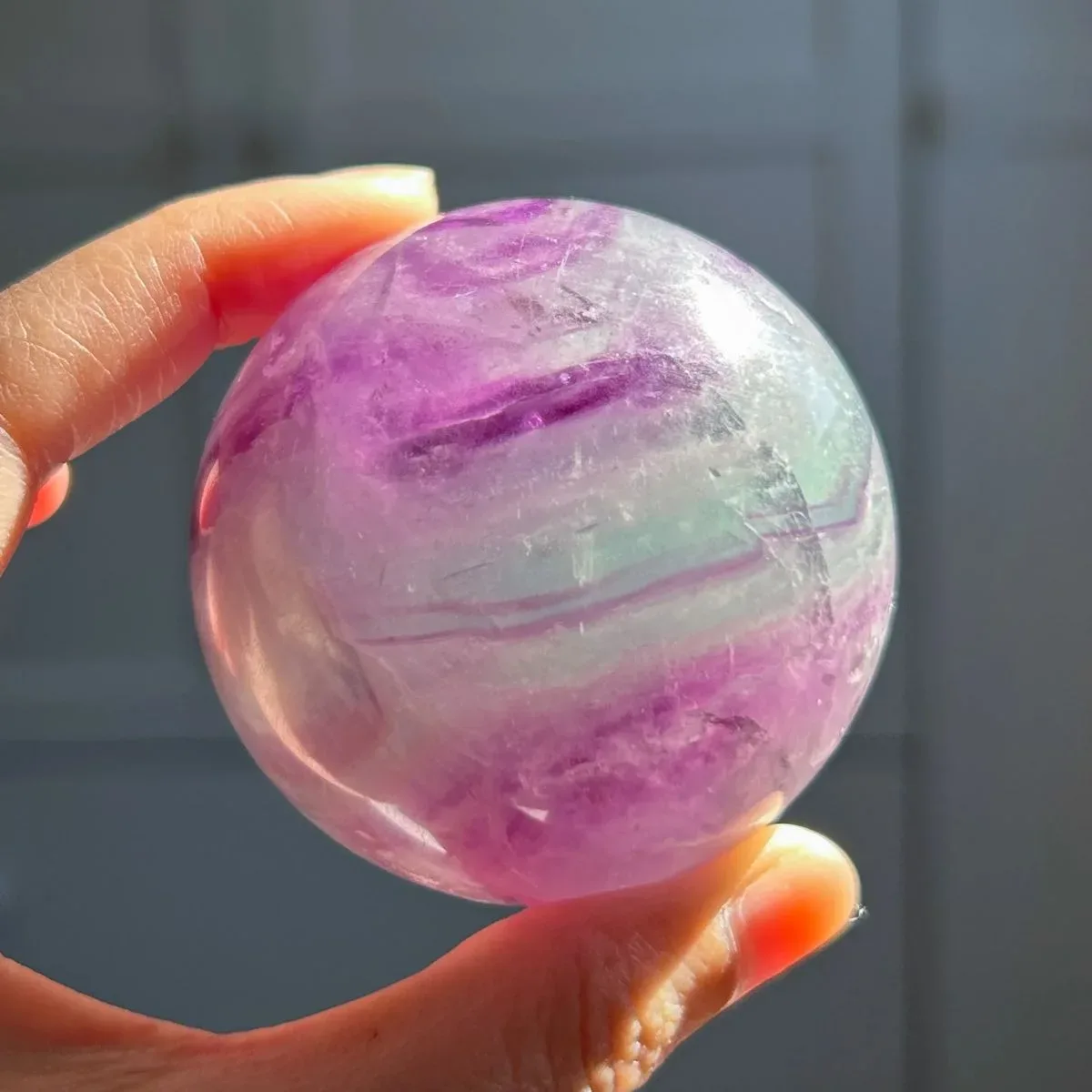
A Fluorite sphere highlights flow. As it turns in the light, the bands seem to wrap around and shift, which softens the overall look. It reads even and balanced, with a smooth, continuous feel.
Palm Stone
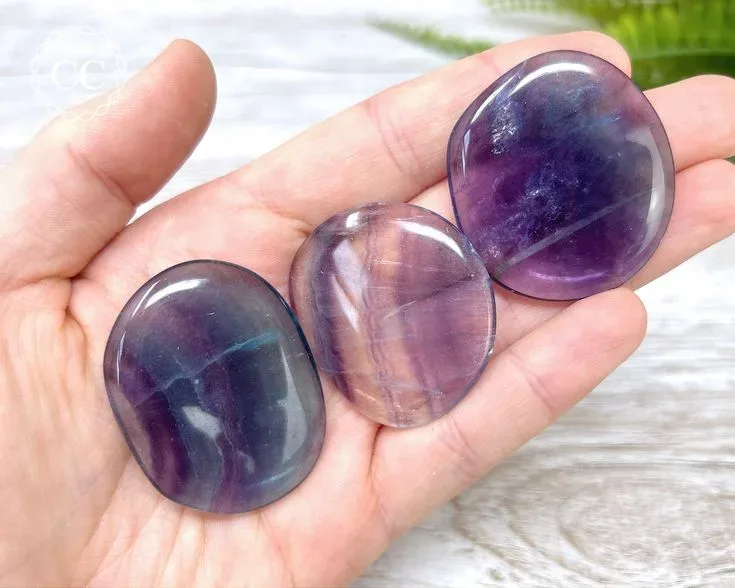
A Fluorite palm stone feels calm and reassuring. The polish brings out a glassy shine and gentle transitions between bands. It reads steady and supportive, without looking intense or sharp.
Tumble Stone
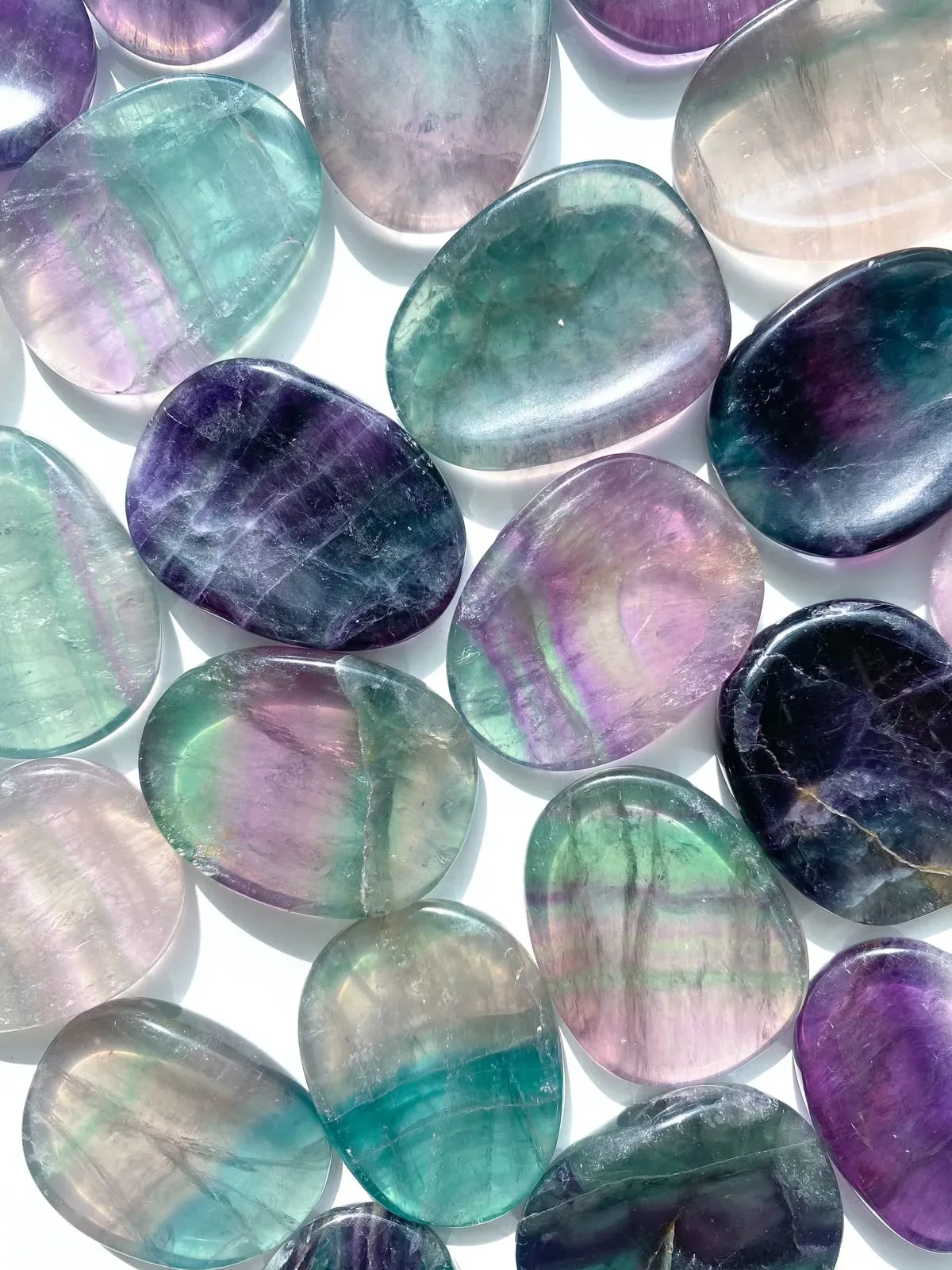
A tumbled Fluorite has an easy, casual look. The smooth finish can brighten the colors and make patterns feel more playful. It reads friendly and flexible, like a small, simple reset for the eyes.
Figure
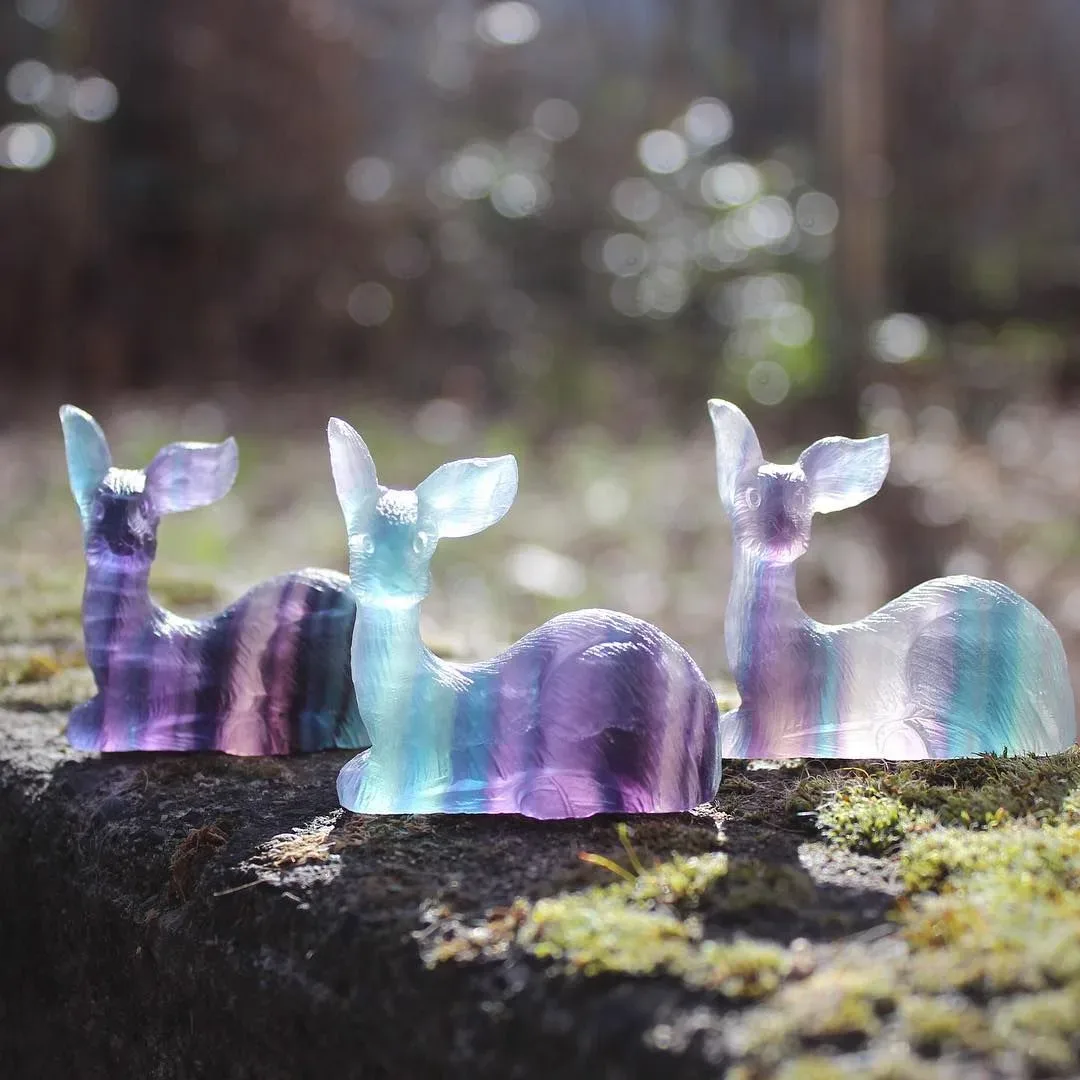
A Fluorite figure adds a characterful note. Carving pulls attention to detail and makes the pattern feel more expressive. It reads thoughtful and intentional, like a piece chosen for its look and meaning.
Heart
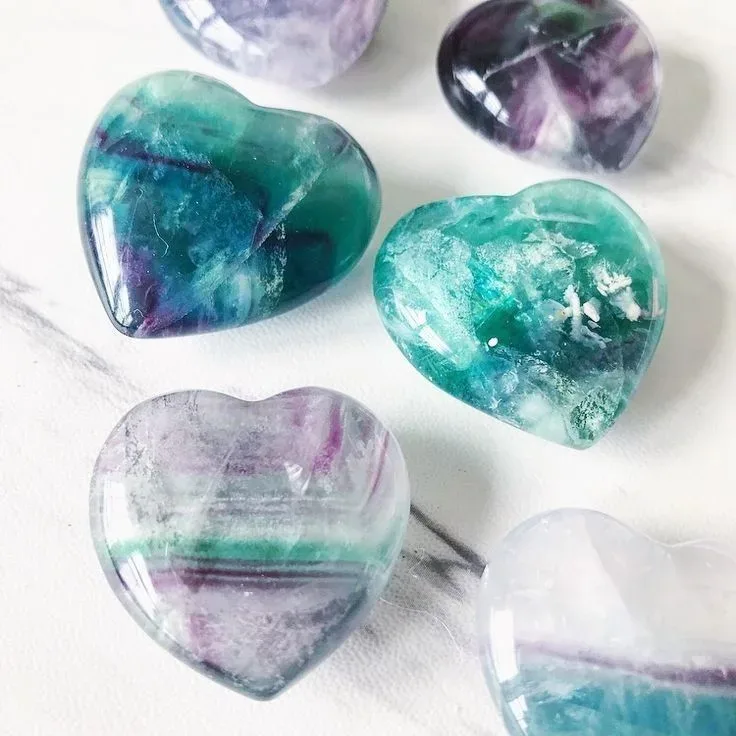
A Fluorite heart softens the stone's overall vibe. The shape makes bold banding feel gentler and more comforting. It reads warm and supportive, adding a kinder tone to a very mental, pattern-rich fluorite.
Cleansing & Charging
Fluorite is relatively soft, so keep care gentle. Avoid harsh salt soaks and rough handling, and treat it more like glass than a tough stone.
How to cleanse Fluorite
- Wipe with a soft, dry cloth, or use lukewarm water and mild soap, then dry well.
- Use smoke cleansing if it fits the routine, keep it brief and ventilated.
- Sound cleansing works well and avoids contact, try a bell, chime, or singing bowl.
- Rest it on a dry bed of selenite to refresh it without abrasion.
How to charge Fluorite
- Place it in bright, indirect light for a short time, avoid strong midday sun.
- Charge alongside Clear Quartz to support a crisp, focused feel.
- Set a simple intention while holding it, then let it be.
Where to Use
Match the space to the goal. In work areas it can support structure, and in rest areas it can help the mind ease out of problem-solving mode.
Office / study
Helpful for planning, revision, and staying on track with a task list. It suits desks where attention gets pulled in too many directions, and can prompt prioritizing and finishing one thing before starting the next.
Living room
Useful in shared spaces where screens and background noise compete for attention. It can support a calmer feel for reading, games, or relaxed chats, especially when the aim is to unwind without feeling mentally scattered.
Bedroom
Supportive when the mind keeps running at bedtime. It can help the room feel less like a place to solve problems, and more like a place to settle. Pair it with a simple wind-down routine so the cue stays gentle and consistent.
Science
Physical properties
- Mineral class
- Halide
- Color
- Varies (purple, green, blue, multi-colored)
- Hardness
- 4
- Density
- ~3.0 - 3.3 g/cm3
- Durability
- Moderate
- Thermal stability
- Moderate
Optical properties
- Transparency
- Transparent to translucent
- Lustre
- Vitreous
- Refraction index
- ~1.43 - 1.44
Chemical composition
- Class
- Halide
- Formula
- CaF2
- Group
- Fluorite
- Magnetic
- Non-magnetic
Formation
Fluorite most often grows from hot, mineral-rich fluids moving through cracks and open spaces in rock. The fluids can rise from cooling magma, or circulate deep underground in hydrothermal systems. As temperature drops or the chemistry shifts, calcium and fluorine come out of solution and start building fluorite faces. Often cubes. Sometimes cleaner, sometimes crowded.
It commonly forms in veins with quartz and calcite. It also lines cavities in limestone and dolostone, where fluids have space to coat the walls with crystals. Color zoning and banding show up when trace elements change from one growth stage to the next. Natural radiation can shift color over time, too. In some deposits it sits with lead and zinc ores, where fluorine-bearing fluids react with calcium in the surrounding rock and crystallize as conditions settle.
Locations
- China
- Mexico
- South Africa
- Spain
- United Kingdom
- Germany
History
Early written references and naming
c. 1st century CE
Roman authors used the term "fluorite" (from Latin roots linked to "flow") for a mineral used as a flux to help metals melt more easily. The name later became standard in mineralogy for calcium fluoride.
Flux stone in European metalworking
16th, 18th centuries
In parts of Europe, fluorite turned up in smelting and refining as a practical material. It can help lower melting temperatures and improve slag flow. Records tend to note the job it did, not its looks.
Fluorspar and early mineral classification
18th, 19th centuries
As collecting and classification developed, fluorite, often called "fluorspar," became a well-described species. Its fluorite shapes and variable coloring made it a handy reference in early catalogs and collections.
Decorative stone and "Blue John" carving
19th century
In Derbyshire, a banded variety of fluorite known as "Blue John" was used for ornamental objects such as vases and small carvings. The patterning did the heavy lifting. The material is relatively soft and delicate to work.
Fluorescence named after fluorite
1852
The term "fluorescence" was introduced in the 19th century after observations of light emission in certain materials, with fluorite being a key example. Not all fluorite fluoresces, but the mineral is historically tied to the naming of the effect.
Industrial use in steel, aluminum, and chemicals
20th century
Large-scale mining expanded in several countries as fluorite became an important industrial mineral. It has been used in steelmaking and in chemical processes that rely on fluorine compounds. Production has shifted over time between major mining regions.
Modern collecting and fluorite culture
Late 20th, 21st centuries
Fluorite stays popular with mineral collectors for its fluorite forms, zoning, and range of colors. In modern fluorite practice it is often picked for study spaces and routines that support focus. That sits alongside its well-documented industrial role.
Got questions?
We've got answers!
FAQ's
What is Fluorite used for?
+×
Fluorite is often used as a support stone for focus and mental organization, especially when tasks feel scattered or hard to prioritize.
It is commonly kept on a desk or near study materials. Handy in planning spaces too. It can also be used during journalling or decision-making as a simple cue to slow down and choose one clear next step.
Which zodiac signs are connected to Fluorite?
+×
Fluorite is most often linked with Capricorn and Pisces.
It can be used as a reminder of Capricorn-style structure and Pisces-style imagination. Useful when both need to sit in the same plan.
What chakras does Fluorite activate?
+×
Fluorite is commonly associated with the Third Eye and Crown chakras.
People use it when they want a quieter headspace for reflection, learning, or spotting patterns without overthinking.
Can Fluorite help with stress and sleep?
+×
Fluorite is sometimes used to wind down by helping the mind feel less busy and more settled. It can fit neatly into an evening routine.
It is not a treatment for stress or sleep issues. Used as a gentle bedtime cue instead, for example placed on a bedside table while doing a few slow breaths or reading.