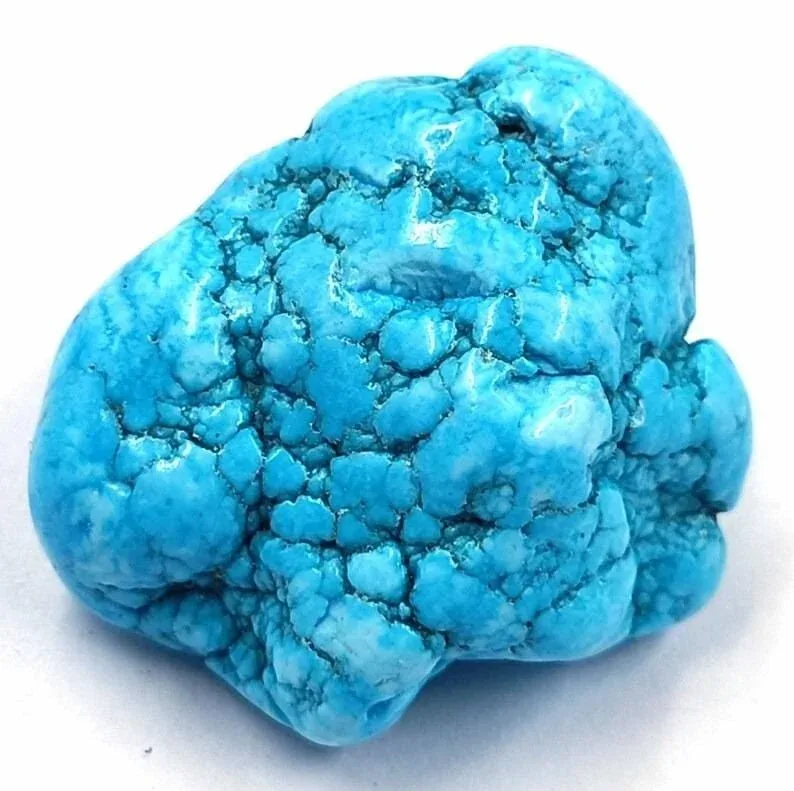
Turquoise turquoise pairings
Turquoise is often chosen for steady protection, honest communication and a calmer emotional baseline, but it can feel different depending on what sits alongside it. Pairing is a simple way to steer the tone, whether the intention is to speak more clearly, stay courageous under pressure, or keep the heart open without feeling overexposed.
The most supportive combinations tend to either sharpen the message, ground the energy, or gently widen the emotional range without overwhelming it. A thoughtful pairing also helps balance Turquoise's soft, open quality so it stays practical for daily life, from focused work to travel routines and reflective moments.
Crystals that combine well with Turquoise
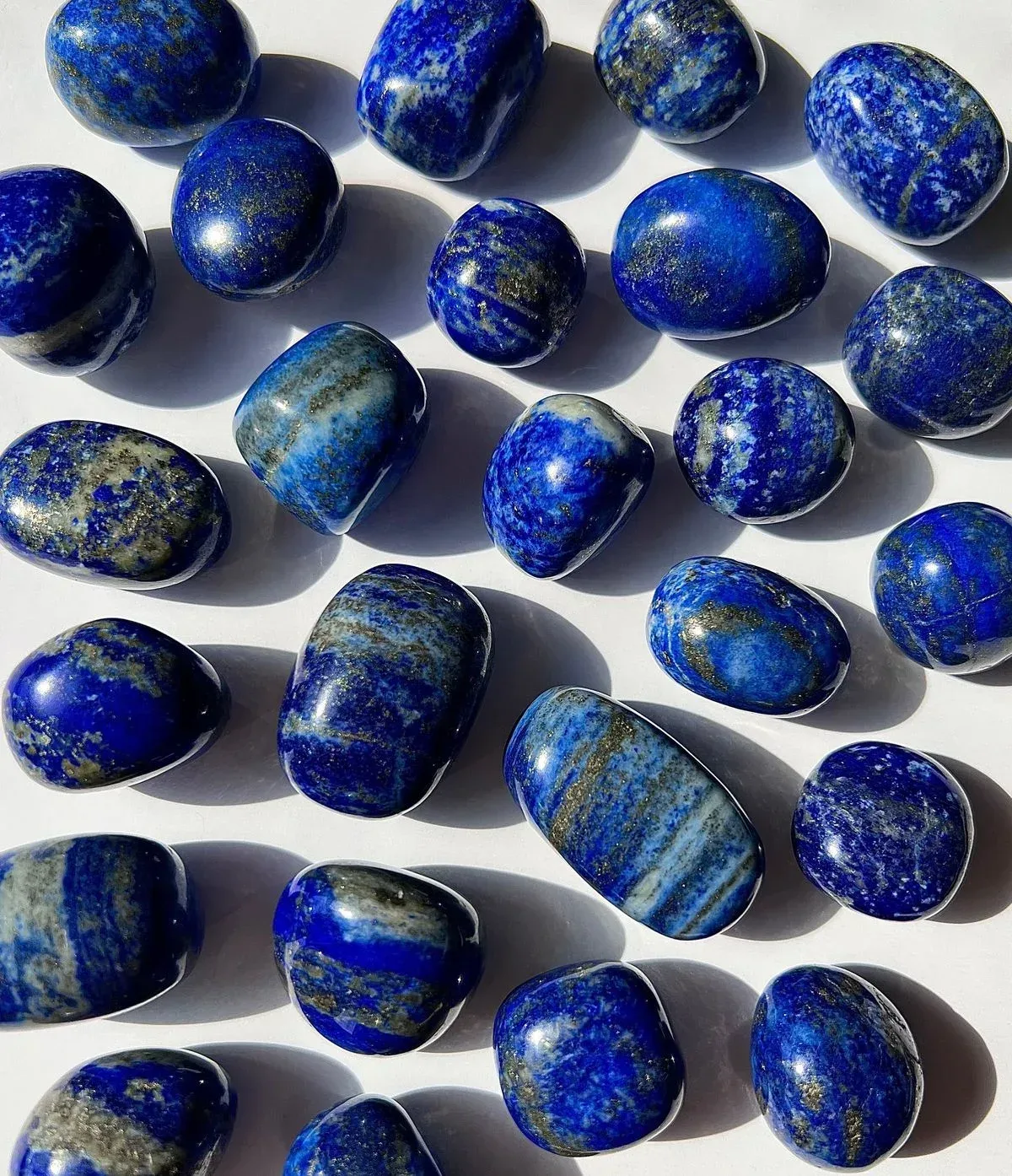
Lapis Lazuli steadies Turquoise's honest-voice theme. It suits clear, measured words, especially when personal values need to stay front and center.
Before an important conversation, hold Turquoise at the throat area and Lapis Lazuli at the brow, then take a few slow breaths. Quietly name the one point that needs to be said, simple and kind.
For journalling, place Turquoise beside the page and Lapis Lazuli near the top of the notebook, then write a short "truth list" of what is known, what is felt, and what is needed. Keep each line brief.

Aquamarine fits Turquoise's watery, easygoing feel. Together they support a calmer flow of expression and a lighter tone in everyday talk.
Use a short morning reset by holding Aquamarine in the non-dominant hand and Turquoise in the dominant hand, breathing in for four counts and out for six. Set one intention for how to communicate today.
For a travel pouch, keep both stones together with a written note of the journey's purpose, then touch the pouch before departures. A small cue to stay composed and clear.
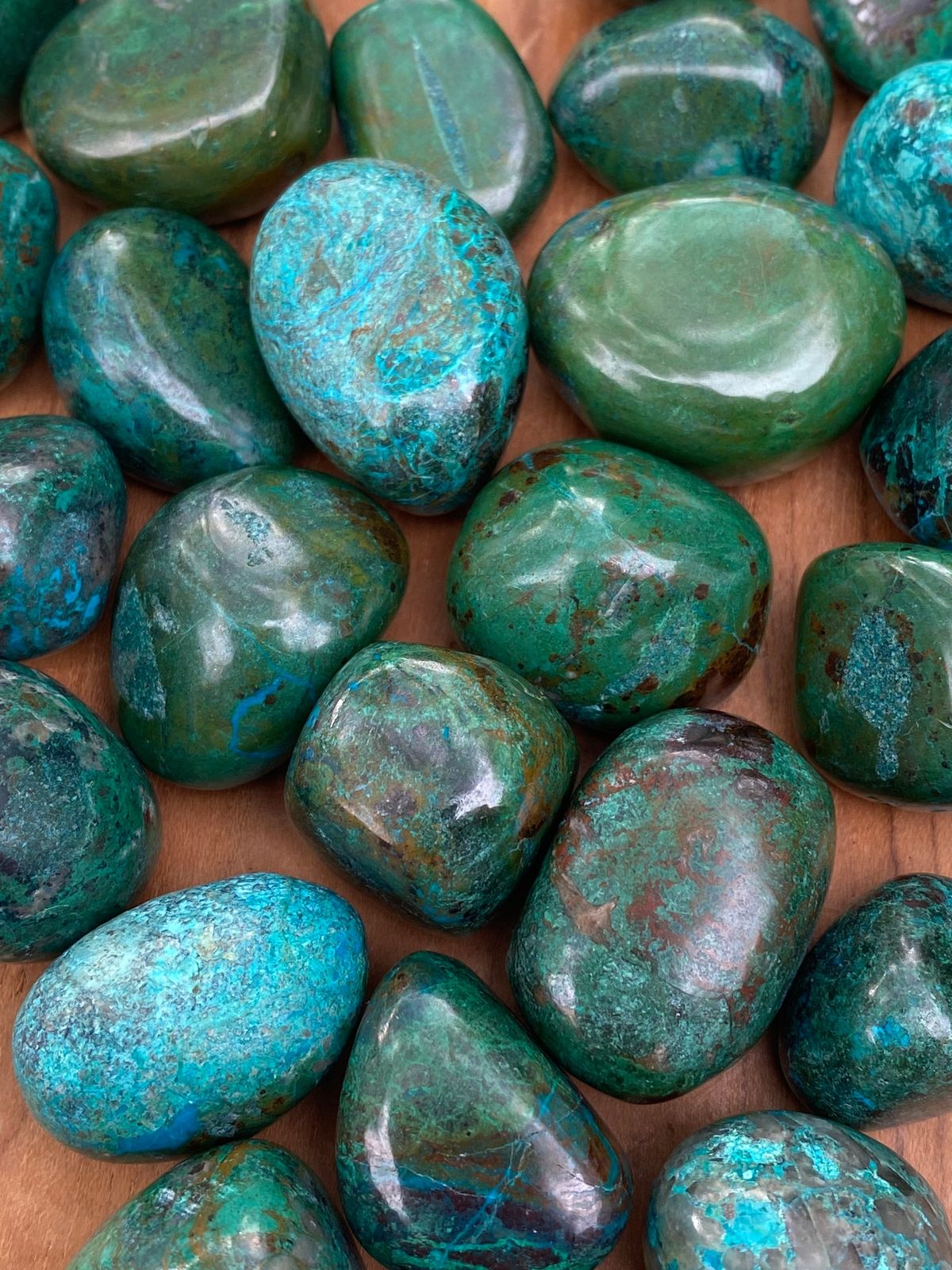
Chrysocolla softens Turquoise with a heart-led note. Good for gentle boundaries and honest words when feelings are close to the surface.
During an evening wind-down, place Chrysocolla over the heart area and Turquoise near the throat, then reflect on one moment from the day. Where could kindness and truth meet more easily next time?
At home, set the pair in the living room or meditation space and use them as a cue for a two-minute pause before responding in tense moments. Slow the exhale. Keep the tone calm.
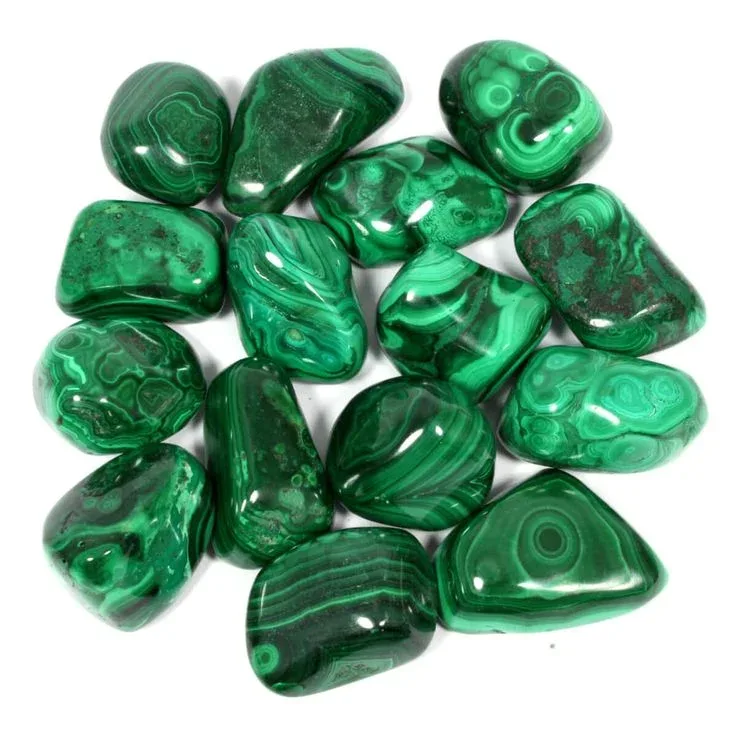
Malachite adds a bold, change-ready edge to Turquoise's courage and truth themes. Useful for spotting patterns and choosing a cleaner response.
For a focused reflection, place Malachite in front of you and Turquoise to the side, then write down one recurring pattern, one trigger, and one small alternative action to try within the next 24 hours.
When preparing for a difficult decision, hold Turquoise and look at Malachite for a minute, then speak a single sentence aloud that captures the decision in plain language. Stop there, no extra justification.
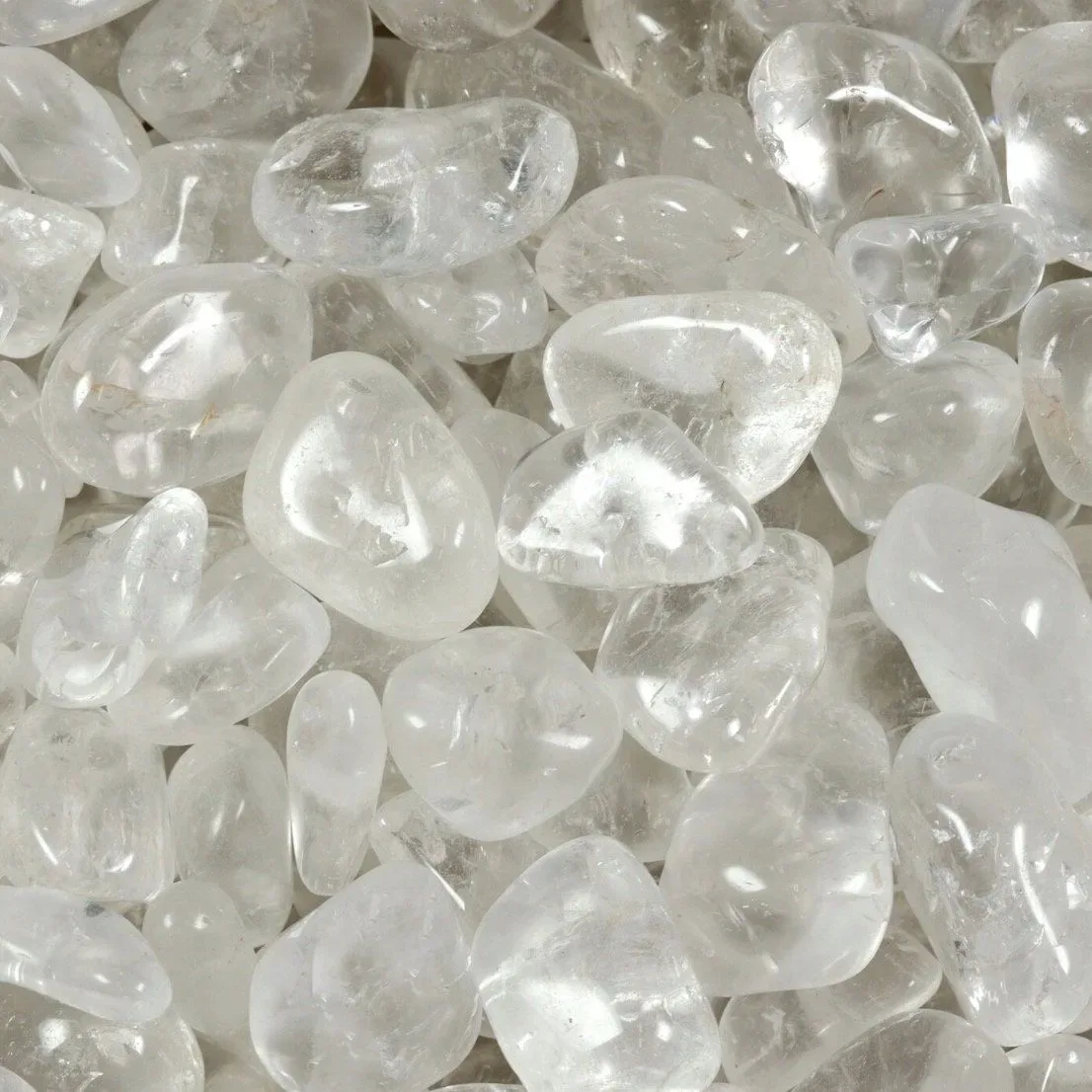
Clear Quartz sharpens Turquoise's focus. It helps intentions feel more defined, handy for routines, spaces, and simple goal-setting.
Create a quick intention-setting practice by placing Clear Quartz above Turquoise, then state a short phrase such as "clear words, calm heart" before starting work or study.
For a tidy desk setup, keep Clear Quartz at the back corner and Turquoise near the keyboard, using the arrangement as a visual prompt to pause. One breath, then concise wording in messages.
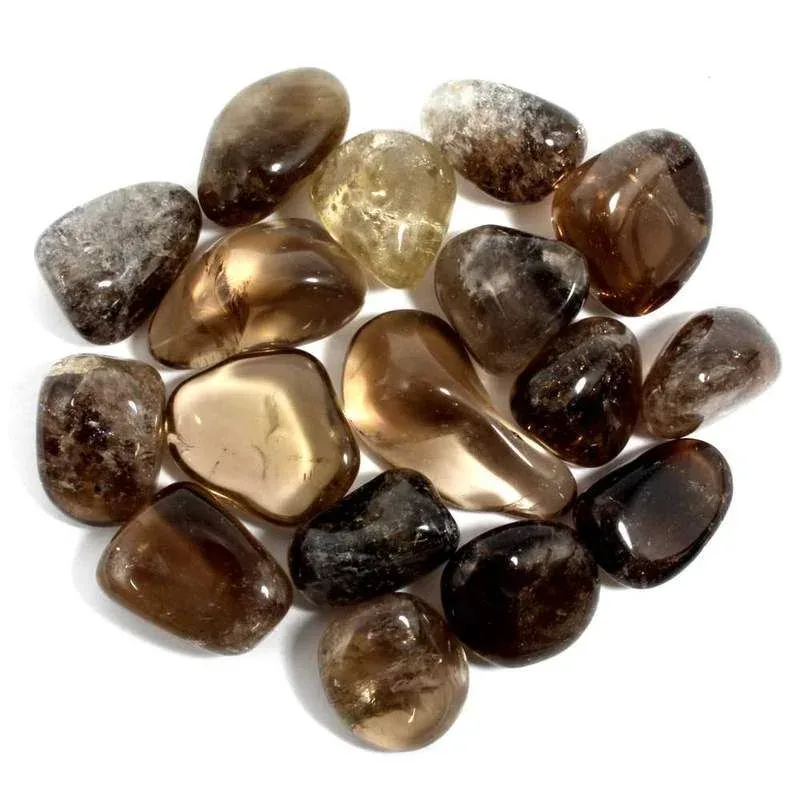
Smoky Quartz grounds Turquoise's airy, expressive feel. It helps communication stay practical instead of reactive, especially when emotions run high.
Try a grounding meditation by holding Smoky Quartz in the palm and resting Turquoise near the throat, then imagine the breath moving downwards on each exhale. Let the body settle before speaking or writing.
For an entryway bowl, place Smoky Quartz and Turquoise together with keys, then touch Smoky Quartz first and Turquoise second when arriving home. A cue to shift into a calmer, more considered tone.
Jewelry pairings that work well together
Turquoise works best beside stones that either sharpen its blue-green clarity or deepen its earthy, protective feel. Bright polished finishes keep the look fresh, while softer, more matte companions bring out its natural, travel-worn charm.
Turquoise & Lapis Lazuli
The pairing is richly blue, with Turquoise bringing a lighter blue-green note against lapis' deeper, inky finish. A polished surface on both stones keeps the contrast crisp, while the slight opacity of Turquoise softens the intensity of the lapis. Set them in a slim signet ring with a small lapis cabochon flanked by Turquoise accents. The compact shape suits the strong color pairing and feels neat enough for everyday wear.
Turquoise & Aquamarine
This is a cool, airy pairing, with Aquamarine's pale translucence lifting the denser color of Turquoise. A high polish helps both stones read as fresh and watery, while the difference in clarity gives the combination a clean, open feel. Choose a single-drop ear climber with Turquoise at the base and Aquamarine above it. The vertical line follows the ear well and gives the stones a light, modern profile.
Turquoise & Chrysocolla
Both stones sit in the blue-green family, but Chrysocolla usually brings a softer, more mottled surface beside Turquoise's steadier color. Keeping the finish gently polished rather than glassy lets the texture differences show without making the pairing feel busy. A woven bracelet suits this combination beautifully, especially if the stones are spaced among fine metal links. The relaxed structure echoes the natural look of both minerals and makes the colors feel easy to wear.
Turquoise & Clear Quartz
Clear Quartz adds brightness and space around Turquoise, making the blue-green color look more vivid. The contrast is strongest when the quartz is clean and transparent, while Turquoise remains softly opaque and grounded. Try a bangle with a central Turquoise cabochon and small Clear Quartz stations around the curve. The open circle gives the stones room to breathe and keeps the overall effect crisp and balanced.
What not to pair with Turquoise
Turquoise works best when its message stays clear, calm and protective, so avoid pairings that crowd the throat and heart with too much heat or urgency. Stones that are intensely activating or strongly disruptive can blur its steady, honest tone and make the energy feel less composed.
Bumblebee Jasper
Its bright, forceful energy can pull Turquoise away from calm communication and into a more restless register. That can make the field feel busy when the aim is steady, heartfelt expression.
Fire Agate
Fire Agate can add a heated, protective intensity that is stronger than Turquoise usually needs. The combination may feel over-activated, with courage turning sharper than clear.
Garnet
Garnet brings a deep, driving force that can weigh on Turquoise's lighter communicative flow. Together they may create a push-pull between emotional steadiness and a more insistent, inward pressure.
Ruby
Ruby's bold, heart-forward fire can overshadow Turquoise's gentler emotional balance. The pairing may feel too intense for reflective truth-telling, as if the message is carried with more heat than clarity.
Carnelian
Carnelian can energise expression so strongly that Turquoise loses some of its calm, measured tone. This can make communication feel lively but less precise, with enthusiasm overtaking quiet truth.
Moldavite
Moldavite tends to shift the field quickly and can make Turquoise feel less settled and easy to read. The pairing may introduce spiritual noise and sudden movement where Turquoise is trying to keep protection and communication steady.
Got questions?
We've got answers!
FAQ's
Can I wear Turquoise with more than one companion stone at once?
+×
Yes. Turquoise layers well when the mix feels intentional and not cluttered. Pick one lead pairing for the main vibe, then add one smaller support stone.
Combinations that tend to wear easily: - Turquoise + Lapis Lazuli + Clear Quartz, for a crisp, high-contrast stack. Quartz keeps the look bright and the message focused. - Turquoise + Aquamarine + Smoky Quartz, for a softer blue story with a grounded, neutral base. - Turquoise + Chrysocolla + Malachite, for a richer green-blue palette. Best kept to two statement pieces and one small accent so the colors do not compete.
Simple rule, keep Turquoise as the hero (one larger stone). Use smaller companion stones to support it rather than match its scale.
Do Turquoise and Lapis Lazuli need to touch in a pairing?
+×
No, they do not need to touch to work as a pairing, either aesthetically or in a personal practice. Touching can make the color story feel more deliberate in jewelry. A little separation often looks cleaner.
For styling, space them with metal links or a small Clear Quartz bead so each blue reads distinctly. For use in a practice, keep Turquoise near the throat area and place Lapis Lazuli slightly higher, or simply hold it in the other hand. The key is a clear intention for the pairing, not physical contact.
Is Turquoise and Aquamarine a good pairing?
+×
Yes, Turquoise and Aquamarine are a naturally harmonious pairing, especially for a calm, clear communication theme. Visually, the tones sit in the same coastal spectrum. Cohesive without extra colors.
To stop the pairing from turning into one flat wash of blue, mix textures and cuts. Try a polished Turquoise cabochon with a faceted Aquamarine, or a matte Turquoise bead strand with a single Aquamarine drop. If the overall effect feels too light, add a small Smoky Quartz accent or choose darker matrix Turquoise for contrast.
What crystals should not be paired with Turquoise?
+×
There are no absolute rules, but some pairings can feel visually heavy or conceptually muddled next to Turquoise.
Examples that often clash with Turquoise in wear or intention: - Jet, can dominate the palette and make Turquoise feel visually "switched off" unless the design is very minimal. - K2 (K2 Jasper), the strong patterning can pull attention away from Turquoise and make the overall look feel fragmented. - Jade, can soften the overall feel so much that the pairing loses crispness, especially if both stones are pale and highly polished.
If a pairing starts to feel noisy, simplify the stack. Reduce the number of statement stones, or add one clean spacer such as Clear Quartz to bring back separation.
How do I use Turquoise and Lapis Lazuli together in a ritual?
+×
A simple, practical way to use Turquoise and Lapis Lazuli together is a short "truth and expression" check-in that ends with one clear action.
1) Set the space: place Turquoise in front of the throat area (on a scarf, collarbone area, or held at the base of the neck). Hold Lapis Lazuli at eye level for a moment, or keep it in the non-dominant hand. 2) Name the topic: choose one conversation, decision, or boundary that needs clarity. 3) Write three lines: - "What is true for me is…" - "What I actually want to say is…" - "The kindest clear version is…" 4) Speak one sentence out loud: read the third line once, slowly, as practice for real-life delivery. 5) Close with a cue: wear Turquoise afterwards as the reminder to follow through, and keep Lapis Lazuli on a desk or beside a journal for the next edit.
Keep it short and repeatable. The point is consistency and a single, specific next step.