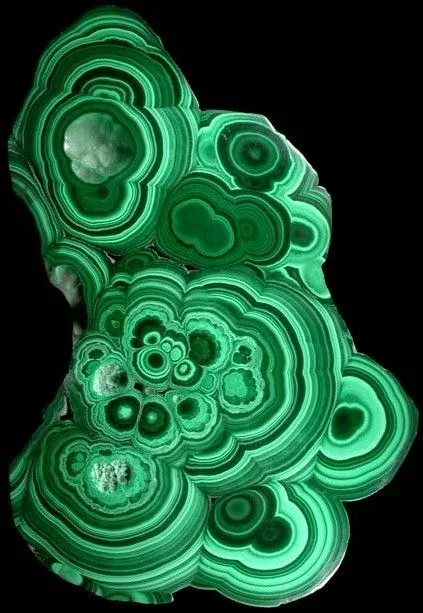
Malachite Crystal, Benefits and Meanings.
Named from the Greek 'molochitis' in reference to the mallow plant's green leaves, malachite has long been used as an ornamental stone and pigment and is strongly linked with protection and transformation.
Metaphysical & Spiritual
Malachite is a deep green stone with a steady, grounded feel. It is often linked with protection and change, especially when life calls for a cleaner, more honest direction. This stone does not blur the edges. It shows what is working, what is not, and what needs to shift, without shutting the heart down. Malachite suits brave growth. Good for seasons when boundaries matter, feelings are in motion, and an old pattern is ready to go.

Planet

Venus
Venus is about love and values, and Malachite brings a firmer edge. It keeps connection honest, with boundaries that protect what matters.
Element
Earth
Earth energy is practical and grounded, and Malachite lands there easily. It steers change into real choices and habits, not just emotion.

Crystal Pairings
Malachite often reads as protection plus change. A steady partner can take the sharpness out of that push. A clear or grounding stone can help it feel simpler and easier to hold.
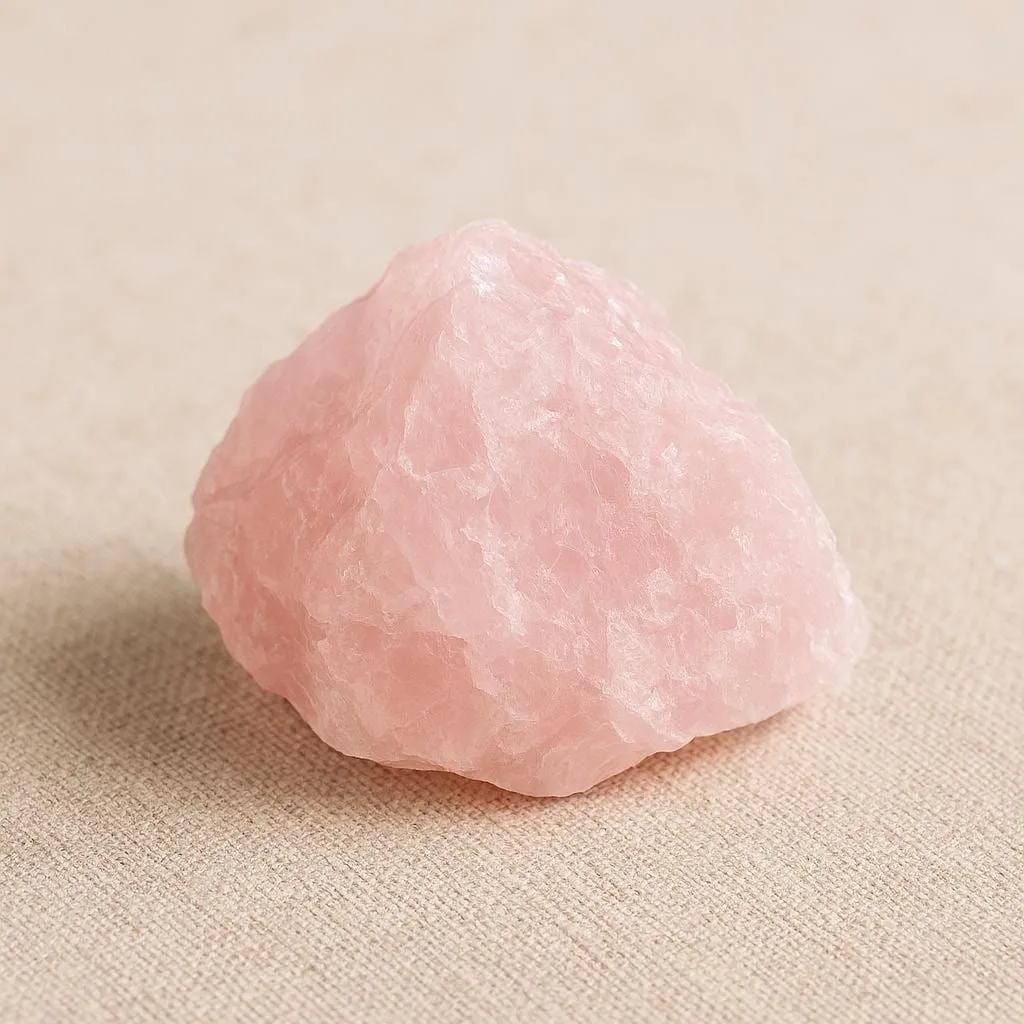
Rose Quartz
Rose Quartz adds a soft, caring tone to Malachite's blunt honesty. Together it feels like change that stays kind, with less harshness and more ease.
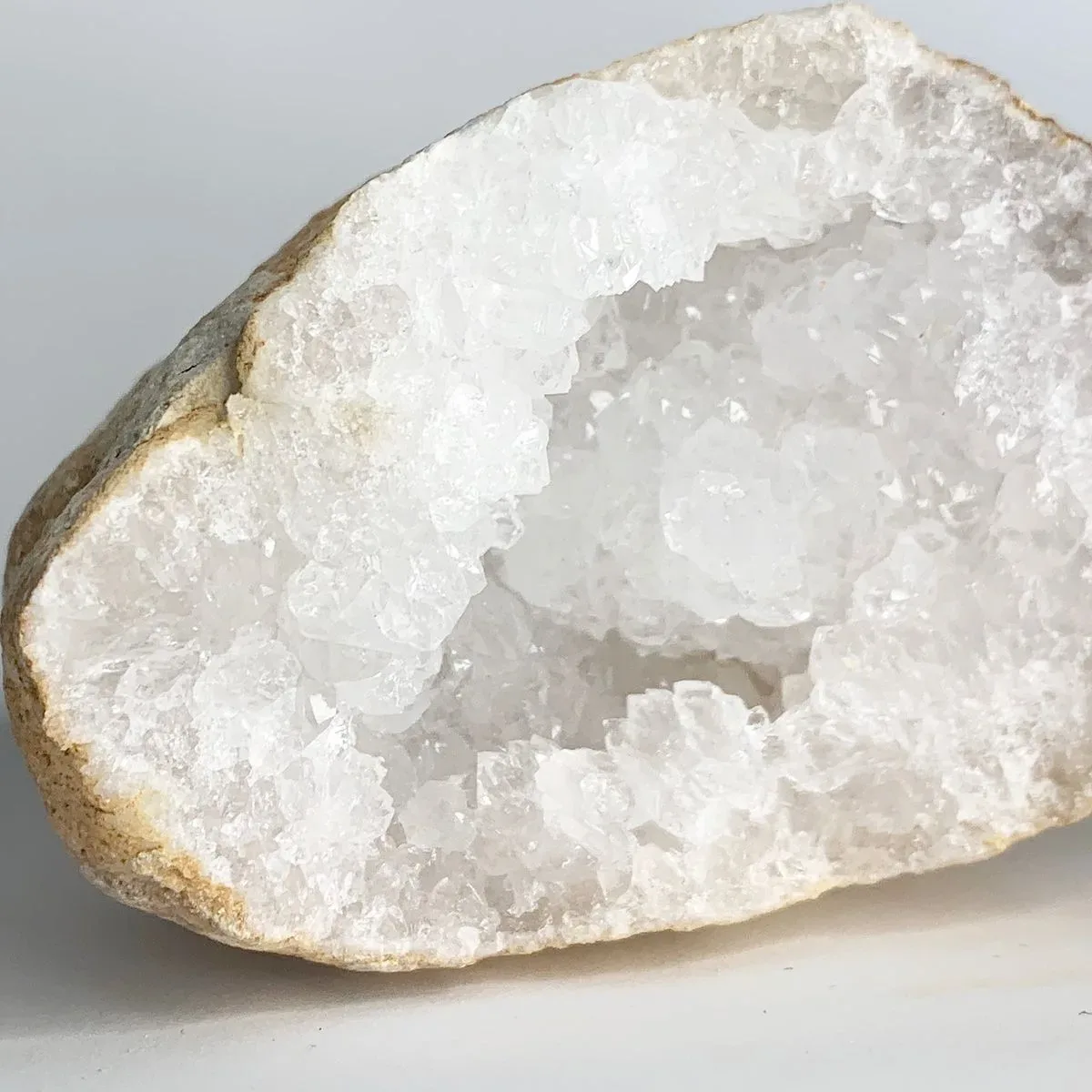
Clear Quartz
Clear Quartz sharpens the signal in Malachite. The pairing feels clean and bright, so Malachite's protective edge comes through as clear and direct, not heavy.
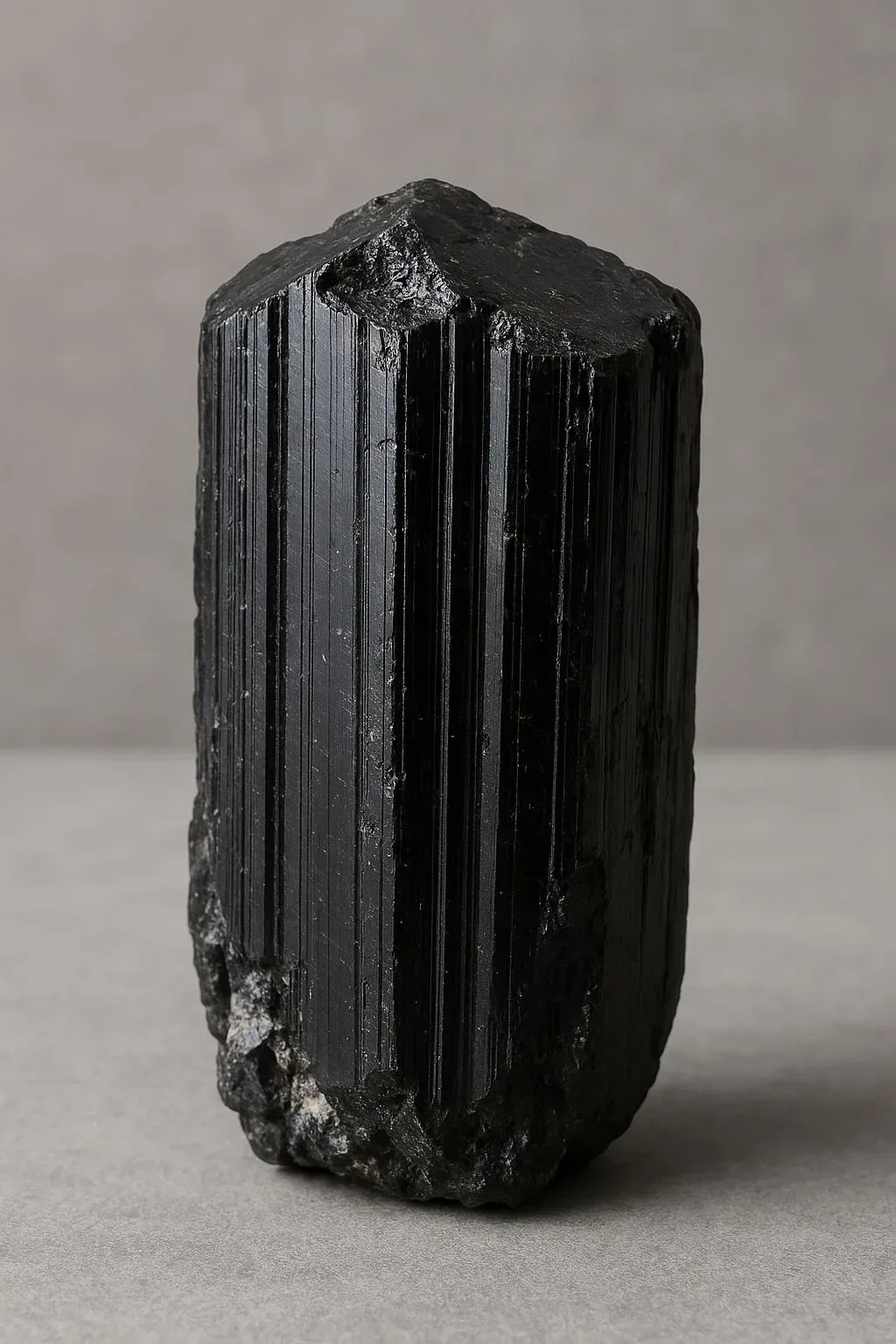
Black Tourmaline
Black Tourmaline gives Malachite a firmer base. Together they read as protective and boundary-minded. Grounded, no-nonsense, steady.
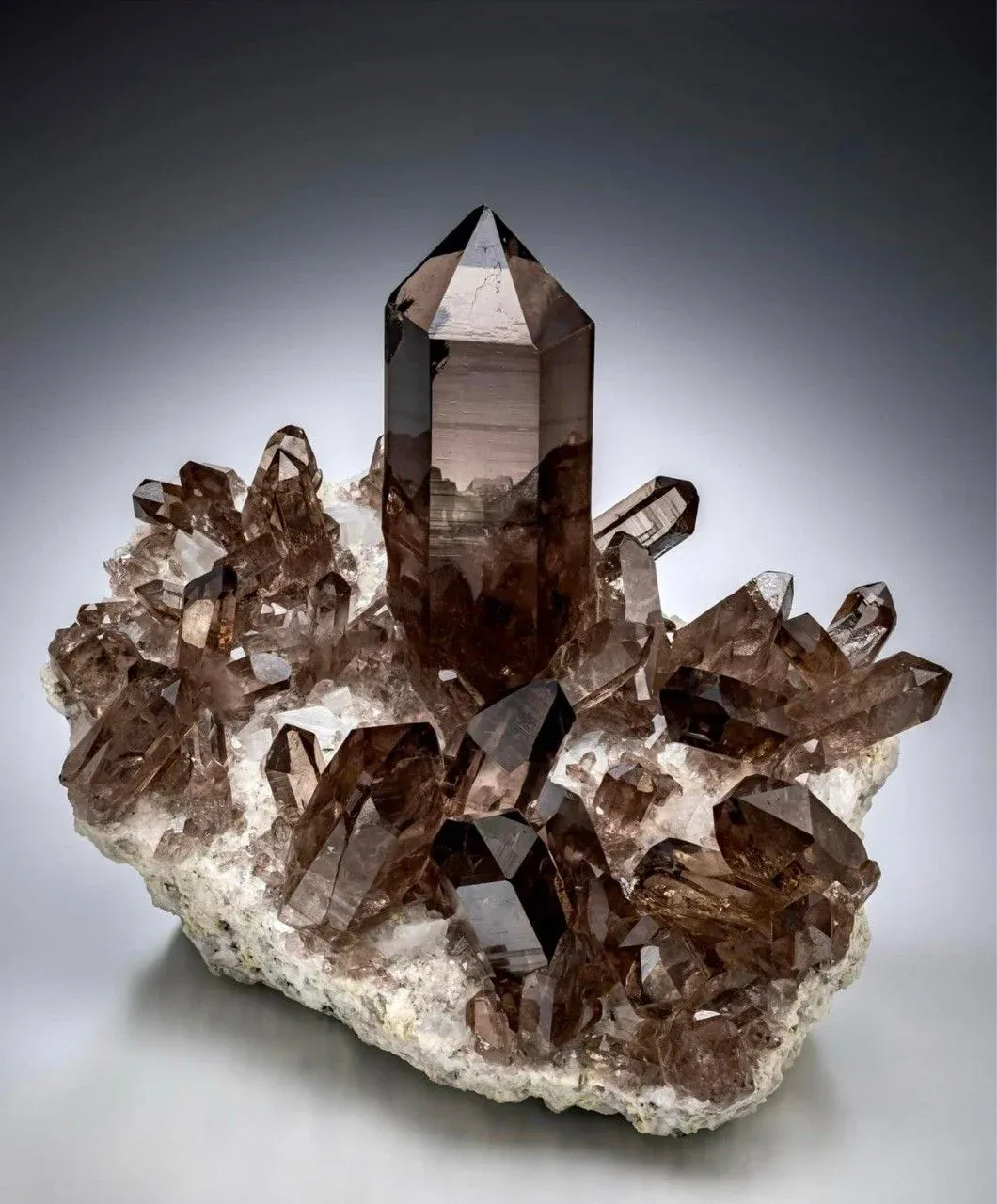
Smoky Quartz
Smoky Quartz brings an earthy calm to Malachite's intensity. The mix stays practical and steady, making change feel more rooted and less emotionally noisy.
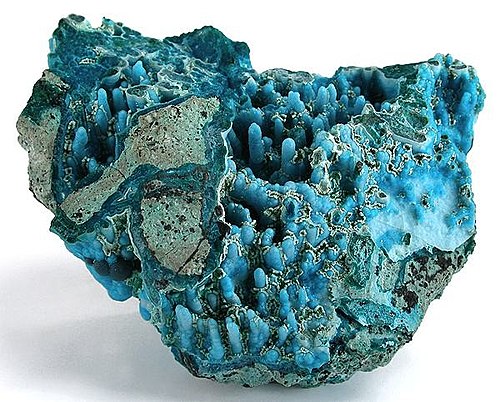
Chrysocolla
Chrysocolla cools Malachite's heat and slows the pace. Together it feels soothing and open, with honesty that lands gently and leaves room to breathe.

Azurite
Azurite adds insight and direction to Malachite's drive to transform. The pairing feels deep but organized, helping strong feelings read as meaningful, not confusing.
Healing
Malachite has a steady, grounded feel that suits emotional clearing. It can bring old patterns into view in a way that feels manageable, not like a sudden flood. Notice what comes up, name it plainly, and give it a place to go, like a note, a talk, or a tidy decision.
Let it be a cue to protect personal space while staying kind. It fits times of change, when one clear boundary and one calm next step matter more than pushing for a fast fix.
Affirmations
Use these when something feels heavy or tangled. Keep the words simple, and repeat one line until it lands.
Try pairing an affirmation with one small action, like sending a message, tidying a corner, or taking a steady breath before a hard chat.
- I am safe to change at my own pace.
- I choose boundaries that protect my peace.
- I release what is not mine to carry.
- I meet my feelings with honesty and care.
- I trust myself to take the next right step.
Intention Setting
Set an intention when starting a new chapter or ending an old one. Aim for a clear focus, not a long list.
A helpful check is whether the intention feels kind and firm at the same time. If it feels harsh, soften it. If it feels vague, tighten it.
- Create stronger, kinder boundaries.
- Let go of a habit that drains energy.
- Speak honestly without over-explaining.
- Choose change that supports long-term wellbeing.
- Stay grounded during a transition.
Manifesting
Manifesting works best here as follow-through. Pick one outcome, then decide what action would match it today.
Malachite suits goals that need courage and consistency. Focus on what can be controlled, like choices, time, and responses, rather than other people's reactions.
- I follow through on the changes I choose.
- I attract relationships built on respect.
- I make decisions that support my future self.
- I welcome opportunities that match my values.
- I keep my energy for what matters most.
Jewelry
Malachite jewelry suits everyday support during change. Where it sits on the body can shift the mood, from quiet confidence to heart-level steadiness. Pick a piece that matches the day, subtle for background support, or bold when a clear signal helps.
General benefits: Wearing Malachite as jewelry keeps its steady, protective theme close all day. It can be a simple cue to pause, check a boundary, and respond with care instead of impulse. Malachite is a softer stone, so gentle wear and mindful storage help prevent scratches.
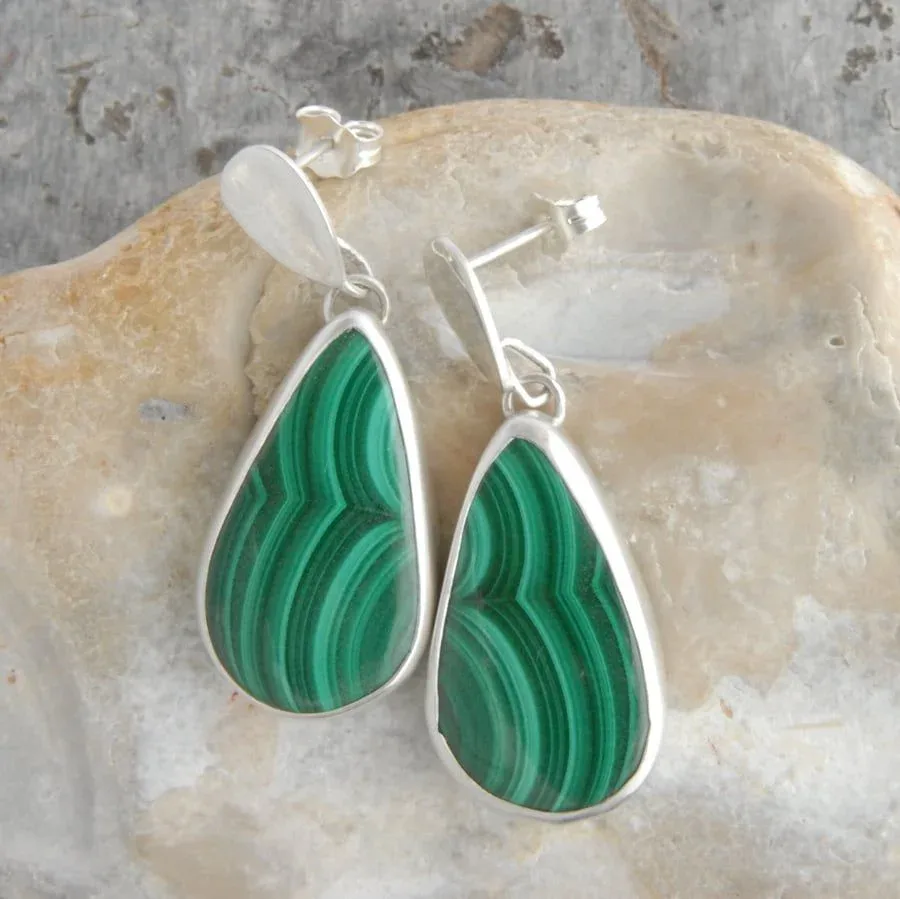
Earrings
Malachite earrings can feel like a calm filter on a busy day. They suit moments when listening matters, but taking on everyone else's mood does not. The green banding reads clean and grounded, so they work for workdays, travel, and social plans. They add presence without needing a loud outfit.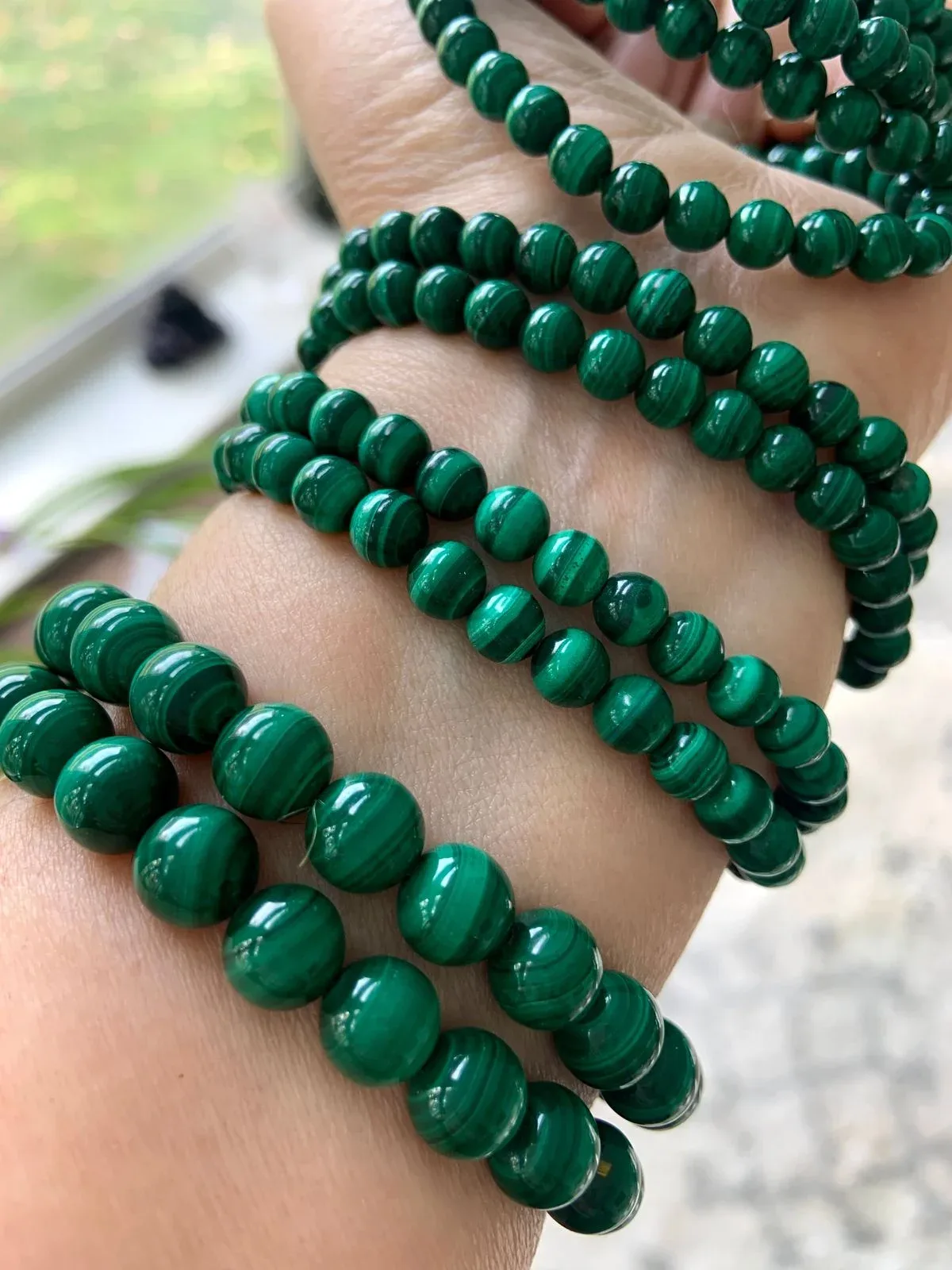
Bracelet
A Malachite bracelet feels practical because it sits where the hands are always in motion. It can be a quick reminder to slow down before replying, agreeing, or explaining. It pairs well with small routines, like a breath before sending a message or a pause before saying yes. Simple, steady support.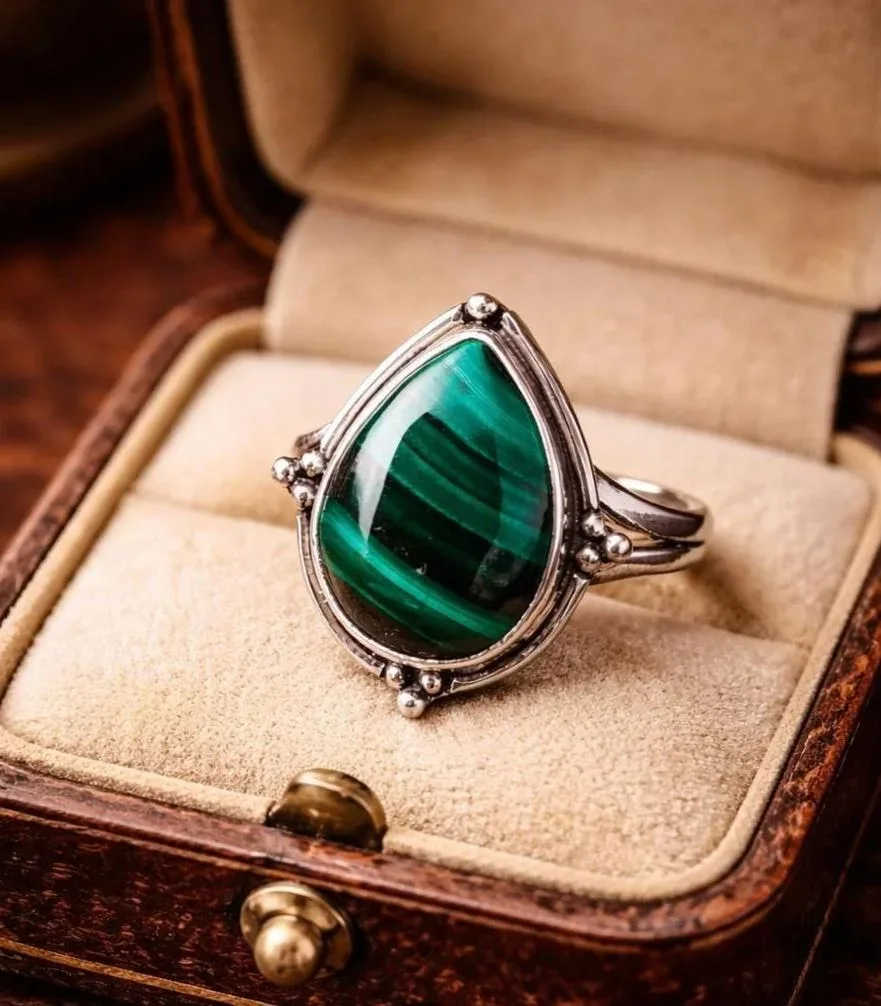
Ring
A Malachite ring stays in view, which makes it useful for staying intentional. It can mark a personal promise, like speaking clearly or keeping a boundary without guilt. The bold green pattern often reads confident and direct. It suits days that call for firm choices and clean follow-through, not second-guessing.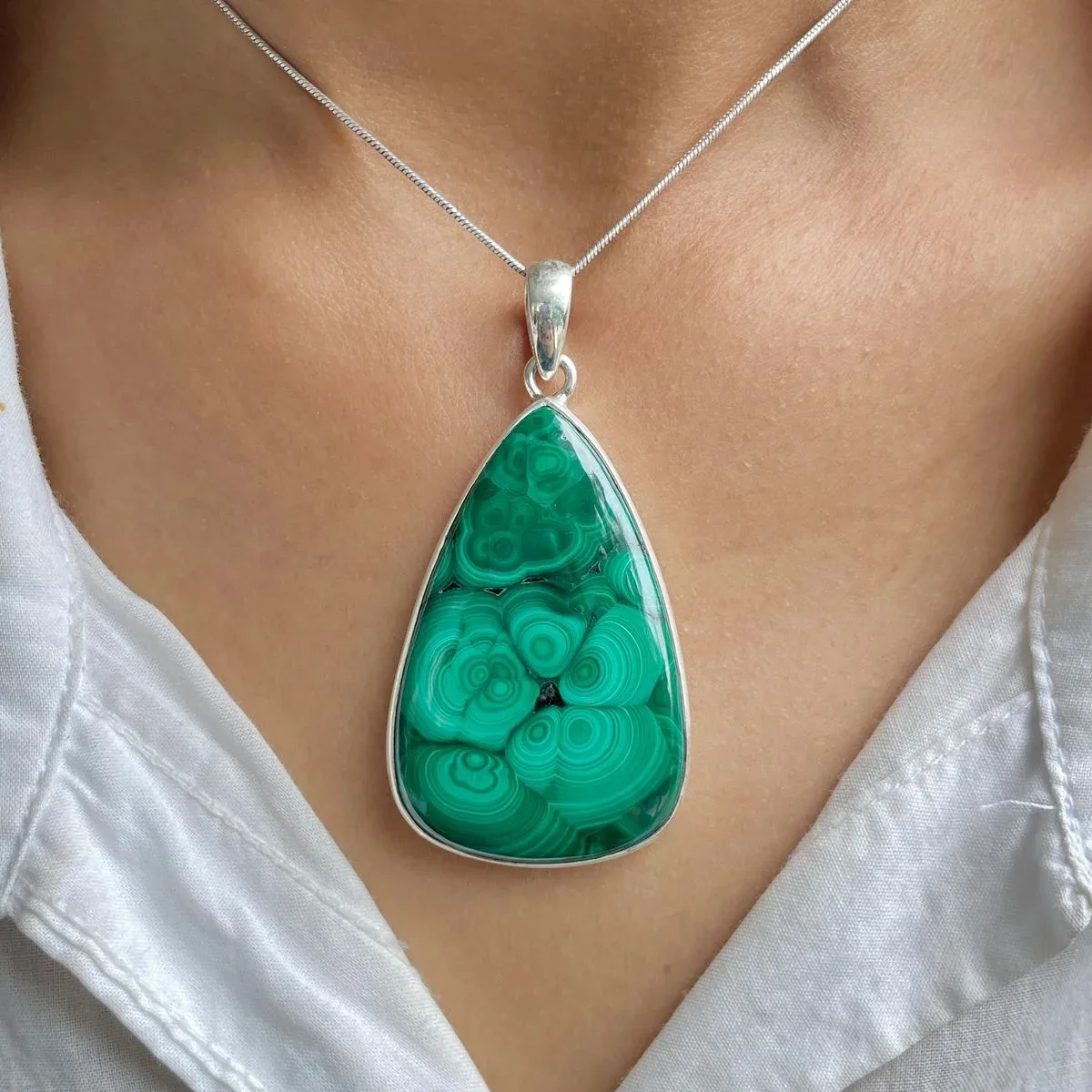
Necklace
A Malachite necklace sits close to the chest, so it tends to feel steady and heart-led. It can support gentle courage when emotions are close to the surface. Choose a length that feels comfortable, then let it be a quiet anchor during conversations that matter. Simple, close, and reassuring.Forms
Explore the forms below and pick the one that matches the mood, crisp and focused, or smooth and supportive.
Rough
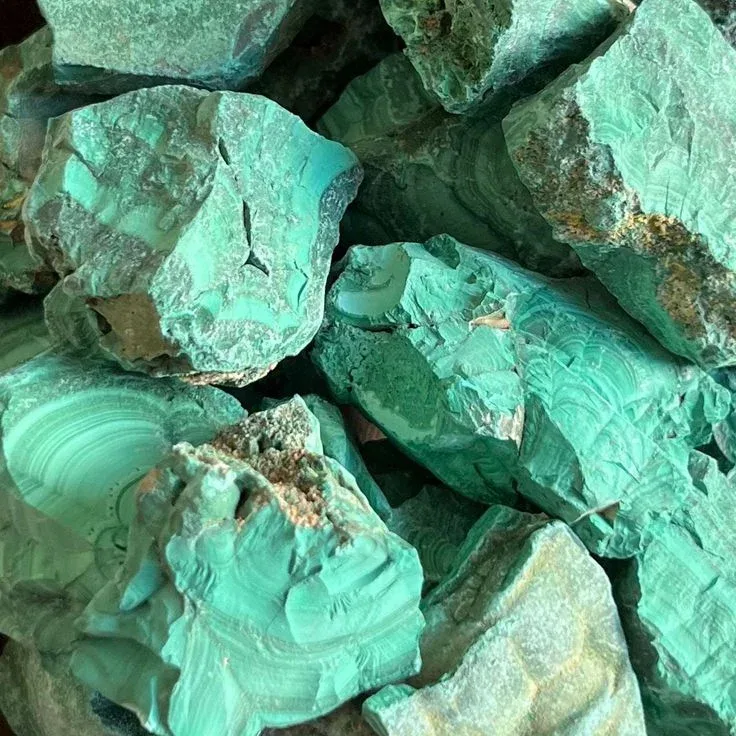
Rough Malachite feels raw and direct. The natural texture and uneven banding give it a blunt, unpolished character, like change that is still in progress. It often looks earthy and forceful, with a strong sense of movement in the stripes.
Point / Tower
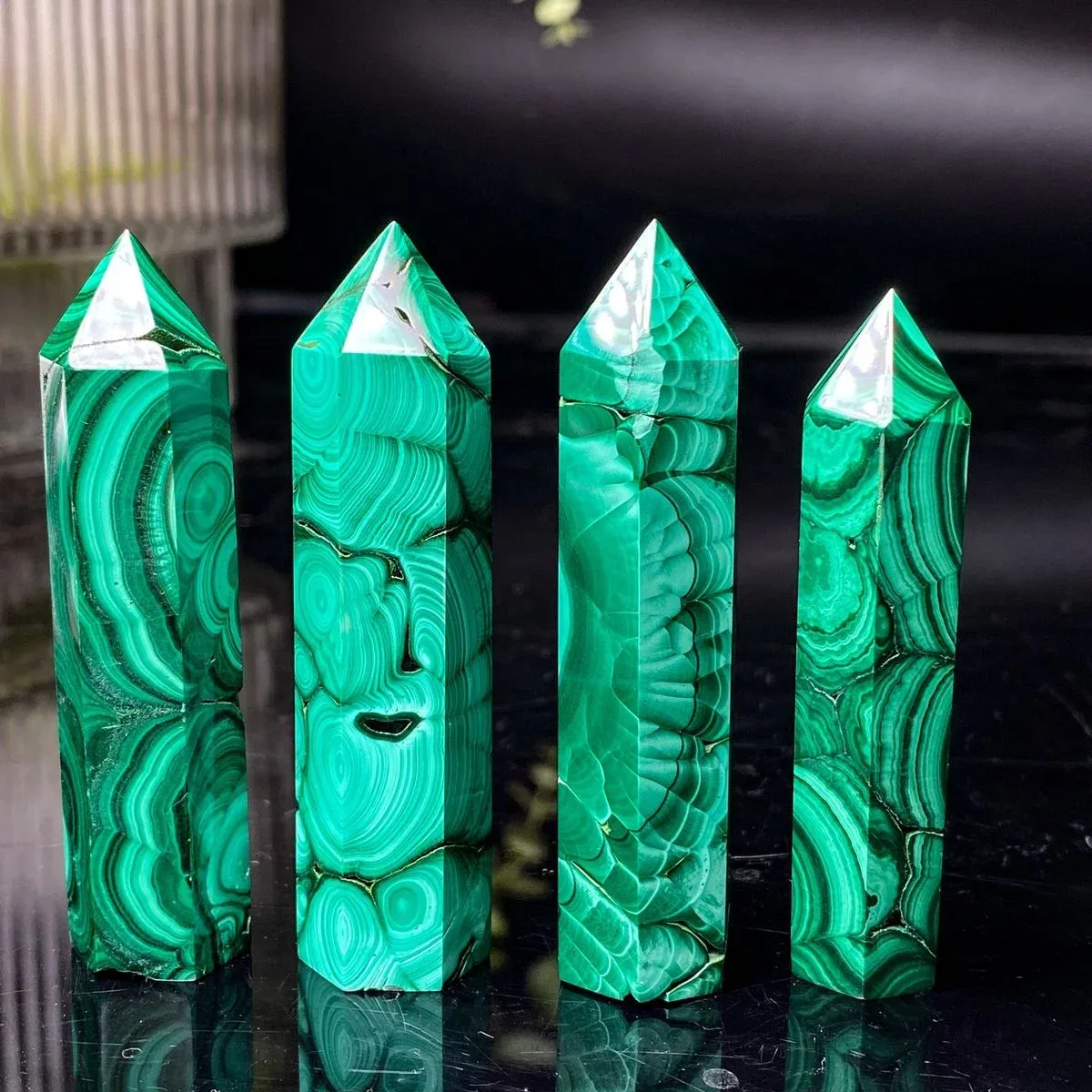
A Malachite point or tower reads as focused and intentional. The upright form and strong banding pull the eye along a clear line, giving a sense of direction. It tends to feel structured and decisive, more sharp-edged in mood than soft or blended.
Sphere
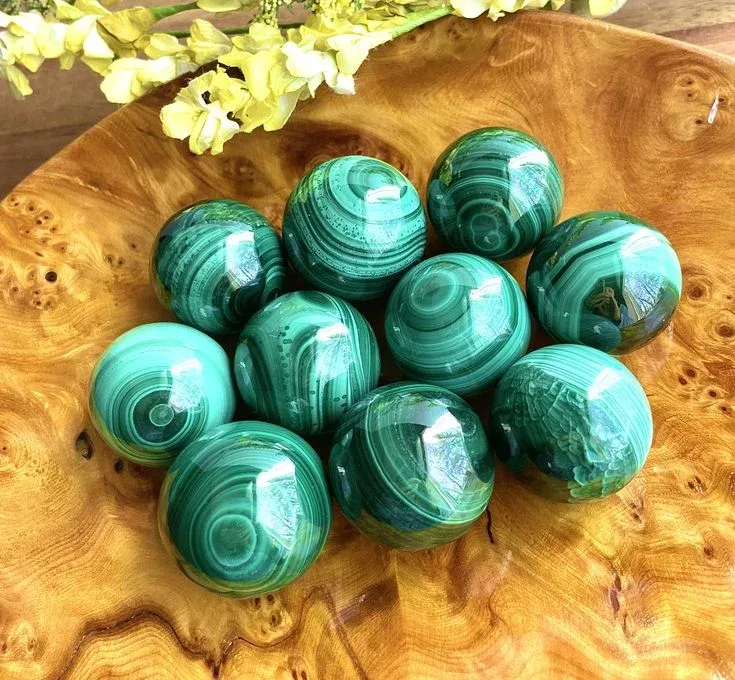
A Malachite sphere feels balanced and contained. The banding wraps around in a continuous way, which can look whole and even. It often reads as calm strength, with the pattern moving smoothly rather than cutting in hard lines.
Palm Stone
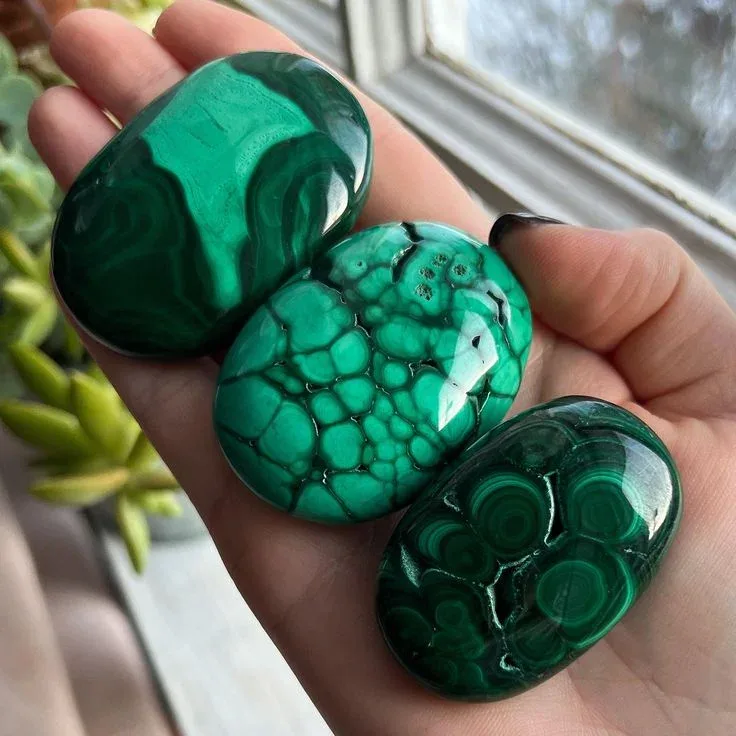
A Malachite palm stone feels steady and reassuring. The polish softens the stripes and makes the green look warmer, while the pattern still has plenty of presence. It often reads like quiet support, solid, comfortable, and easy to hold.
Tumble Stone
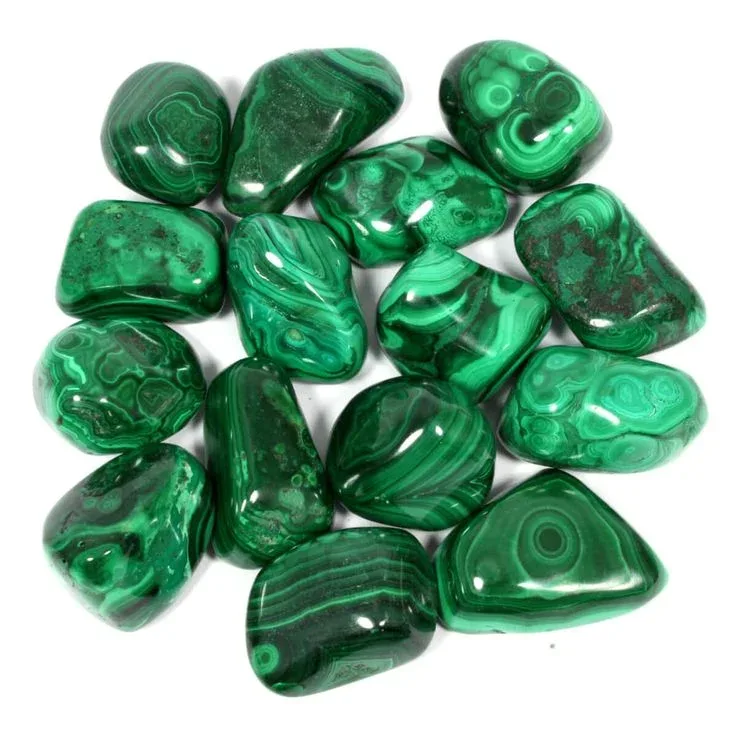
A tumbled Malachite looks friendly and everyday. The smaller size and rounded edges make the banding feel lighter and less intense, while still clearly Malachite. It reads as simple, practical support, easygoing, but not flimsy.
Figure
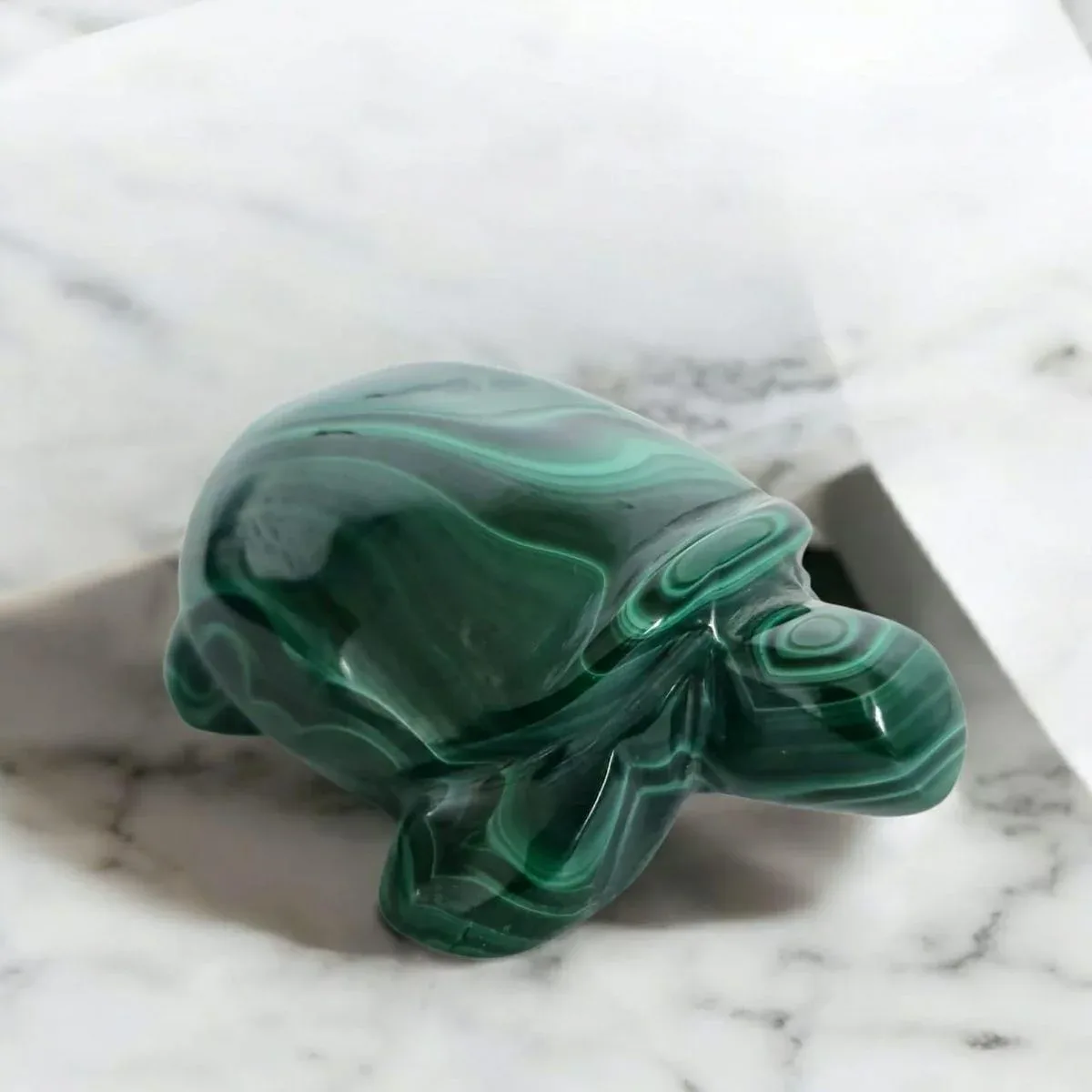
A Malachite figure adds a story-like feel. Carving turns the banding into natural motion across the shape, so the pattern looks more expressive. It often reads as transformation with personality, like change taking a clear, recognizable form.
Heart
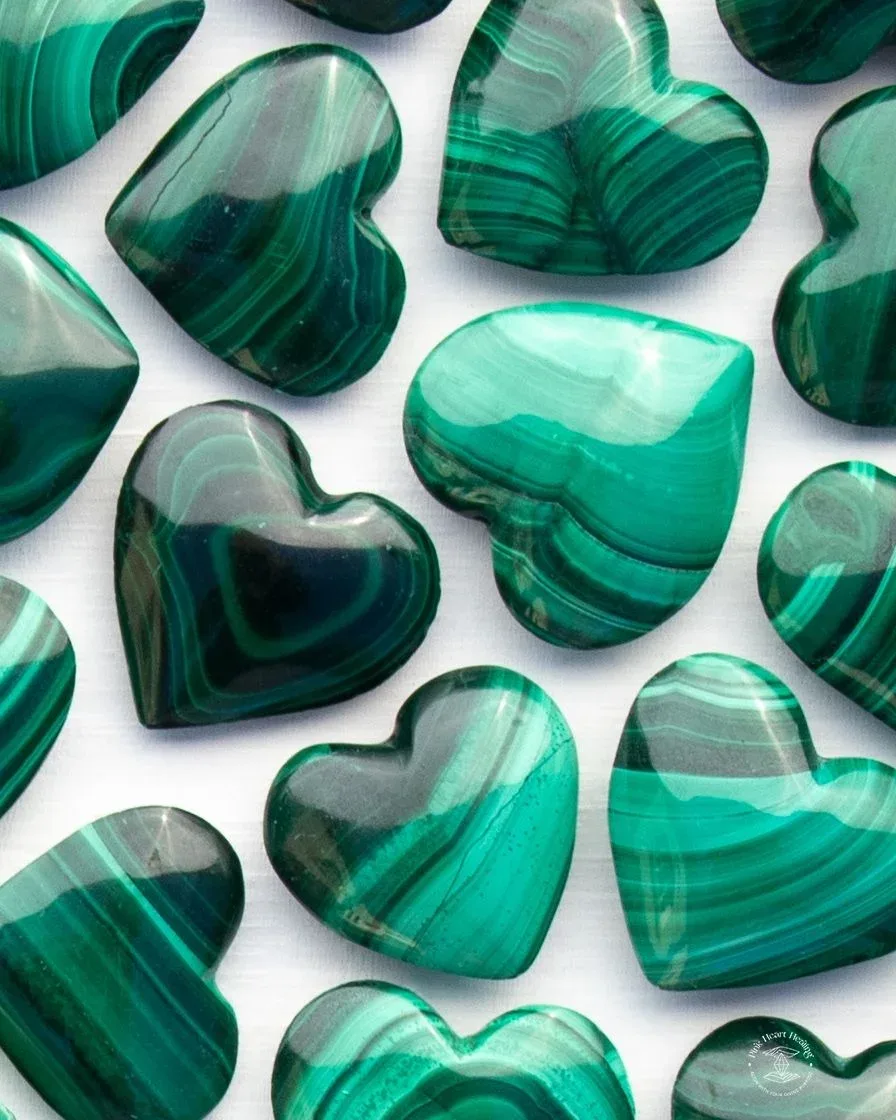
A Malachite heart leans warm without losing firmness. The heart form softens the bold green pattern, so it looks caring but clear. It often reads as love with boundaries, tender, steady, and not self-sacrificing.
Cleansing & Charging
Malachite is best treated gently. It has lower durability, so avoid harsh methods, salt, and long soaks. A light, careful routine keeps it feeling fresh without risking the surface.
How to cleanse Malachite
- Use smoke cleansing briefly, then air it out.
- Use sound, like a bell or singing bowl, for a simple reset.
- Wipe with a soft, dry cloth to lift everyday residue.
- If using water, keep it quick and minimal, then dry straight away.
How to charge Malachite
- Place it in morning light for a short time, not harsh midday sun.
- Charge beside Clear Quartz to brighten and steady the feel.
- Set it near a plant or natural space for a grounded refresh.
Where to Use
Choose one spot and keep the intention simple. If the space starts to feel heavy again, cleanse the stone and reset the focus rather than adding more crystals.
Entryway
Good for setting the tone as people come and go. It suits a clear 'leave the day at the door' feeling, especially after work or busy errands.
Living room
Helps keep shared space feeling steady when lots of moods mix. Useful for keeping conversations honest and respectful, without letting tension linger.
Office / study
Supports focus and firm boundaries around time and attention. Handy when decisions need courage, or when it is important to stop over-committing.
Meditation space
Works well for reflection when working through change. It suits sessions that aim for clarity and release, rather than forcing a big emotional breakthrough.
Science
Physical properties
- Mineral class
- Carbonate
- Color
- Green, often banded
- Hardness
- 3.5 - 4
- Density
- ~3.6 - 4.0 g/cm3
- Durability
- Low to moderate
- Thermal stability
- Low
Optical properties
- Transparency
- Opaque to translucent
- Lustre
- Vitreous to silky
- Refraction index
- ~1.65 - 1.91
Chemical composition
- Class
- Carbonate
- Formula
- Cu2CO3(OH)2
- Group
- Malachite
- Magnetic
- Non-magnetic
Formation
Malachite is a secondary copper mineral that forms near the surface. It develops where copper sulphides and other copper-bearing rocks meet oxygen and weathering. In the oxidized zone of a copper deposit, rainwater and groundwater pick up copper and move it through fractures, porous rock, and old mine workings.
Once those copper-rich fluids reach carbonate-rich ground, such as limestone, dolomite, or carbonate-bearing sediments, malachite can precipitate. It may begin as a thin green coating, then thicken into solid masses. Common habits include rounded botryoidal growth, fibrous crusts, and banded layers. In open cavities it can build into stalactitic forms. It often sits with other oxidation-zone minerals, especially azurite and chrysocolla, as small shifts in chemistry, pH, and available carbonate steer what forms.
Locations
- Democratic Republic of the Congo
- Zambia
- Russia
- Australia
- Namibia
- United States
History
Ornamental stone in early civilizations
c. 3000, 1000 BCE
Archaeological sources describe malachite being worked as a decorative stone in parts of North Africa and the Near East. Its green color made it easy to spot. It could be carved or inlaid, though the exact uses vary by site and period.
Copper mining and secondary minerals
c. 2000, 500 BCE
Malachite forms in the weathered zones of copper deposits, so it often shows up alongside evidence of copper extraction. In several ancient mining regions, it is noted as a bright green copper mineral visible near the surface.
Green stone in protective symbolism
c. 1500 BCE onward
Green stones were sometimes linked with protection and renewal in ancient symbolic systems. Tying those meanings to malachite across long periods is tricky, but later writing and museum interpretation often place it within wider traditions of amulets and pigments.
Mentioned in classical mineral writing
1st century CE
Classical authors wrote about copper minerals and green stones used for ornament and color. The exact materials behind those terms are not always clear. Malachite is often included in modern discussions of the green copper carbonates known in the Roman world.
Continued use as a decorative material
Middle Ages (c. 5th, 15th century)
Malachite appears in treasuries and collections as a carved or polished ornamental stone. Surviving objects show it was prized for its banded pattern and color, even though sourcing and trade routes differed by region.
Large-scale decorative use in Russia
18th, 19th century
Russian deposits, especially in the Ural region, supported notable use of malachite in decorative arts and interiors. Many well-documented examples survive in museums and historic buildings, often as veneers, columns, and inlaid work.
Pigment and color in applied arts
19th century
Malachite has been used as a green pigment in different periods, although the term 'malachite green' can also refer to later synthetic dyes. Older references to green pigments can be broad, so confirming the material often depends on analysis.
Modern jewelry and collecting, with new sources
20th, 21st century
Malachite remains popular for jewelry, carvings, and mineral specimens. Supply has included material from central and southern Africa and other regions. Modern use tends to focus on decorative appeal and collecting rather than industrial roles.
Got questions?
We've got answers!
FAQ's
What is Malachite used for?
+×
Malachite is often used as a supportive stone for protection and personal change. It suits boundary work, especially when life is shifting.
It is also used for heart-led emotional clearing, so feelings can move through instead of piling up. Many keep it by the front door or at a desk. It also works well for quiet reflection and sticking to the next practical step.
Which zodiac signs are connected to Malachite?
+×
Malachite is most commonly linked with Scorpio and Capricorn.
It can be a good match when those signs are leaning into change, commitment, and the kind of inner work that holds up over time.
What chakras does Malachite activate?
+×
Malachite is linked with the Heart chakra.
It is often used to keep the heart open while still holding clear limits. Less over-giving. More steady care.
Can Malachite help with stress and sleep?
+×
Malachite is sometimes used as a calming, protective companion during stressful periods, which can make it easier to wind down. It is not a substitute for medical care, and it should not be treated as a cure for sleep issues.
For a gentle routine, place it in a calming spot rather than under a pillow. Pair it with basics like dimmer light, slower breathing, and a short screen break before bed.