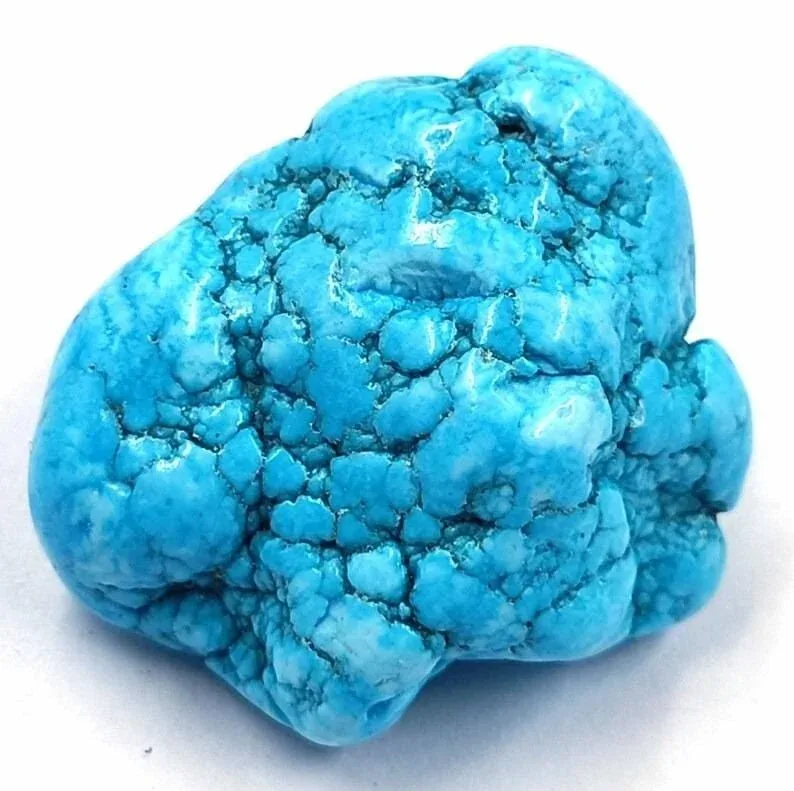
Turquoise Crystal, Benefits and Meanings.
Named from the French 'turquoise' meaning Turkish, referring to stones traded into Europe via Turkey; long linked with protection, travel, and honest communication.
Metaphysical & Spiritual
Turquoise is linked with protection and safe passage, especially when life feels busy or unpredictable. It also suits honest communication, kind but clear. The blue to blue-green range is part of the draw in spiritual work. Open sky and clear water come to mind. A simple cue to slow down and stick with what feels true. Turquoise is also tied to emotional balance and steady courage. It fits moments where words need heart without getting swept up in the heat of it.

Planet

Jupiter
Jupiter brings the big view, growth, meaning. Turquoise matches that spacious feel, nudging reflection and a steady confidence that comes from acting in line with values.
Element
Water
Turquoise has a Water feel, calming, clearing, steady. It fits the flow of emotion, especially when moods run strong and things need to level out.

Crystal Pairings
Turquoise pairs well with stones that steady the mood and keep communication clean. These combinations lean into calm honesty, gentle confidence, and a grounded sense of protection, without pushing the energy too hard.
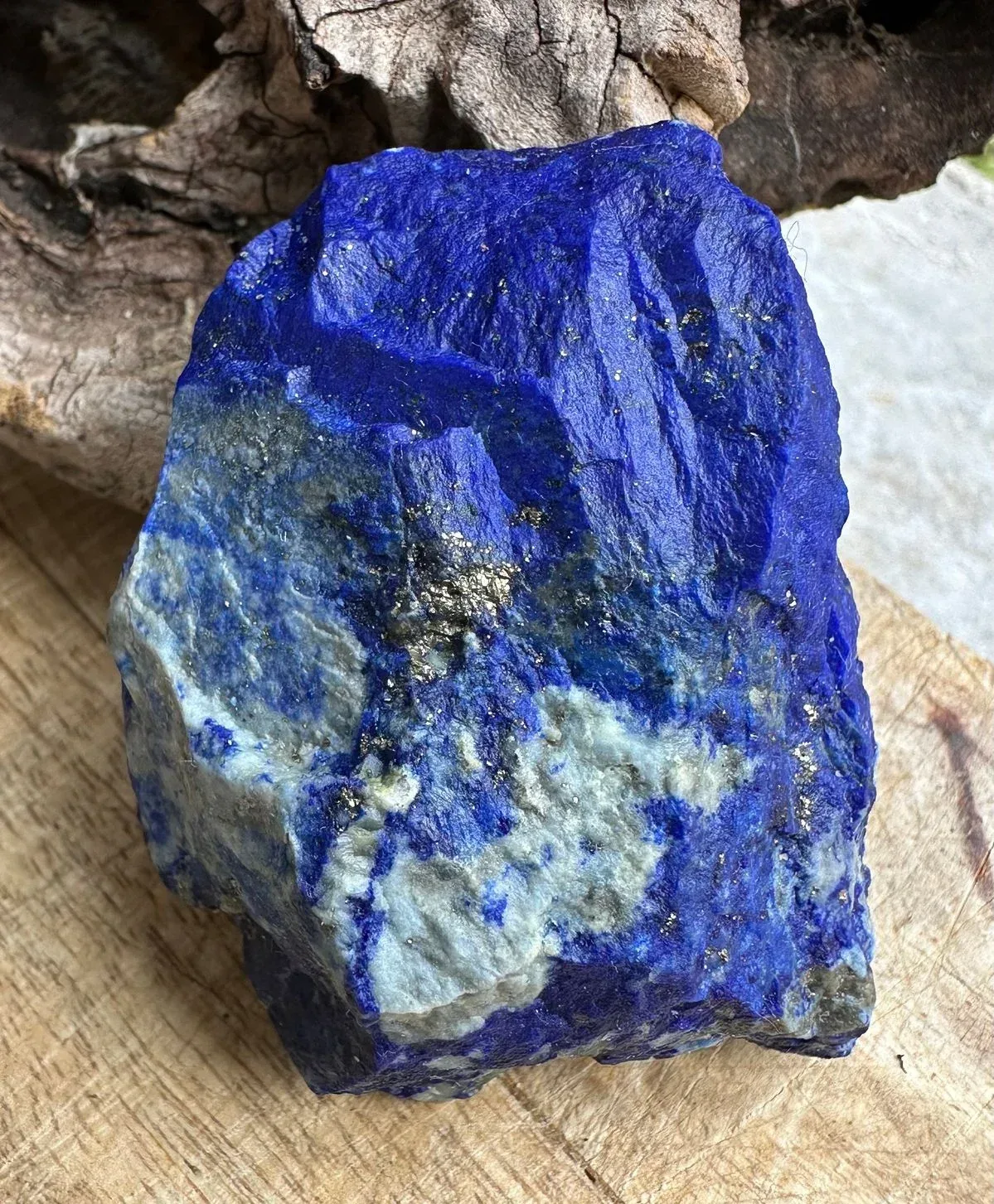
Lapis Lazuli
Lapis Lazuli adds depth to Turquoise's clear, heart-forward tone. The mix feels honest and considered. Plain words, wider context.
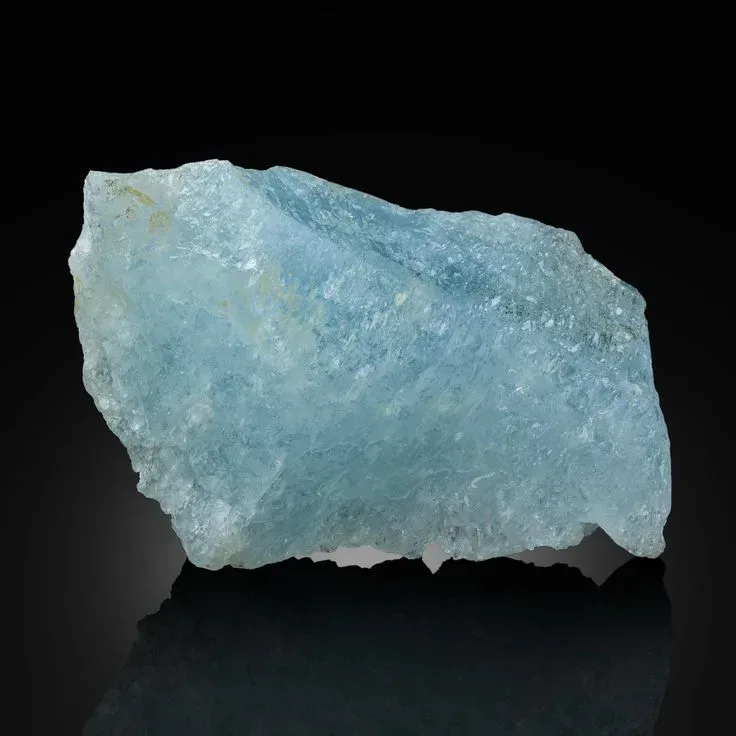
Aquamarine
Aquamarine keeps the mood soft and steady next to Turquoise. The tone stays open, calm, and easy.
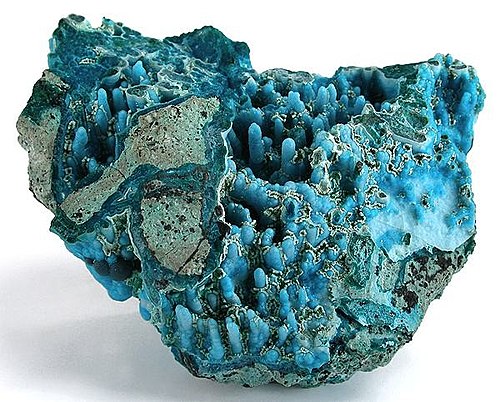
Chrysocolla
Chrysocolla brings a gentle, soothing note to Turquoise's protective steadiness. Kind communication, still direct.
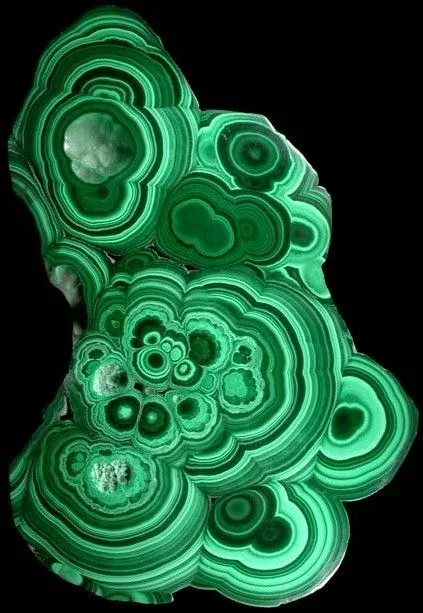
Malachite
Malachite adds boldness to Turquoise's balanced, sincere feel. Truth comes up fast, and it stays visible.
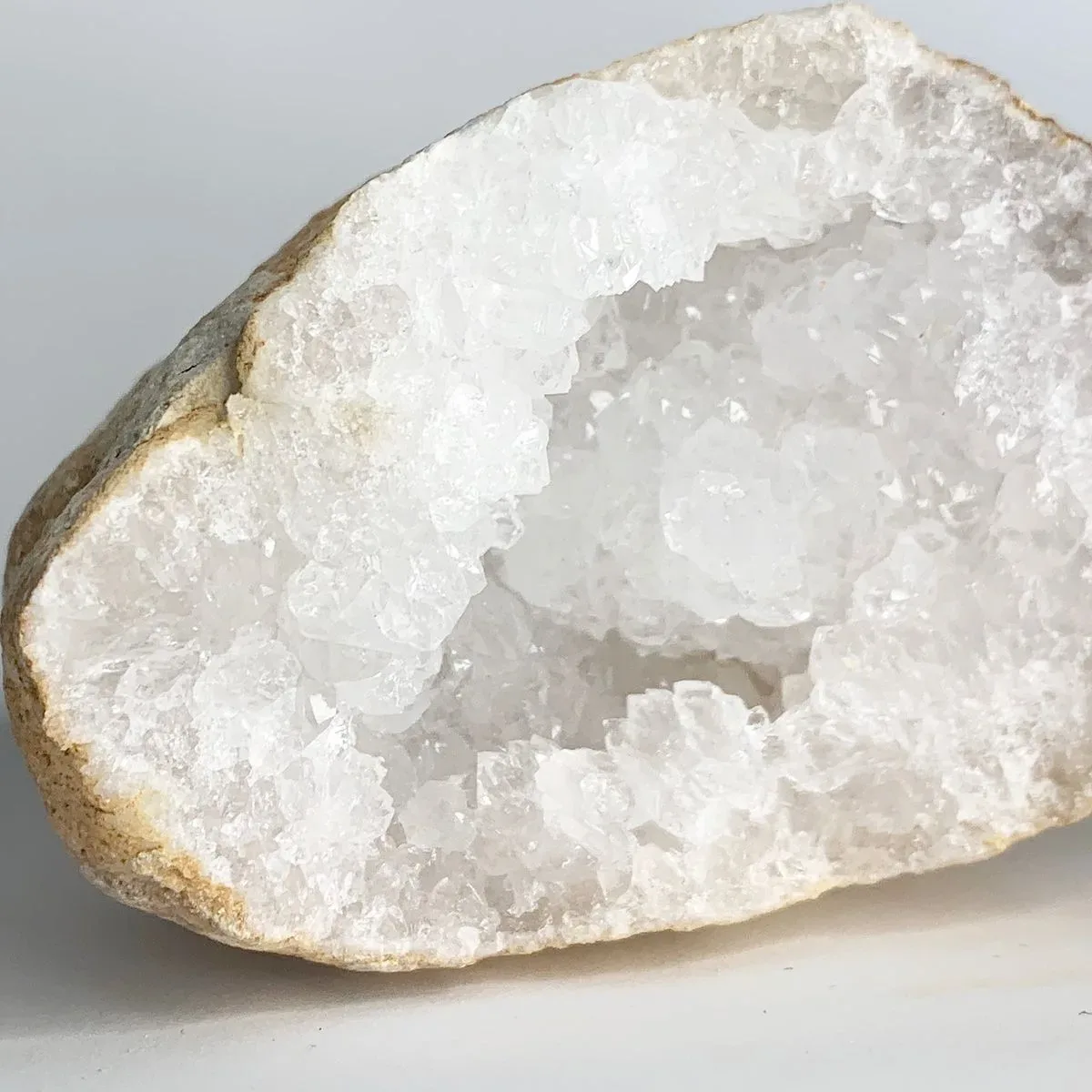
Clear Quartz
Clear Quartz reads like a clean lens beside Turquoise, sharpening the message without changing it. Simple. Bright. Clear.
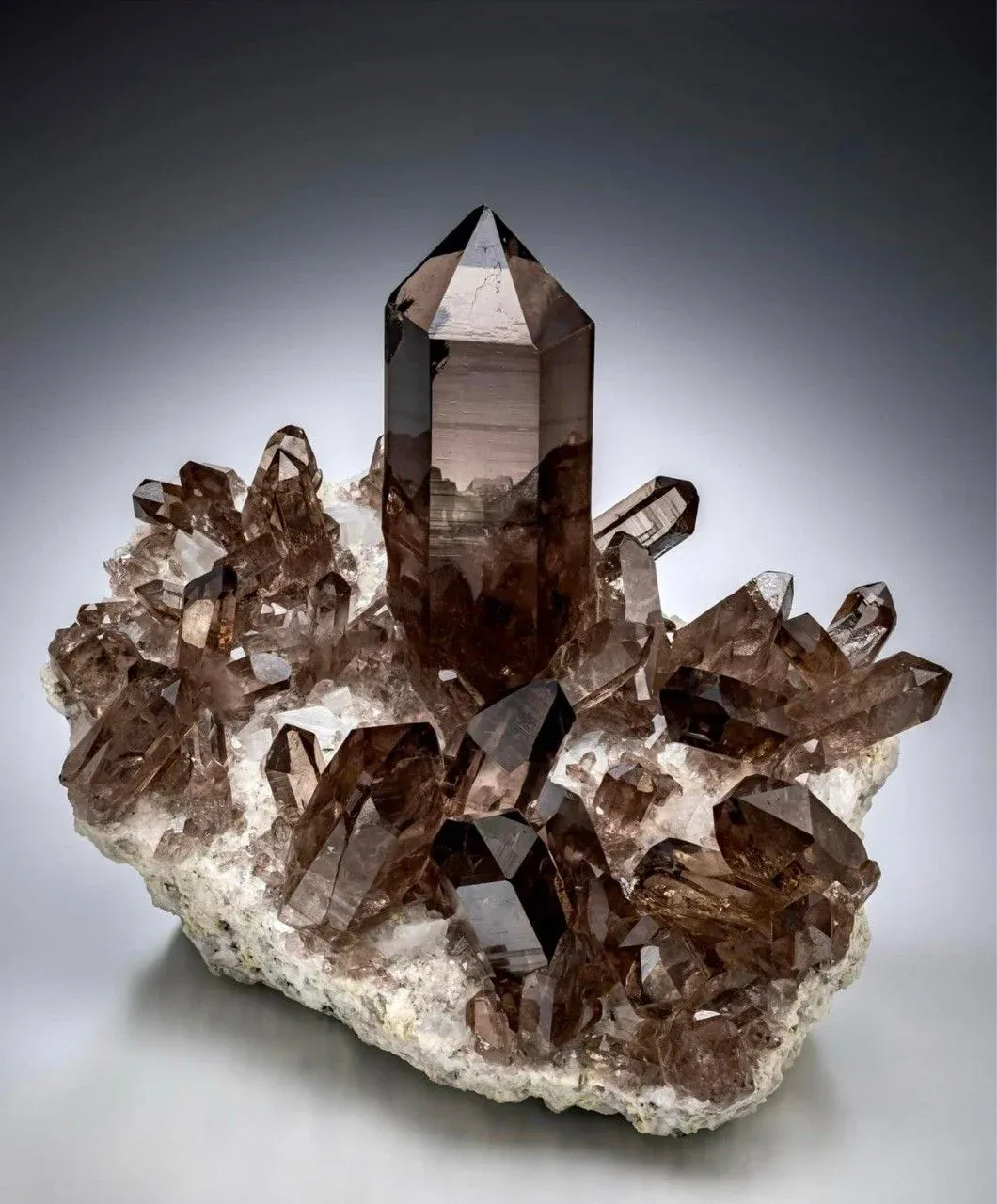
Smoky Quartz
Smoky Quartz brings quiet grounding to Turquoise's clear, honest tone. Boundaries feel steadier, with less edge.
Healing
Turquoise suits days when everything feels loud and the point needs to land clean. It is linked with calm courage, so words can come out steady instead of sharp.
It fits honest talks, first days, and travel, when staying centered helps. Let it be a cue to pause before replying. Keep the message simple. Warm tone, clear truth, even when the topic is touchy.
Affirmations
Use these when the mind feels busy or the voice feels stuck. Keep the tone simple and true to the moment.
Say one line a few times, then pause and notice what shifts in the body. Adjust the words if they feel too strong or too soft.
- My voice is clear and kind.
- I speak the truth without rushing.
- I listen with an open heart.
- I stay calm when things feel tense.
- I trust myself to say what matters.
Intention Setting
Intentions work best when they are specific and practical. Pick one that matches a real situation coming up soon.
Write it down, then choose one small action that supports it. Let Turquoise be the cue to follow through.
- Speak up in one important moment this week.
- Have a direct, respectful conversation.
- Share feelings without blaming or shutting down.
- Keep steady boundaries while staying warm.
- Choose honesty over people-pleasing.
Manifesting
Use these as clear outcomes to aim for, not promises. Keep them grounded in what can be done and said.
Check in after a few days and refine the wording. The goal is progress, not perfection.
- A conversation ends with clarity and respect.
- A decision is made without second-guessing.
- Emotions settle faster after stress.
- Supportive people respond to honest words.
- Plans move forward with fewer mixed signals.
Jewelry
Turquoise jewelry keeps things practical. Pick a piece that sits well and does not snag or slide around, so it stays a quiet support, not a distraction. Small pieces work fine. Comfort matters most, the best one is the one worn often.
General benefits: Wearing Turquoise keeps the message close all day. It is often linked with clear communication and steadier nerves, handy for busy work, travel days, or tricky chats. Jewelry makes it easy to build a quick reset, touch it, breathe, then speak.
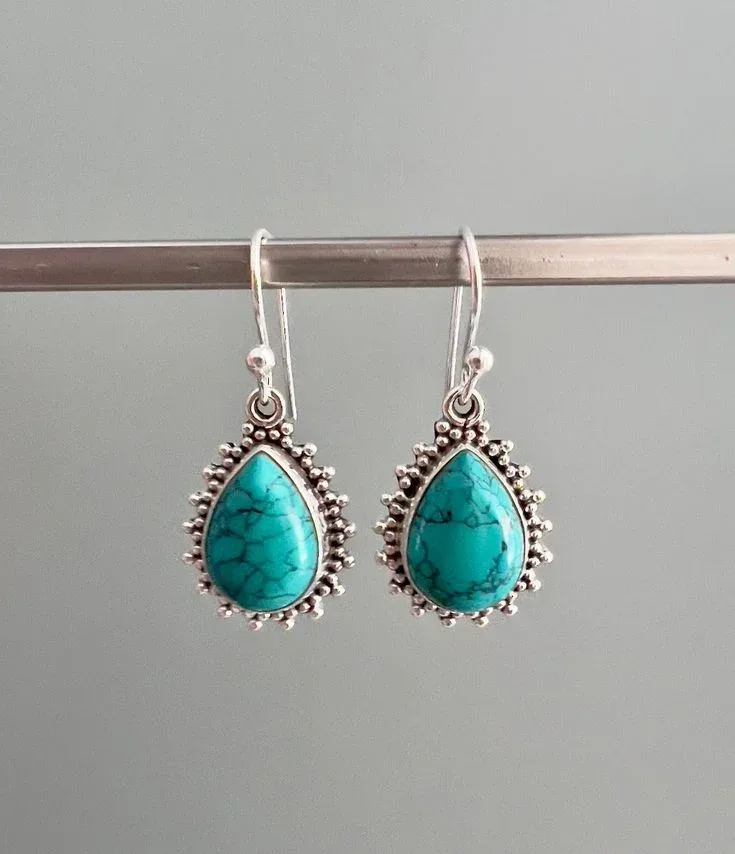
Earrings
Turquoise earrings sit near the face, which suits moments that need clear thinking and careful wording. They can be a subtle nudge to listen right through, then answer. Studs keep it neat and low-key. Drops add a bit more presence when speaking up.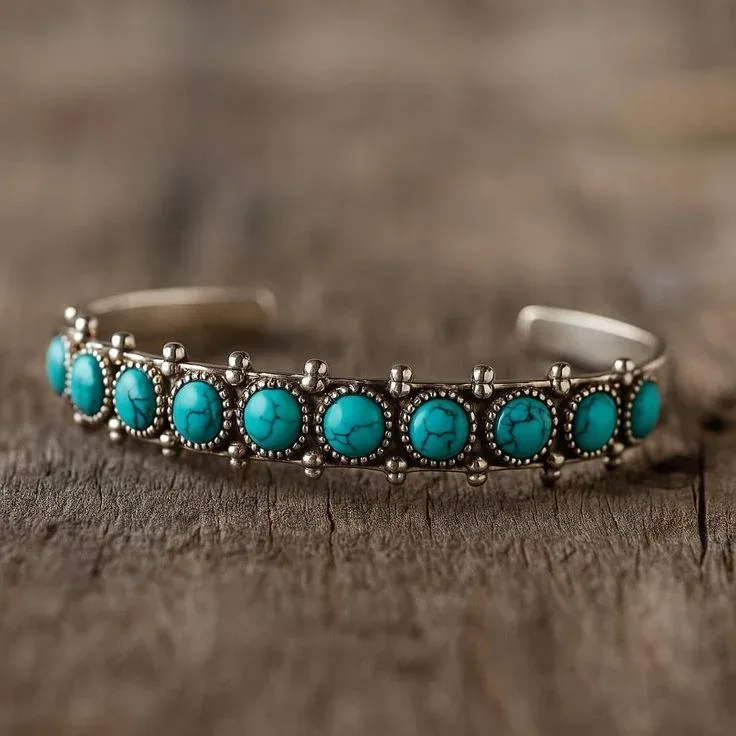
Bracelet
A Turquoise bracelet is hard to miss because the hands are always moving. That makes it a simple reminder to slow down before agreeing, firing off a text, or cutting in. Beads feel relaxed and casual. A cuff reads firmer, like a steady boundary.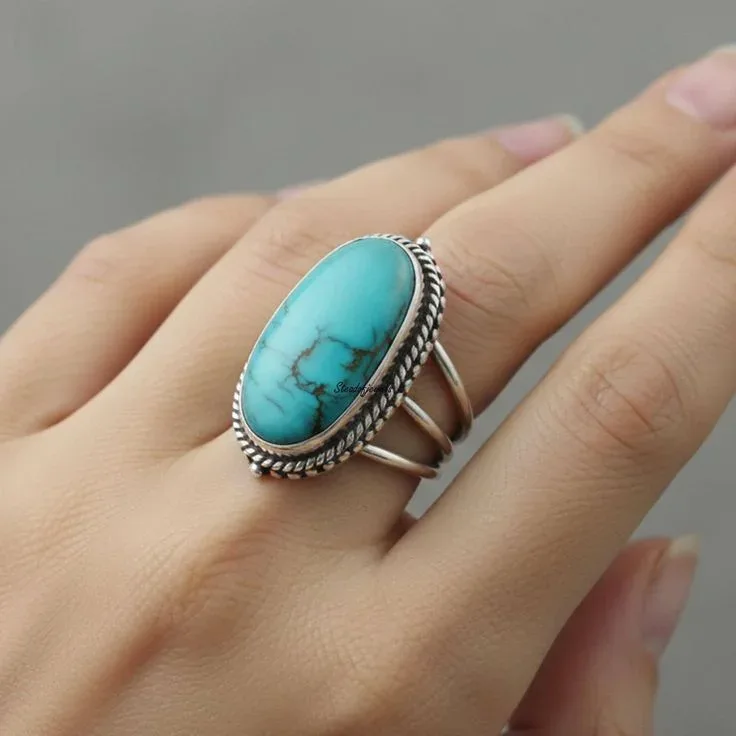
Ring
A Turquoise ring draws the eye while typing, writing, or gesturing. It suits a clear promise, keep the message honest and the tone even. Bigger stones feel bold and noticeable. Smaller settings stay tidy and practical, good for everyday wear without fuss.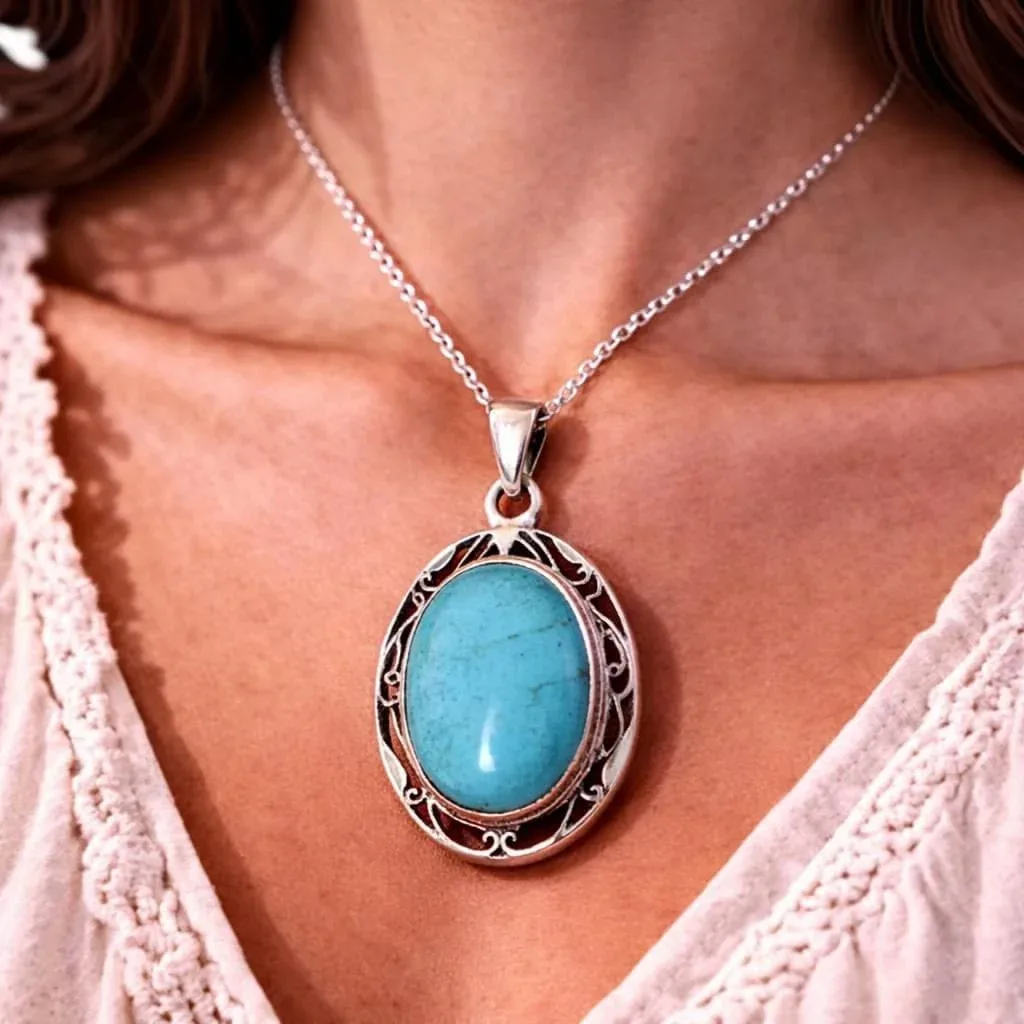
Necklace
A Turquoise necklace rests near the throat and chest, which matches the stone's link to voice and heart-led truth. In tense moments, the weight can feel steady and reassuring. Short chains look direct and focused. Longer pendants feel softer, with a more open vibe.Forms
Turquoise shows its personality through color and matrix. Form changes the whole read, rough and grounded, clean and precise, or smooth and calming to look at.
Rough
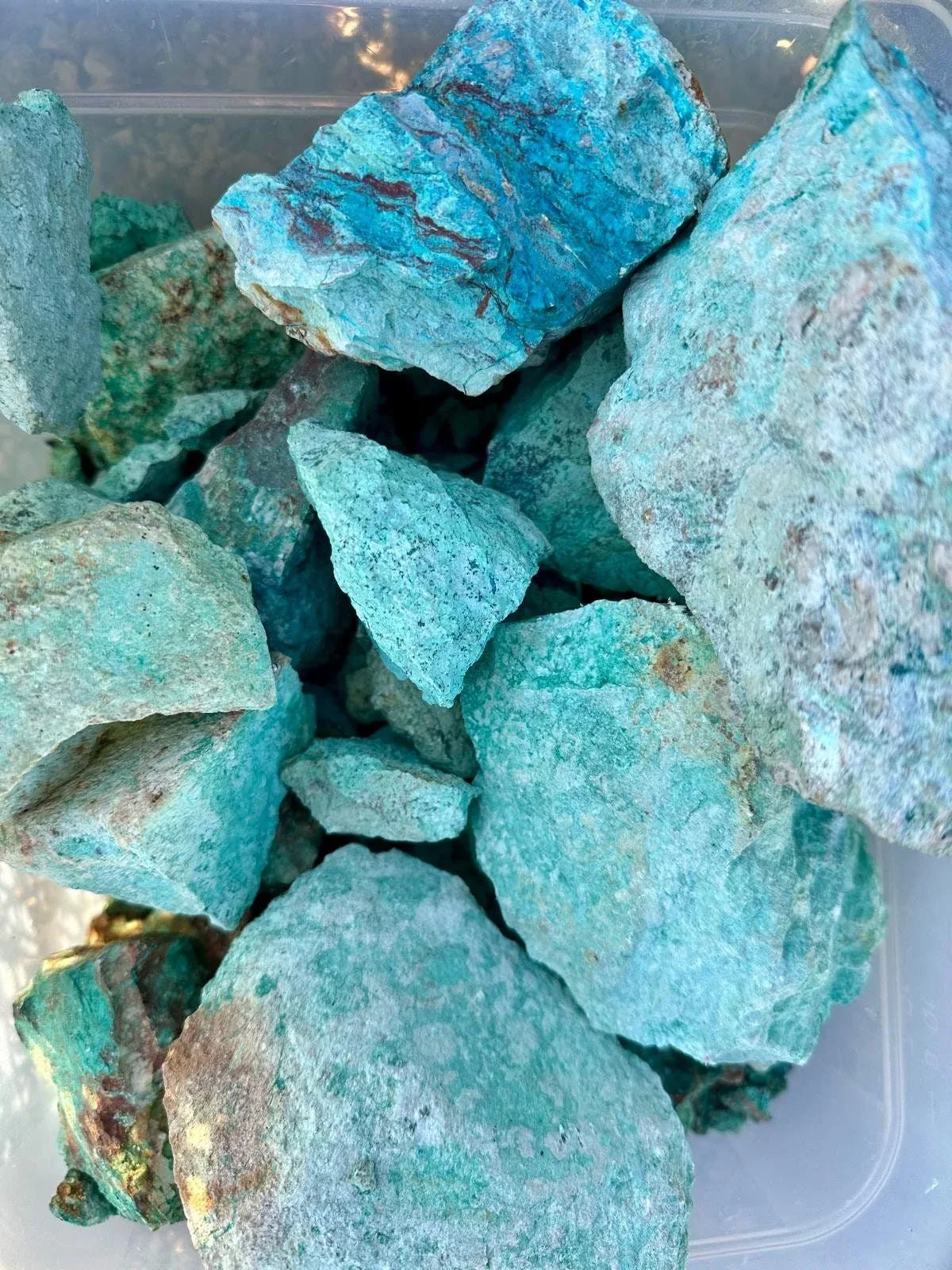
Rough Turquoise feels straight-up and natural. The uneven surface and visible matrix keep it earthy, like something found rather than finished. It reads sturdy and grounded, with character that does not rely on shine or perfect color.
Point / Tower
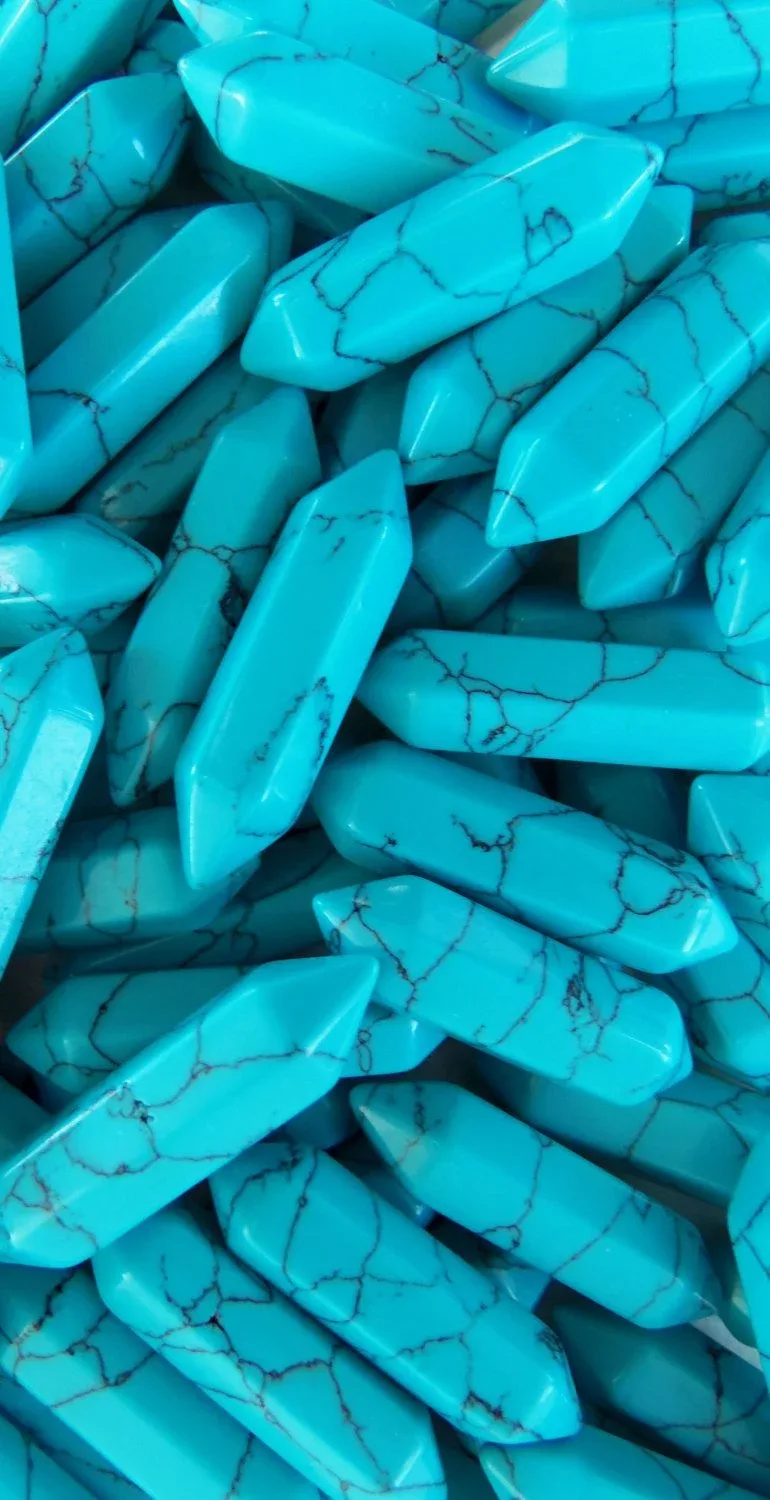
A Turquoise point or tower looks focused. The clean edges make the color feel more direct, and the form gives a sense of direction without being loud. It tends to read crisp and intentional, especially when the matrix runs in strong lines.
Sphere
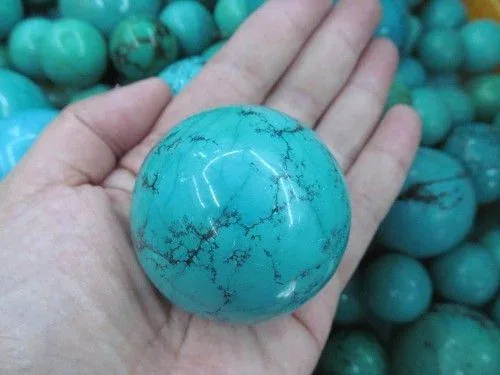
A Turquoise sphere feels smooth and balanced. The round form softens the look, so the color reads gentle and friendly. With no corners, the matrix can feel more flowing, like the whole stone is one calm, even statement.
Palm Stone
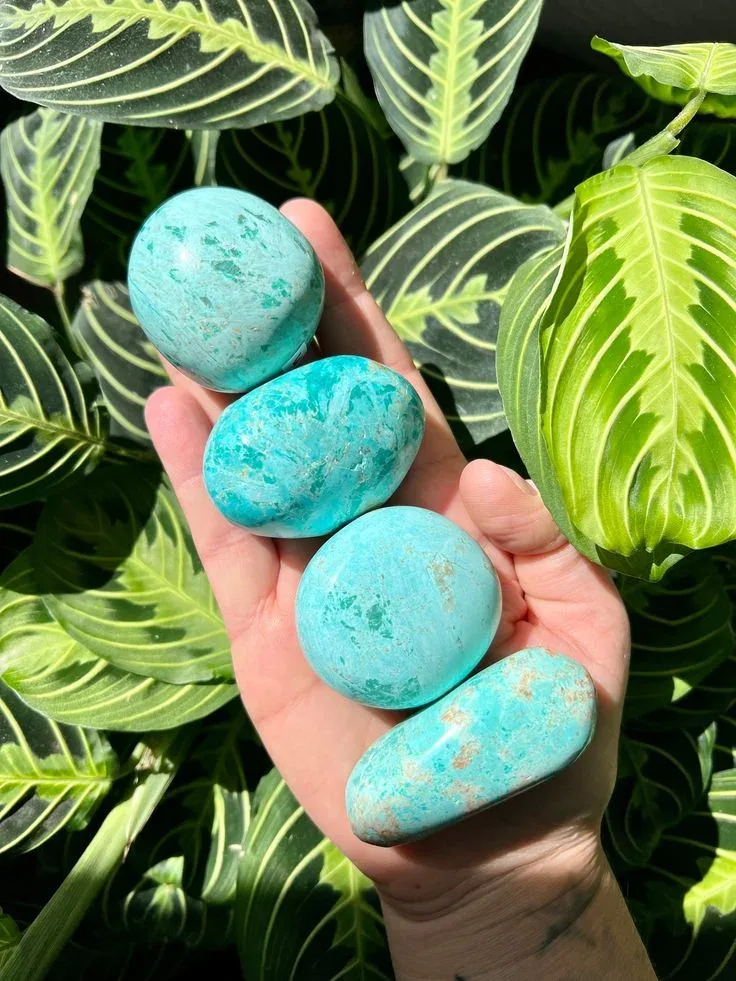
A Turquoise palm stone has a settled, familiar feel. The flat, polished surface shows off color and matrix clearly, without extra fuss. It reads soothing and steady, like a simple object with a calm presence.
Tumble Stone
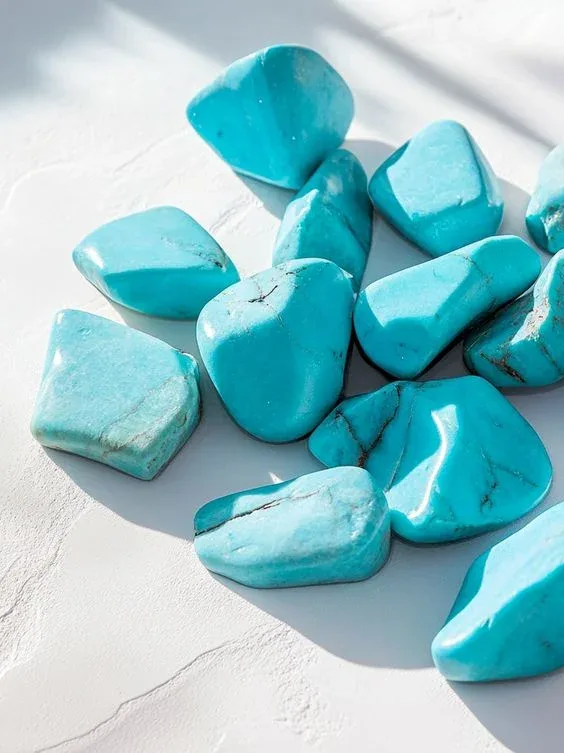
A tumbled Turquoise feels everyday and easy. The small, polished form often makes the blue-green look brighter, while the matrix keeps it grounded and natural. It reads friendly and low-pressure, more like a small companion than a showpiece.
Figure
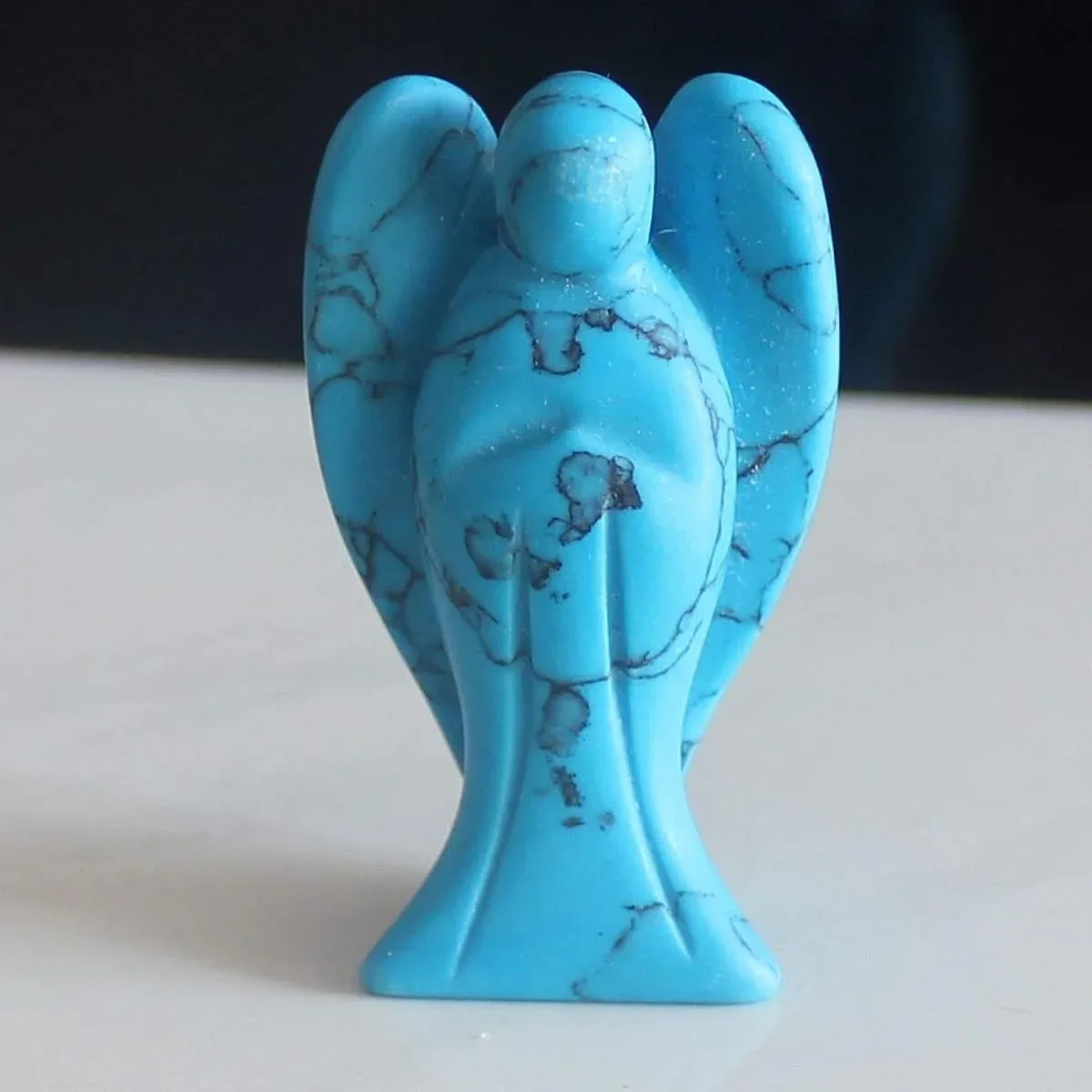
A Turquoise figure brings in story. The carving turns color and matrix into a clear motif, so the stone feels more personal and symbolic. It often reads like a keepsake, with meaning shaped into it, not just color on display.
Heart
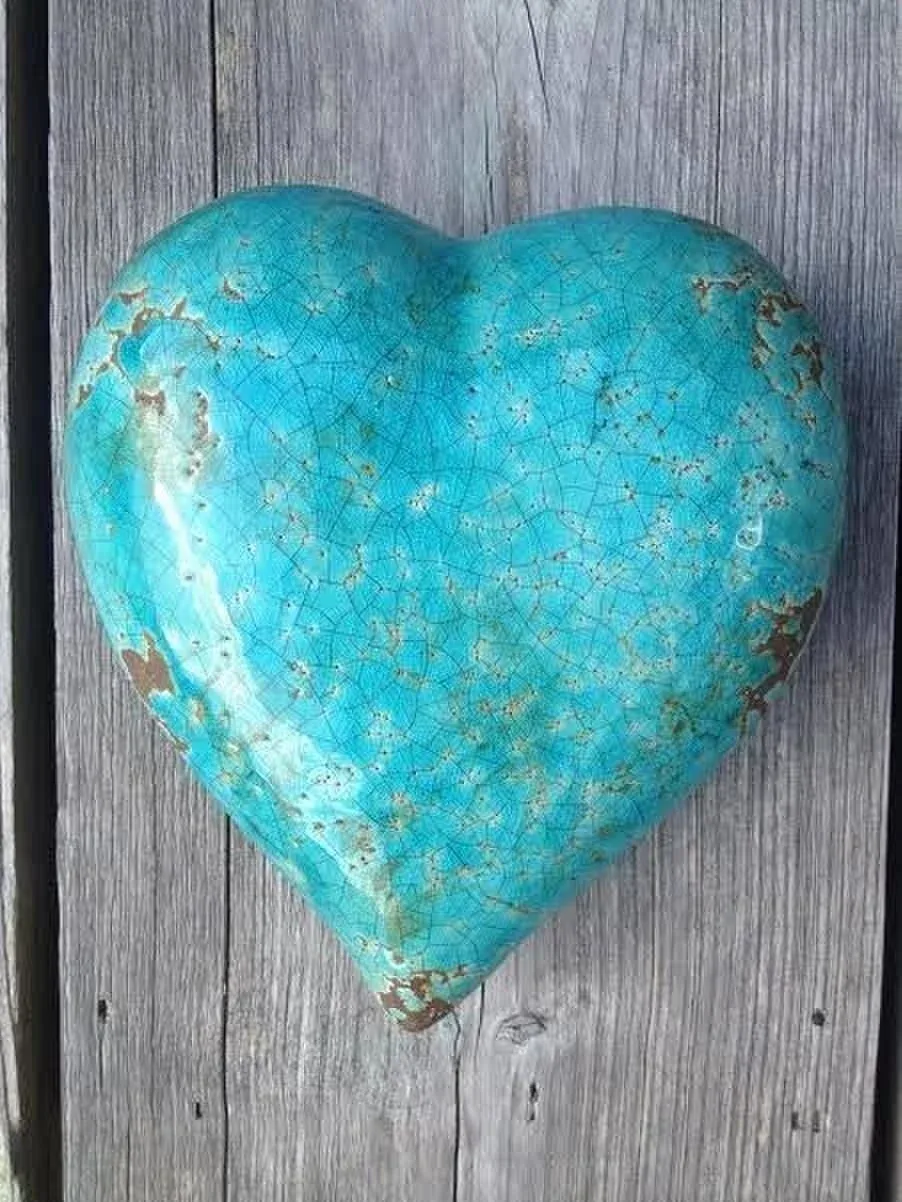
A Turquoise heart leans into warmth. The familiar form makes the stone feel softer and more relational, even if the matrix is bold. It reads like gentle courage, saying the honest thing while keeping the connection and the tone kind.
Cleansing & Charging
Turquoise is moderately durable and can be sensitive to chemicals, heat, and long soaking. Keep cleansing gentle and avoid salt water or harsh cleaners, especially for porous stones or pieces with matrix. If in doubt, choose a dry method and a soft cloth.
Cleansing (gentle options)
- Wipe with a soft, dry cloth after wearing to remove oils and sweat.
- Use a brief smoke cleanse if that fits the space and routine.
- Try sound cleansing, such as a bell or singing bowl, kept at a comfortable distance.
- Avoid soaking, salt, and strong detergents, they can dull the surface.
Charging (low-risk options)
- Rest it in indirect light rather than strong sun, color can fade over time.
- Place it near Clear Quartz to refresh the feel without handling it much.
- Set a simple spoken intention while holding it briefly, then put it away safely.
Where to Use
Use Turquoise where it supports clear thinking, respectful conversation, and a steadier emotional tone. Choose one spot per area so it does not get lost in clutter, and keep it away from sprays, steam, and direct heat.
Office / study
Helpful for meetings, writing, and focused tasks where the right words matter. It suits a workspace that needs calm boundaries, especially during busy periods or when juggling messages and deadlines.
Living room
Supports smoother conversations and a more relaxed tone when people gather. It can be a quiet cue to listen well, speak plainly, and let small tensions pass without turning into a bigger thing.
Meditation space
Fits reflective time that centers on honesty and emotional balance. It can support a simple check-in, what is being felt, what needs to be said, and what can be left for later.
Entryway
Works well as a threshold reminder to leave stress at the door and step out with a clear head. It suits routines around coming and going, especially on days with travel, errands, or important conversations.
Science
Physical properties
- Mineral class
- Phosphate
- Color
- Sky-blue to green, often with brown/black matrix
- Hardness
- 5 - 6
- Density
- ~2.6 - 2.9 g/cm3
- Durability
- Moderate
- Thermal stability
- Moderate
Optical properties
- Transparency
- Opaque to translucent
- Lustre
- Waxy to subvitreous
- Refraction index
- ~1.61 - 1.65
Chemical composition
- Class
- Phosphate
- Formula
- CuAl6(PO4)4(OH)8·4H2O
- Group
- Turquoise group
- Magnetic
- Non-magnetic
Formation
Turquoise is a secondary mineral that forms near the surface, in the oxidized, weathered parts of copper deposits. It turns up most in arid to semi-arid areas, where groundwater can move through fractures and porous rock without being quickly diluted.
Copper-rich fluids react with aluminum- and phosphorus-bearing host rocks, or with nearby clay-rich material. As the chemistry shifts, turquoise precipitates and fills cracks and pore spaces. Thin veins, nodules, and crusty coatings are common. It often sits with other copper minerals in the same weathered zone. Copper gives the classic blue color, while small amounts of iron can push it towards green.
Locations
- Iran
- United States
- China
- Egypt
- Mexico
- Afghanistan
History
Early use in Egypt and the Near East
c. 3000, 1000 BCE
Finds from ancient Egypt and nearby regions show turquoise made into beads, inlay, and small ornaments. It also appears in burial goods and decorative work, a sign it was valued for color and durability.
Mining and trade in ancient Iran
c. 2000, 500 BCE
Iran is often named as a long-term source of fine turquoise. Records and later accounts point to organized mining and regional trade over long periods. Exact dates and routes vary by source.
Protective travel stone in regional traditions
Antiquity (dates vary)
In several cultures, turquoise was treated as protective, especially for riders and travellers. Practices differ across time and place. Sources are uneven, so this reads best as a broad theme, not one fixed custom.
Trade into Europe via Turkey and the name "turquoise"
Medieval period (c. 11th, 15th century)
The name comes through French, linked to stones traded into Europe via Turkey. It is a trade route and market label, not a claim the stone originated in Turkey.
Ceremonial and decorative use in Mesoamerica
Pre-Columbian era (dates vary)
Turquoise was used in mosaics, masks, and ornaments in parts of Mesoamerica. Some material traveled long distances. Researchers still study how local and imported sources were used together.
Southwestern North America jewelry and craft traditions
Pre-contact to 19th century
In the American Southwest, turquoise has a long history in jewelry and adornment. Styles and techniques shifted over time. Trade, tools, and community preferences all played a part.
Commercial mining and modern jewelry markets
Late 19th, 20th century
Turquoise mining expanded in several regions, including the United States, alongside growing jewelry demand. Treatments and stabilization became more common too, changing how stones were graded and sold.
Ongoing cultural significance and sourcing awareness
20th, 21st century
Turquoise remains important in jewelry, design, and cultural expression. As supply chains widened, talk around provenance, fair trade, and respectful use became more visible.
Got questions?
We've got answers!
FAQ's
What is Turquoise used for?
+×
Turquoise is often used as a support stone for protection and steady confidence, especially when heading into new places or situations.
It is also commonly chosen for honest communication and emotional balance. Handy for travel, big conversations, or any moment that calls for calm and clarity.
Which zodiac signs are connected to Turquoise?
+×
Turquoise is most often linked with Sagittarius and Pisces.
It can be used as a simple focus stone for these signs. Try it during journalling, goal-setting, or when practicing more plain, kind communication.
What chakras does Turquoise activate?
+×
Turquoise is commonly associated with the Throat chakra and the Heart chakra.
Often used to help words come through with less strain. Speaking from the heart, staying steady in the middle of a conversation.
Can Turquoise help with stress and sleep?
+×
Turquoise is commonly believed to soothe stress and support emotional balance. That can help when the mind will not slow down.
For sleep, treat it as a comfort tool, not a fix. Keep it by the bed, or hold it for a few slow breaths before lights out. If stress or sleep problems persist, speak with a qualified professional.