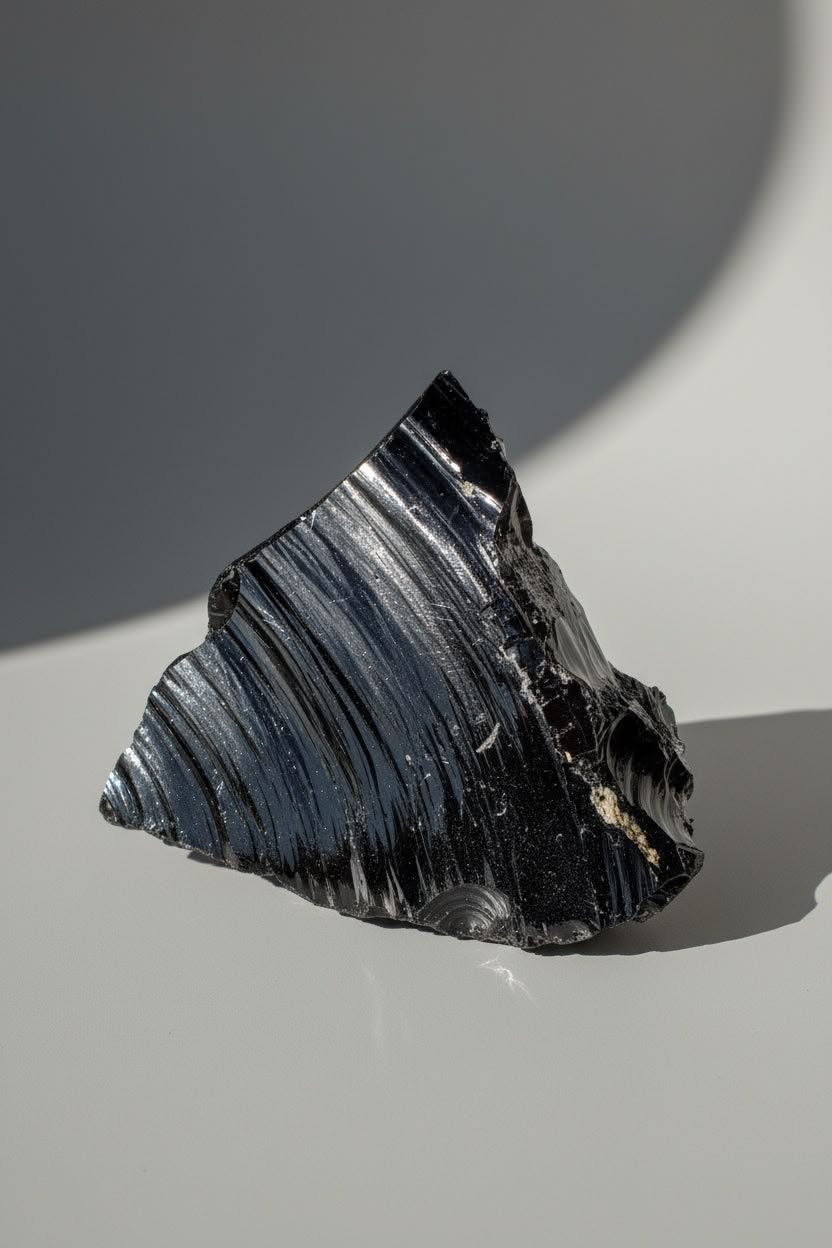
Obsidian Crystal, Benefits and Meanings.
Obsidian meaning centres on protection, grounding, truth, transformation, and strength.
Metaphysical & Spiritual
Obsidian works like a clear boundary in the subtle field. It brings attention back to what is real, what is felt, and what is being avoided, which is why it is often chosen for shadow work, self-inquiry, and moments that call for plain truth. Its energy tends to move downward and inward rather than outward. That makes Obsidian useful when thoughts are spinning or emotions feel uncontained, because it helps gather scattered energy and settle it into a more grounded rhythm. In spiritual practice, Obsidian carries a strong protective current without becoming passive or dull. It supports the kind of honesty that strips away noise, so a person can meet fear, habit, or old tension with more steadiness and less reaction. Because it works closely with the Root chakra and Pluto, Obsidian often feels best when used with intention and respect. It does not soften the message - it sharpens it, helping the inner field recognise what needs to be released, faced, or held with firmer boundaries.

Planet

Pluto
Pluto gives Obsidian its underworld quality, drawing attention to what is hidden, buried, or ready to change. The stone carries that Plutonian pressure into the inner field, where it supports release, truth, and deep energetic clearing.
Element
Fire
Fire animates Obsidian with intensity and movement, but the stone channels that force into focus rather than heat alone. It brings the element down into a disciplined, grounded expression that can cut through confusion and restore direction.

Crystal Pairings
Obsidian pairings work best when the aim is to keep protection active without becoming closed off. It brings a firm, honest edge to other stones, helping their energy stay clear, grounded, and usable when emotions, intuition, or change need to be handled with steadiness.
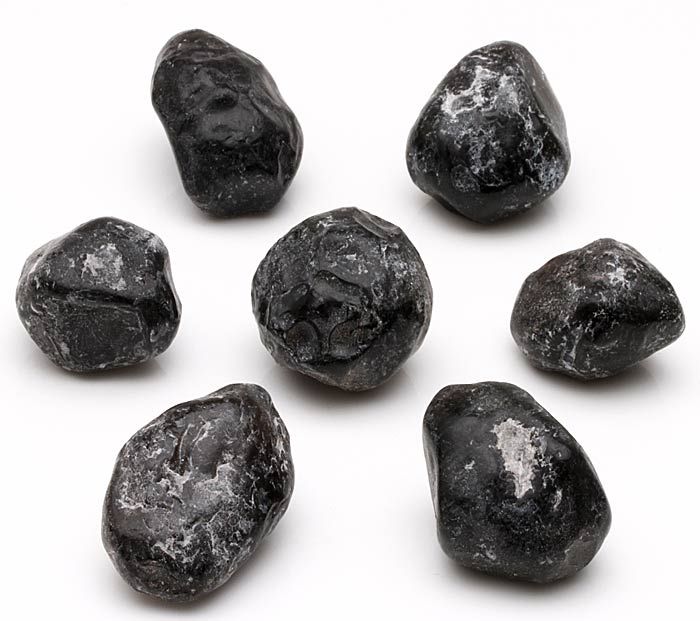
Apache Tears
Apache Tears and Obsidian create a quietly protective field that holds grief with more gentleness. Together, they help the heart stay present while still keeping emotional boundaries intact, which can be useful when pain needs to be felt without being overwhelmed by it.
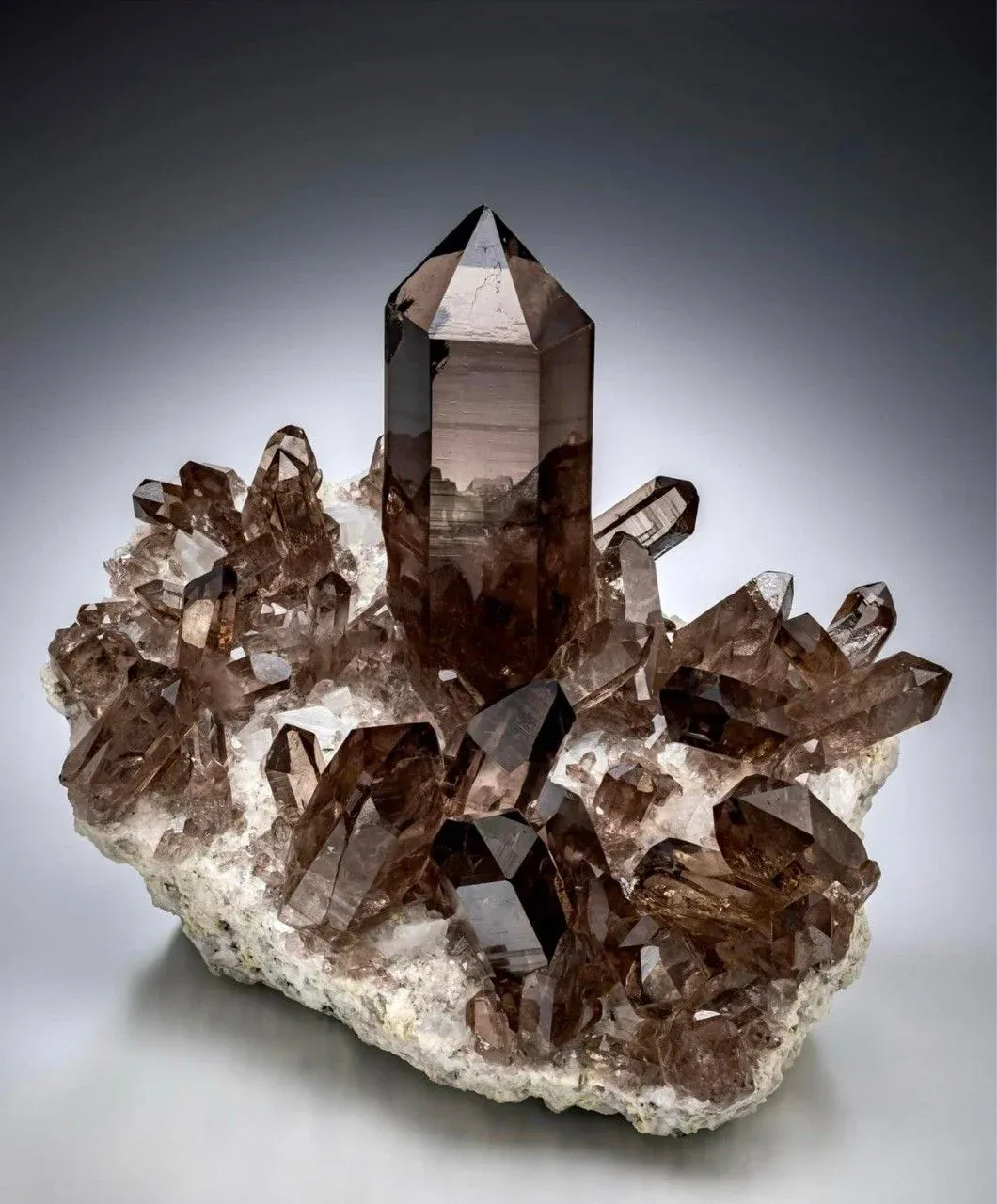
Smoky Quartz
Smoky Quartz deepens Obsidian's grounding and gives the mind somewhere solid to settle when pressure builds. This pairing is often chosen for clearing heavy thought patterns, releasing tension, and staying rooted while moving through difficult decisions.
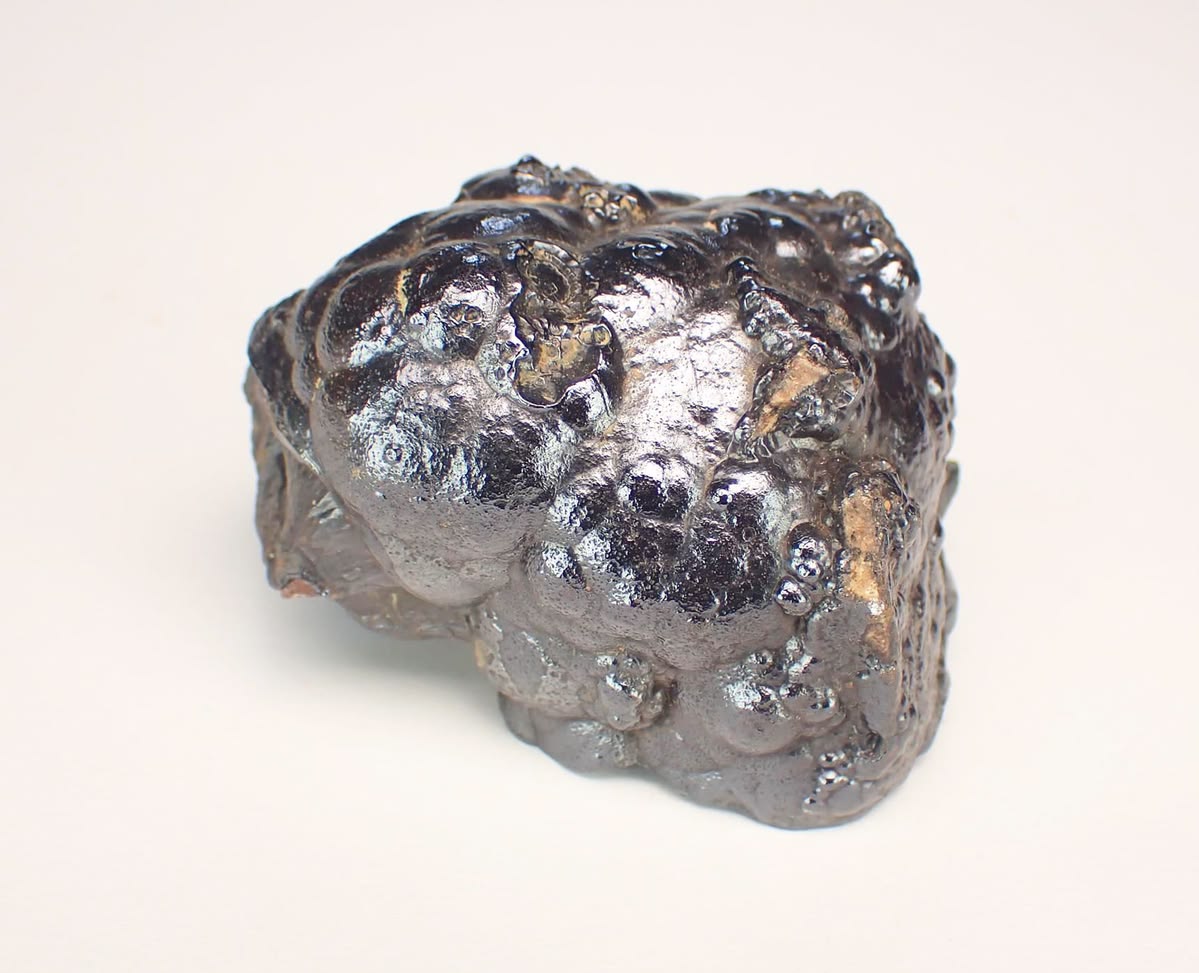
Hematite
Hematite and Obsidian bring a strong sense of containment and practical focus. The combination supports firm boundaries, disciplined energy, and a steadier response to outside noise, especially when life feels scattered or too demanding.
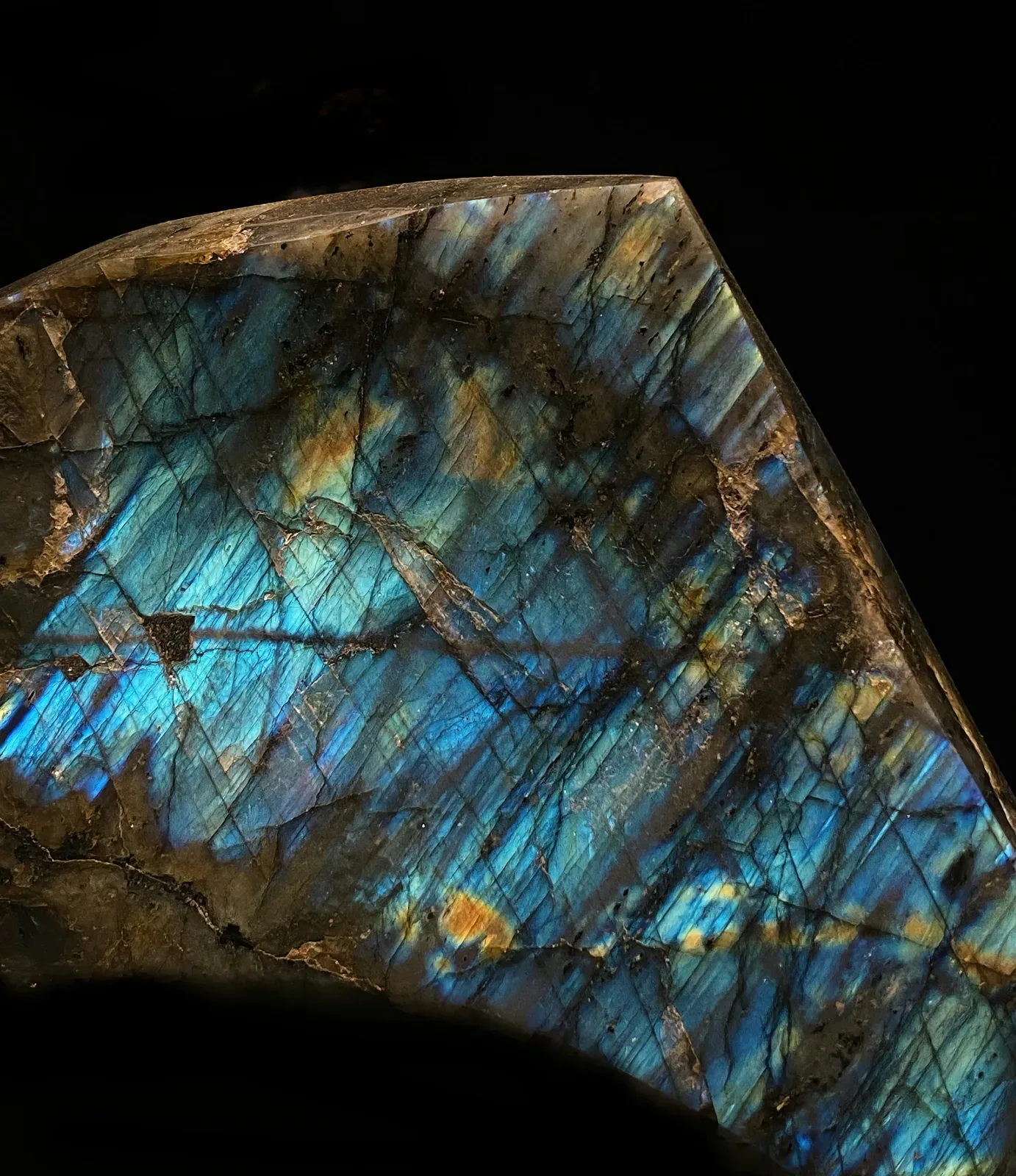
Labradorite
Labradorite opens the intuitive field while Obsidian keeps the experience anchored and clean. Together they work well for insight that needs discernment, helping spiritual impressions stay clear, protected, and connected to real-world action.
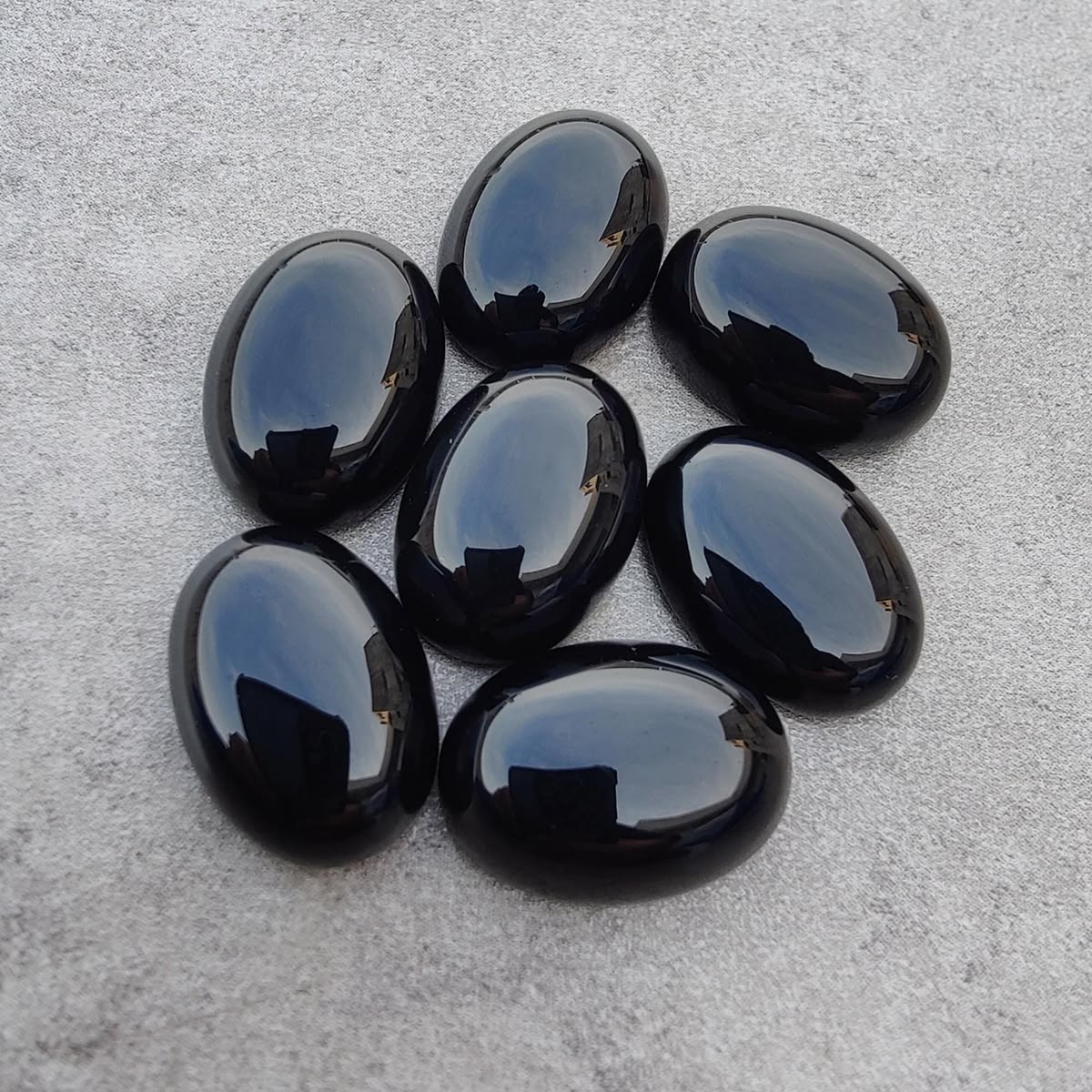
Onyx
Onyx adds endurance and self-command to Obsidian's protective current. This pairing supports inner discipline, calm restraint, and the kind of strength that holds its shape without becoming rigid or defensive.
Mahogany Obsidian
Mahogany Obsidian and Obsidian create a layered grounding that feels both steady and energising. The pairing helps bring courage into the body, supporting resilience, practical follow-through, and a more settled response to stress or change.
Healing
Obsidian connects with moments when the inner field feels crowded, especially after sharp words, sudden change, or too much outside noise. It helps draw attention back to what is true, so feelings are easier to notice without being carried off by them.
It is often used when boundaries need to be felt as much as spoken. Obsidian also works with steady self-honesty, helping the body and mind settle enough to meet difficult choices without flinching.
Affirmations
Hold Obsidian at the Root area or near the throat and choose an affirmation that matches the moment.
Repeat it slowly, then let one practical action follow so the words have somewhere to land.
- I stand steady in my truth
- I protect my energy with calm
- I speak with clear boundaries
- I release what is not mine
- I meet change with strength
Intention Setting
Obsidian can help set intentions that are direct, grounded, and free from excess noise.
It is useful when the aim is to stay clear, keep a boundary, or move through change without losing centre.
- I choose what keeps me steady
- I honour my boundaries today
- I release what drains me
- I meet change with clear eyes
- I act from grounded truth
Manifesting
Obsidian supports focused manifesting when the goal asks for discipline, honesty, or a clean break from old patterns.
It helps keep attention on what is real, so wishes do not drift into fantasy or self-doubt.
- I move with grounded purpose
- I welcome clear and honest change
- I stay focused on what matters
- I release what no longer fits
- I build strength through truth
Jewellery
Obsidian jewellery works differently depending on where it is worn, so the reminder can settle near the mind, the hands, the heart, or the voice. That placement shapes how the stone is felt, whether the need is clearer speech, steadier choices, or a more guarded emotional edge.
General benefits: Wearing Obsidian jewellery keeps its protective, grounding tone close through the day. It serves as a quiet reminder to pause before reacting, to keep energy contained, and to meet pressure with a steadier spine. It is especially useful on busy days, during hard conversations, or when change asks for calm self-command.
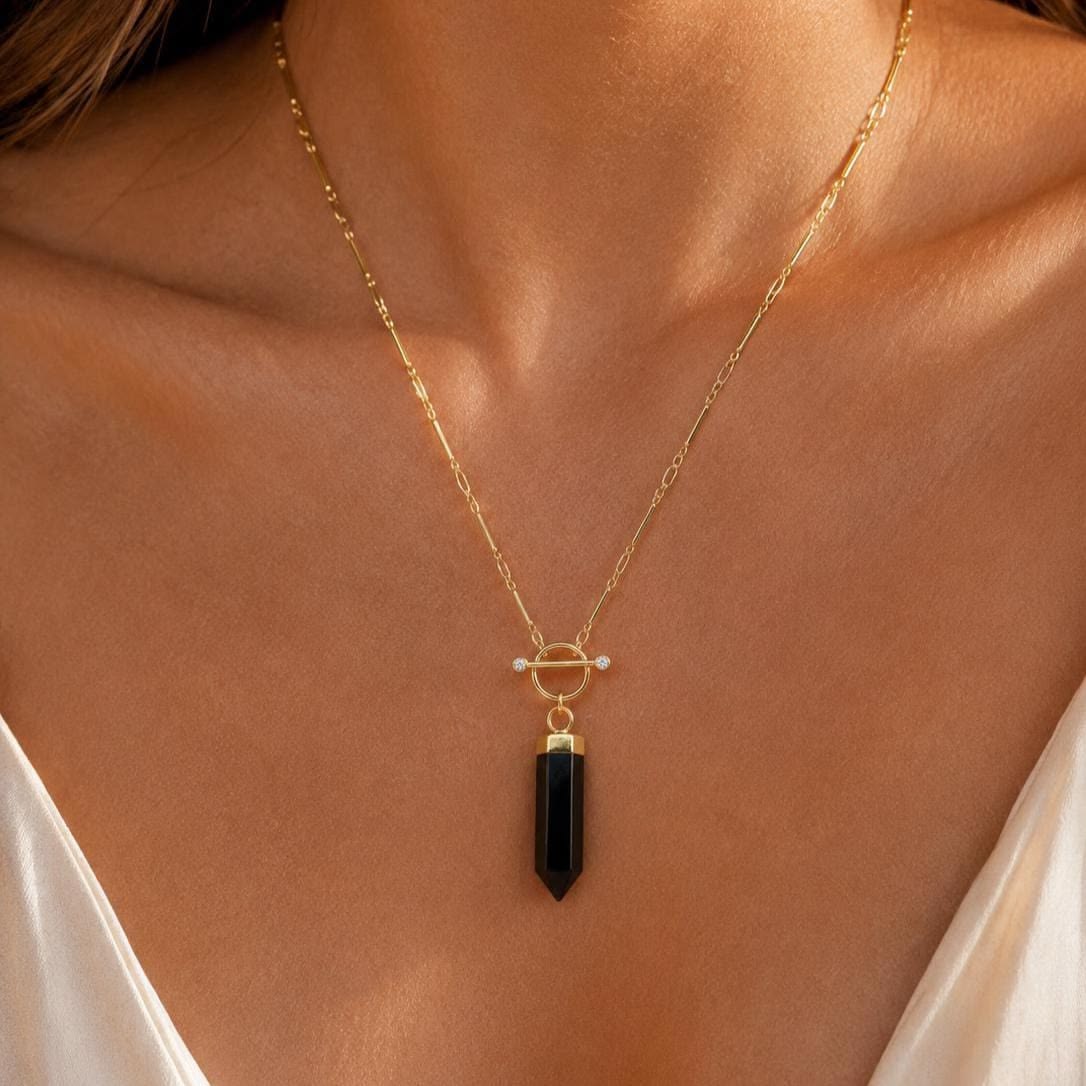
Necklace
A necklace keeps Obsidian close to the centre of the chest, where it can help the wearer stay anchored when emotions rise. It is a steady companion for moments that ask for calm truth rather than quick reaction.
Bracelet
An Obsidian bracelet brings the stone into the rhythm of the hands, which can support clearer action and more deliberate choices. It is often chosen when a person wants to notice what they are carrying and set it down with intention.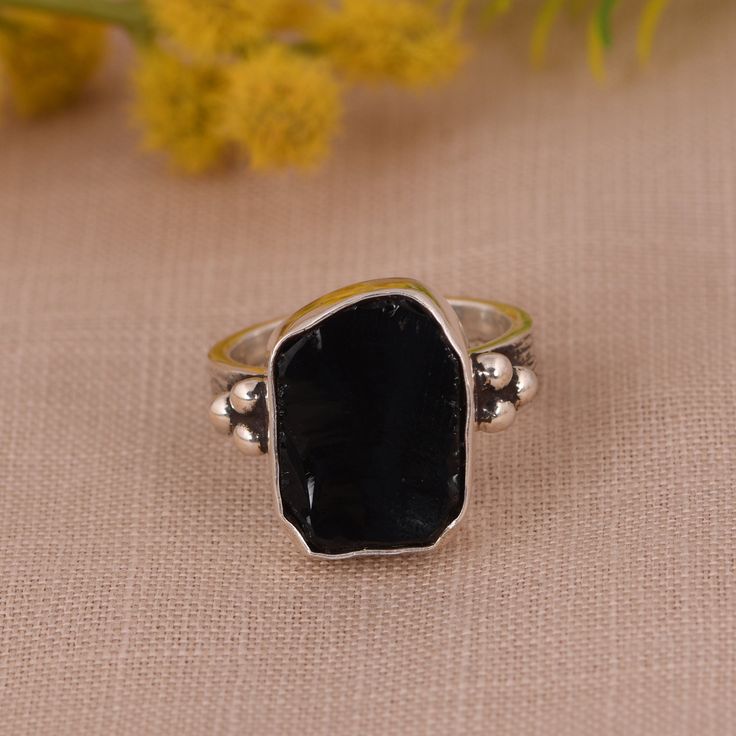
Ring
Worn on the hand, Obsidian can act as a small reminder to hold boundaries in daily exchanges. It is useful when signing, deciding, replying, or touching into work that needs focus and restraint.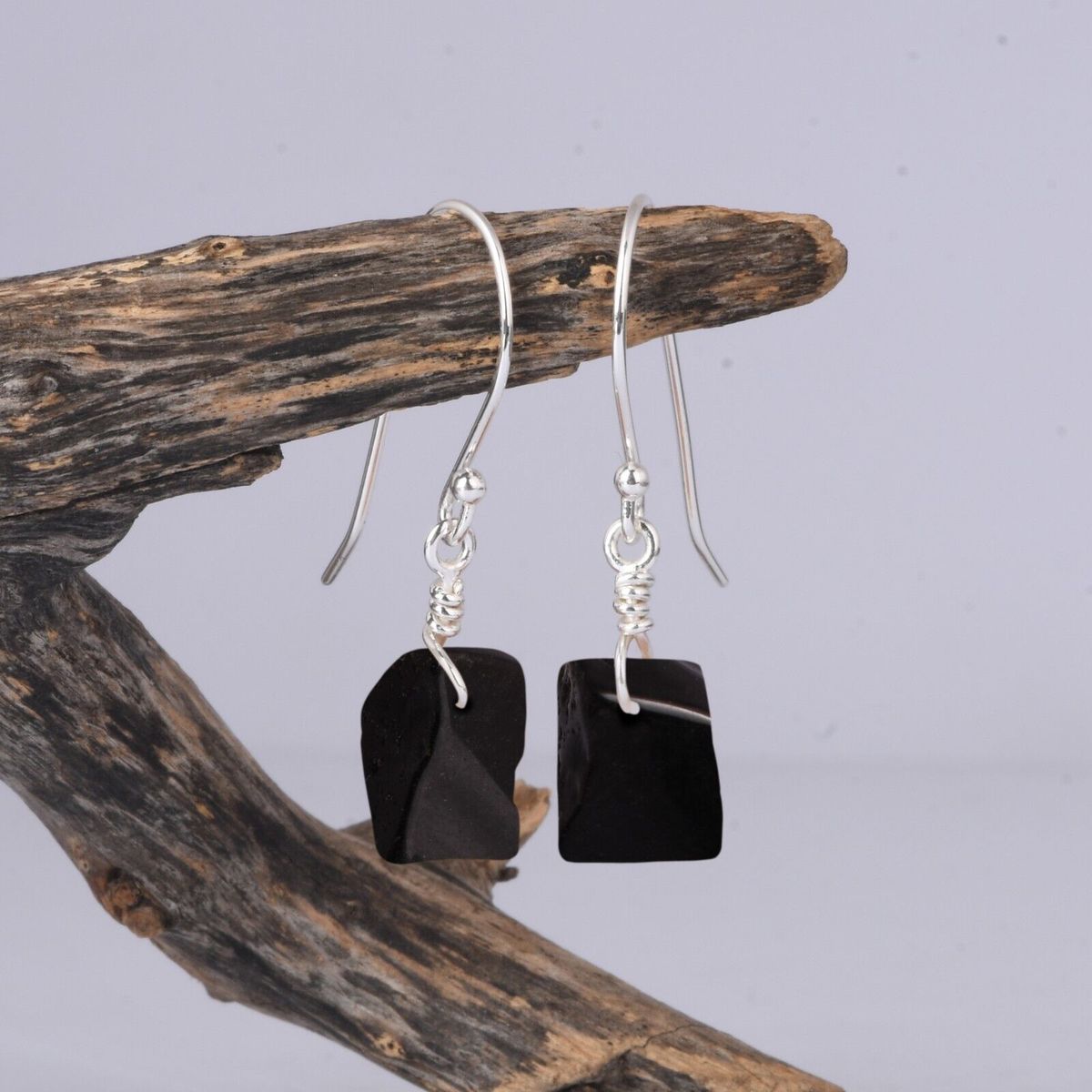
Earrings
Obsidian earrings sit close to the head and can support a clearer inner filter when thoughts feel busy. They are a quiet choice for conversations, planning, and any day that asks for careful listening before speaking.Forms
Different Obsidian forms shift how its energy is held, from raw and direct to more contained and reflective. Choose the form that matches the kind of steadiness wanted, whether that is a firm boundary, a calm pause, or a focused reset.
Rough
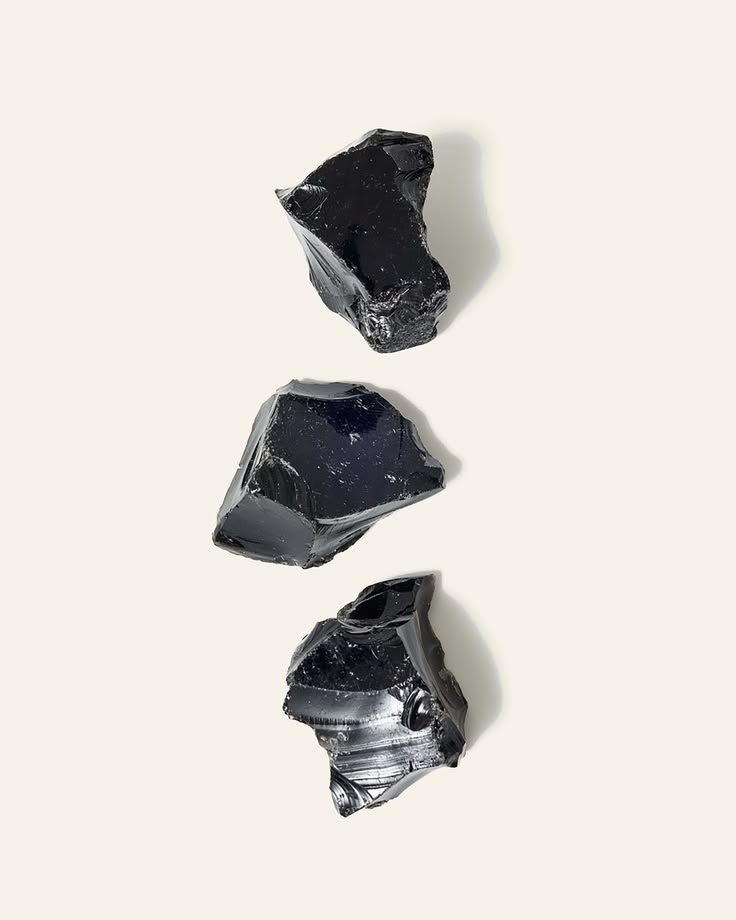
Rough Obsidian feels immediate and unfiltered. It is often used when simple, direct grounding is needed.
Palm Stone
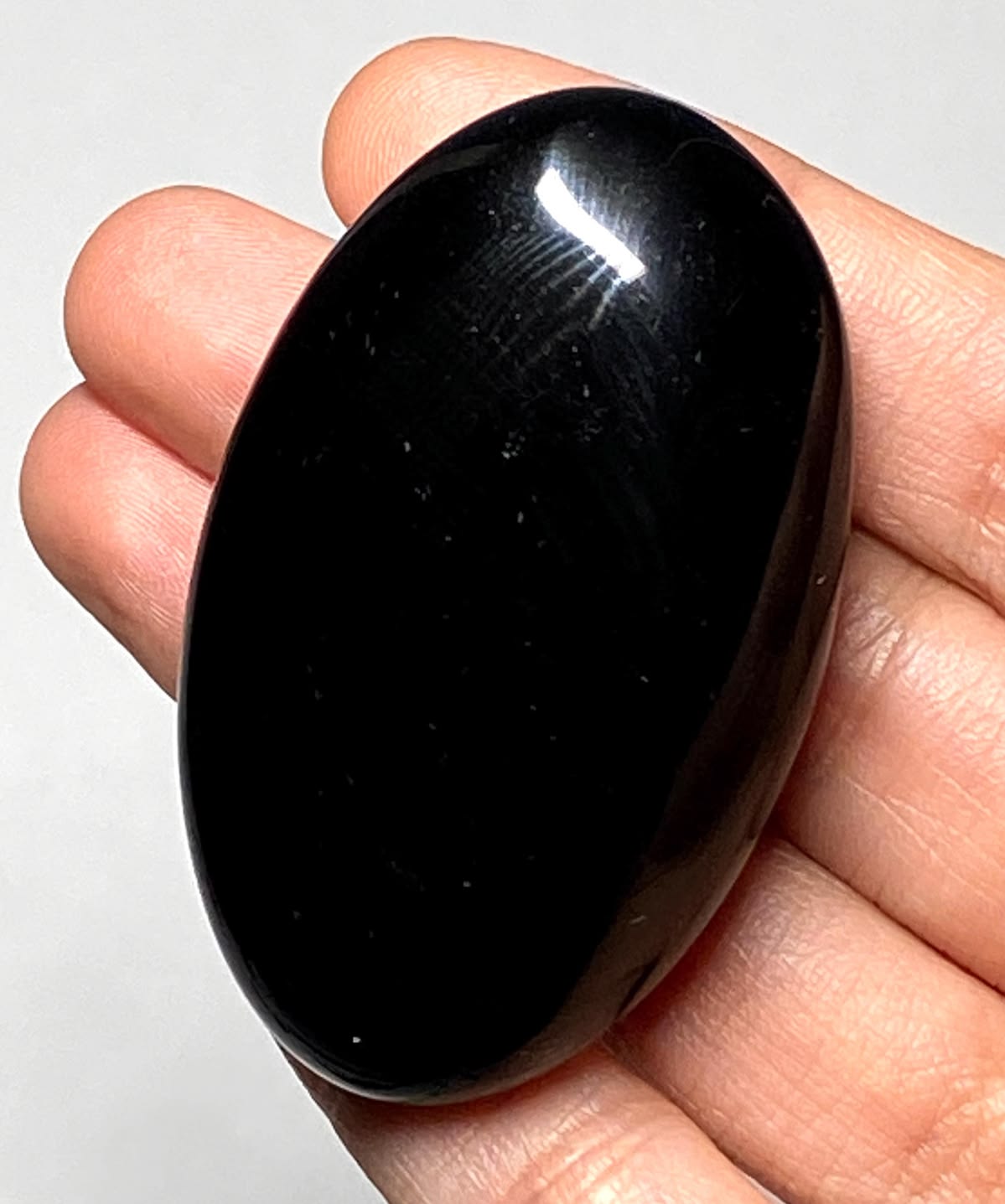
A Palm Stone gives the hands something steady to hold during stress or reflection. It helps the body settle while the mind sorts through what is true.
Tumble Stone
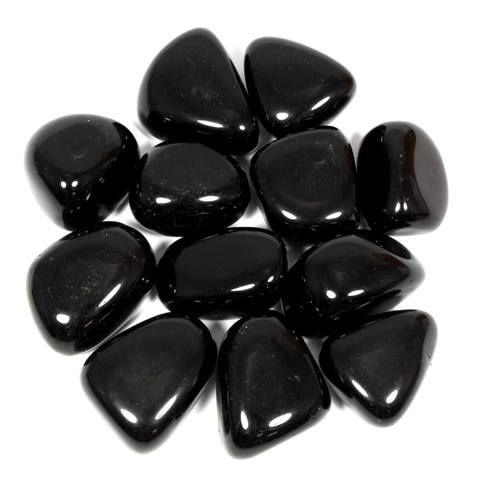
A Tumble Stone is easy to carry and works well for small, repeated resets through the day. It can help keep attention on boundaries without demanding much effort.
Sphere
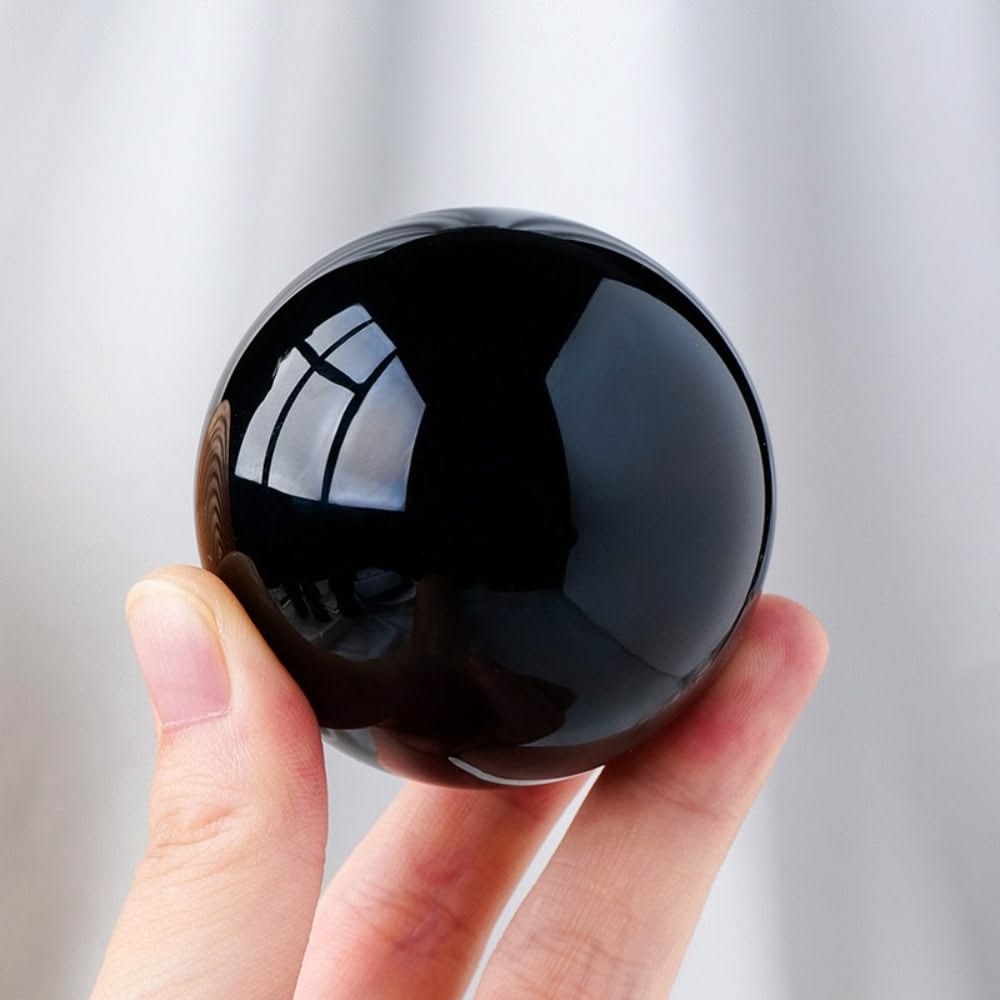
A Sphere spreads Obsidian's energy evenly, which can feel useful in a room or meditation practice. It supports a more settled, watchful kind of presence.
Point
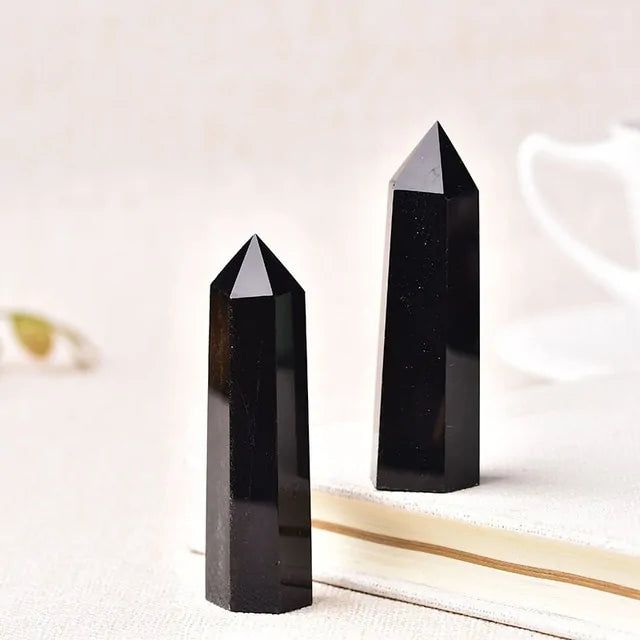
A Point directs Obsidian with more focus, making it useful for intention work or a clear energetic boundary. It helps gather attention rather than letting it scatter.
Figure
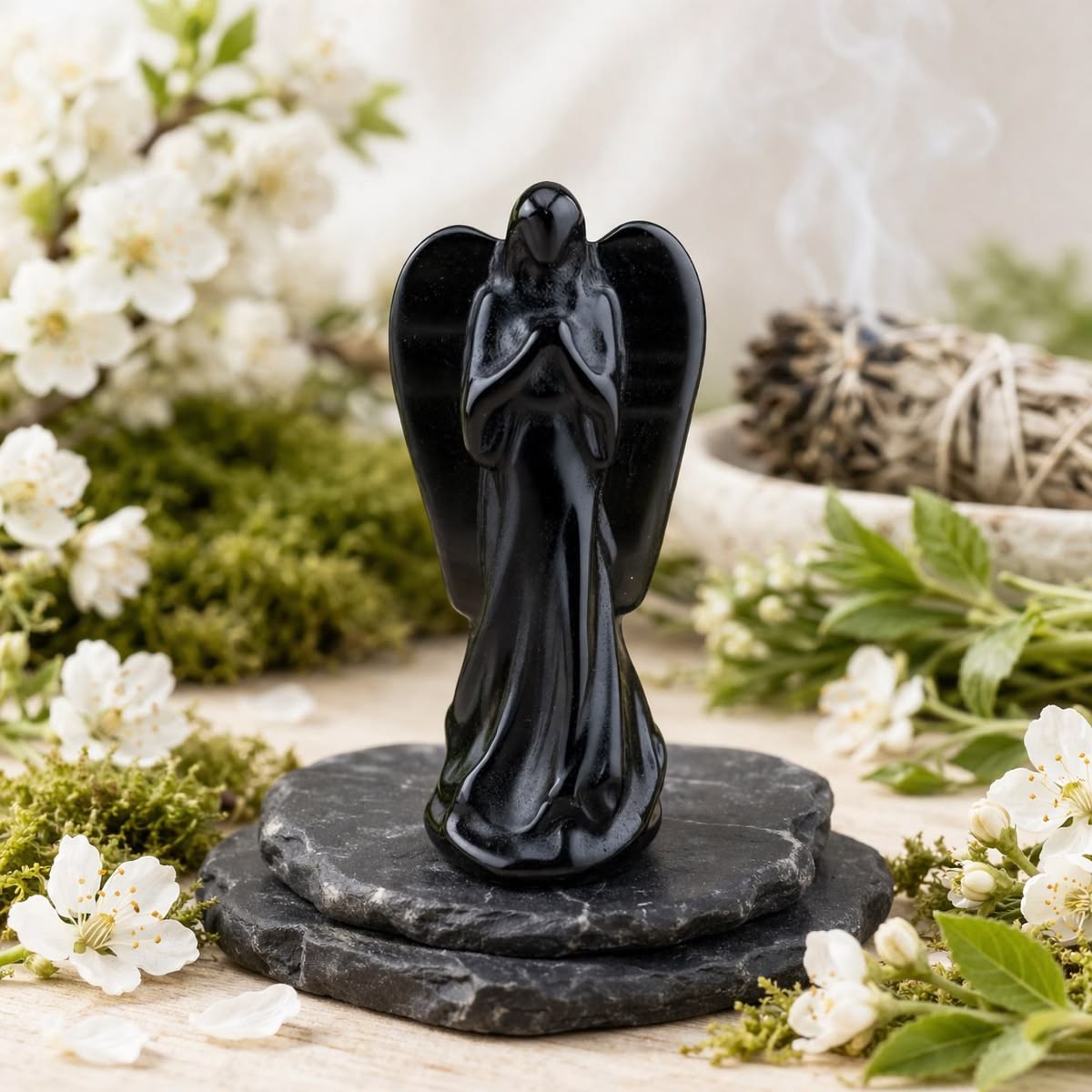
A Figure brings Obsidian into symbolic, ritual use. It can hold a protective or grounding intention in a more personal, devotional way.
Heart
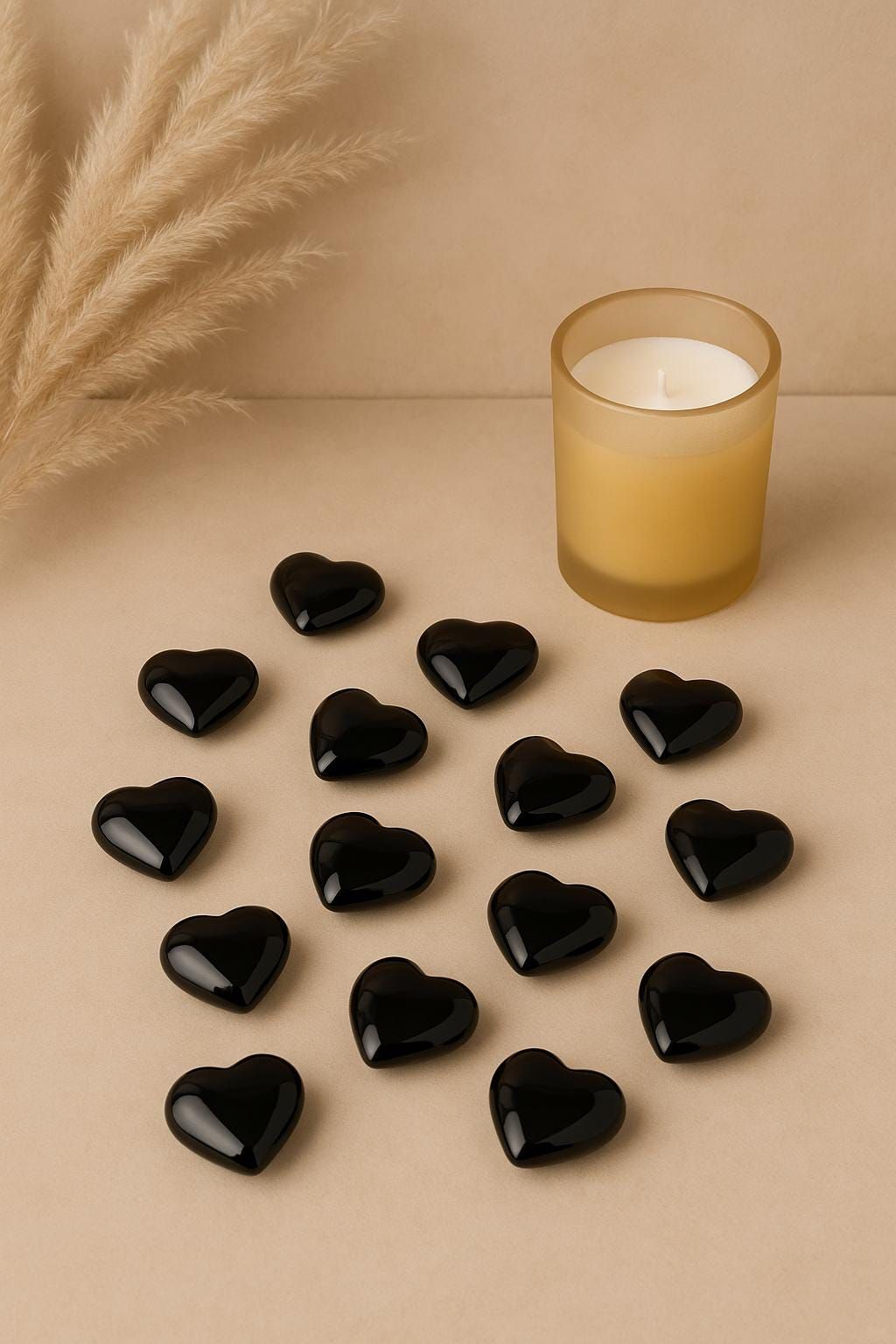
A Heart shape softens Obsidian's edge while keeping its truth-telling quality intact. It is often chosen when emotional honesty needs to stay kind and contained.
Cleansing & Charging
Obsidian can gather a lot of heavy or intense energy, especially after conflict, emotional release, or a day spent holding other people's tension. A regular reset helps keep it clear, receptive, and ready to work without feeling weighed down.
How to cleanse Obsidian
- Rinse Obsidian briefly in lukewarm water, then dry it straight away with a soft cloth.
- Pass it through smoke from sage or incense for a gentle cleanse when water is not practical.
- Place it beside selenite or clear quartz for a quiet, low-effort reset.
How to charge Obsidian
- Leave Obsidian in moonlight for a calm charge, especially under a full moon.
- Set it on dry earth for a grounded refresh, then bring it back in once it feels settled.
- Rest it near selenite or clear quartz, and hold a clear intention while it charges.
Where to Use
Choose places that match Obsidian's job of holding a line, clearing static, and helping the atmosphere feel more contained.
Entrance hallway
In the entrance hallway, Obsidian can act as a threshold stone, helping the energy of the home feel more deliberate as people come and go. It is a useful place for setting the tone of protection and calm before the rest of the day unfolds. A small piece near the door can serve as a quiet reminder to leave outside stress at the threshold.
Desk
At a desk, Obsidian supports focus when the mind is pulled in too many directions. It can help keep decisions cleaner and self-talk less reactive, especially during work that involves pressure, deadlines, or difficult messages. Keep it close when the aim is to stay grounded while thinking clearly.
Meditation space
In a meditation space, Obsidian helps the body settle into stillness without drifting away from what needs to be seen. It works well for shadow work, honest reflection, or any practice that asks for quiet courage. Place it nearby when the intention is to sit with truth rather than avoid it.
Carried in a pocket, Obsidian becomes a discreet companion for moments that need a quick return to centre. It is useful before meetings, family conversations, or any situation where it helps to pause, breathe, and respond with more care. Touching it can bring attention back to the body and the boundary.
Science
Physical properties
- Mineral class
- Natural Volcanic Glass
- Color
- Typically black, but also brown, grey, mahogany, rainbow, silver sheen, or snowflake varieties
- Hardness
- 5 - 5.5
- Density
- ~2.35 - 2.60 g/cm3
- Durability
- Moderate
- Thermal stability
- Moderate
Optical properties
- Transparency
- Opaque to translucent in thin edges
- Lustre
- Glassy (vitreous)
- Refraction index
- ~1.48 - 1.51
Chemical composition
- Class
- Silica-rich volcanic glass
- Formula
- Variable (predominantly SiO2)
- Group
- Natural volcanic glass
- Magnetic
- Usually non-magnetic
Formation
Obsidian forms when silica-rich lava cools extremely quickly after a volcanic eruption. The atoms do not have time to arrange into a regular crystal lattice, so the result is natural volcanic glass rather than a true mineral.
That rapid cooling gives Obsidian its glassy lustre and its famously sharp conchoidal fracture, which can produce edges sharper than surgical steel. Trace elements, gas bubbles, and microscopic inclusions create the familiar variations such as Mahogany Obsidian, Rainbow Obsidian, Silver Sheen Obsidian, and Snowflake Obsidian.
Locations
- Mexico
- United States
- Iceland
- Armenia
- Japan
- Ethiopia
History
Used for cutting tools and weapons
Prehistoric period
Obsidian's sharp fracture made it one of the earliest materials chosen for practical cutting. Across volcanic regions worldwide, people shaped it into knives, arrowheads, spear points, and scraping tools because it could take an edge with remarkable precision. Its usefulness gave it an important place in daily survival long before modern metalworking.
Highly valued by the Aztec and Maya
Ancient Mesoamerica
In Mesoamerica, Obsidian held both practical and ceremonial value. The Aztec and Maya worked it into blades, mirrors, jewellery, and everyday tools, and it became a major traded volcanic material across the region. Its dark sheen and sharp edge gave it a presence that moved easily between ritual use and ordinary life.
Name linked to Obsidius
Ancient Rome
Roman writer Pliny the Elder recorded a name story tied to Obsidius, who reportedly found a similar volcanic glass in Ethiopia. That account helped place the stone within the classical world’s record of unusual natural materials. The name has remained part of Obsidian's history ever since.
Scientific recognition as volcanic glass
19th to 20th century
Geologists later established that Obsidian forms when silica-rich lava cools so quickly that crystals do not have time to develop. This shifted it firmly into scientific understanding as natural volcanic glass rather than a true mineral. The classification also clarified why its structure, fracture, and surface differ from crystalline stones.
Popular decorative stone and meditation crystal
Present day
Obsidian remains widely used in carvings, jewellery, polished spheres, palm stones, and meditation practices. Modern crystal traditions continue to value it for grounding, protection, and self-reflection, while its volcanic origin keeps its identity firmly rooted in the earth’s fire. It carries a long history of being both useful and symbolically charged.
Got questions?
We've got answers!
FAQ's
What is Obsidian used for?
+×
Obsidian is commonly used for grounding, protection, truth work, and steady self-reflection. In crystal practice, it is often chosen when the atmosphere feels heavy, scattered, or in need of firmer boundaries.
It also suits practical settings such as an entrance hallway, office, or meditation space. A small piece nearby can serve as a quiet reminder to stay centred and respond with more clarity.
Is Obsidian a crystal or volcanic glass?
+×
Obsidian is natural volcanic glass rather than a true crystal. It forms when silica-rich lava cools so quickly that crystals do not have time to develop.
That rapid cooling gives it a glossy surface and a sharp fracture, which is why it has been valued for cutting tools since prehistoric times. Its scientific classification is a mineraloid, even though it is widely used as a crystal in modern practice.
Which zodiac signs are connected to Obsidian?
+×
Obsidian is most often linked with Scorpio and Sagittarius. Scorpio suits its depth, privacy, and transformation themes, while Sagittarius connects with its honest, grounding quality.
The stone is also associated with Pluto, which reinforces its underworld, truth-facing character. In practice, it is often chosen by people who want a more direct and disciplined energy.
What chakra does Obsidian activate?
+×
Obsidian is connected with the Root chakra. It is traditionally used to support grounding, stability, and a stronger sense of containment in the body.
For practical use, it is often held during quiet reflection or placed nearby during meditation. Many people also keep it close when they want to feel more settled and less pulled by outside noise.
How should Obsidian be cleansed and charged?
+×
Obsidian can be cleansed with a brief rinse in lukewarm water, followed by immediate drying with a soft cloth. It can also be cleared with smoke, sound, or by resting beside selenite or clear quartz.
For charging, moonlight is a gentle choice, especially on a full moon. It can also be placed on dry earth or left near clear quartz with a quiet intention.