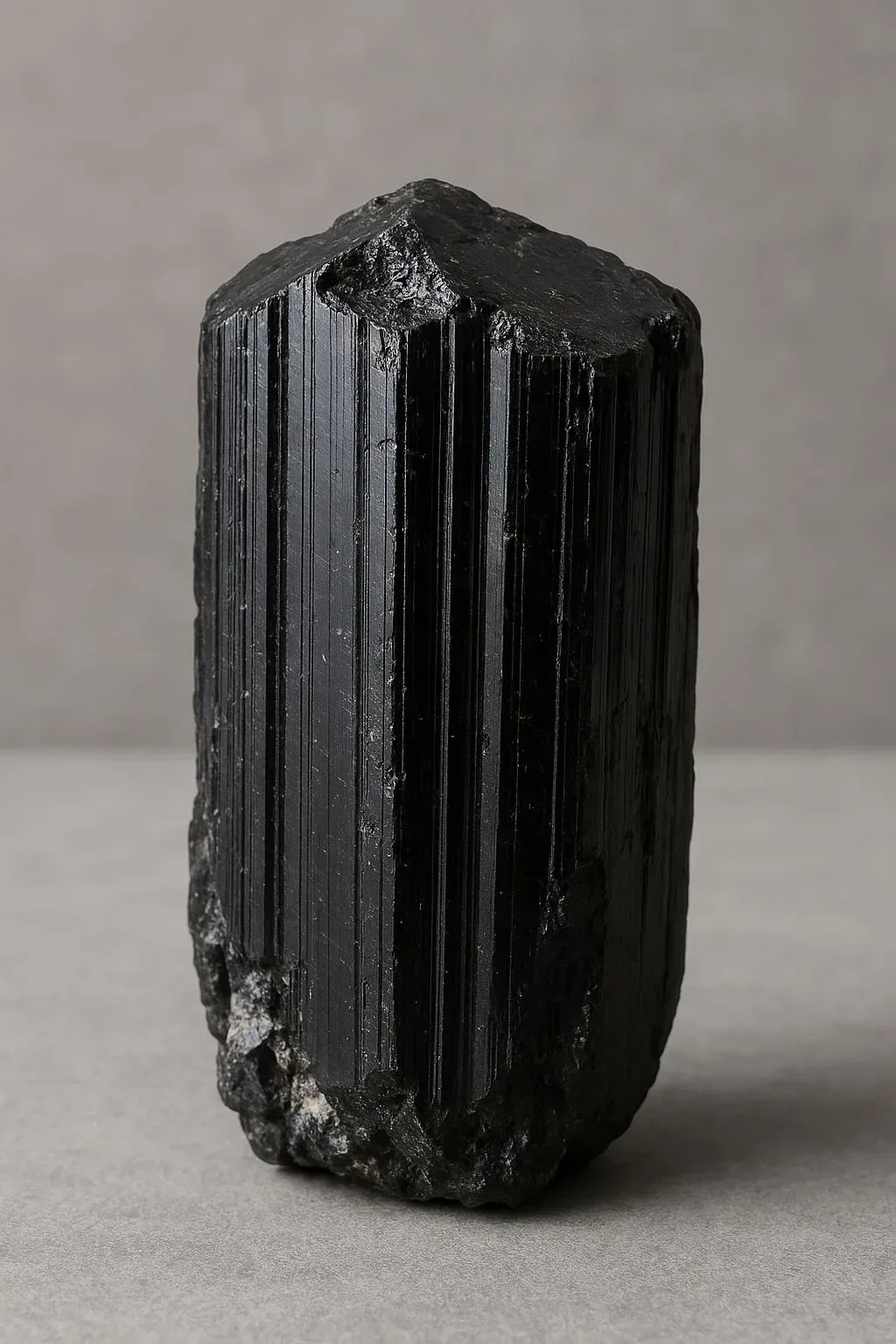
Black Tourmaline pairings
Black Tourmaline is often chosen when the priority is feeling anchored, protected, and less pulled around by external noise. Pairing matters because it lets this steady, boundary-setting energy stay at the core, while other stones can refine the focus, such as adding clarity, lifting heaviness, or supporting a calmer day-to-day rhythm.
The most satisfying combinations keep the intention simple, start with grounding at the base, then layer one supporting quality at a time. This approach helps create an energetic "structure" that feels stable rather than intense, especially when working with clearing and negativity-shedding themes.
Crystals that combine well with Black Tourmaline
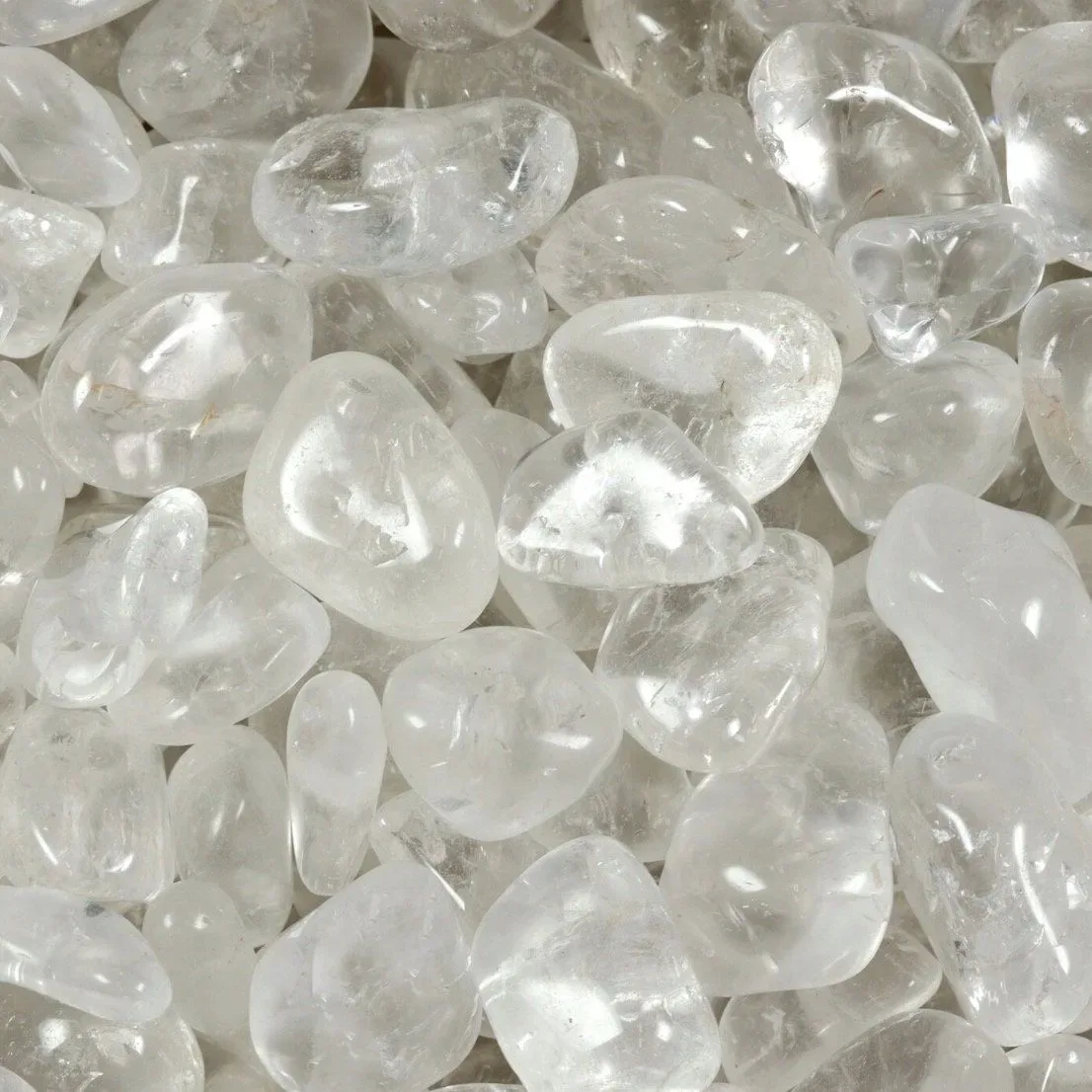
Clear Quartz is used for clarity and focus. Black Tourmaline brings a grounded, contained feel. Together, it stays simple, clean, and steady for everyday routines.
Before meditation, choose one plain intention. Hold Black Tourmaline in the non-dominant hand, Clear Quartz in the dominant. Breathe slow, return to the intention when the mind wanders.
Set up an entryway pair, Black Tourmaline closest to the door, Clear Quartz just behind it. Take ten seconds when leaving or coming home to touch the stones and mentally "reset" for what comes next.
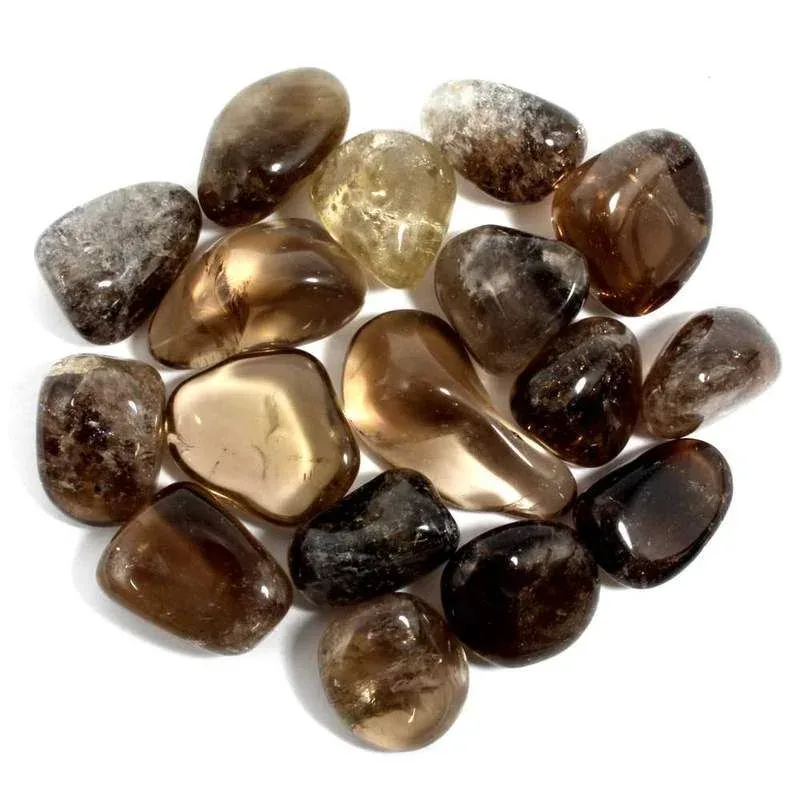
Smoky Quartz has an earthy, settling tone that matches Black Tourmaline. Good for heavy, busy days, when the aim is to stay practical and present.
For an evening wind-down, place both stones on the bedside table. Do a three-minute body scan. Notice where tension sits, then leave it there.
Carry both in a pocket or pouch for commutes or crowded places. When attention scatters, take one slow breath and press the pouch lightly. Use the touch as a cue to slow down.
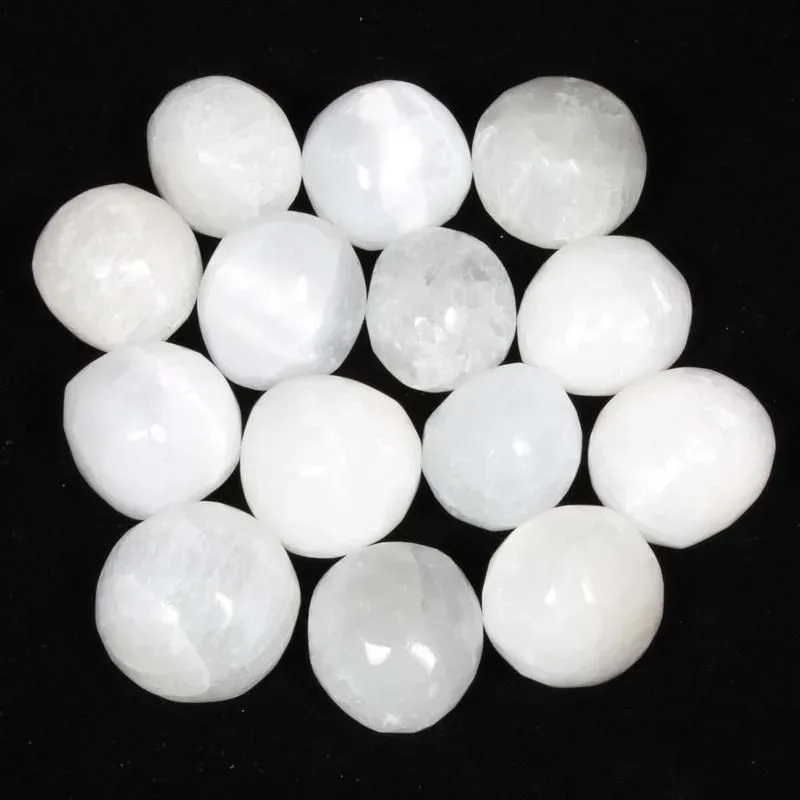
Selenite brings a bright, clearing feel. Black Tourmaline keeps things grounded and contained. The room can feel fresher, without feeling wide open.
For a quick room reset, place Selenite higher on a shelf and Black Tourmaline lower, near the floor or a doorway. Open a window for a minute, then walk the room once. Keep it calm and clear.
Keep it tidy: rest Black Tourmaline beside a piece of Selenite overnight. In the morning, wipe both with a soft cloth and set one plain intention for the day. Light, easy, done.
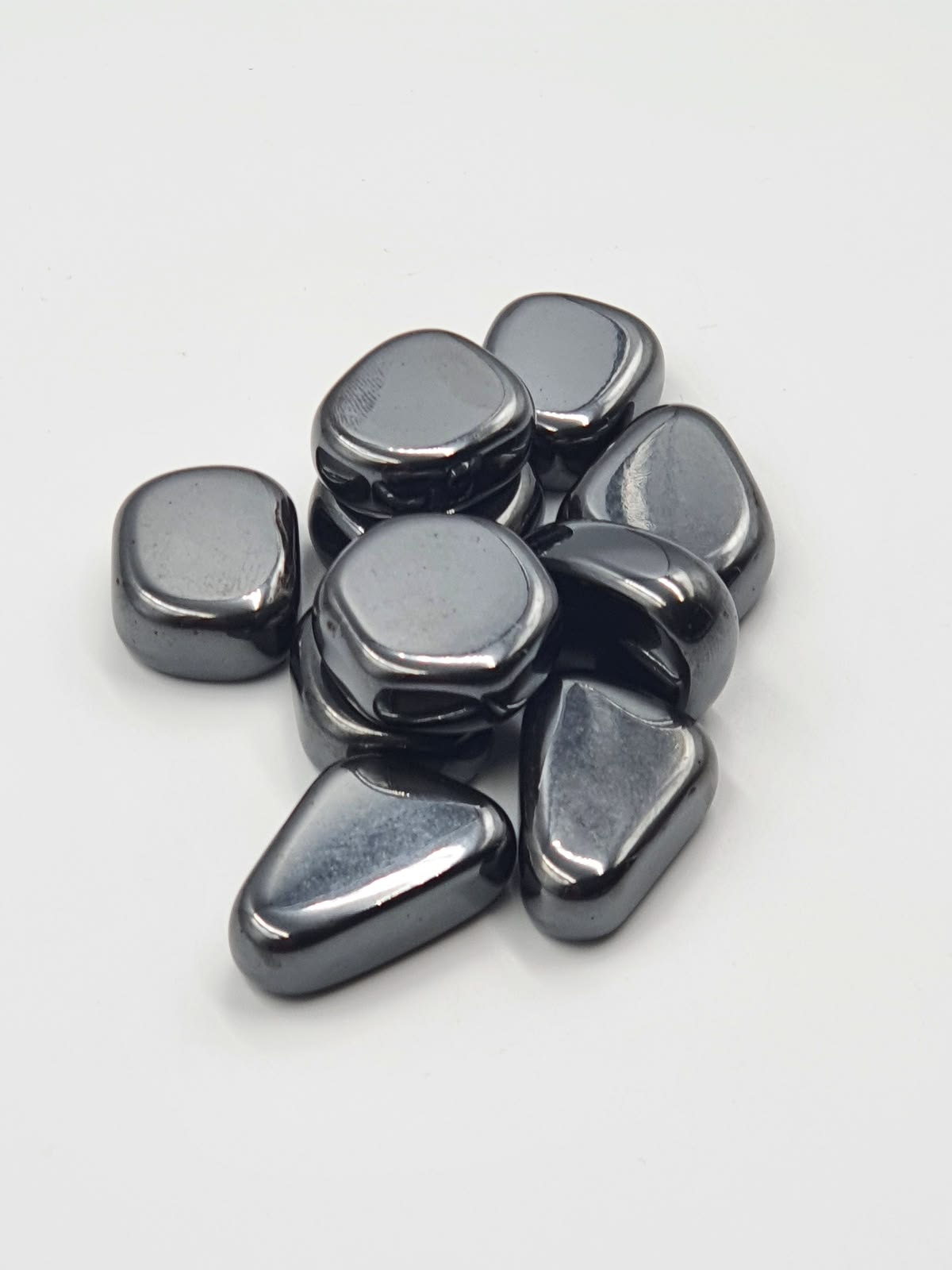
Hematite feels heavy and centered, a good match for Black Tourmaline's grounded tone. Useful for focus, follow-through, and sticking to practical priorities.
Try a desk setup, Hematite on the left side of the workspace and Black Tourmaline on the right. Write the next single action on paper, then do a timed 20-minute sprint.
After a long day, sit with both stones in the palms and count ten slow exhales. Notice weight, temperature, and contact. Let the body do the settling.
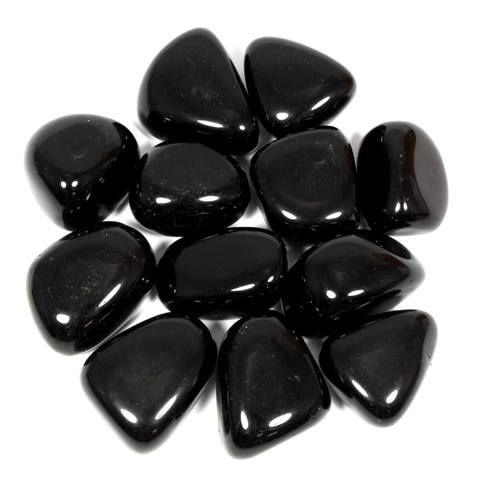
Obsidian with Black Tourmaline feels firm and straightforward. It suits boundary work and honest reflection when things start to feel tangled.
Use the pair for simple journalling. Place the stones at the top of the page, then write two lists, "What is mine to carry" and "What is not mine". End by choosing one small boundary to practice tomorrow.
Keep the stones near the front door or in a work bag for demanding settings. Before going in, pause and pick one behavior to protect, like speaking more slowly or taking breaks on schedule.
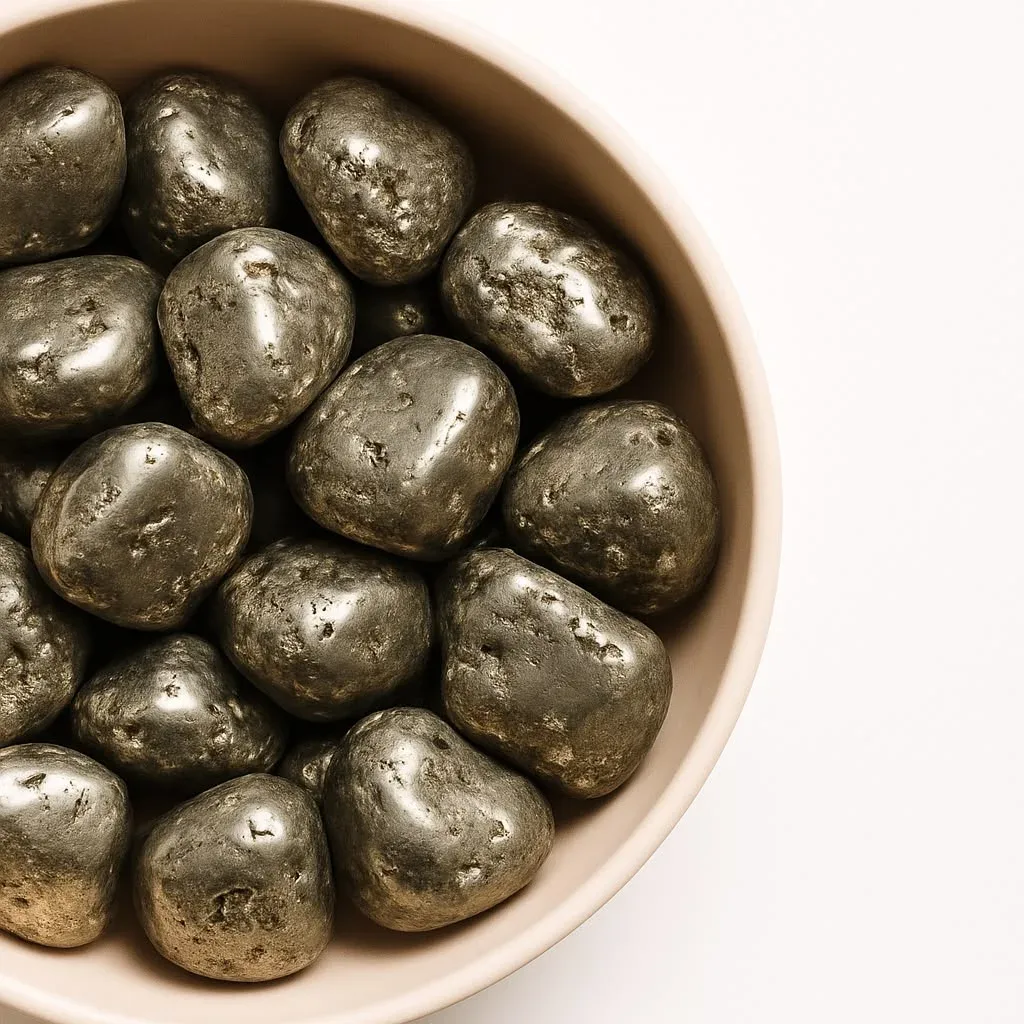
Pyrite brings a bright, driven tone that offsets Black Tourmaline's steady grounding. The pairing feels purposeful, forward-moving, and still rooted.
Set a morning intention with structure: place Pyrite beside a written goal and Black Tourmaline beside a to-do list. Spend two minutes picking the top priority, then take the first small step before checking messages.
Use the pair while planning. Hold Black Tourmaline when reviewing constraints and risks, then switch to Pyrite when listing opportunities and next actions. The back-and-forth keeps the plan realistic and moving.
Jewelry pairings that work well together
Black Tourmaline pairs best with companions that sharpen its dark, grounded look without making it feel heavy. Matte, mirror-like, and translucent finishes all work well here, especially when the second stone adds either a bright flash or a softer smoky depth.
The strongest pairings tend to balance protection with clarity, giving the jewelry a clean line and a practical, wearable feel.
Black Tourmaline & Clear Quartz
The deep opaque black of Tourmaline against Clear Quartz creates a crisp, high-contrast pairing. A polished finish on both stones keeps the look clean, while the quartz adds light and lift without softening the Tourmaline's grounded presence. A slim signet ring with a small quartz accent beside the tourmaline face feels sharp and modern. It suits everyday wear well and gives the darker stone a bright edge without looking ornate.
Black Tourmaline & Smoky Quartz
These two stones sit close in tone, but Smoky Quartz brings a translucent depth that stops the pairing from feeling flat. A satin or softly polished finish works especially well, letting the black and brown-gray shades blend in a calm, layered way. A woven bracelet with alternating stones makes a restrained, tactile piece that feels steady on the wrist. It is a good choice if you want the pairing to read as subtle rather than stark.
Black Tourmaline & Selenite
Black Tourmaline's dense opacity sets up a strong contrast against Selenite's pale, milky glow. The contrast is most effective when the tourmaline is polished and the selenite is left with a soft, luminous finish. A pair of simple studs using one stone of each type gives a neat, balanced look near the face. This works well for understated jewelry that still feels deliberate and protective.
Black Tourmaline & Hematite
This is a dark-on-dark pairing with different reflections rather than different colors. Hematite's metallic sheen brings a mirror-like finish beside the more natural black surface of Tourmaline, creating texture without breaking the palette. A cuff with inset stones placed in a single line feels strong and architectural. It suits a minimal wardrobe and lets the finish contrast do the work.
Black Tourmaline & Pyrite
Pyrite's warm gold flashes bring brightness to Tourmaline's matte or polished black, creating a bold but grounded contrast. The metallic sparkle is especially effective when kept small, so the black stone remains the anchor. A single pendant on a short chain works well here, with Pyrite used as a small accent above or beside the tourmaline. It gives the piece a clean vertical line and a little lift at the neckline.
What not to pair with Black Tourmaline
Black Tourmaline works best when its grounding and boundary-setting role stays clean and uncomplicated. Pairings that are too activating, airy, or spiritually expansive can blur its protective focus and make the overall field feel less settled.
Phenacite
Phenacite can lift the energy so high that Black Tourmaline's grounding job becomes harder to hold. The combination may feel overly stripped of weight, leaving the protective field less anchored and more difficult to read.
Azeztulite
Azeztulite tends to open the field in a very expansive, high-vibration way, which can pull Black Tourmaline away from its steady root-centered purpose. Instead of clean protection, the pairing may feel too diffuse and less boundary-focused.
Libyan Desert Glass
Libyan Desert Glass brings a bright, forward-driving quality that can make Black Tourmaline's quieter stabilizing work feel overpowered. The result may be a sharper, more restless current rather than the calm containment this stone is meant to support.
Herkimer Diamond
Herkimer Diamond can intensify clarity and speed, which may leave Black Tourmaline's grounding influence feeling secondary. That can create a slightly over-bright field where protection is present, but not as settled or easy to maintain.
Angel Aura Quartz
Angel Aura Quartz has a light, airy, and highly refined feel that can soften Black Tourmaline's earthy density too much. The pairing may become more floaty than protective, making it harder to keep a firm energetic boundary.
Apophyllite
Apophyllite often opens perception and lifts the atmosphere, which can conflict with Black Tourmaline's need to keep things simple and rooted. Together they may create a scattered, upward-leaning field that muddies the stone's protective purpose.
Celestite
Celestite brings a serene but very elevated quality that can draw attention away from Black Tourmaline's earthbound stability. The combination may feel lovely yet too detached, weakening the sense of firm containment and practical grounding.
Moldavite
Moldavite can be intensely catalytic and fast-moving, which may overwhelm Black Tourmaline's slower, steadier protective rhythm. Rather than clean grounding, the pairing can feel disruptive and energetically noisy, making boundaries harder to hold.
Got questions?
We've got answers!
FAQ's
Can I wear Black Tourmaline with more than one companion stone at once?
+×
Yes. Black Tourmaline works well as the anchor, with one or two companions to narrow the focus. Keep it simple. Two companions is usually enough, so the stack stays clean and intentional.
Try one "amplifier" or "clarifier" (like Clear Quartz), plus one "support" stone in the same grounded color family (Smoky Quartz, Hematite, Obsidian, Pyrite, or Selenite). In jewelry, make the hierarchy obvious, for example Black Tourmaline as the largest bead or center piece, with the companions as smaller accents.
Do Black Tourmaline and Clear Quartz need to touch in a pairing?
+×
No, they do not need to touch. Touch can make it feel like one set, especially in a bracelet or a two-stone pendant. The pairing still works when they are worn on the same body or kept in the same space.
If keeping them separate, place Clear Quartz higher (neckline, chest, or on a desk) for a bright, clean look, and Black Tourmaline lower (pocket, waistband, or near the feet when seated) for a steadier, grounded feel. If they do touch, keep the design tidy, like alternating beads or a simple two-stone setting, not a busy cluster.
Is Black Tourmaline and Smoky Quartz a good pairing?
+×
Yes. Black Tourmaline and Smoky Quartz make a cohesive pairing in both look and feel. Earthy. Steady. Good for days when low-key and no-fuss fits best.
For wearing, try matte Black Tourmaline with translucent Smoky Quartz for depth without extra color. For home or work, put Smoky Quartz where focus is needed (desk, shelf, bag). Keep Black Tourmaline nearer the edge of the space (by the door, on a lower table, or near cables and devices) for a contained, practical setup.
What crystals should not be paired with Black Tourmaline?
+×
There are no absolute rules. Still, some pairings are harder to pull together, either because the styling clashes or because the setup starts to feel scattered. If it looks busy or the intention gets muddy, simplify.
Amazonite, Amber, and Zircon can be trickier with Black Tourmaline. The contrast is sharper, and the mix can feel less cohesive than a neutral, grounded palette. If one of these is the pick, wear it on a different day, or keep it separate rather than stacking it with Black Tourmaline.
How do I use Black Tourmaline and Clear Quartz together in a ritual?
+×
Keep it simple. Use Clear Quartz to set the focus. Use Black Tourmaline to keep the space feeling contained.
1) Set the space: place Black Tourmaline at the edge of the area (near the doorway, or at the outer corner of a desk). Put Clear Quartz in the center, where attention naturally lands. 2) Add a cue: use a candle, a written note, or a glass of water as a neutral focal point. Keep the surface uncluttered. 3) Do a short reset: sit for 3 to 5 minutes and hold one practical theme in mind (for example, "clear priorities" or "clean boundaries"). 4) Close the ritual: pick up the Clear Quartz last and place it somewhere it will be seen during the day (desk, bedside). Leave Black Tourmaline at the perimeter for a longer, steady presence.
For a wearable version, make Clear Quartz the front-facing piece (pendant or center bead), and use Black Tourmaline as supporting beads or a second charm. The design mirrors the same center-and-boundary layout.