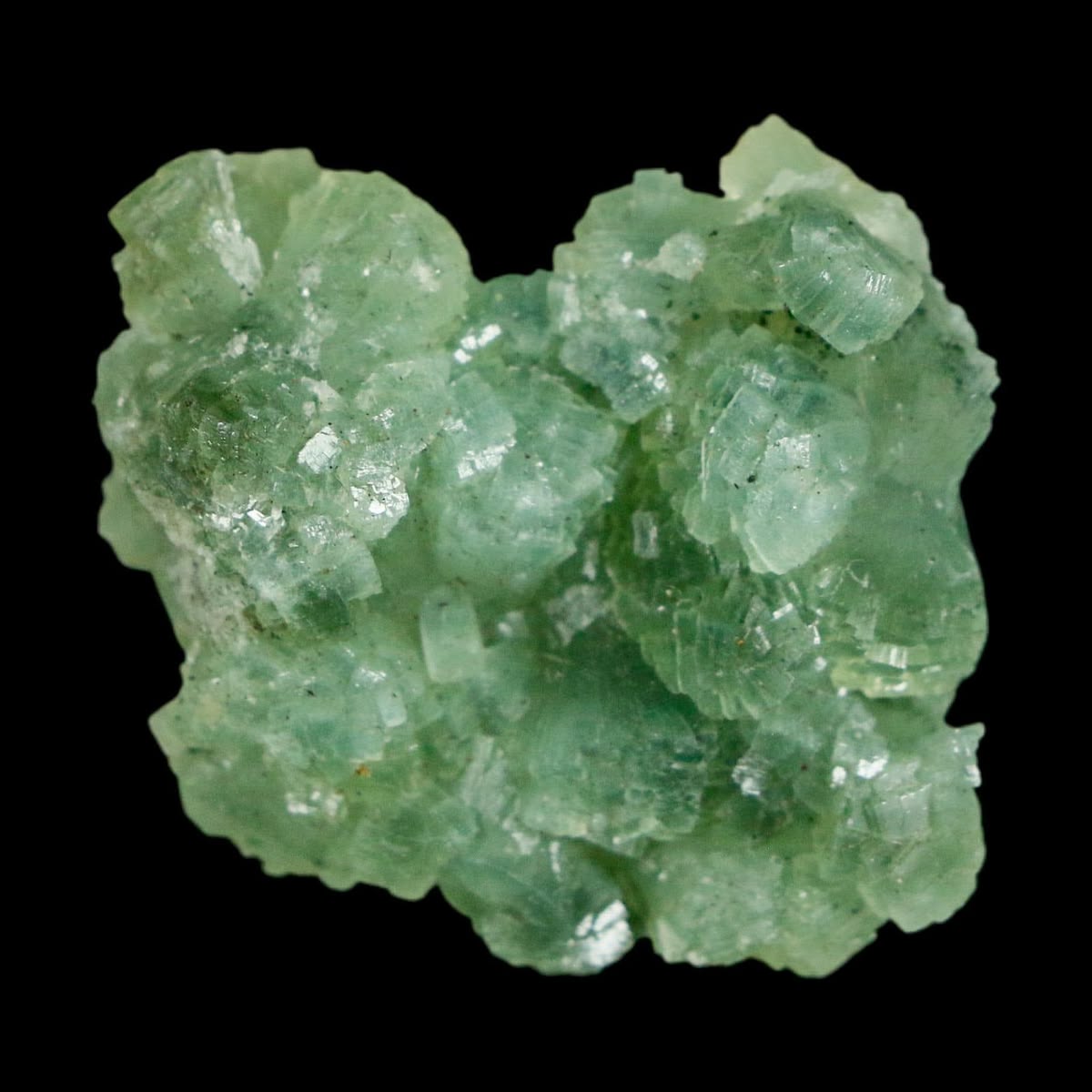
Prehnite Crystal, Benefits and Meanings.
Prehnite meaning centres on inner peace, emotional balance, intuition, personal growth, and confidence.
Metaphysical & Spiritual
Prehnite works with the inner field in a way that feels orderly and quietly corrective. It is often chosen when thoughts, feelings, and plans have started to pull in different directions, because its energy brings a sense of arrangement rather than force. In spiritual practice, Prehnite carries a patient kind of awareness. It helps keep intuition grounded in lived reality, so insight does not drift away from action or become too abstract to trust. This is a stone that brings the heart and will into closer conversation. It supports the moment when someone wants to act from care, but still needs enough inner structure to stay clear, steady, and self-respecting. Prehnite also reads as a stone of gradual growth. It does not push for dramatic change; it settles into the field and encourages a more measured confidence, where trust builds through consistency.

Planet

Venus
Prehnite carries Venusian energy through gentleness, receptivity, and the wish to restore ease. It brings affection and self-worth into a more grounded form, where care can be expressed with steadiness and not only feeling.
Element
Earth
Prehnite works with Earth by making spiritual insight more usable in daily life. It helps keep intuition anchored, so inner guidance can shape routines, boundaries, and choices with a calm, practical tone.
Crystal Pairings
Prehnite pairings work best when the other stone gives the field a clear task: a sharper line of thought, a steadier emotional base, or a more open channel for speaking and listening. These combinations keep Prehnite's gentle, organising quality from becoming vague, and help it settle into practical spiritual use.
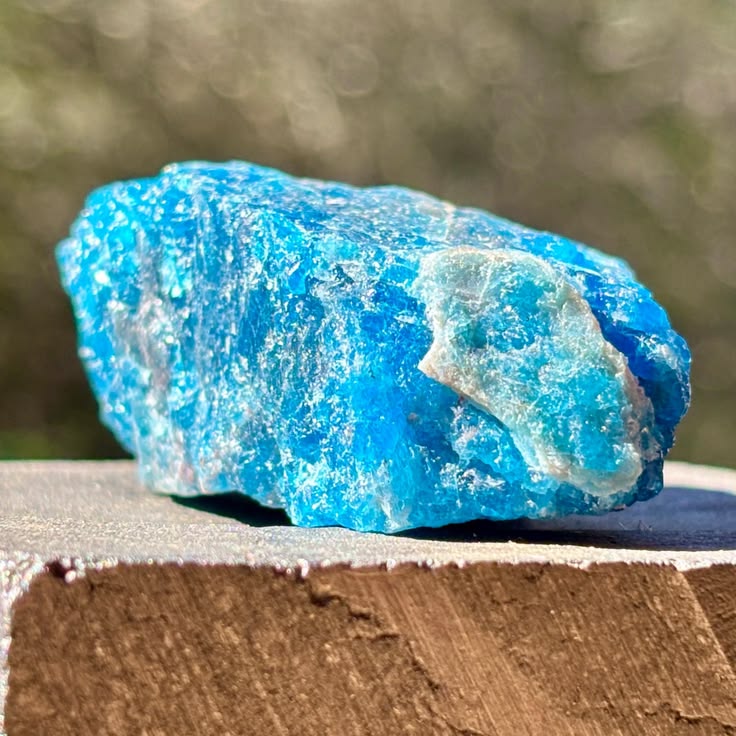
Blue Apatite
Blue Apatite and Prehnite bring intuition into words, making it easier to notice what is known inwardly and then speak it with shape and purpose. Together they support clear insight without rushing the process, which is useful for reflection, study, and honest conversation.
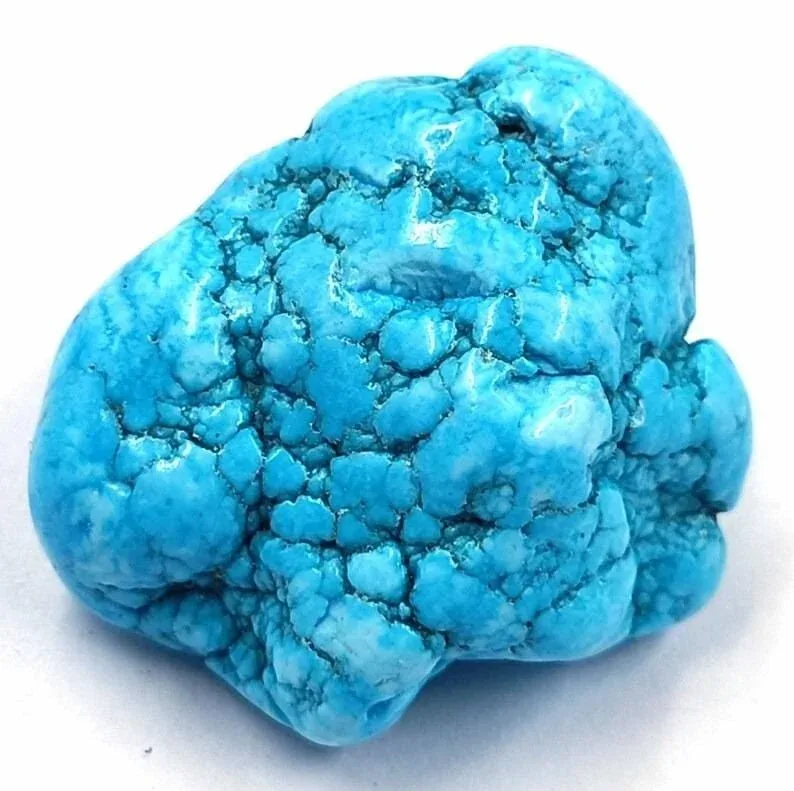
Turquoise
Turquoise adds a protective, truth-telling current beside Prehnite, so the heart can stay open without losing its boundaries. The pairing works well when calm communication needs to hold both compassion and firmness at the same time.
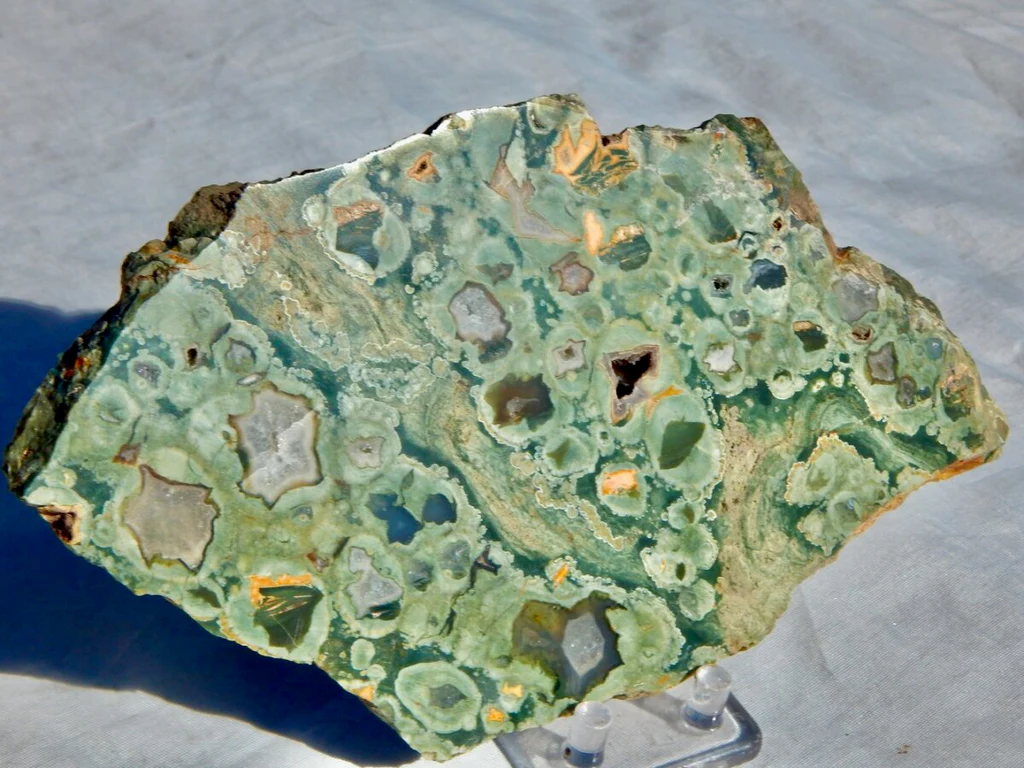
Rhyolite
Rhyolite grounds Prehnite's softer guidance into lived change, especially when growth needs patience, realism, and follow-through. It helps the energy move from insight into action, so intentions feel less like ideas and more like a steady pattern of behaviour.
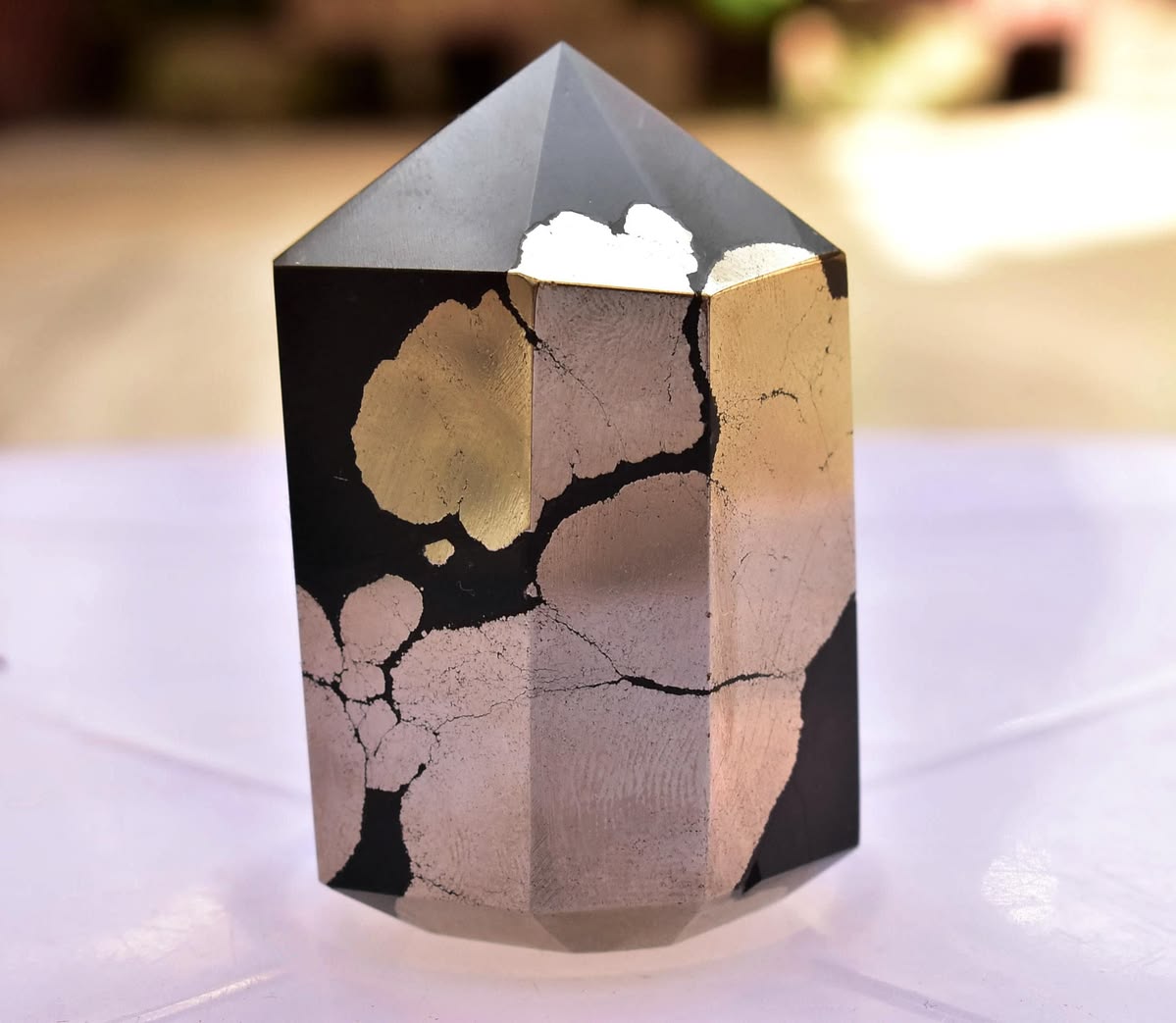
Healer's Gold
Healer's Gold brings a more vital, solar quality to Prehnite, supporting confidence when emotional balance needs to become active self-trust. Together they encourage a centred kind of courage that keeps the inner voice clear while the body stays steady.
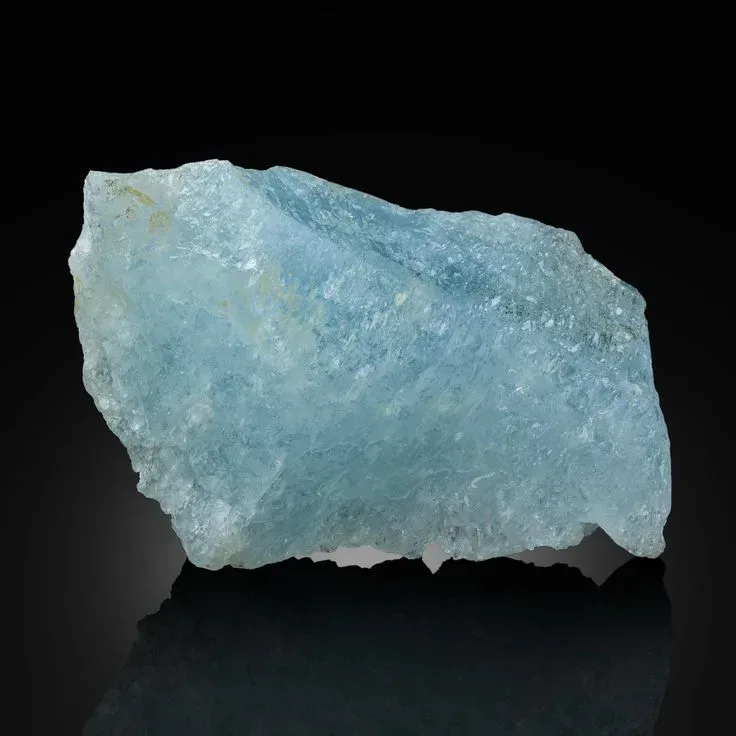
Aquamarine
Aquamarine and Prehnite create a quiet, receptive space for clear speech, gentle release, and thoughtful listening. The pairing is especially supportive when emotions need to be named without strain, allowing communication to stay soft, direct, and composed.
Healing
Prehnite connects with moments when the inner world feels crowded and the body is still trying to keep pace. It is often chosen when feelings need sorting without forcing them, especially after a tense exchange, a change in routine, or a day that has left the nerves thin and watchful.
It brings a quiet kind of order to the emotional field, so intuition has room to speak without being drowned out by overthinking. Prehnite also works well when confidence needs rebuilding in small, steady steps, with less self-criticism and more trust in what is already known.
Affirmations
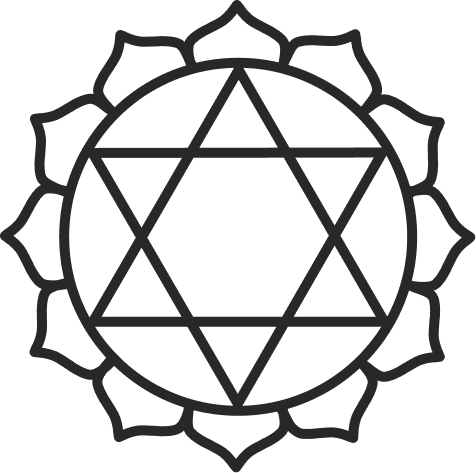
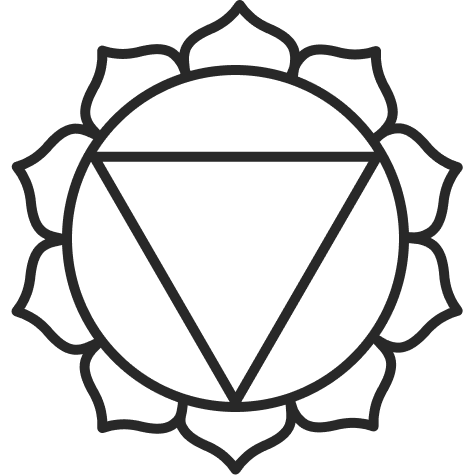
Hold Prehnite at the Heart or Solar Plexus area and choose the phrase that feels most honest for the moment.
Repeat it slowly, then let one simple action follow so the words settle into practice.
- I trust my quiet knowing
- I meet change with steadiness
- I speak with calm confidence
- I honour what feels true
- I allow peace to guide me
Intention Setting
Prehnite can help set intentions that are gentle but not vague, especially when a fresh start needs clear emotional boundaries.
It is useful for naming what should be kept, what should be released, and what kind of atmosphere is wanted around the next step.
- I choose calm and clarity
- I release what is not mine
- I trust my inner guidance
- I move forward with ease
- I keep my boundaries clear
Manifesting
Prehnite supports manifesting that grows from patience rather than pressure. It helps keep attention on what is workable today, so goals around self-trust, communication, and personal growth do not become tangled in doubt.
It is a steady companion for intentions that need both heart and follow-through, especially when confidence is being rebuilt after uncertainty or emotional strain.
- I grow with steady trust
- I welcome peaceful change
- I act from clear inner guidance
- I build confidence step by step
- I stay open to what is ready
Jewellery
Prehnite jewellery works as a small, steady cue that can be felt in different parts of the day depending on where it sits. Near the throat it supports measured speech, at the wrist it keeps actions deliberate, and close to the heart it helps the wearer stay aligned with what feels sincere.
General benefits: Wearing Prehnite jewellery keeps its quiet, organising presence close through the day. It can remind the wearer to pause before reacting, listen for the softer truth underneath a situation, and keep boundaries kind but firm. It is especially helpful on busy days, during difficult conversations, or when change asks for a calmer response than the body first wants to give.
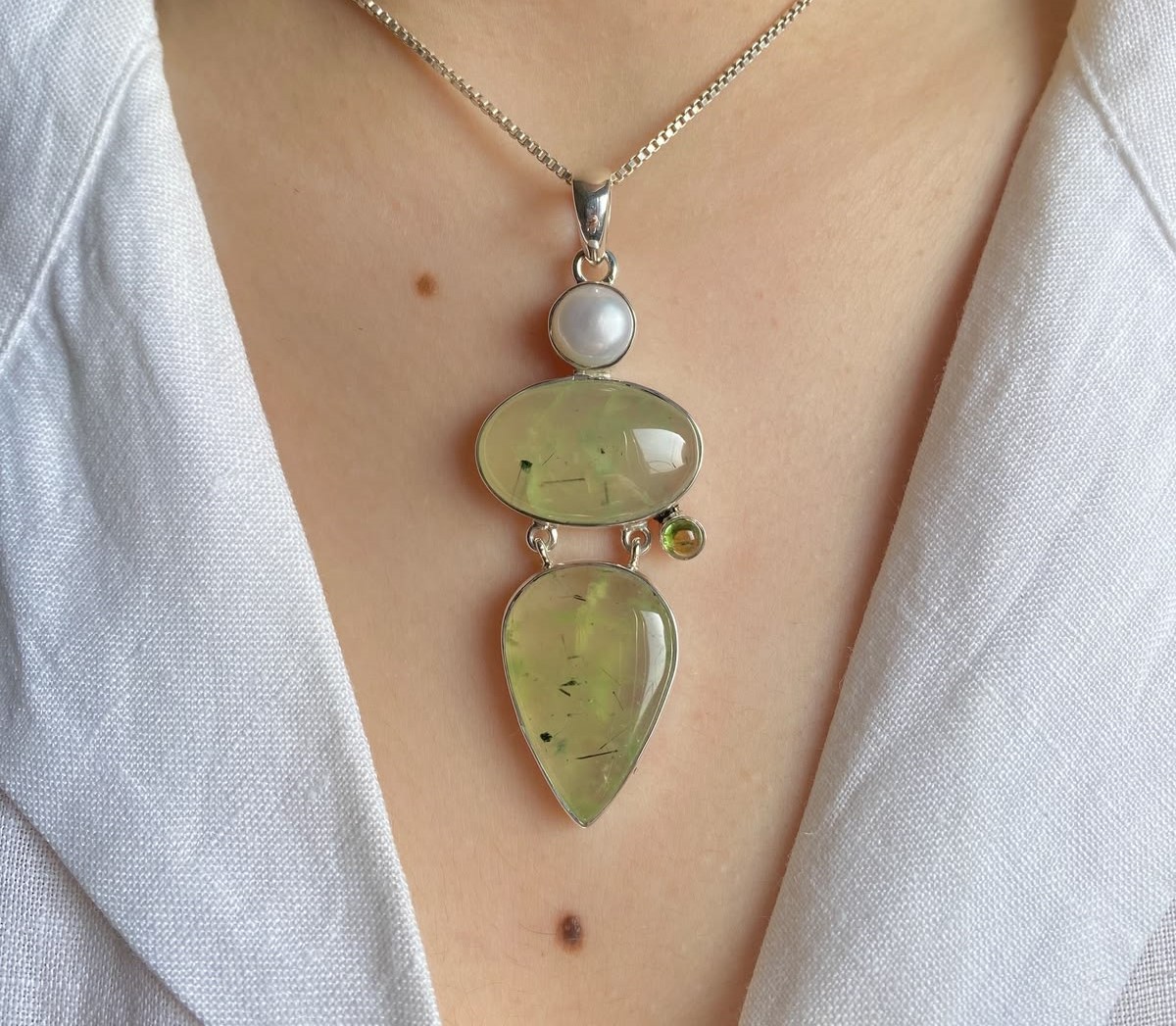
Necklace
A Prehnite necklace sits close to the heart and can support emotional steadiness when feelings are close to the surface. It is useful when speaking from care without losing self-respect, especially in conversations that need warmth and clarity at the same time. Worn near the chest, it can help the wearer stay with what is true rather than what is easiest to say. That makes it a quiet ally for honest talks, reconciliations, or moments of private reflection before a decision.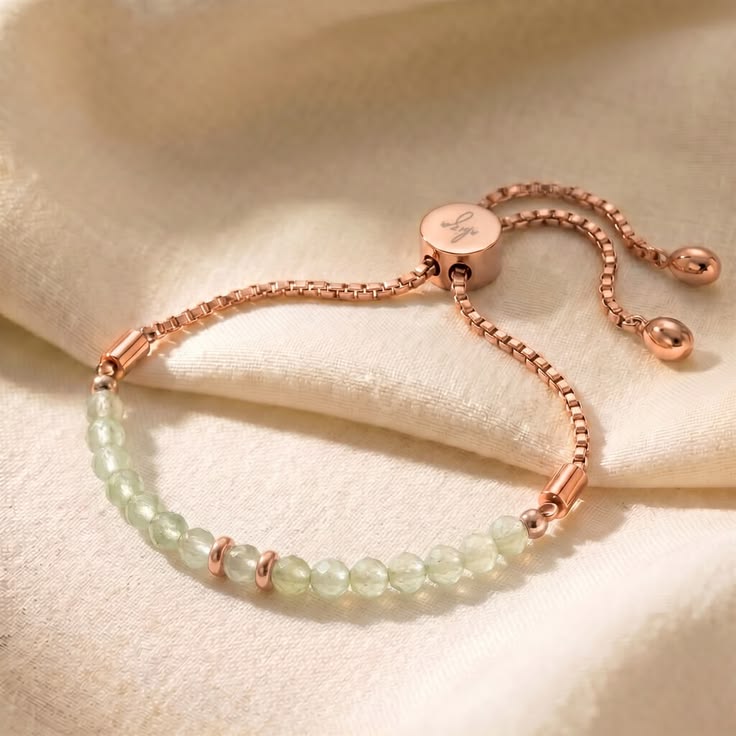
Bracelet
A Prehnite bracelet brings the reminder into the hands, where choices are made and habits are repeated. It can help keep actions measured when the day feels full, rushed, or emotionally reactive. Each glance at the wrist can become a brief pause to check whether the next move still matches the intention. That small reset is helpful when the body wants to hurry ahead before the mind has settled.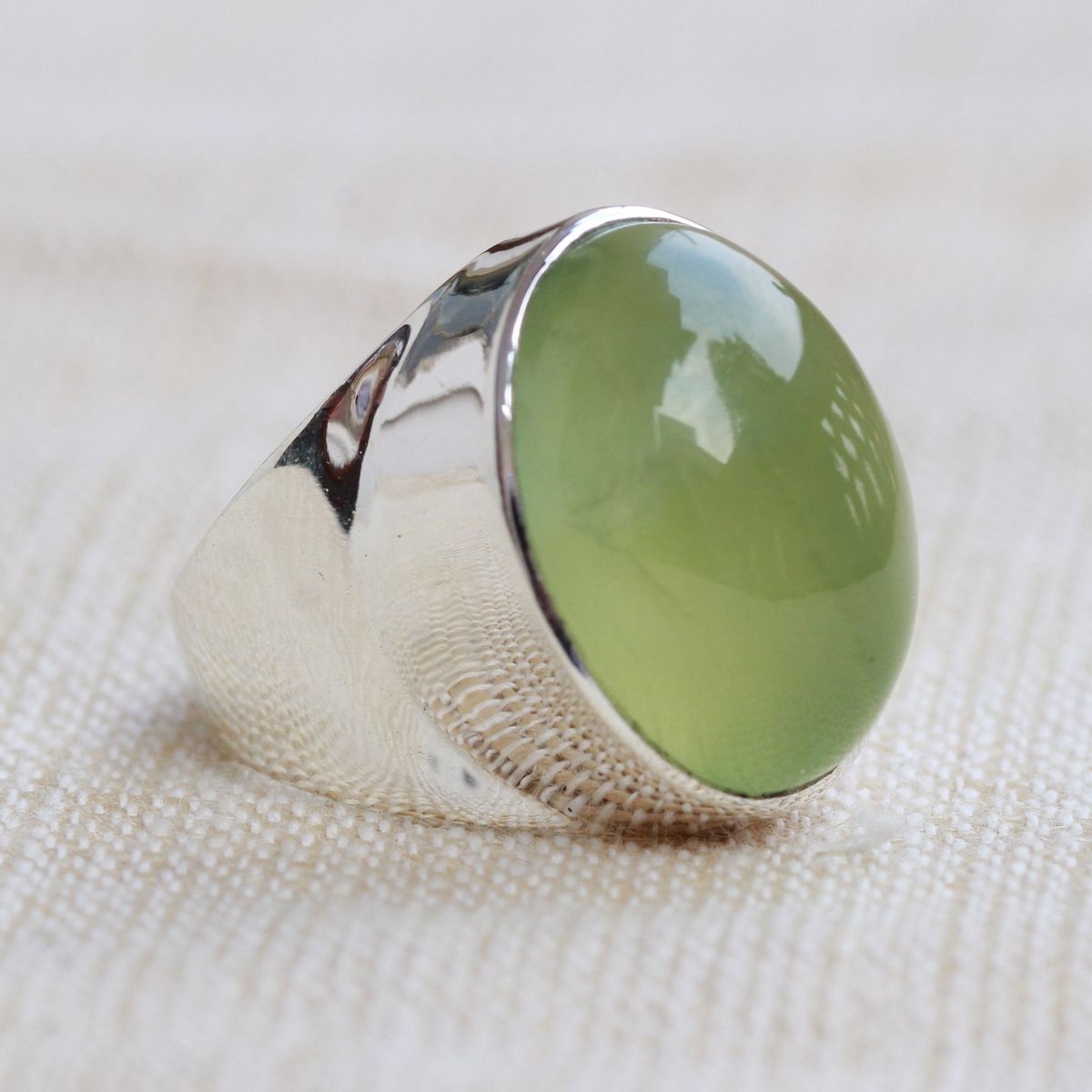
Ring
A Prehnite ring keeps the stone present during decisions, writing, and self-talk. It can support a more compassionate inner voice when doubt starts to crowd out confidence. Because the hands are always in view, it also works as a subtle reminder to stay aligned with what has been chosen. Useful for commitments, boundaries, and any moment that asks for quiet follow-through.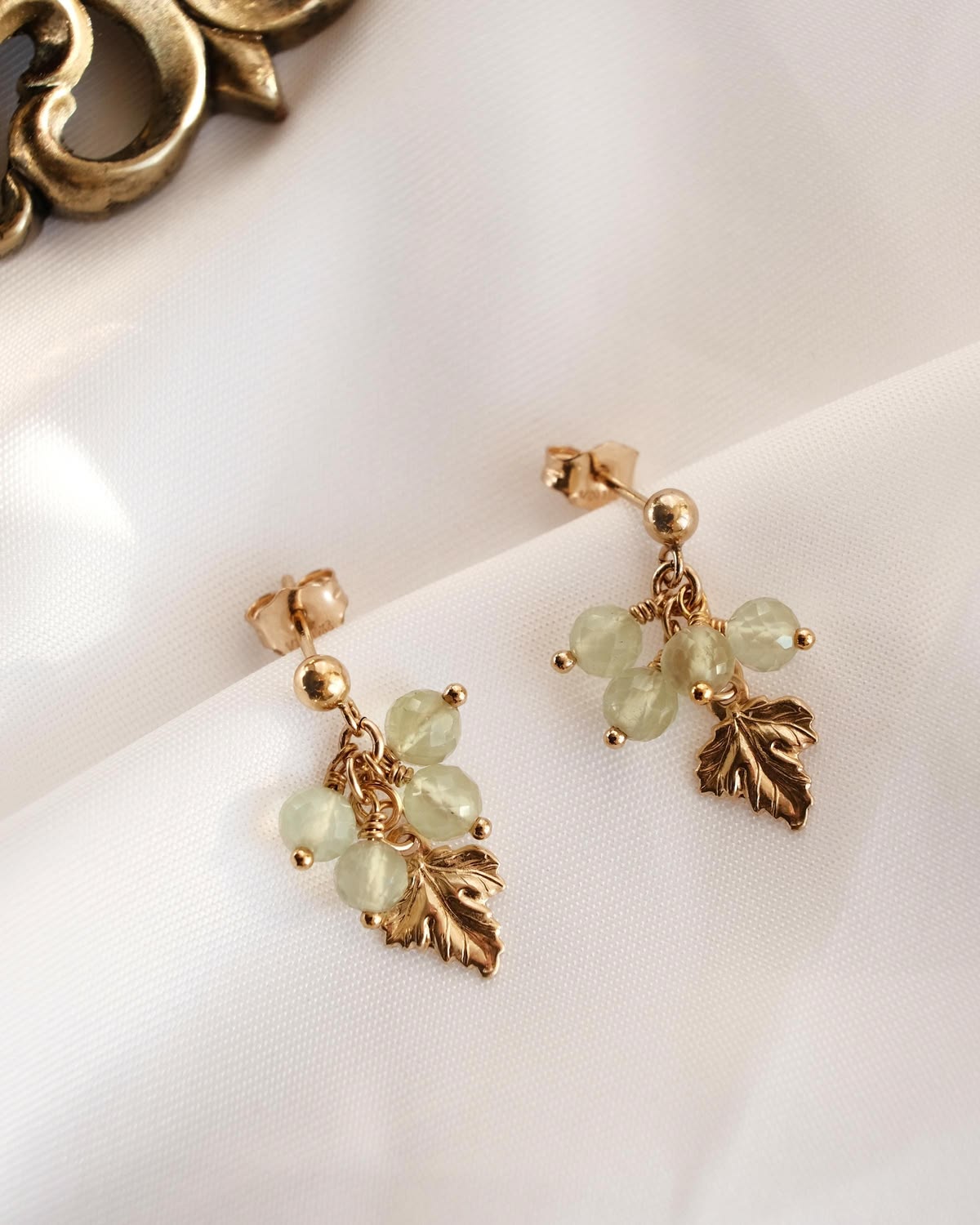
Earrings
Prehnite earrings sit close to the head and can support clearer listening before speaking. They are well placed for meetings, phone calls, and conversations where the first response should be thoughtful rather than immediate. This placement can help the wearer keep the mind open while the emotions stay settled. It brings a calm, attentive quality to communication, especially when the atmosphere around a conversation feels tense or uncertain.Forms
Different Prehnite forms shift how its energy is held and directed. Some feel more grounding and contained, while others bring a clearer line for intention, reflection, or quiet emotional work.
Rough
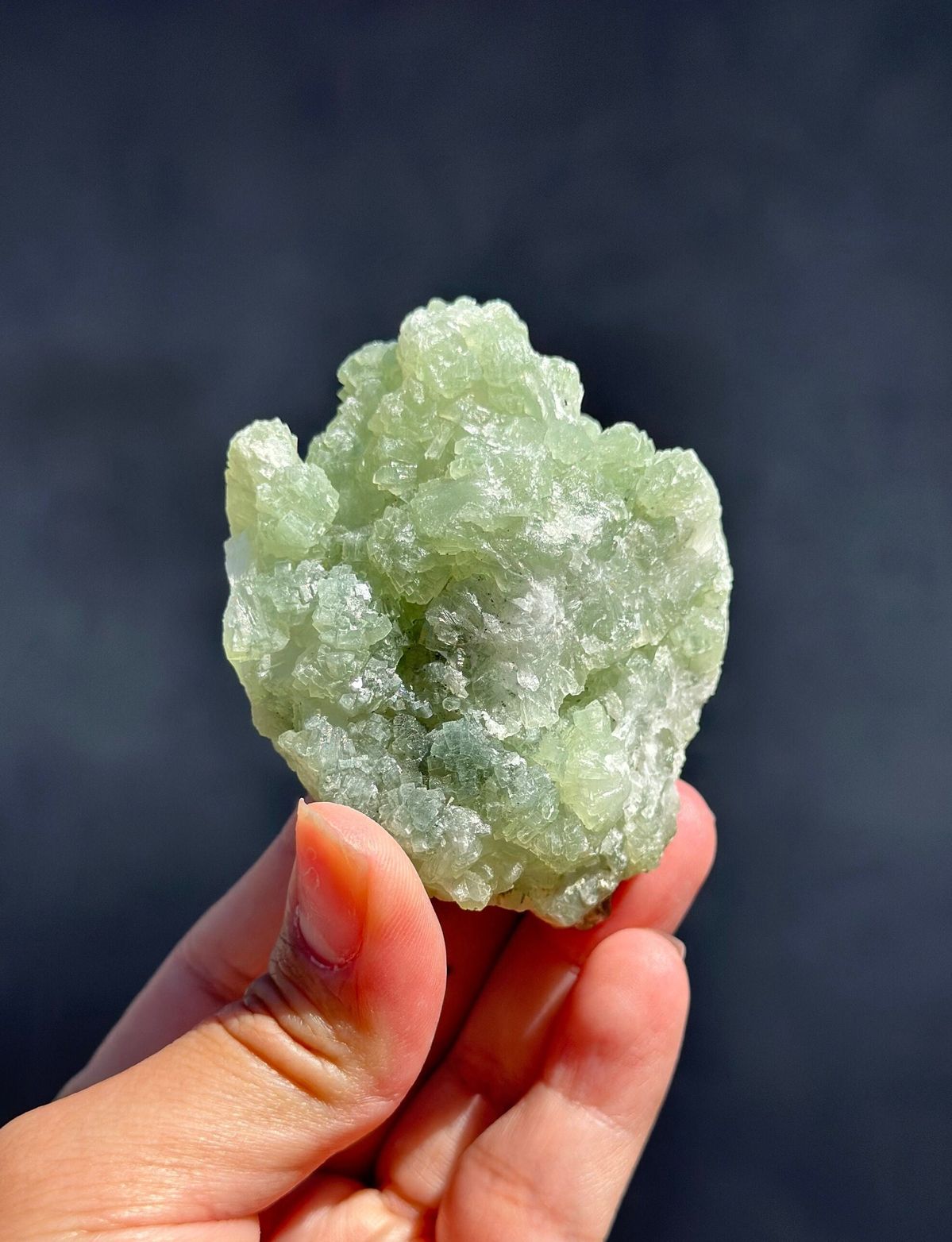
Rough Prehnite feels direct and earthy. It is useful when the aim is simple steadiness without overworking the energy.
Point / Tower
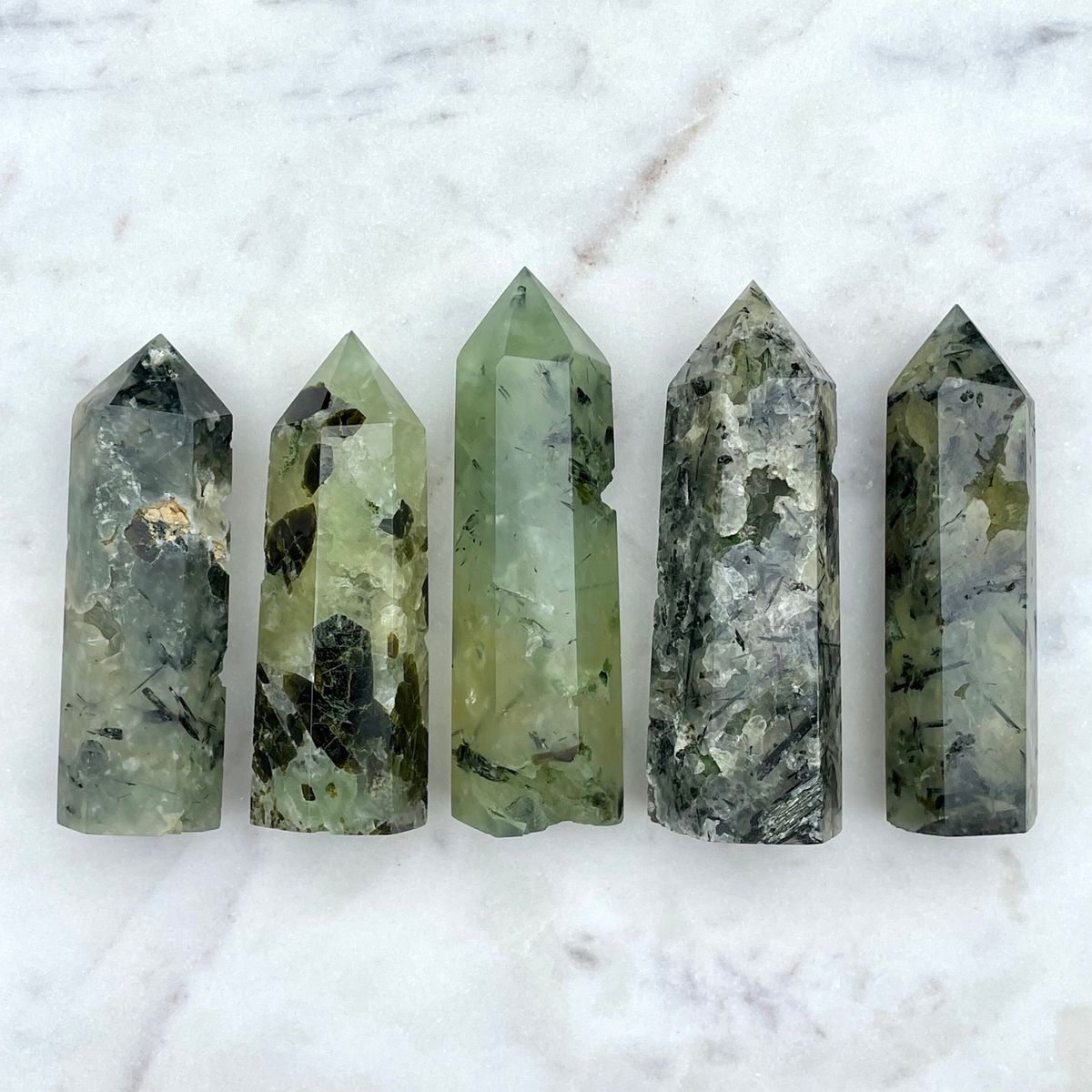
A point or tower gives Prehnite a more focused feel. It helps gather scattered thoughts into one clear intention.
Sphere
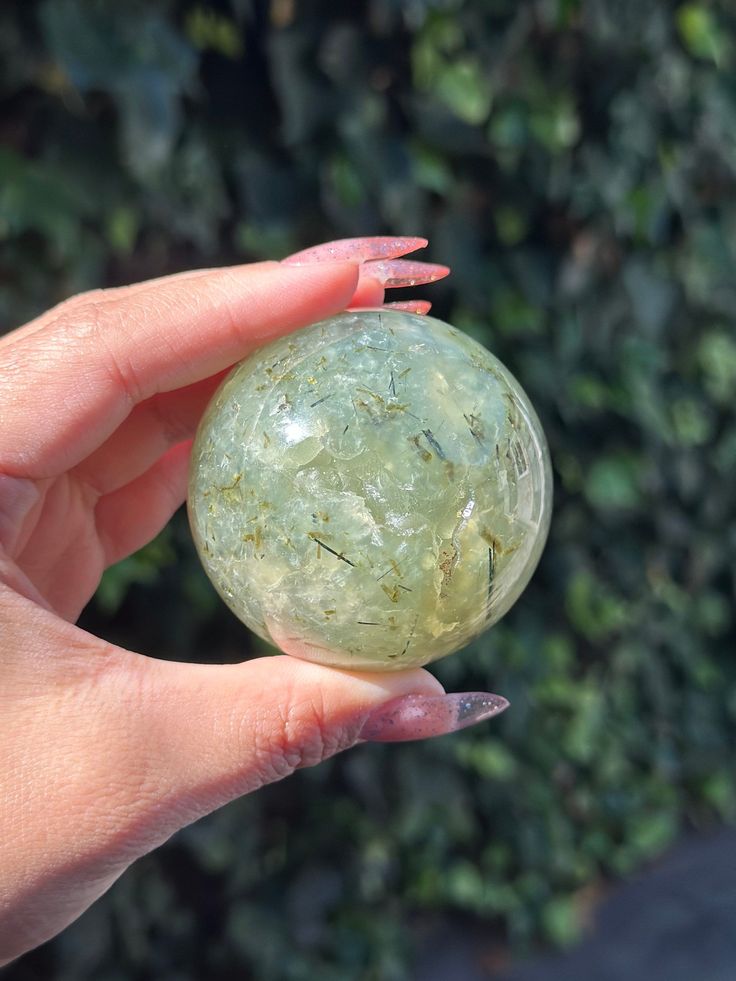
A sphere tends to spread Prehnite evenly through a space. It reads as calm, balanced support for a room or altar.
Palm Stone
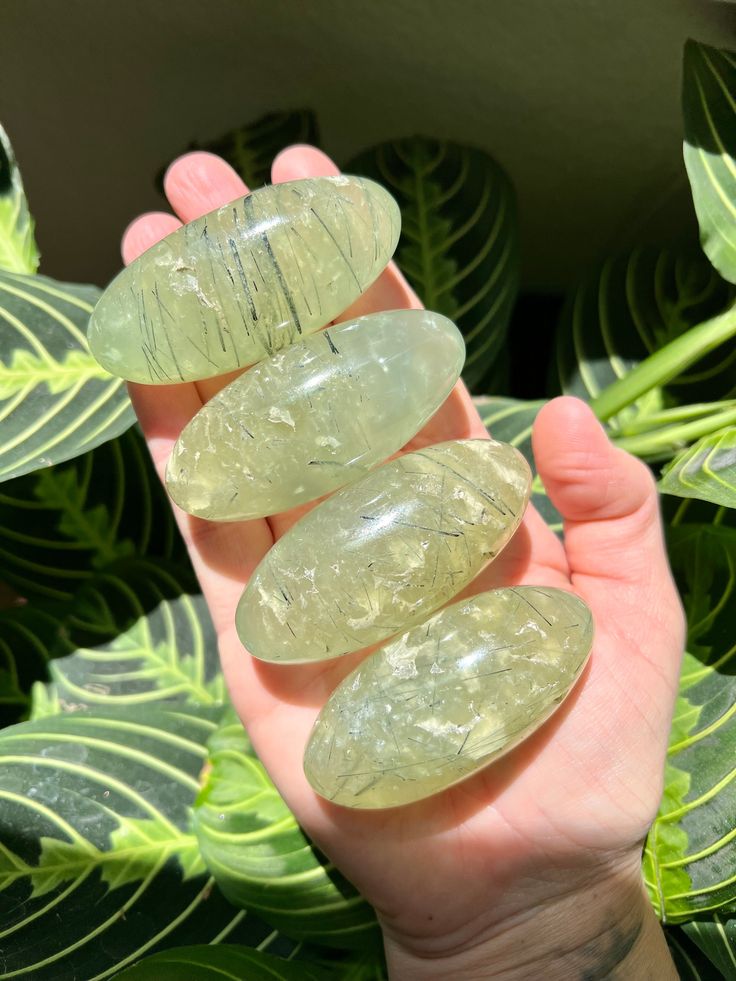
A palm stone offers a contained, hand-held presence for quiet holding. It is well suited to short pauses when the body needs to settle.
Tumble Stone
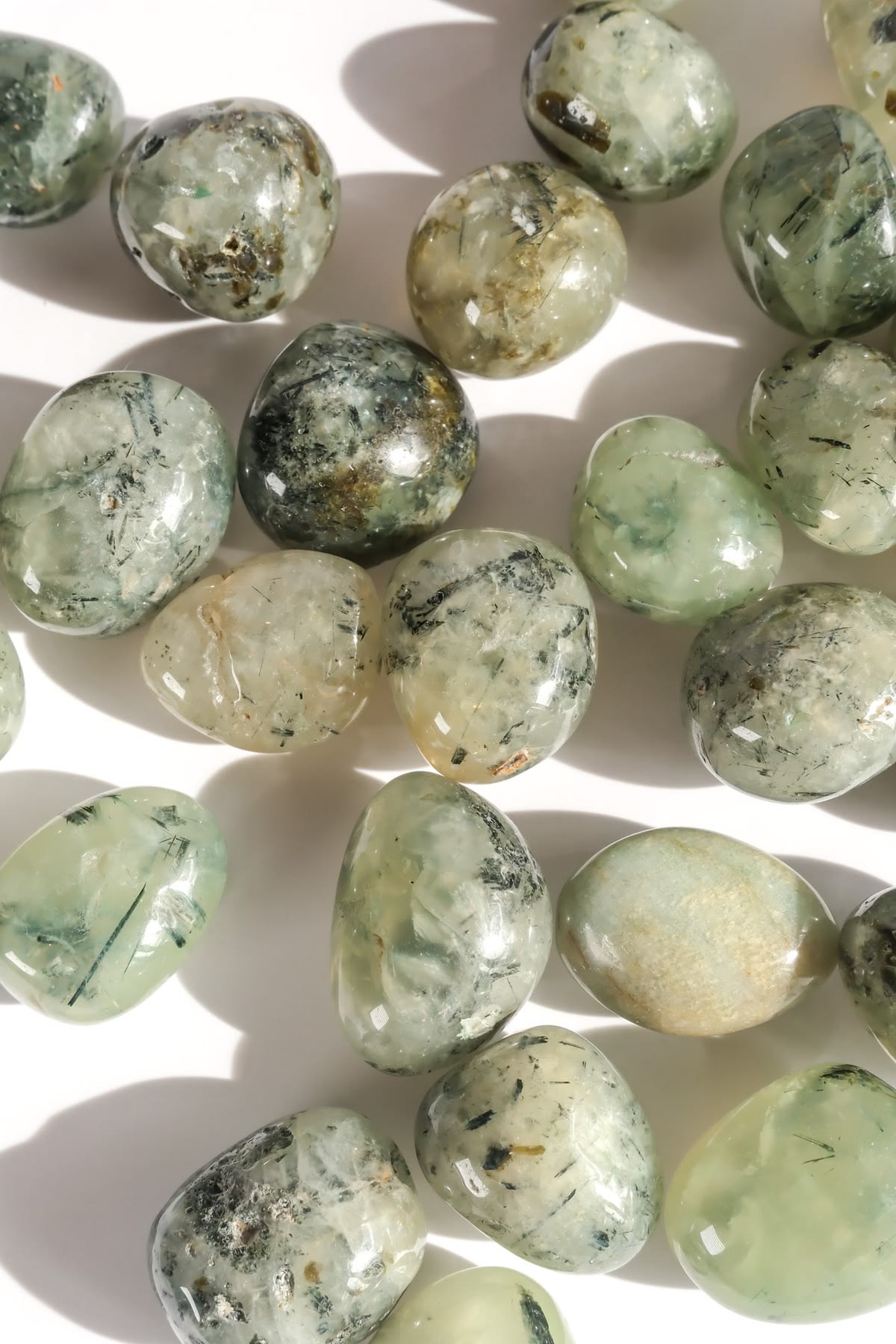
A tumble stone carries Prehnite in a small, easy form for pockets or bags. It works well for brief resets during the day.
Figure
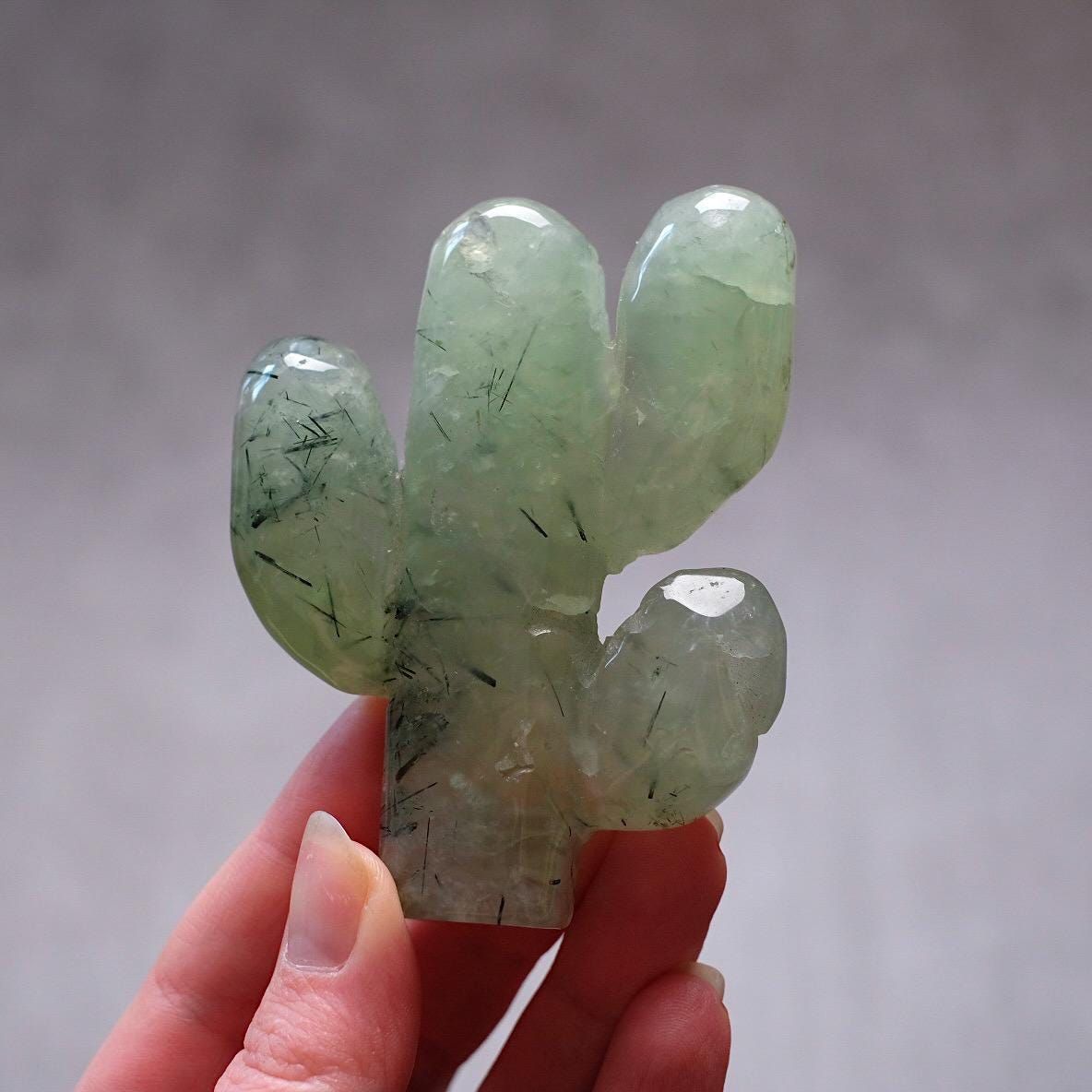
A carved figure can make Prehnite feel more intentional and companion-like. It is often chosen for focused spiritual practice or a personal altar.
Heart
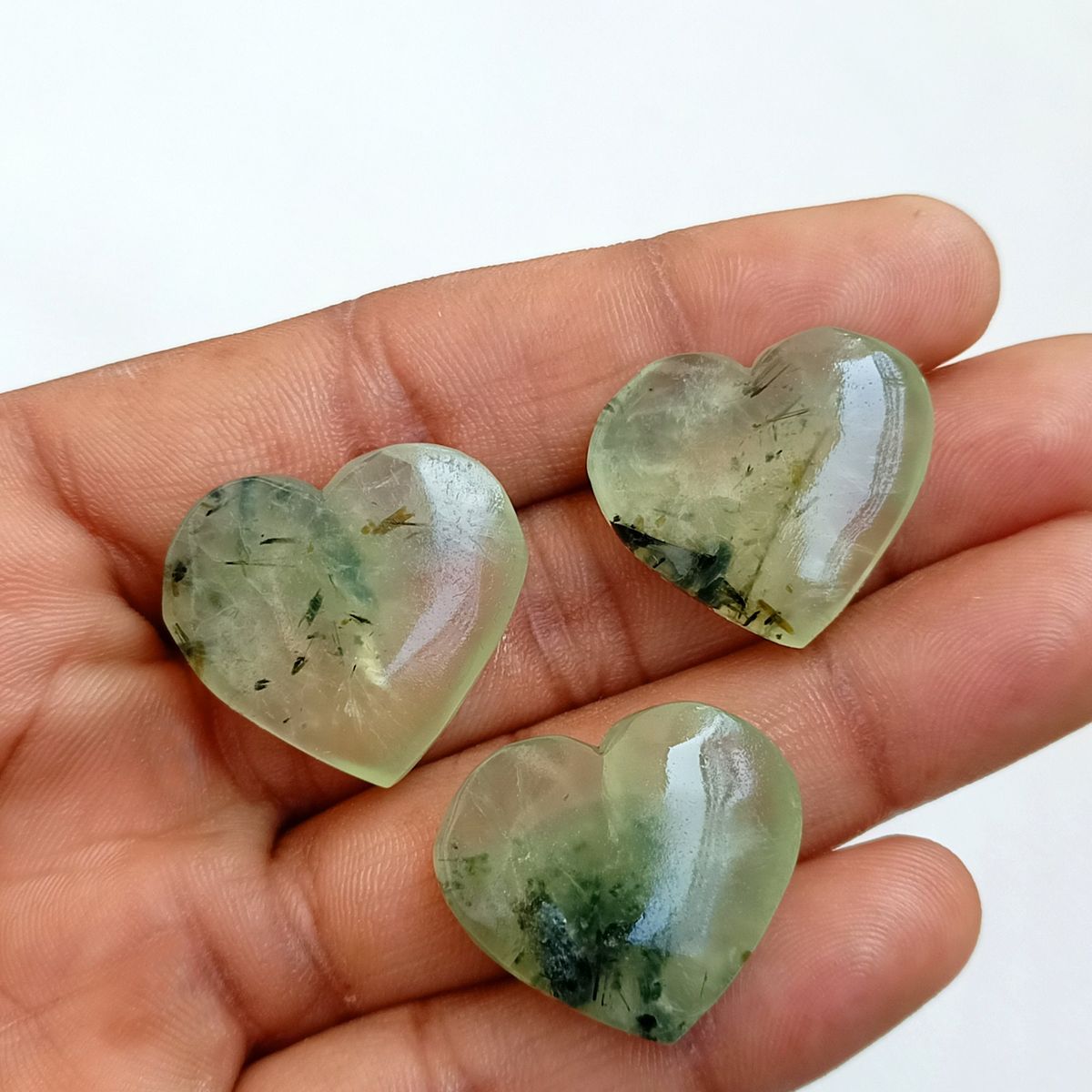
A heart form brings out Prehnite's softer, more caring tone. It is useful when the work is about self-respect, gentleness, and emotional honesty.
Cleansing & Charging
Prehnite benefits from regular cleansing after emotional conversations, busy social days, or any period when it has been held through a lot of mental noise. Because it is best treated gently, simple methods keep its feel clear without stressing the stone.
How to cleanse Prehnite
- Cleanse Prehnite with sound from a voice, singing bowl, chime, or soft music for a gentle reset.
- Pass it through smoke from sage or incense for a brief cleansing, keeping the session light and unhurried.
- Place it in a dry spot beside selenite or clear quartz overnight to clear the energy without using water.
How to charge Prehnite
- Leave Prehnite in brief indirect morning light, then bring it back indoors before the light becomes strong.
- Set it beside clear quartz or selenite on a plate or in a bowl to refresh its field quietly.
- Hold it in both hands and state a clear intention, then leave it somewhere calm until the next use.
Where to Use
Choose spaces where Prehnite can support emotional order and gentle follow-through, rather than places that need a loud or forceful energy. A small piece is often enough when it is placed with a clear purpose.
Personal workspace
At a personal workspace, Prehnite helps keep the mind from scattering when tasks, messages, and decisions all arrive at once. It can be placed near a notebook or keyboard as a reminder to work from calm focus rather than pressure. This is a good spot for setting intentions before beginning something important.
Front door
Near the front door, Prehnite can mark the boundary between the outside world and the inner one. It helps create a pause before stepping out or bringing other people's energy back in, which is useful after social contact or a demanding day. A small stone here can support clearer transitions and kinder self-protection.
Meditation space
In a meditation space, Prehnite settles the atmosphere so intuition has more room to surface. It works well beside a candle, journal, or other quiet practice tool when the aim is to listen rather than force an answer. This placement supports reflection, release, and patient inner checking-in.
Bedroom
In the bedroom, Prehnite can soften the mental noise that lingers at the end of the day. It is helpful on the bedside table when the mind keeps replaying conversations or tomorrow feels too close. Used here, it becomes a gentle cue to let the body rest and the thoughts slow down.
Science
Physical properties
- Mineral class
- Transitional Inosilicate-Phyllosilicate
- Color
- Colourless, white, grey, yellow, yellow-green, apple green, or occasionally pale blue or brownish
- Hardness
- 6 - 6.5
- Density
- Approximately 2.80 - 2.95 g/cm3
- Durability
- Fair to good
- Thermal stability
- Moderate
Optical properties
- Transparency
- Transparent to translucent, commonly subtransparent
- Lustre
- Vitreous to pearly
- Refraction index
- Approximately 1.61 - 1.67
Chemical composition
- Class
- Calcium aluminium silicate hydroxide
- Formula
- Ca2Al2Si3O10(OH)2
- Group
- Prehnite species
- Magnetic
- Usually non-magnetic
Formation
Prehnite is a recognised calcium aluminium silicate hydroxide mineral with an orthorhombic crystal structure, and it sits in a transitional position between chain silicates and sheet silicates. That borderline structure is why different classification systems describe it with slightly different structural language, while still treating Prehnite as its own distinct mineral species rather than a variety of Quartz, Calcite, or Jade.
The prehnite mineral commonly forms through low-temperature hydrothermal alteration, when calcium- and aluminium-bearing fluids move through fractures, veins, and gas cavities in basalt and other volcanic rocks. It also occurs in low-grade metamorphic settings, and its name is used for the prehnite-pumpellyite metamorphic facies. Prehnite often grows with Epidote, Pumpellyite, Calcite, Quartz, Datolite, Apophyllite, and zeolite minerals, though it is not itself a zeolite.
Locations
- Eastern Cape, South Africa
- Northern Territory, Australia
- Western Australia, Australia
- Paterson, New Jersey, United States
- Keweenaw Peninsula, Michigan, United States
- Québec, Canada
- Isle of Skye, Scotland
- Maharashtra, India
History
Prehnite formed through hydrothermal alteration
Ancient geological history
Prehnite began forming in volcanic and metamorphic settings where calcium- and aluminium-bearing fluids moved through fractures and cavities in rock. As those fluids cooled, the mineral crystallised alongside Epidote, Calcite, Quartz, Datolite, and zeolites. This process gave Prehnite its place in low-temperature geological environments rather than deep, high-heat ones.
Specimens collected at the Cape of Good Hope
1774
Dutch military officer and mineral collector Hendrik von Prehn is credited with collecting or obtaining pale green specimens from the Cape of Good Hope region. The material later travelled to Europe, where it drew attention as a distinct and attractive mineral. This early movement helped bring Prehnite into the wider mineral record.
Named in honour of Hendrik von Prehn
1788
German mineralogist Abraham Gottlob Werner named the mineral Prehnite after Hendrik von Prehn. The naming gave the stone a formal identity in mineralogy and linked it directly to the collector associated with its early European introduction. It is often described as one of the earliest minerals named after an individual.
Prehnite localities documented internationally
19th century
During the 19th century, mineralogists recorded Prehnite in basalt cavities, hydrothermal veins, and metamorphosed rocks across several continents. Notable occurrences were documented in Scotland, New Jersey, Canada, and Australia. These records established Prehnite as a mineral with a broad geological range rather than a single local source.
Australian material entered the gem trade
20th century
Large deposits in Northern Territory and Western Australia supplied translucent yellow-green and apple-green Prehnite for the gem trade. The material was cut into cabochons, beads, carvings, and polished ornamental pieces. Its soft glow and workable form helped it move from specimen cabinets into jewellery and decorative use.
Popular translucent green collector and jewellery stone
Present day
Prehnite is now widely collected and worn in jewellery, polished stones, and carvings. Modern crystal traditions commonly place it with peace, intuition, emotional balance, and personal growth. Its ongoing appeal comes from the meeting of mineral character, gentle translucence, and a long history of international discovery.
Got questions?
We've got answers!
FAQ's
What is Prehnite used for?
+×
Prehnite is often chosen for quiet, steady support in meditation, reflection, and emotional reset. Its calm green presence is commonly linked with inner peace, intuition, personal growth, and the kind of confidence that builds gradually.
It is also a practical stone for spaces that benefit from a softer atmosphere, such as a bedroom, meditation corner, or personal workspace. Many people keep it nearby when they want a gentler pace and a clearer sense of what feels aligned.
What gives Prehnite its green colour?
+×
Prehnite's pale green to apple-green colour is commonly linked to small amounts of iron within its crystal structure. It can also appear yellow-green, yellow, white, or colourless, so the shade may vary from stone to stone.
Its translucent to subtransparent body often gives it a soft inner glow, especially in rounded or polished pieces. That gentle appearance is one reason it is so often associated with calm and restoration.
Is Prehnite a type of Zeolite?
+×
No - Prehnite is not a zeolite, even though it often forms in the same kinds of volcanic cavities and hydrothermal settings. It is a distinct calcium aluminium silicate hydroxide mineral with its own crystal structure.
It is frequently found alongside zeolites such as Apophyllite, but that association does not make it part of the zeolite group. Mineral collectors often value it for that reason as well as for its soft green colour.
Which zodiac signs are connected to Prehnite?
+×
Prehnite is commonly linked with Libra and Virgo. Libra connections often emphasise balance, harmony, and calm decision-making, while Virgo associations tend to highlight discernment, order, and practical self-awareness.
Its Venus influence and Earth element give it a gentle, grounded quality that suits both signs well. In crystal work, it is often used when balance needs to feel lived and practical rather than merely ideal.
What chakras does Prehnite work with?
+×
Prehnite is associated with the Heart chakra and the Solar Plexus chakra. The Heart connection reflects its gentle, settling quality, while the Solar Plexus link supports quiet confidence and self-direction.
Together, these associations make it a useful stone for work that joins feeling and action. It is often chosen when emotional balance needs to support clearer choices and steadier boundaries.