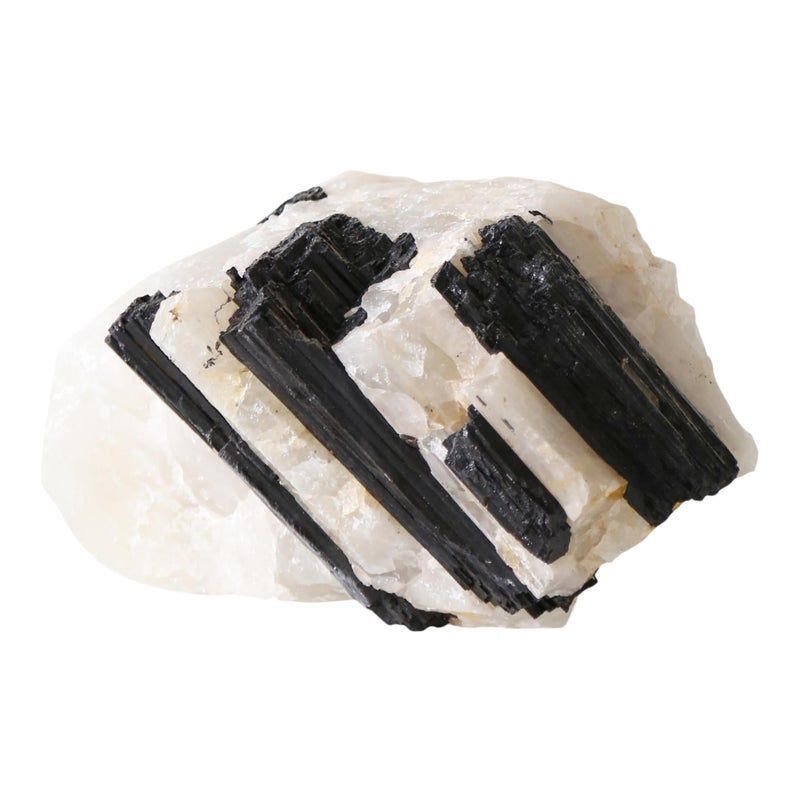
Tourmalinated Quartz tourmalinated quartz pairings
Tourmalinated Quartz is a study in contrast, clear quartz brightness threaded with dark, needle-like inclusions, so pairing choices can either sharpen that sense of balance or pull it into overwhelm. Thoughtful combinations help keep the blend of clarity, cleansing and protection feeling steady rather than busy.
Use pairings to fine-tune the overall tone, anchoring the energy when focus is needed, or lifting the feel when a space wants lightness without losing boundaries. The most satisfying stacks usually keep one clear intention at the center, then add one supporting layer that reinforces grounding and one that supports mental clarity.
Crystals that combine well with Tourmalinated Quartz
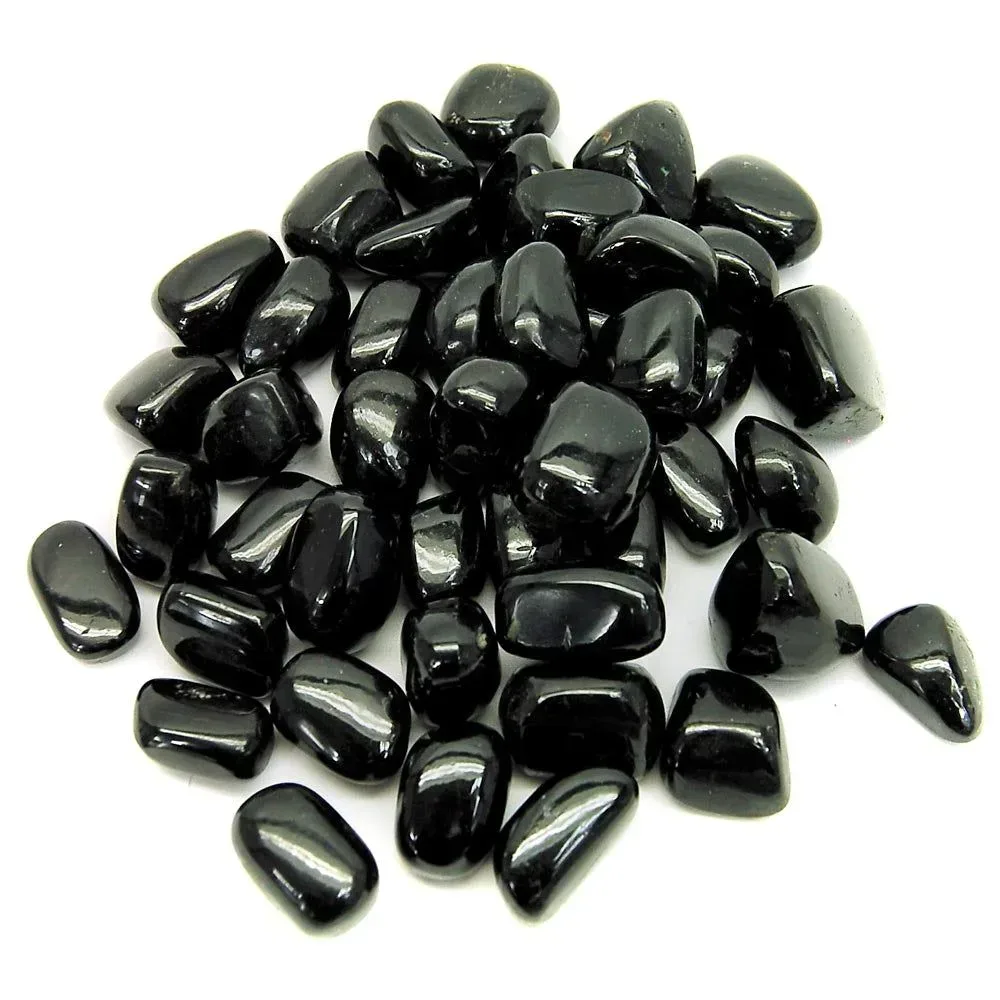
A clean, practical pairing for grounding and boundaries. Black Tourmaline holds the line, Tourmalinated Quartz adds a clearer edge.
Set Tourmalinated Quartz and Black Tourmaline near the front door or on a hallway shelf. Stand still for 30 seconds, feet on the floor. Set one plain line: keep what is useful, release what is not.
For a quick reset, hold Tourmalinated Quartz in the non-dominant hand and Black Tourmaline in the dominant hand. Slow the breath. Split the moment into two piles, what needs attention now, and what can wait.
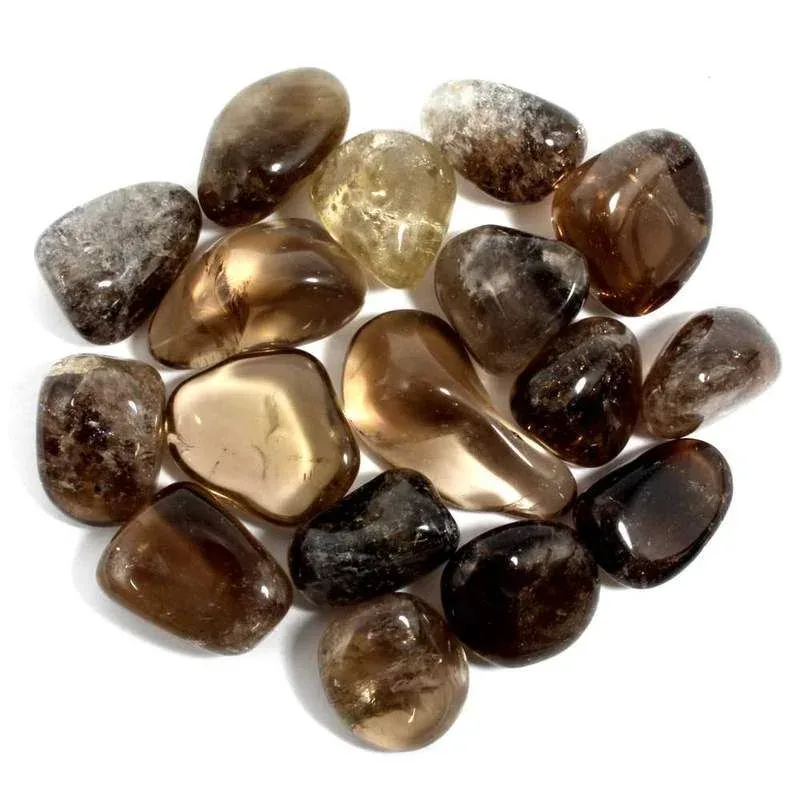
Smoky Quartz brings a calm, anchored tone. Tourmalinated Quartz keeps the head clear, so the mood stays steady, not foggy.
Keep both stones on a desk or study area. Put Smoky Quartz closer to the body, Tourmalinated Quartz slightly forward. A simple cue. Before starting, write three lines: priority, next step, finish point.
In the evening, rest with Smoky Quartz near the hips and Tourmalinated Quartz near the chest. Scan for leftover mental noise. Name one thing to drop, then one practical action for tomorrow.
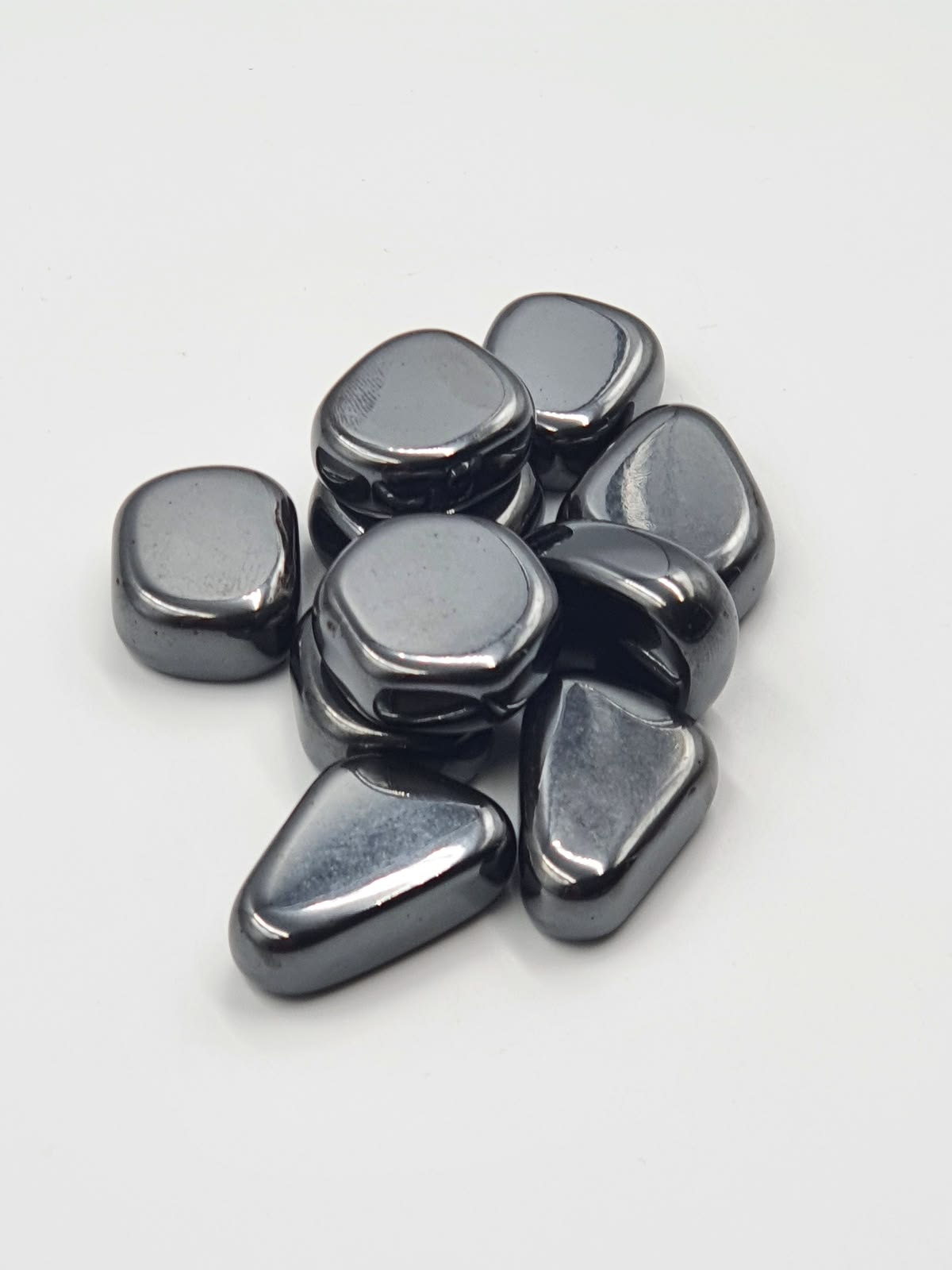
Hematite adds weight and structure. With Tourmalinated Quartz, it suits days built on routine, focus, and a practical mindset.
Use this pair to set the morning up: place Hematite by a notebook and Tourmalinated Quartz by a water glass. Take one minute to outline the day. One non-negotiable task, one supportive task, one small reward.
For a pocket pairing, carry Hematite on one side and Tourmalinated Quartz on the other. Before meetings or commutes, touch each stone and repeat: steady body, clear mind. Then go straight to the next step.
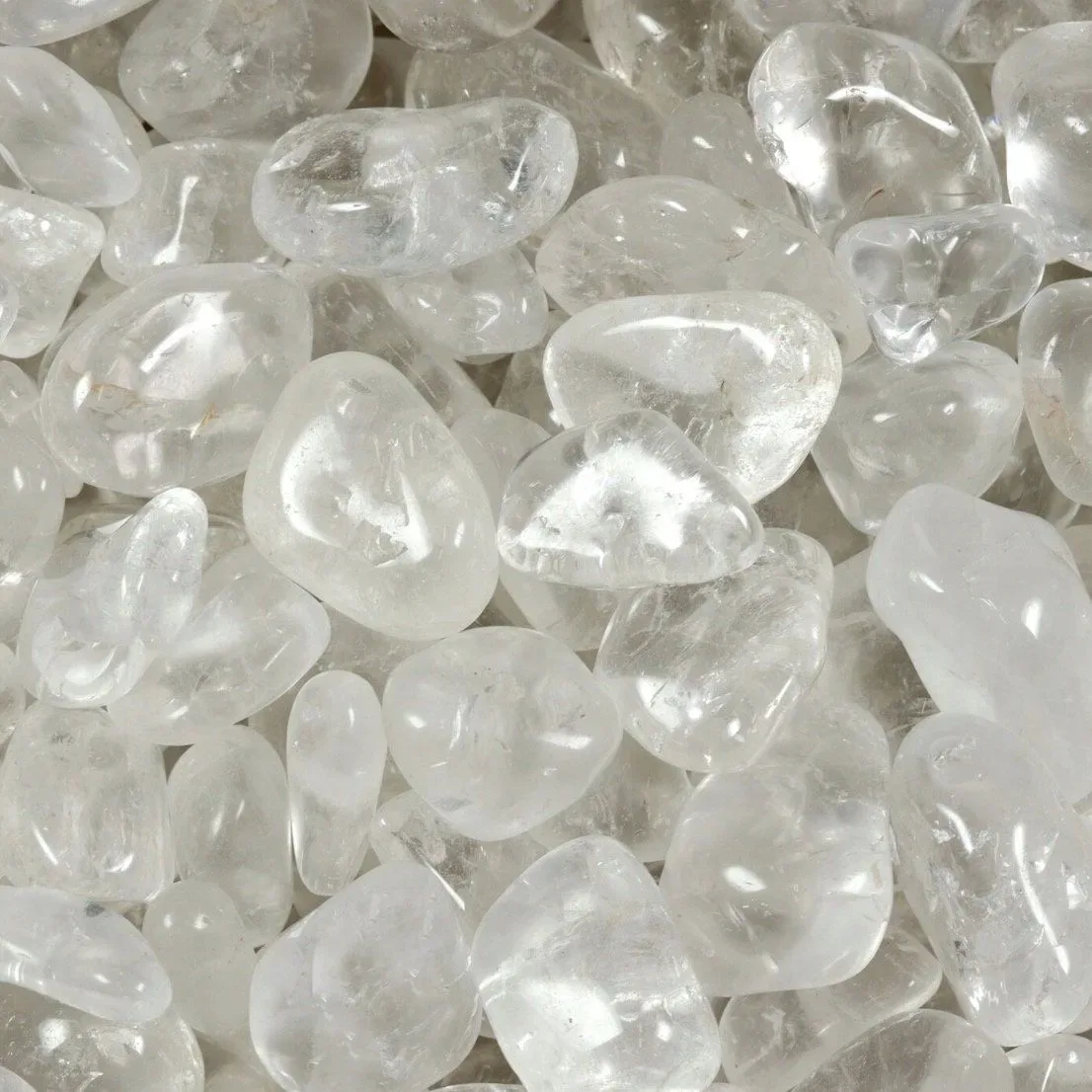
Clear Quartz sharpens the aim. Tourmalinated Quartz keeps that clarity grounded and usable, not scattered.
For intention-setting, place both stones in front of a written goal. Edit the goal into one clear sentence. Read it once, then set Tourmalinated Quartz closest to the paper, with Clear Quartz just above it.
For a simple room reset, place Clear Quartz on a windowsill and Tourmalinated Quartz on a nearby shelf or table. Open the window for a few minutes. Do a quick tidy so the space matches the calmer tone.
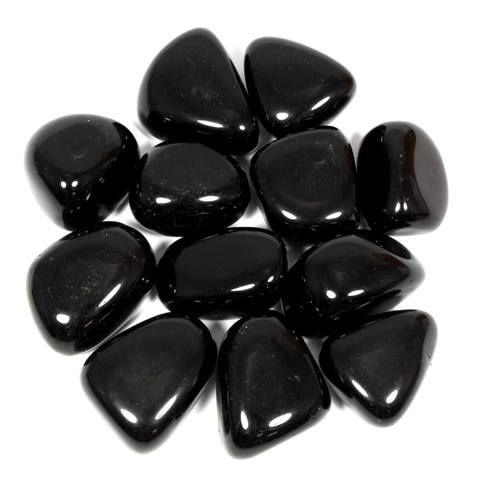
Obsidian brings depth and direct reflection. Tourmalinated Quartz keeps things balanced, useful for self-review without getting stuck in a heavy mood.
Use this pair while journalling: Obsidian to the left of the page, Tourmalinated Quartz to the right. Write two columns, what drains and what supports. Circle one boundary to strengthen and one small habit to adjust this week.
In meditation, place Obsidian near the feet and Tourmalinated Quartz near the hands. Keep posture steady and breathing slow. Bring it back to what is true, then what is practical.
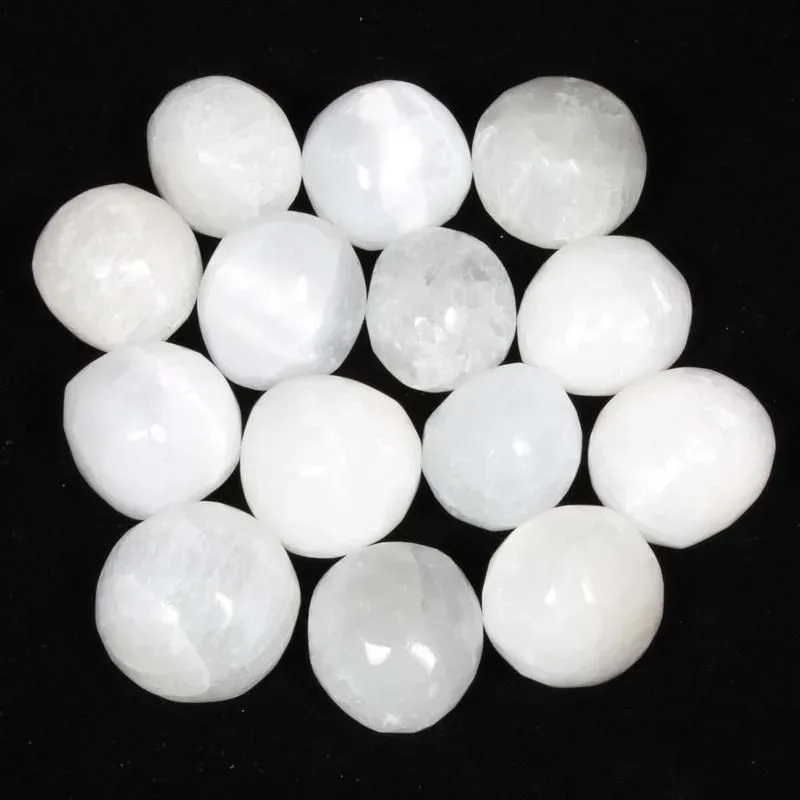
Selenite feels light and clean. Tourmalinated Quartz keeps that lightness grounded, so the room still feels settled.
For an evening reset, place Selenite on a bedside table and Tourmalinated Quartz a little lower, on a shelf or near the floor. Dim the room. Take a few slow breaths, then close the day with one sentence of gratitude and one sentence of release.
For a simple charging routine, rest jewelry or small stones near Selenite, with Tourmalinated Quartz beside it. Keep it brief. Put everything away neatly, a cue for calm, clear order.
Jewelry pairings that work well together
Tourmalinated Quartz works best in restrained settings that let the dark inclusions read clearly against the pale quartz body. Matte silver, polished steel and blackened finishes all suit its grounded, high-contrast look, while bright white metals can keep the overall effect crisp and clean.
Tourmalinated Quartz & Black Tourmaline
The pairing is deeply tonal, with the quartz crystal giving a clearer window to the needle-like black tourmaline inside and the companion stone adding a fuller, opaque depth. A polished finish keeps the contrast sharp, while a slightly matte setting can make the whole piece feel more earthy and contained. A slim signet ring works well here, with the two stones set side by side or in a small clustered face. It gives the pairing a compact, protective feel without losing the visual interest of the internal patterning.
Tourmalinated Quartz & Smoky Quartz
Both stones sit within a soft gray-to-black range, but Tourmalinated Quartz brings more light and movement through its clear body. Smoky Quartz adds a warmer opacity and a smoother surface, creating a gentle contrast between transparency and depth. A single pendant in a simple bezel setting suits this pairing well, especially on a medium-length chain. The look is calm and wearable, with enough variation in tone to keep the piece from feeling flat.
Tourmalinated Quartz & Hematite
This is a crisp, metallic pairing: the quartz stays bright and glassy while Hematite introduces a dense, mirror-dark sheen. The contrast between clear stone and reflective metal-like surface gives the combination a disciplined, modern edge. A cuff bracelet is a strong choice, with one stone at each end or a central Tourmalinated Quartz accent framed by small Hematite details. It creates a structured line on the wrist and suits neat, tailored styling.
Tourmalinated Quartz & Clear Quartz
The two stones share clarity, but Tourmalinated Quartz brings the black linear inclusions that stop the pairing from becoming too plain. Clear Quartz keeps the look light and bright, while the subject stone adds texture and visual tension. A pair of ear climbers would suit this combination nicely, especially in a slim, architectural design. The stones can be arranged to follow the curve of the ear, giving a clean and lifted finish.
Tourmalinated Quartz & Selenite
Tourmalinated Quartz has a sharper, more graphic character, while Selenite offers a soft white glow and a satin-like finish. The contrast is gentle but distinct, with the dark threads in the quartz standing out against the pale, cloudy calm of Selenite. A woven bracelet is a good way to use this pairing, especially with the stones spaced through a fine cord or chain structure. It gives the jewelry a relaxed, tactile feel that still reads as polished and intentional.
What not to pair with Tourmalinated Quartz
Tourmalinated Quartz works best when its clear, protective current stays legible, so avoid pairings that flood the field with too much ascent, volatility, or psychic static. Stones that are highly activating or expansive can blur its grounded focus and make the blend feel busy rather than clean.
Phenakite
Phenakite can lift the energy so high that Tourmalinated Quartz loses some of its grounded, filtering role. The pairing may feel overly rarefied, making practical focus harder to hold.
Azeztulite
Azeztulite tends to open a very expansive, high-frequency field, which can outpace Tourmalinated Quartz's calm protective structure. Together they may feel less anchored and more difficult to settle into one clear intention.
Libyan Desert Glass
Libyan Desert Glass brings a sharp, catalytic quality that can make Tourmalinated Quartz feel more reactive than steady. The combination may intensify movement without giving the quartz enough room to keep the energy clean and contained.
Angel Aura Quartz
Angel Aura Quartz can add a bright, airy shimmer that muddies Tourmalinated Quartz's straightforward clarity. The result may feel lovely but diffuse, with less emphasis on grounding and protection.
Apophyllite
Apophyllite often opens a light, upward flow that can pull attention away from Tourmalinated Quartz's root-centered steadiness. This can make the pairing feel floaty, with the protective edge becoming less defined.
Labradorite
Labradorite introduces shifting, intuitive layers that can complicate Tourmalinated Quartz's simple, practical focus. The mix may feel mentally busy, with too many impressions competing for attention.
Pietersite
Pietersite has a stormy, fast-moving quality that can stir Tourmalinated Quartz into a more turbulent register. Instead of balanced clarity, the pairing may feel restless and difficult to settle.
Moldavite
Moldavite can be intensely catalytic, which may overwhelm Tourmalinated Quartz's measured, protective nature. The energy can feel abrupt and destabilizing, closing the door on the crystal's calm, clarifying job.
Got questions?
We've got answers!
FAQ's
Can I wear Tourmalinated Quartz with more than one companion stone at once?
+×
Yes. Tourmalinated Quartz can be worn with more than one companion stone, as long as the stack stays intentional and not crowded. For everyday wear, keep it to two or three stones total. Tourmalinated Quartz as the main piece, plus one or two supports.
Solid pairings include Black Tourmaline for a deeper, more contained look, or Smoky Quartz for a smoother, low-key grounding. Want a third stone? Hematite adds a crisp, structured finish. Clear Quartz keeps the mix brighter and easier to style.
If the combination starts to feel busy, strip it back to one companion stone. Let the setting, metal color, or bead size do the rest.
Do Tourmalinated Quartz and Black Tourmaline need to touch in a pairing?
+×
No, they do not need to touch for the pairing to feel cohesive. A little separation often looks cleaner. Alternate beads, use spacer beads, or add a Black Tourmaline charm next to a Tourmalinated Quartz pendant.
If a more unified feel is the goal, bring them closer together. It can read more anchored, especially in a bracelet where stones naturally sit side by side. Either way, keep the design consistent so the black tones do not fight the needle-like patterning.
For non-jewelry use, place them on the same tray, in the same bowl, or on the same shelf. Direct contact is optional.
Is Tourmalinated Quartz and Smoky Quartz a good pairing?
+×
Yes. Tourmalinated Quartz and Smoky Quartz are a steady, easy pairing with a calm, no-fuss feel. Smoky Quartz looks softer and more blended. Tourmalinated Quartz adds contrast and definition, so the mix feels grounded without looking heavy.
This combo suits routines that need focus without intensity. Wear Tourmalinated Quartz as the statement piece and let Smoky Quartz support, or keep both nearby when planning, journalling, or tidying a workspace.
Styling is simple. Warm metals and neutrals like taupe, charcoal, cream, and black work well.
What crystals should not be paired with Tourmalinated Quartz?
+×
There are no absolute rules, but a few stones can feel off-tone next to Tourmalinated Quartz's grounded, Root-led character. If the aim is calm structure and clear focus, these mixes are often less satisfying:
Apophyllite: can feel too bright next to Tourmalinated Quartz, so the mix reads scattered.
Aquamarine: its airy mood can soften the practical edge Tourmalinated Quartz is often chosen for, especially in an everyday stack.
Bloodstone: can bring a more push-forward tone that may clash with Tourmalinated Quartz's steady feel.
If the look still works, keep it tight. Make one stone the lead, the other a small accent, and skip extra stones.
How do I use Tourmalinated Quartz and Black Tourmaline together in a ritual?
+×
Keep it simple with this duo. Clear intention. Clean edges.
1) Set the space: place Tourmalinated Quartz and Black Tourmaline on a small cloth or tray. Tidy the area. Pick one intention, like protecting focus, reducing distractions, or closing out the day.
2) Define the roles: put Tourmalinated Quartz closest to where attention will go, beside a notebook or at the center of the tray. Place Black Tourmaline nearer the edge as a visual cue for limits and "what stays out".
3) Short focus practice: sit comfortably and take a few slow, even breaths while looking at the stones. Write one sentence that names the boundary for the next few hours, for example, "Only the next useful step gets attention."
4) Close and carry: leave the stones in place while working, or wear one and keep the other at the doorway or desk. When finished, return them to the tray to mark the task as complete and separate it from the rest of the day.