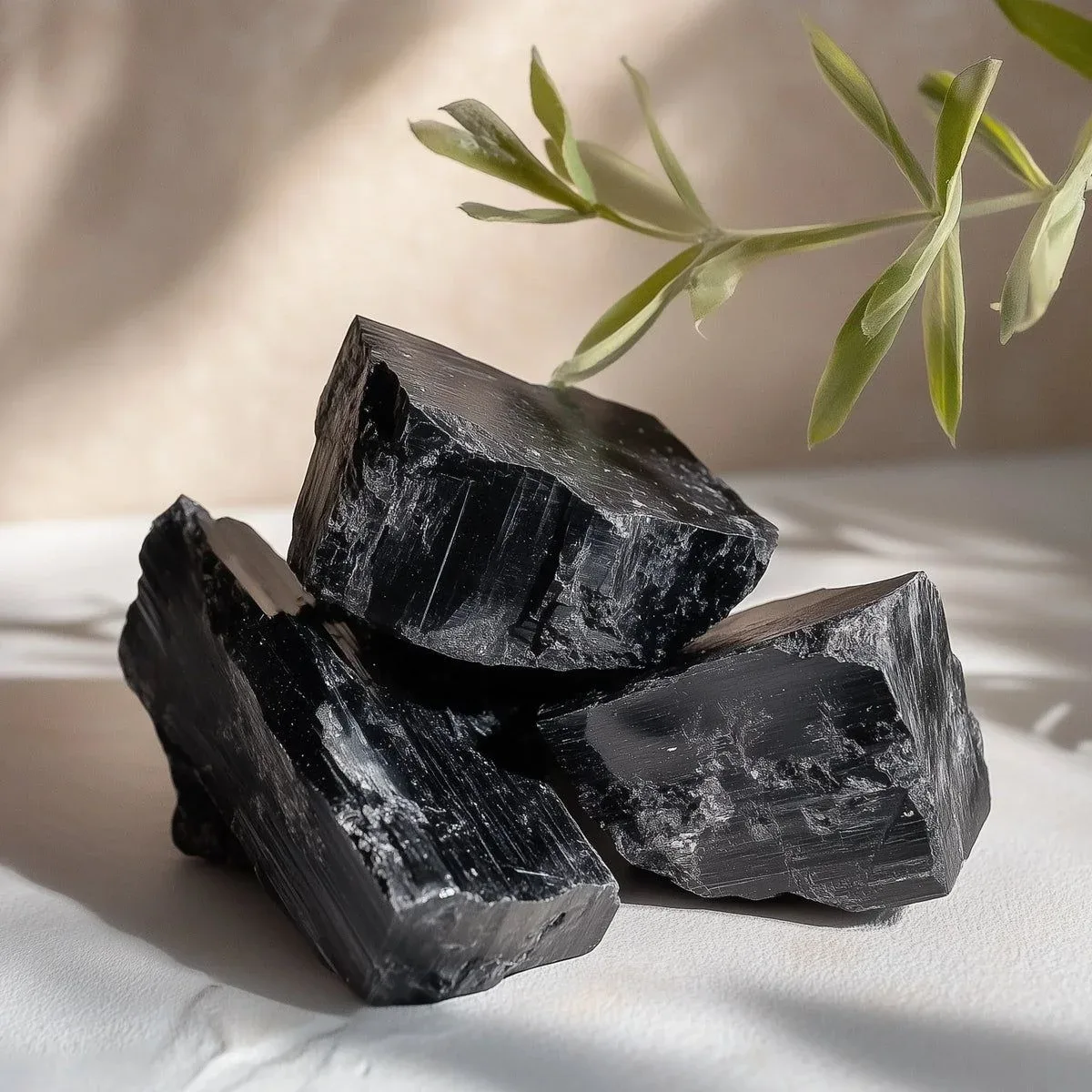
Shungite Crystal, Benefits and Meanings.
Named after the village of Shunga in Karelia, Russia, where it is most famously found; it is widely associated with grounding, purification, and protective energy work.
Metaphysical & Spiritual
Shungite is usually read as a steadying stone. It suits days that feel loud or scattered, when the aim is to get back to what is solid and simple. Shungite feels earthy and direct. It is linked with clearing out what feels heavy, then settling into a calmer, more grounded baseline. This leans practical, focused on stability and clean boundaries. It fits steady routines, quiet focus, and choices that support long-term resilience.
Planet

Saturn
With Saturn, the vibe is structure and limits, lessons earned over time. Shungite matches that firm, clarifying pressure, narrowing things down to what is essential and what can be released.
Element
Earth
Shungite carries Earth's grounded tone, plain and steady. It points back to basics that hold, bringing a sense of solidity and a cleaner, more settled inner atmosphere.

Crystal Pairings
Shungite pairs well with stones that either deepen its steady, clearing feel or add a clean, bright counterpoint. The tone stays grounded, with extra focus, lift, or a quiet intuitive edge depending on the match.
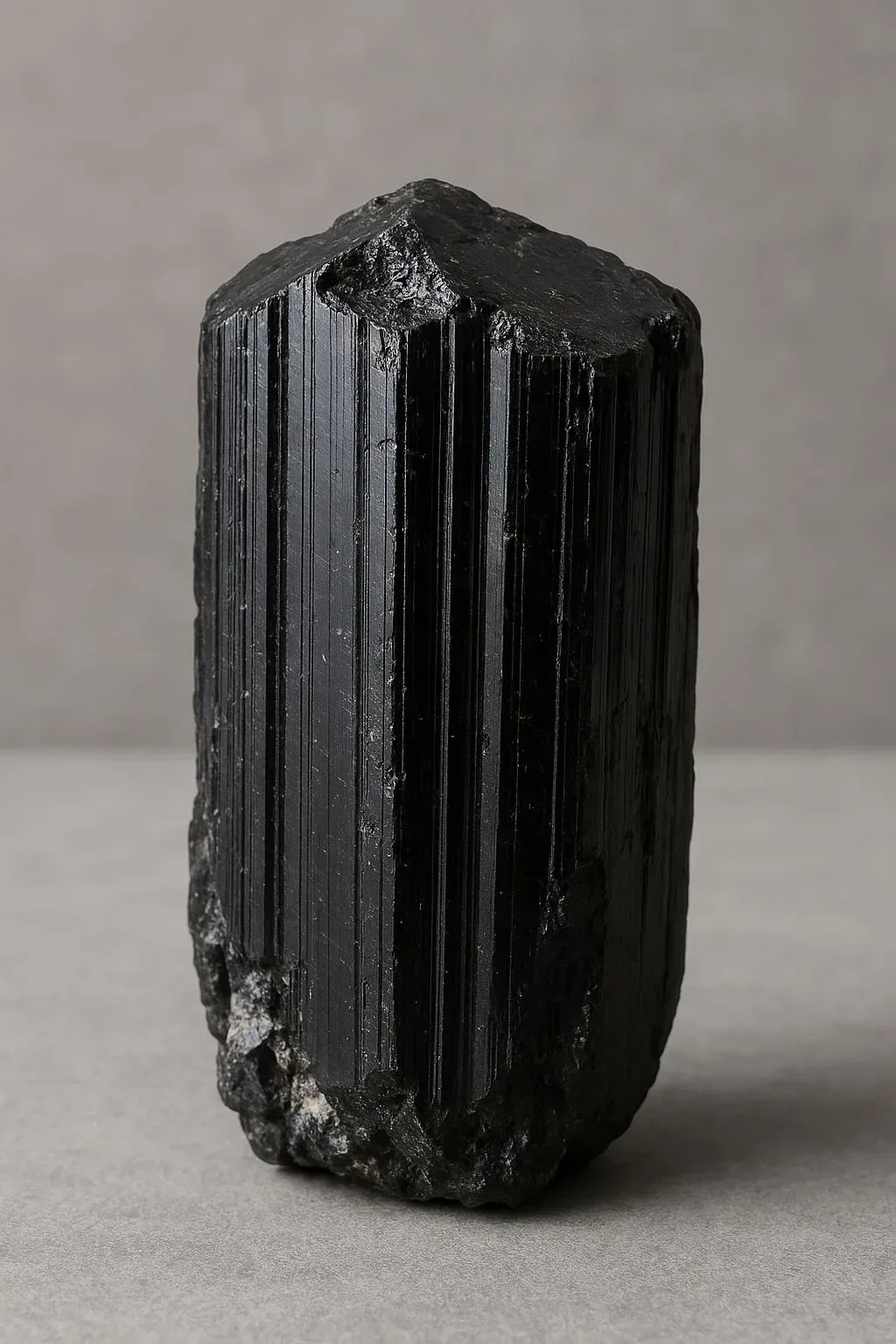
Black Tourmaline
Shungite and Black Tourmaline feel direct and solid. Shungite brings a dense, clearing weight, and Black Tourmaline adds a firm, protective edge that keeps the whole mix contained.
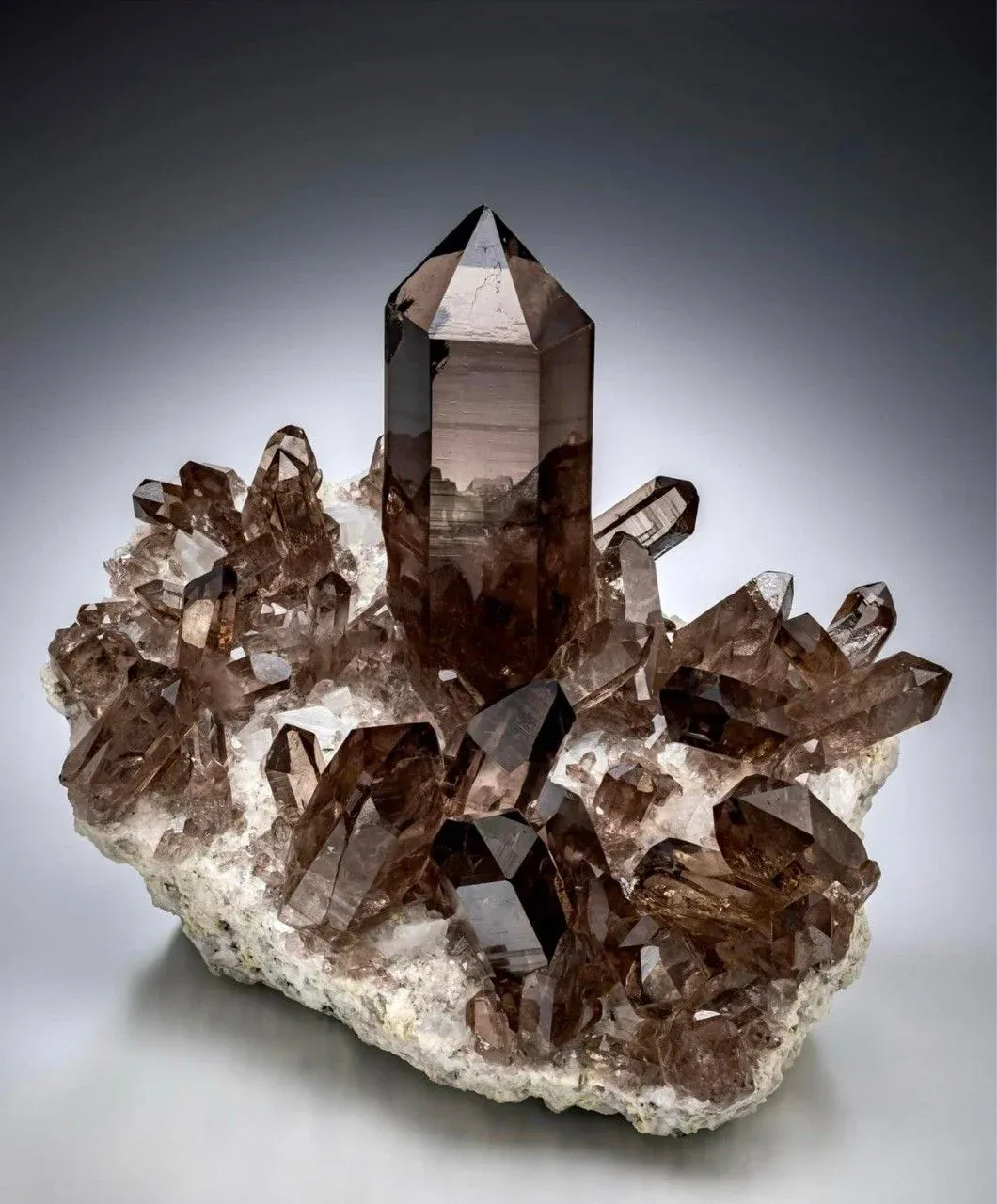
Smoky Quartz
Smoky Quartz brings a gentler kind of grounding next to Shungite. The blend stays calm and practical, Smoky Quartz softens the tone, and Shungite keeps it clean and anchored.
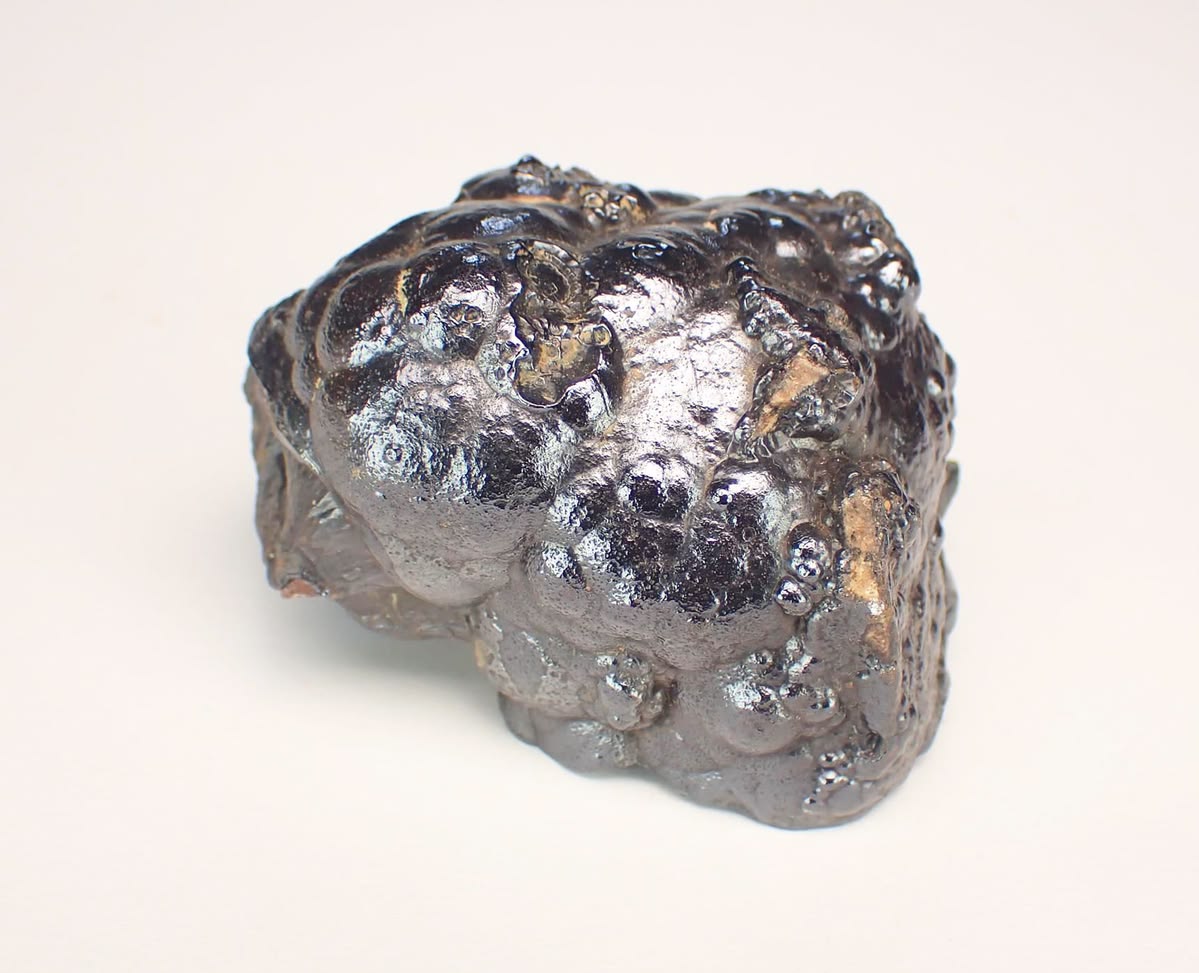
Hematite
Hematite adds a crisp, metallic steadiness to Shungite's heavier feel. Together it comes off structured and firm, like a clear line that holds without turning sharp.
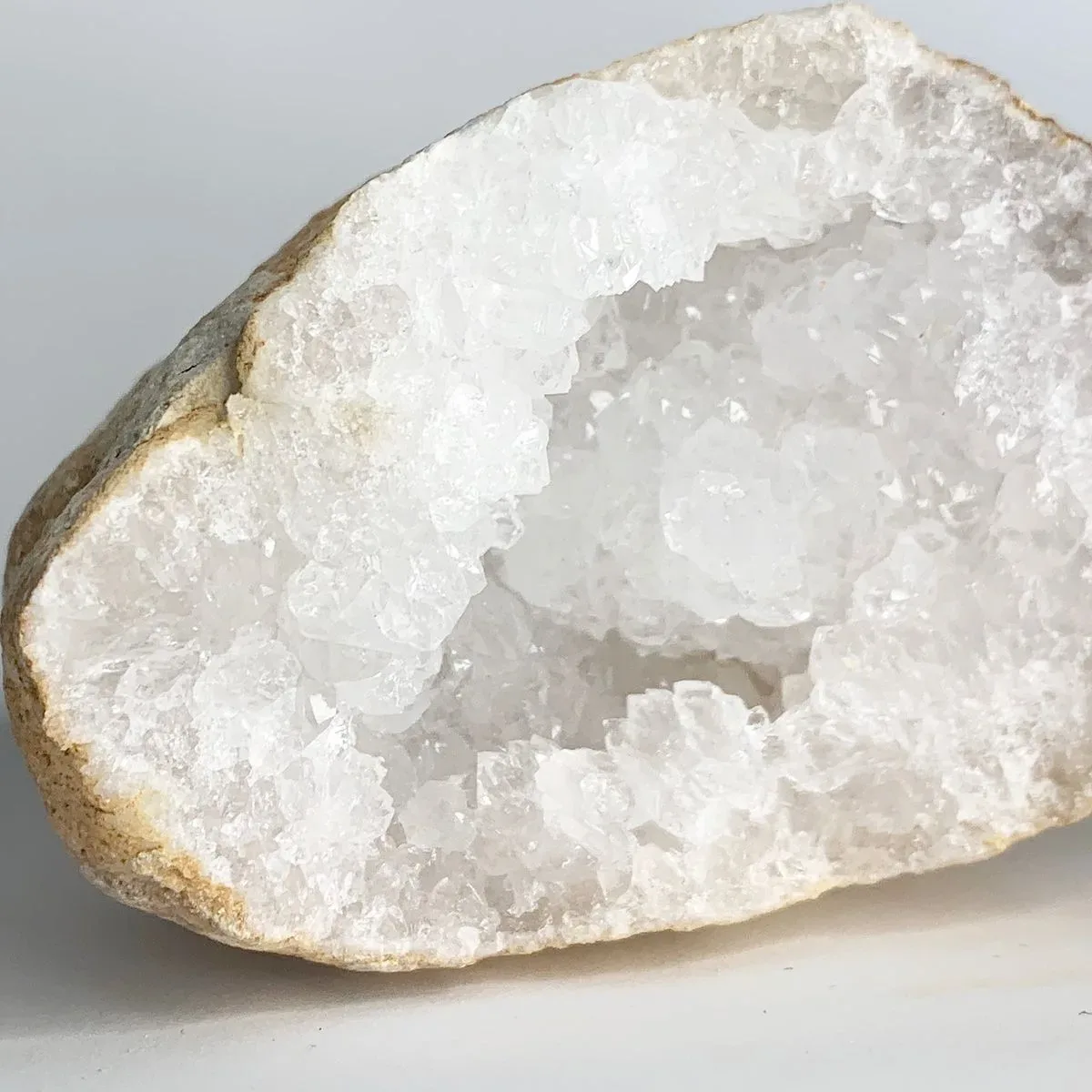
Clear Quartz
Clear Quartz brings brightness and definition to Shungite's deep, absorbing quality. Shungite keeps things pared back, Clear Quartz sharpens the feel, and it lands clean and precise.
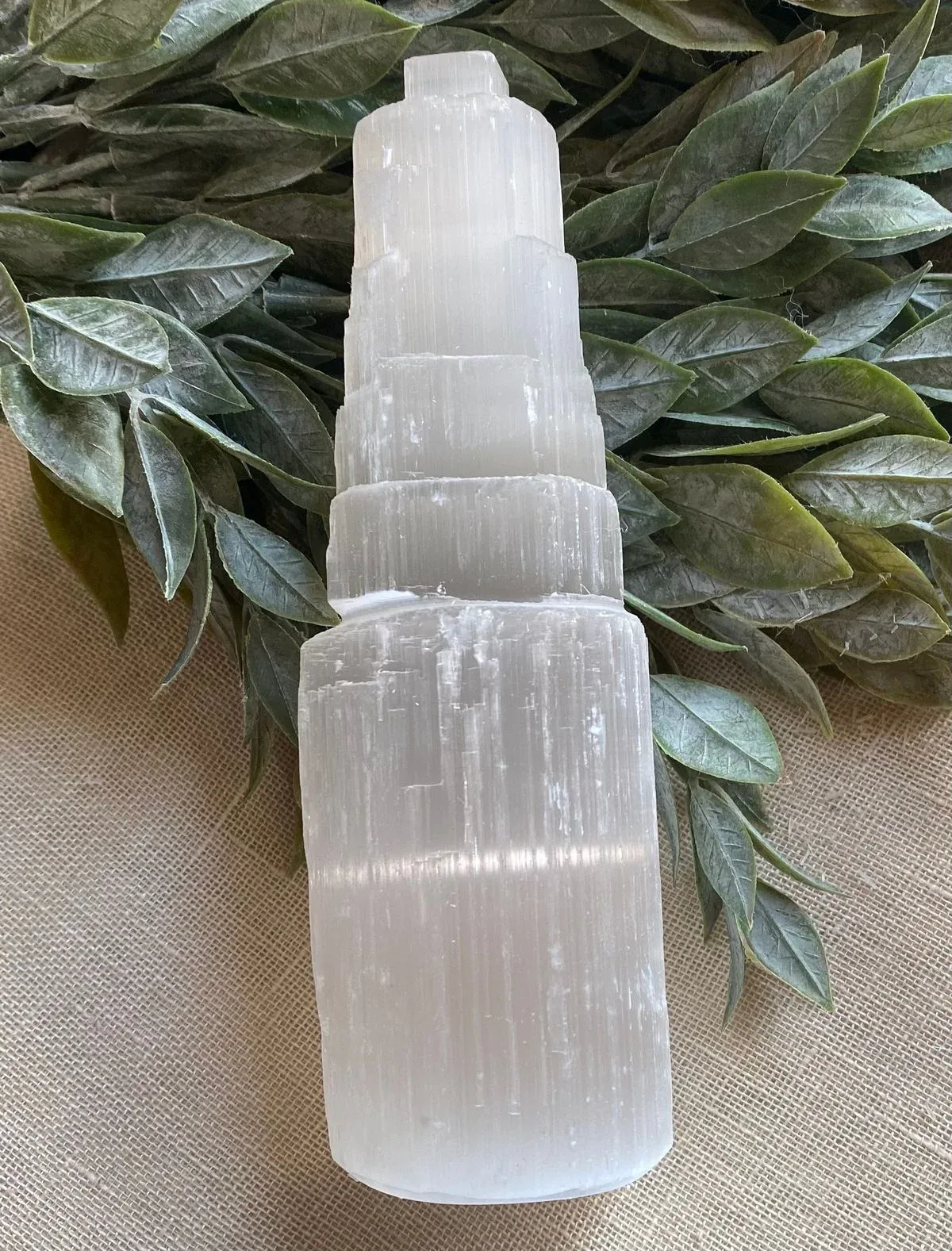
Selenite
Selenite and Shungite balance through contrast, airy and dense, light and dark. Selenite feels clear and high, Shungite keeps it rooted, and the pairing stays clean without getting floaty.
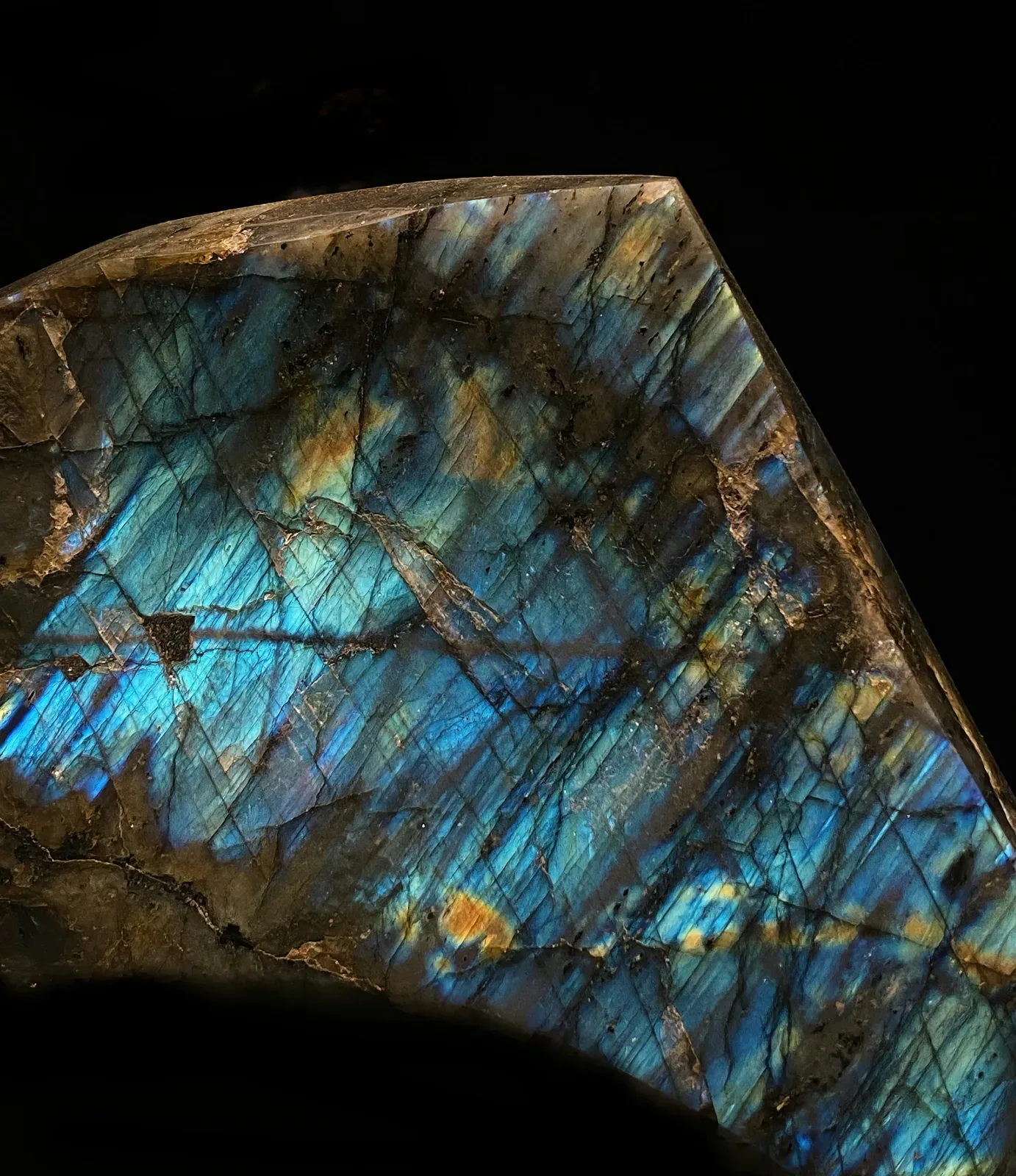
Labradorite
Labradorite brings a subtle, reflective shimmer to Shungite's solid base. Shungite holds the mood steady, Labradorite adds a curious intuitive note, and it still stays grounded.
Healing
Shungite is often picked when life feels heavy and the day needs a steadier baseline. It can bring attention back to simple choices, slow the pace, finish one task, and step away from other people's tension.
It is also linked with clearing and "reset" energy. That can feel like less mental noise, cleaner limits, and an easier time switching off after a demanding day, without carrying the whole thing into the next one.
Affirmations
Use these when things feel crowded or intense. Keep the words plain, and repeat one line slowly.
Stay with one affirmation for a few days. Let it settle through small actions, like saying no once or taking a short pause before replying.
- I feel grounded and steady.
- I release what is not mine to carry.
- I keep my boundaries clear and kind.
- I return to calm, one breath at a time.
- I choose simple, practical next steps.
Intention Setting
Keep intentions specific and realistic. Name what is being cleared, then name what replaces it, like calm focus or clean boundaries.
Pair the intention with one small action the same day, such as closing a loop or saying no once.
- Clear my energy after demanding conversations.
- Stay steady and present during a busy day.
- Keep my boundaries simple and firm.
- Let go of mental clutter and return to basics.
- Choose actions that support stability.
Manifesting
With Shungite, manifesting tends to suit practical outcomes. Think consistency, follow-through, and choices that hold up under pressure.
Focus on what can be built through repetition, then track progress in small, clear ways.
- A steady routine that feels sustainable.
- Clear boundaries that protect time and energy.
- A calmer, more focused mind during the day.
- Less emotional build-up after stress.
- Follow-through on practical goals.
Jewelry
Shungite jewelry is an everyday way to stay connected to its calm tone. Different pieces can feel quieter or more noticeable depending on where they sit and how often they catch the eye. Choose something comfortable for long wear and normal routines.
General benefits: Wearing Shungite as jewelry keeps its grounded feel close through the day. It suits times when boundaries need to stay firm and attention keeps getting pulled around. Easy too, it goes on once and works as a steady cue to reset.
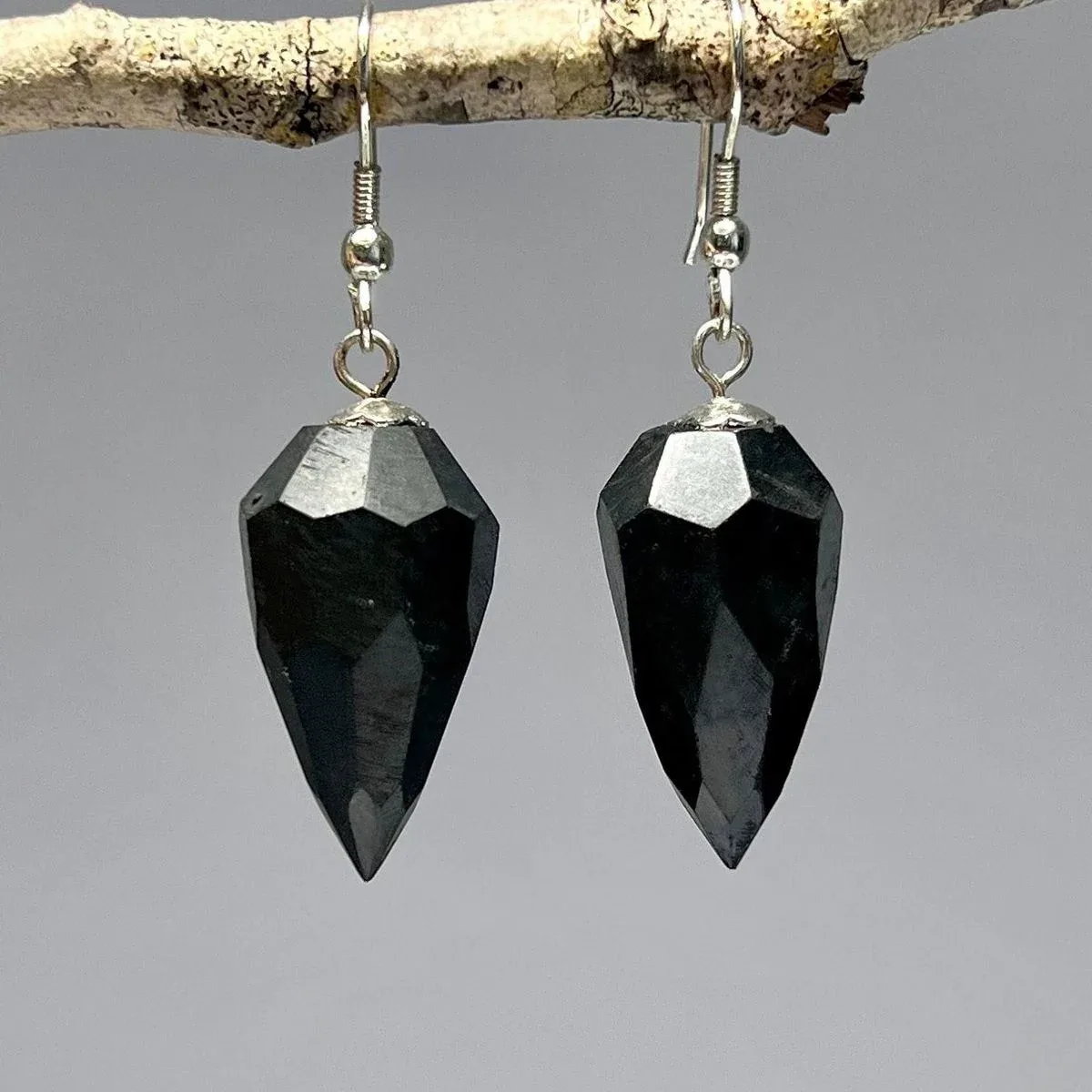
Earrings
Shungite earrings can feel like a light buffer for the day. They suit social settings, meetings, and busy conversations where it helps to stay clear-headed and not take on other people's mood. The reminder is small but consistent. It is less about a big shift, more about staying even when the room gets loud.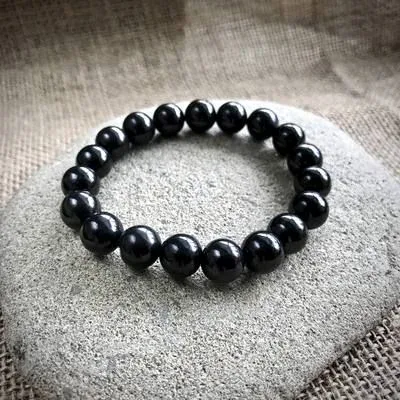
Bracelet
A Shungite bracelet is practical because it stays in view. It can cue a quick check-in, relax the jaw, unclench the hand, and return to the next right step. This style often feels steady and contained. It suits routines, workdays, and patience-heavy moments when reactions come fast.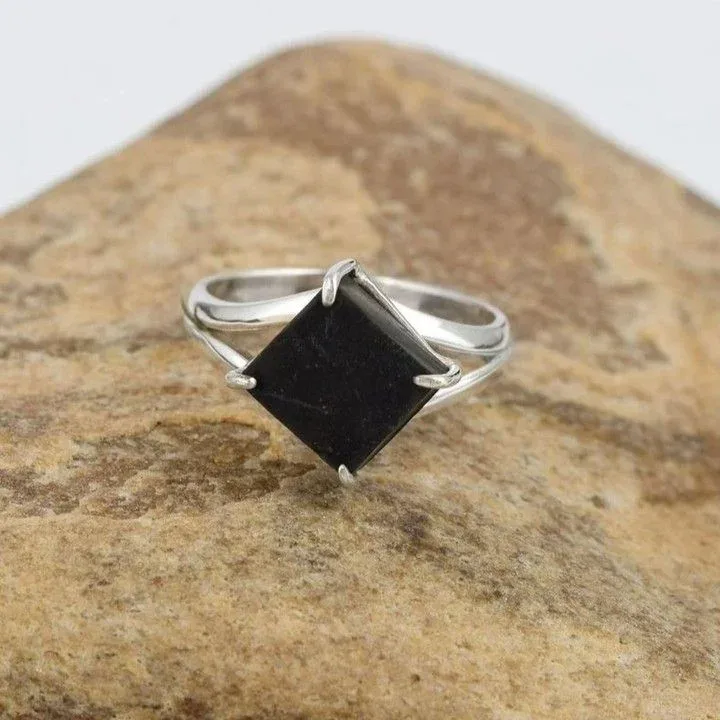
Ring
Shungite in a ring can feel direct and focused. It suits decisions, clear limits, and sticking with a plan when it would be easier to drift. Because it sits on the hand, it links with everyday actions like typing, writing, and finishing small tasks with care.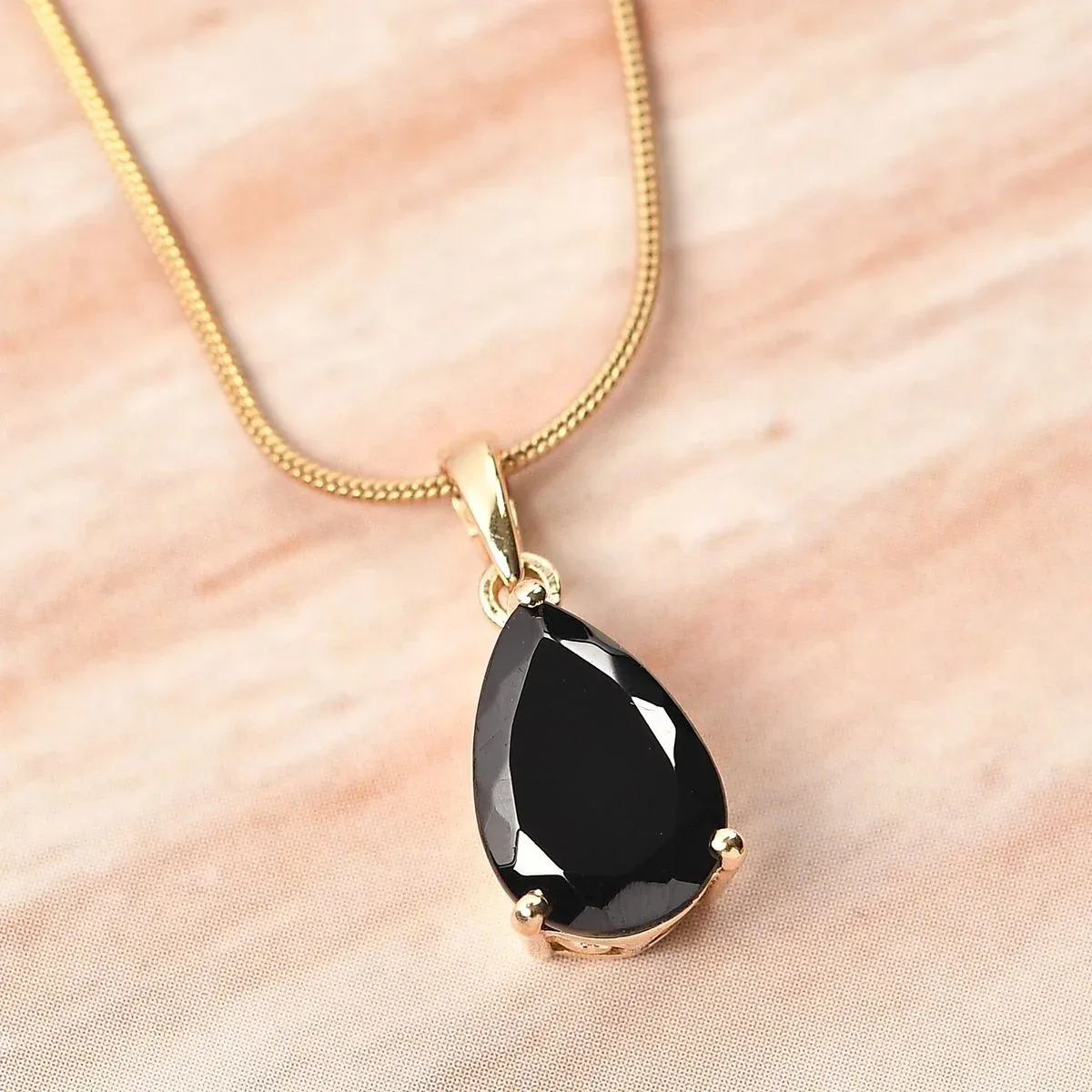
Necklace
A Shungite necklace sits close to the center of the body, which can feel steady during long days. It reads like a quiet anchor, not a sharp push. Good for consistent support. Once it is on, it tends to fade into the background and still do its job.Forms
These are common Shungite forms and the tone each one tends to carry.
Rough
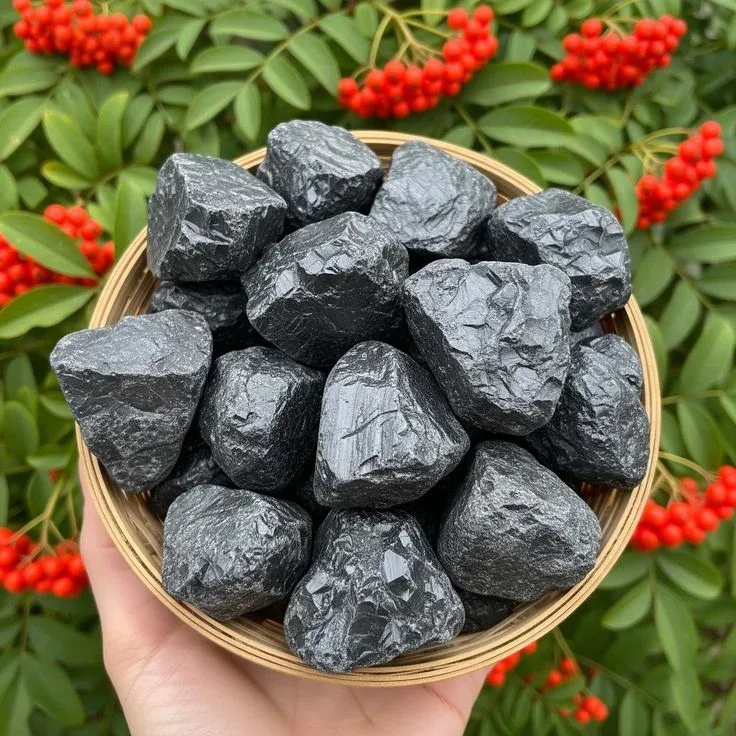
Rough Shungite feels blunt and no-nonsense. The natural surface gives it a heavier, earthier presence, like something solid and unpolished. It often reads as firm and protective in tone, raw and straightforward.
Point / Tower
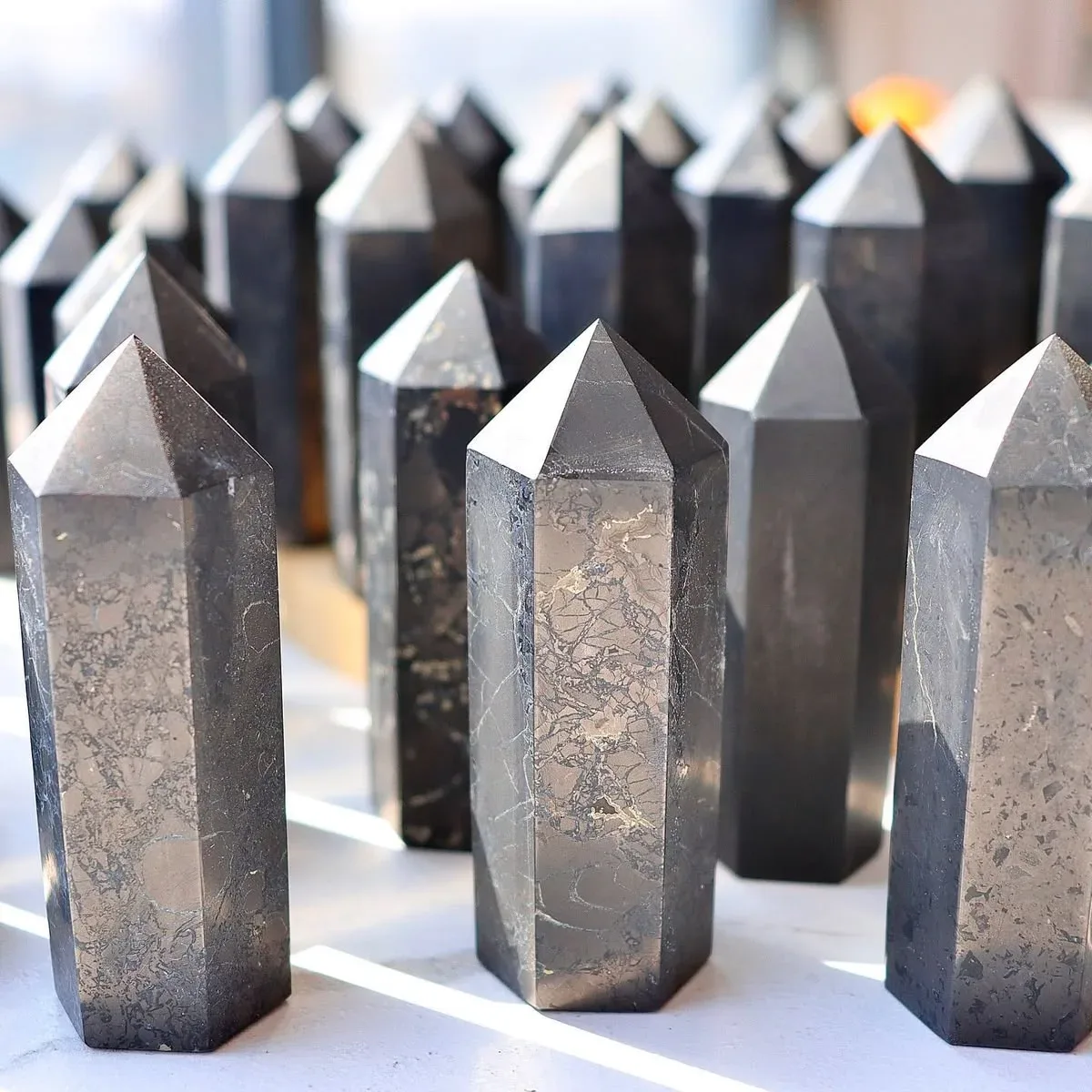
A Shungite point or tower tends to feel focused and directional. The straight lines give it a clean, organized tone, like attention being pulled into one clear lane. It suits grounding that feels structured and deliberate, not spread out.
Sphere
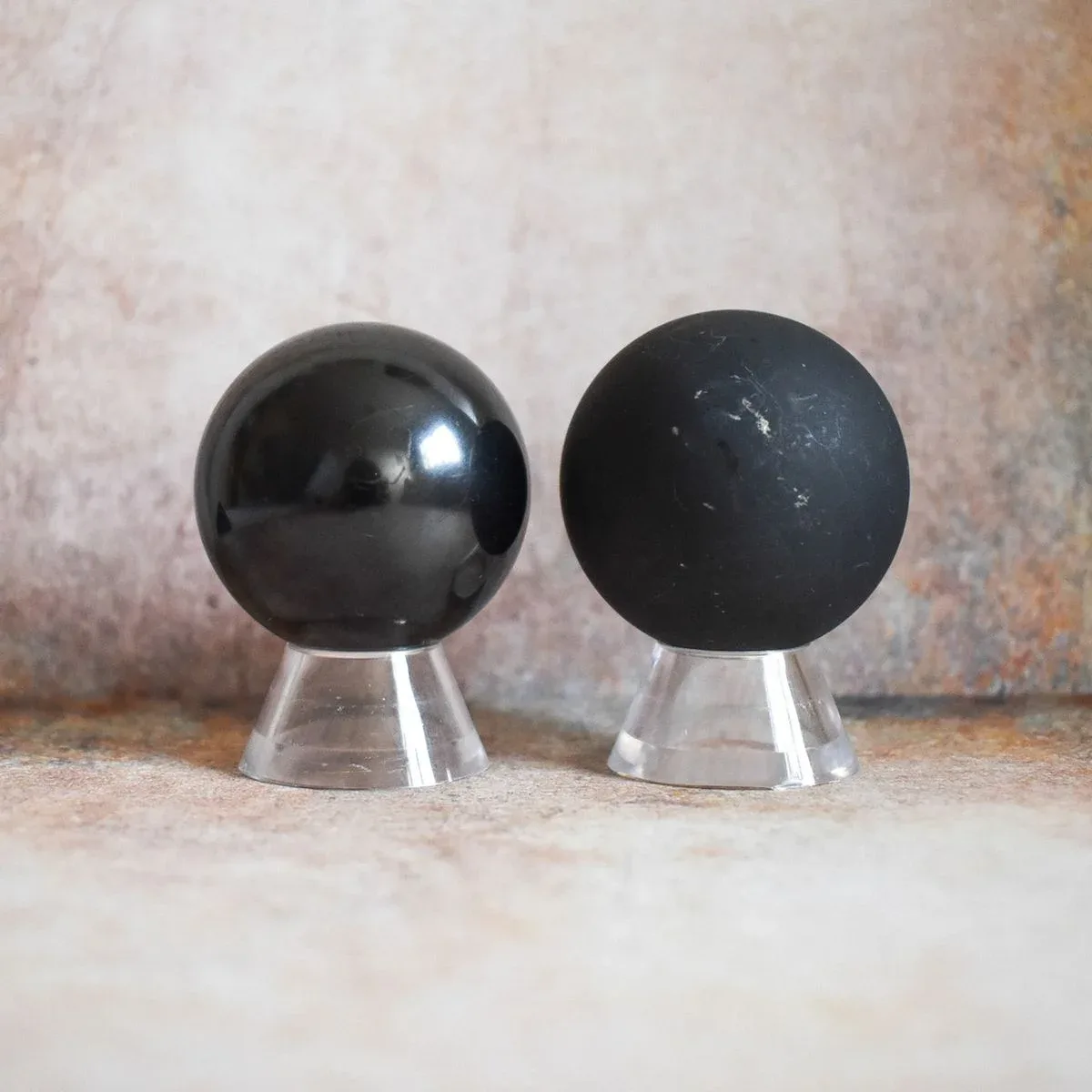
A Shungite sphere usually feels even and balanced. The rounded form softens the stone's intensity, so it reads steady rather than sharp. It can feel like contained strength, consistent and calm, with no obvious edges.
Palm Stone
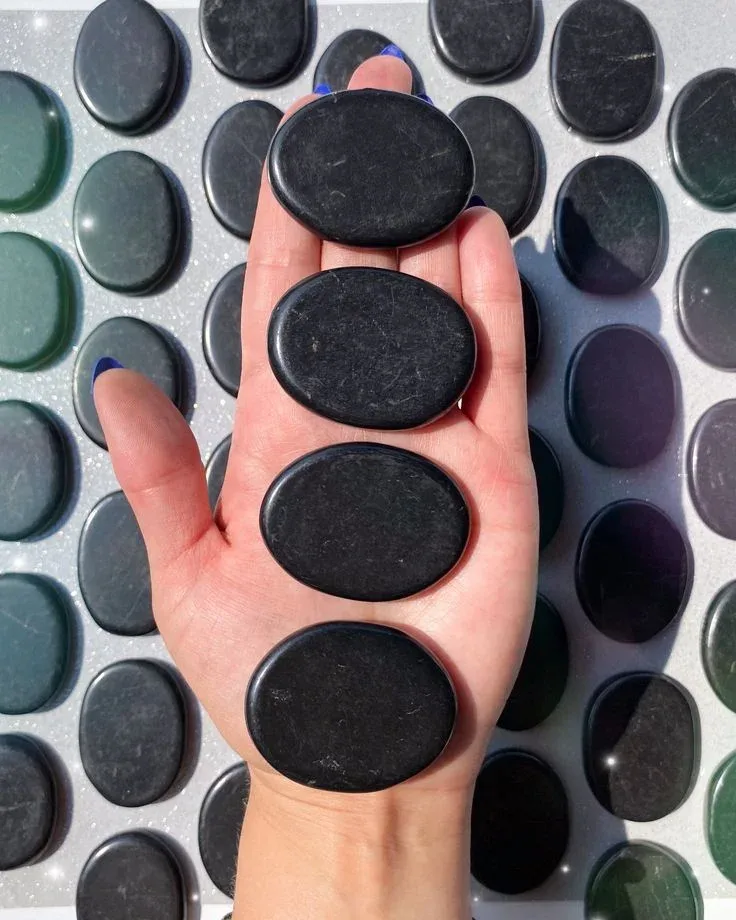
A Shungite palm stone feels smooth and easy to hold. The polish brings out a quieter side of the stone while keeping its grounded tone. It often reads as settled and supportive, with a gentle weight that feels familiar.
Tumble Stone
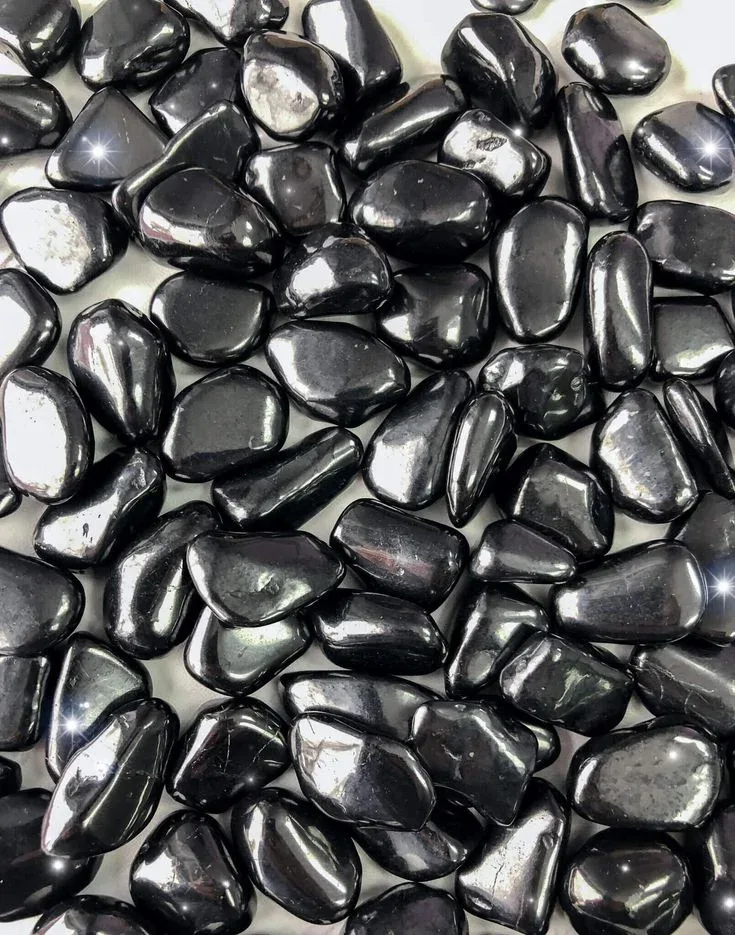
A tumbled Shungite stone feels simple and practical. The small, rounded form keeps its presence tidy and contained, without the boldness of a raw piece. It often reads steady and low-key, with a softer feel than sharper cuts.
Figure
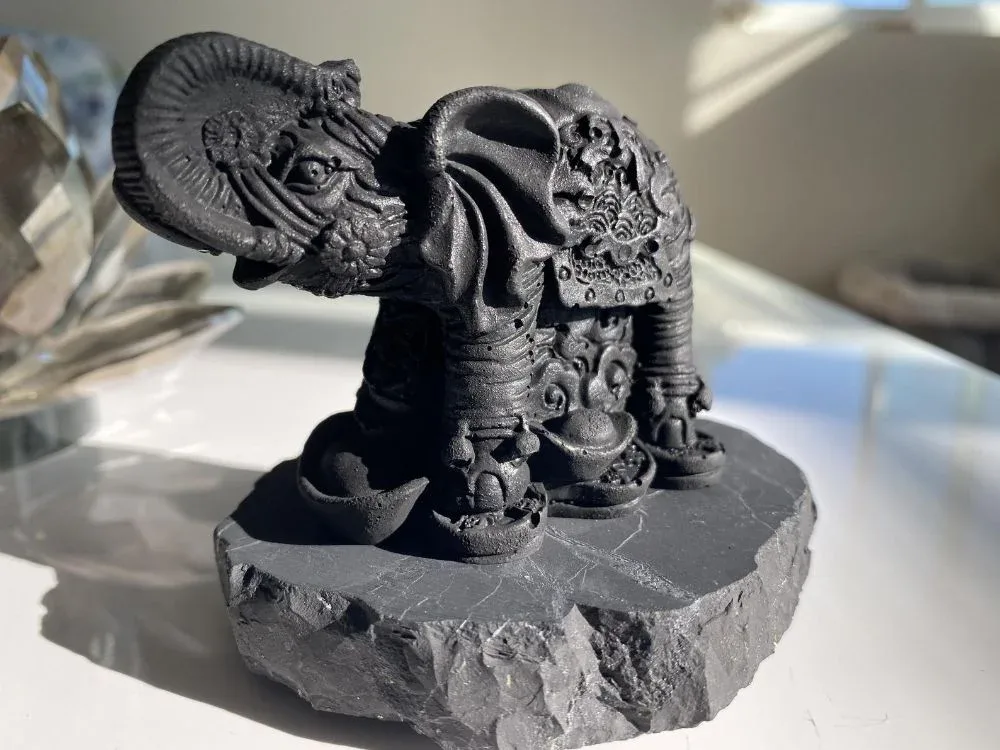
A Shungite figure adds personality to the stone's grounded tone. The carved form can feel more specific and familiar, like a companion piece rather than a plain stone. It often reads protective in a calm way, with a clear character.
Heart
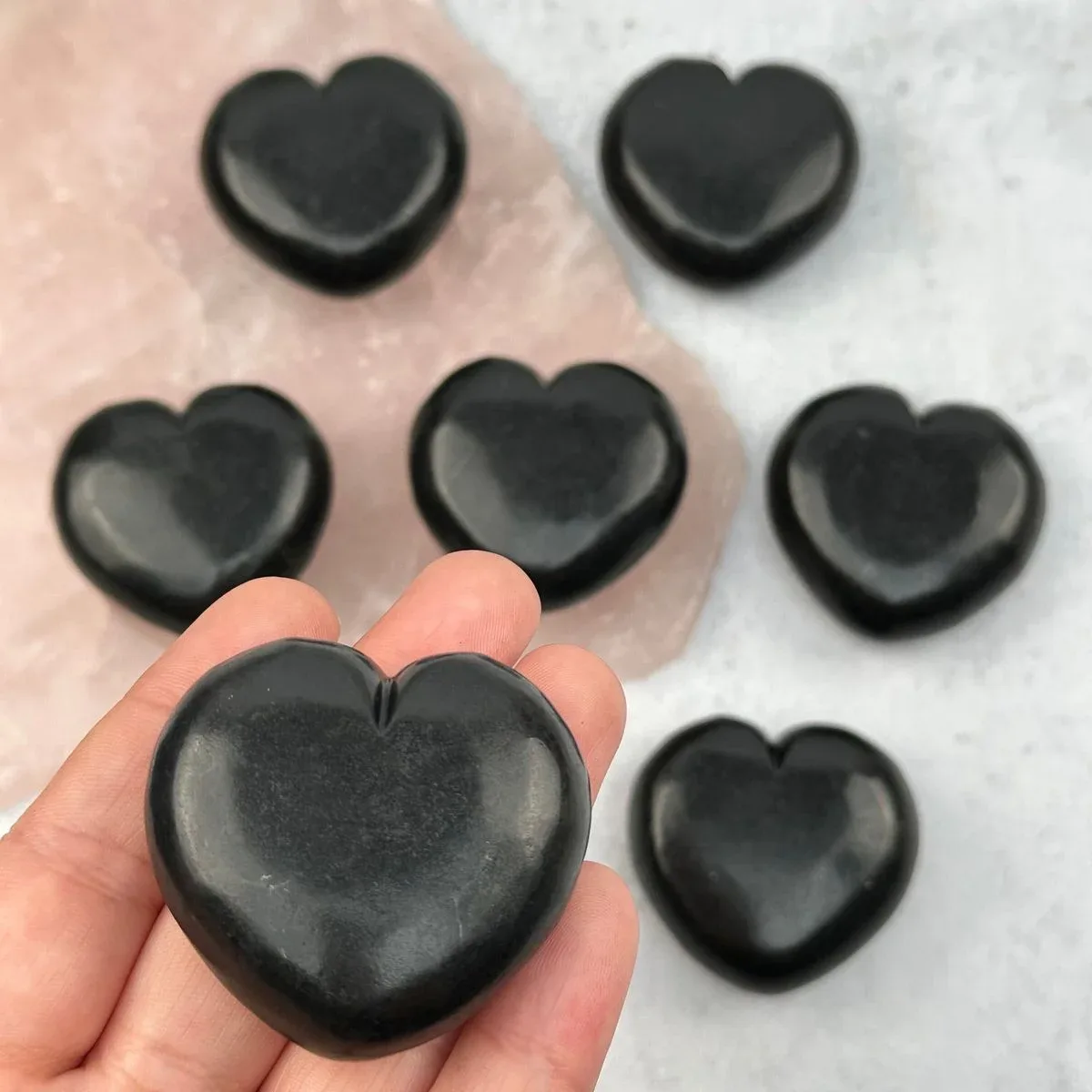
A Shungite heart softens the stone's firm edge. The heart form brings a warmer, steadier emotional tone while staying grounded. It can feel caring without being sentimental, like quiet support that holds its shape when things get tense.
Cleansing & Charging
Shungite is often treated as a strong cleansing stone, but it still benefits from regular care. Keep methods gentle, especially for polished pieces. Aim for consistency rather than doing everything at once.
How to cleanse Shungite
- Wipe with a soft, dry cloth to clear residue and refresh the surface.
- Use sound, such as a bell or singing bowl, for a quick reset.
- Pass briefly through light incense smoke, keeping it away from heavy soot.
- If using water, keep it brief and dry it well, avoid soaking.
How to charge Shungite
- Place it near clear quartz or selenite to refresh its feel.
- Use moonlight overnight for a gentle recharge.
- Hold it, set a clear intention, then let it rest.
Where to Use
Match the space to the job. In active areas it can help keep things feeling contained. In quieter areas it can support a sense of reset after a long day.
Entryway
Useful for creating a clear start and finish to the day. It suits homes that feel busy, helping the space feel more contained as people arrive, leave, and bring outside stress in with them.
Office / desk area
Good for keeping focus clean during tasks and calls. It suits days with lots of messages and quick switching, helping the workspace feel less mentally noisy so priorities stay clearer.
Bedroom
A steady choice for winding down after a demanding day. It can suit evenings where the mind keeps replaying conversations, supporting a calmer tone so rest feels more settled and less restless.
Meditation space
Works well when the aim is to feel grounded and present, rather than "floaty". It can support a simple, quiet reset, especially when the body feels tense or attention keeps drifting.
Science
Physical properties
- Mineral class
- Carbon (mineraloid)
- Color
- Black to dark gray, sometimes with a silvery sheen
- Hardness
- 3.5 - 4
- Density
- ~1.9 - 2.1 g/cm3
- Durability
- Moderate
- Thermal stability
- High
Optical properties
- Transparency
- Opaque
- Lustre
- Submetallic to dull
- Refraction index
- Not applicable (opaque)
Chemical composition
- Class
- Native element / carbon-rich mineraloid
- Formula
- C (variable; carbon-rich with minor impurities)
- Group
- Carbon
- Magnetic
- Non-magnetic
Formation
Shungite starts as organic-rich sediment that gets buried, then altered by metamorphism. With time, heat and pressure push out volatile material and leave carbon concentrated behind. No neat shungite faces, just a fine-grained, dense mass.
It is typically found in metamorphosed sedimentary sequences, with carbon-rich layers beside silica- and clay-derived rocks. Metamorphic fluids can move through the rock and shuffle minor components. That is why small amounts of silicates and sulphides are often mixed through the carbon. Shungite most often occurs as massive, non-crystalline layers, lenses, or nodules within the surrounding strata. Trace fullerenes have been reported in some samples, but they are not present in all shungite.
Locations
- Russia
- Kazakhstan
- India
- Austria
- Democratic Republic of the Congo
- Ukraine
History
Geological formation in ancient strata
c. 2.0, 0.6 billion years ago
Shungite started as organic-rich sediments. Heat and pressure changed them over a very long time, pushing carbon into a dense, fine-grained material found in layers and bigger masses inside metamorphosed rock.
Local use of black carbon-rich stone
Pre-modern era (date uncertain)
In Karelia, dark carbon-rich stones were part of the landscape and may have been used in everyday ways nearby. Early records are thin and hard to date, so this sits closer to local tradition than a fixed timeline.
Early written mentions linked to Karelia
18th century (reported)
Later sources often point to Russian Imperial-era accounts when talking about shungite in Karelia. The details shift between references, so this period is best treated as when written mentions become easier to track, not one settled story.
Shungite named for the village of Shunga
Late 19th to 20th century
The name "shungite" ties back to Shunga in Karelia, the best-known source area. As geology and classification tightened up, descriptions became more consistent and the material was catalogued under that name.
Scientific interest in carbon structures
Late 20th century
Modern work on carbon materials brought shungite under a closer lens. Some samples have been reported to contain trace fullerenes, with notes in the literature about how much results can vary between specimens.
Growth in wellness and shungite culture
Late 20th century to present
Shungite spread well beyond its source region through the shungite and wellness market. It is commonly framed as grounding and cleansing, with meanings shaped more by modern use than by a long, unbroken historical record.
Protective and cleansing stories in contemporary myth-making
Modern folklore (date uncertain)
Modern stories around shungite lean on purification and protection themes. More present-day myth than old lineage, tied to the stone's dark look and origin story.
Got questions?
We've got answers!
FAQ's
What is Shungite used for?
+×
Shungite is often used as a steady, grounding stone. It suits spaces that feel busy or draining, helping things feel a bit more contained.
It also works well in simple reset routines, like drawing a line under the day. In practical terms, it is often kept near a doorway, on a desk, or in a bedroom to support a calmer, more settled atmosphere.
Which zodiac signs are connected to Shungite?
+×
Shungite is most closely linked with Capricorn. It is also often tied to Saturn themes like structure, boundaries, and staying steady when life feels demanding.
Anyone can use Shungite. The zodiac link is a traditional association, not a rule.
What chakras does Shungite activate?
+×
Shungite is associated with the Root chakra. It is typically used when the goal is to feel more grounded, steady, and present in the body.
Try holding it during a quiet moment. Or keep it close while doing practical tasks that help life feel more organized.
Can Shungite help with stress and sleep?
+×
Shungite is often used as a calming, grounding support during stressful periods. It can be a handy cue to slow down, especially with a consistent evening routine.
For sleep, it is commonly placed by the bed or on a bedside table to encourage a more settled feel. It is not a substitute for medical care, but it can fit well alongside gentle habits like dimmer lights, less screen time, and slower breathing.