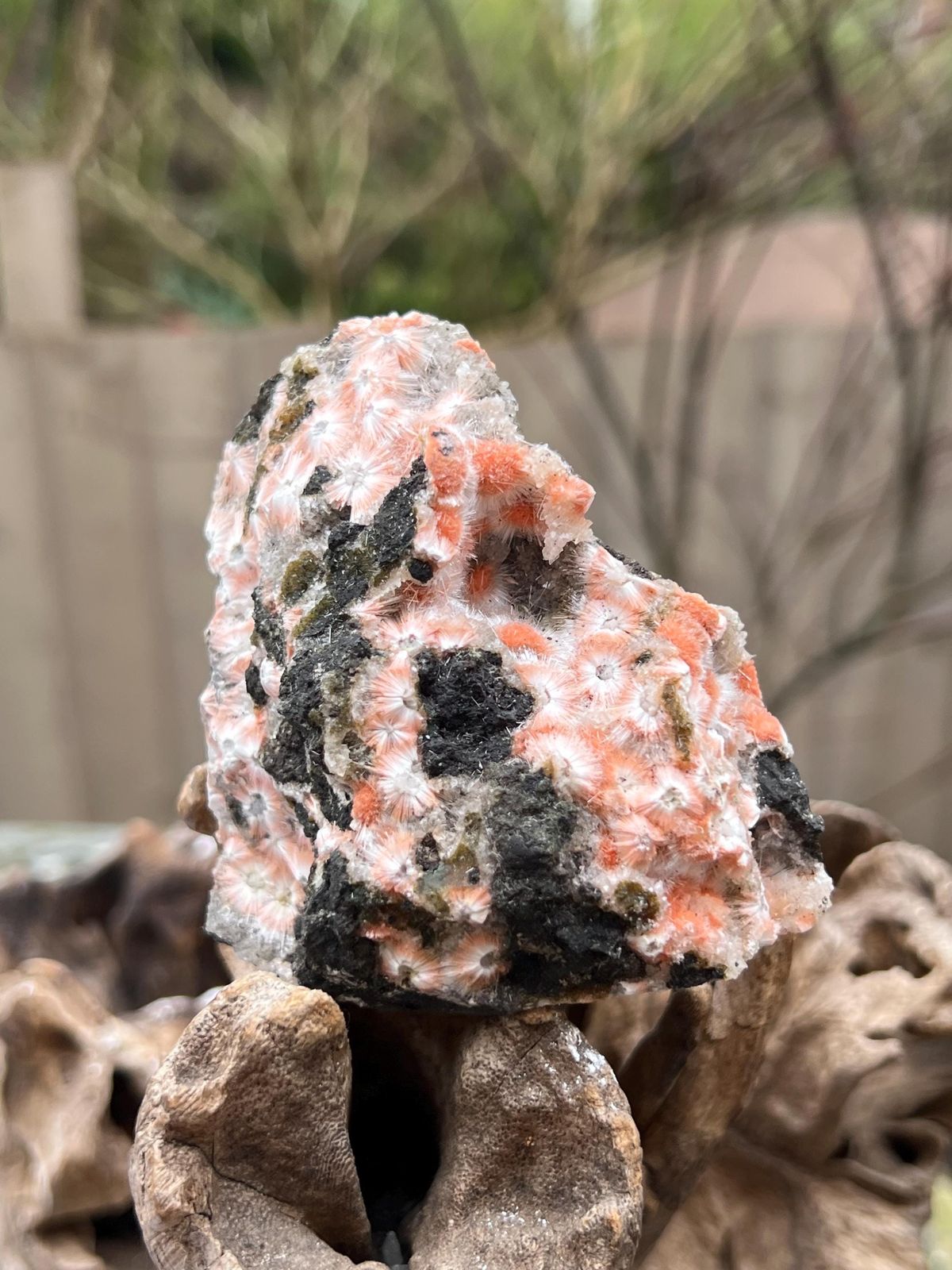
Thomsonite Crystal, Benefits and Meanings.
Thomsonite meaning centres on compassionate clarity, emotional balance, and quiet personal growth.
Metaphysical & Spiritual
Thomsonite works with the inner field in a measured, organising way. It brings a sense of spiritual tidiness, where feelings, thoughts, and intentions are less likely to spill everywhere at once. Its energy is often worked with when emotional sensitivity needs structure rather than suppression. Thomsonite helps keep awareness open while giving the heart enough steadiness to notice what is true without becoming overwhelmed. The stone also carries a quietly reflective quality that supports personal growth through observation. It encourages a slower kind of insight, where clarity arrives in layers and the next step becomes easier to name. Because Thomsonite belongs to the zeolite family, it reads as a mineral of receptivity and subtle adjustment. That makes it a good companion for inner work that asks for patience, honesty, and a calm willingness to change.
Planet

Mercury
Thomsonite works with Mercury by steadying the flow of thought, speech, and mental sorting. It brings a clearer rhythm to communication, so ideas can be shaped with more patience and less nervous rush.
Element
Earth
Thomsonite brings Earth energy into the emotional body in a quiet, stabilising way. It helps spiritual insight land in practical awareness, so reflection becomes something you can live rather than only think about.


Crystal Pairings
Thomsonite pairings work best with stones that either refine its quiet clarity or give it a steadier frame to rest within. These combinations keep the energy gentle but purposeful, helping Thomsonite move from subtle inner sorting into a more settled spiritual rhythm.
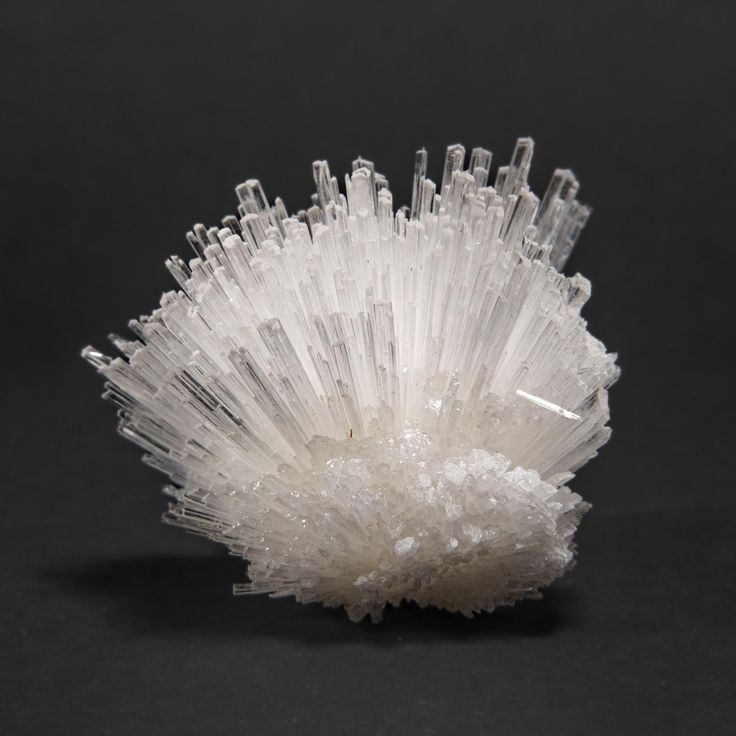
Scolecite
Scolecite deepens Thomsonite's quiet, inward listening and gives its soft awareness a more meditative current. Together they create a calm field for stillness, reflection, and receiving guidance without forcing an answer.
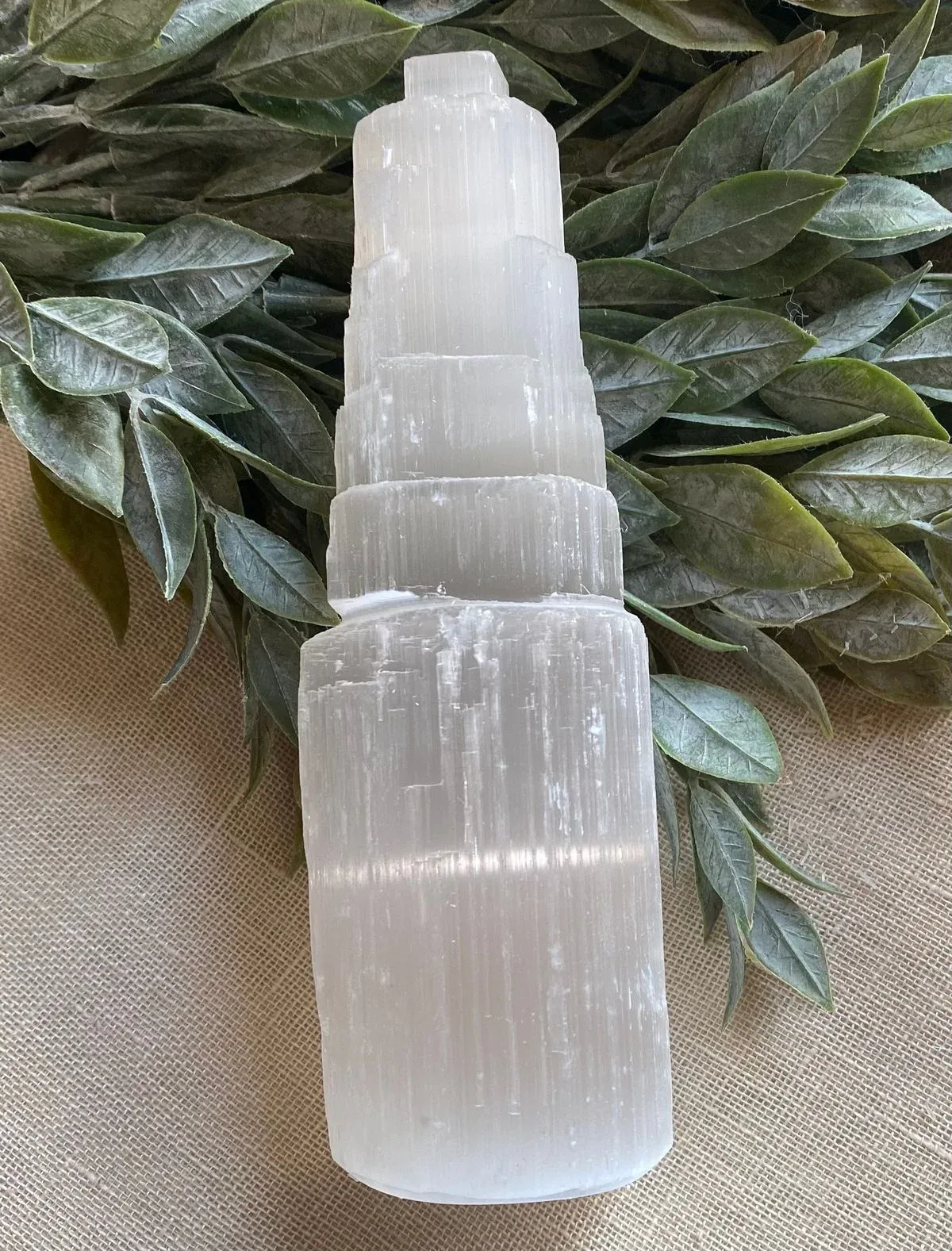
Selenite
Selenite brings a clean, spacious quality that lifts Thomsonite into clearer spiritual order. The pairing feels useful when the mind needs lightness, the atmosphere needs clearing, and intention needs to stay simple and direct.
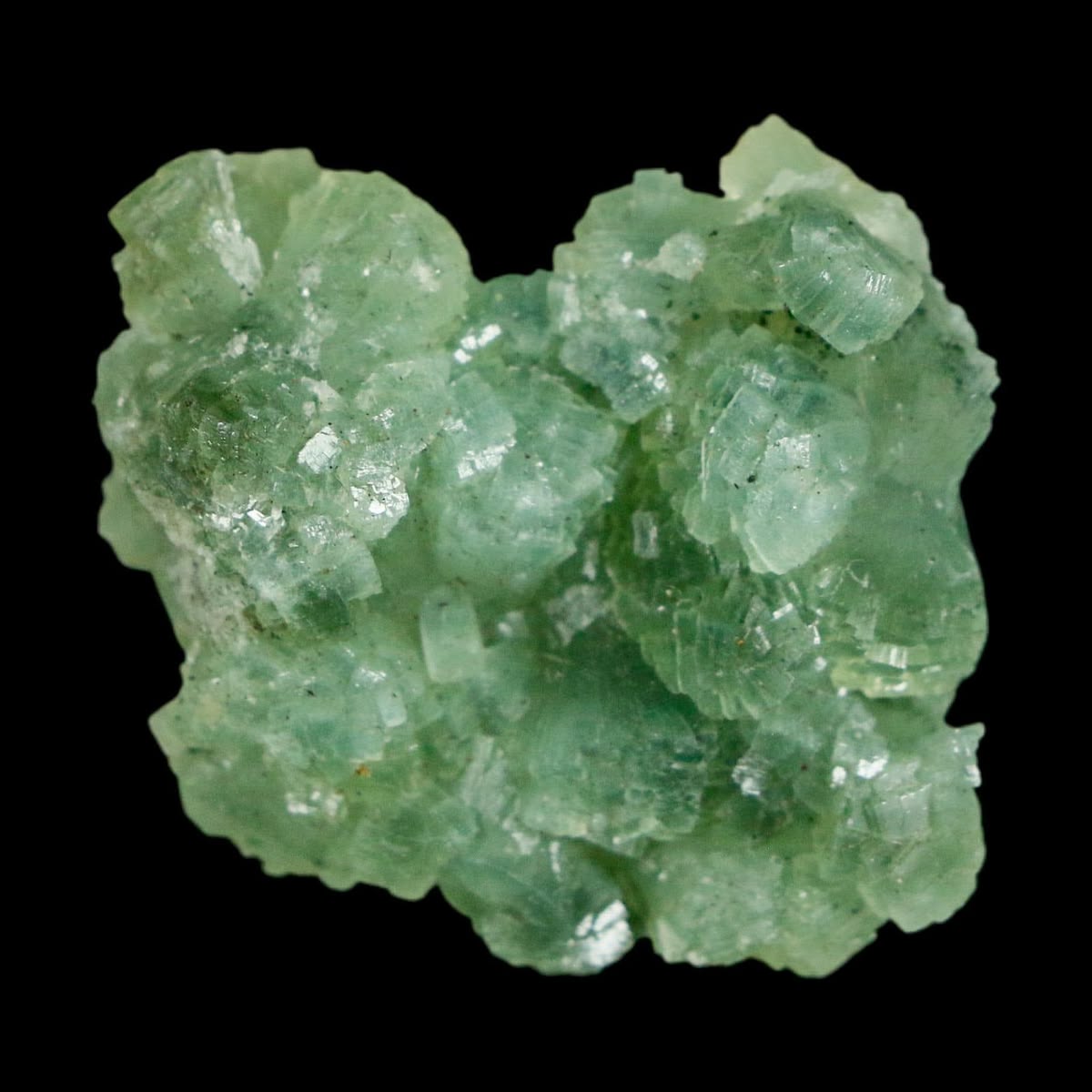
Prehnite
Prehnite adds a heart-led, nurturing tone that helps Thomsonite settle emotional sensitivity with more trust. Together they support gentle discernment, so care and boundaries can sit in the same space without strain.
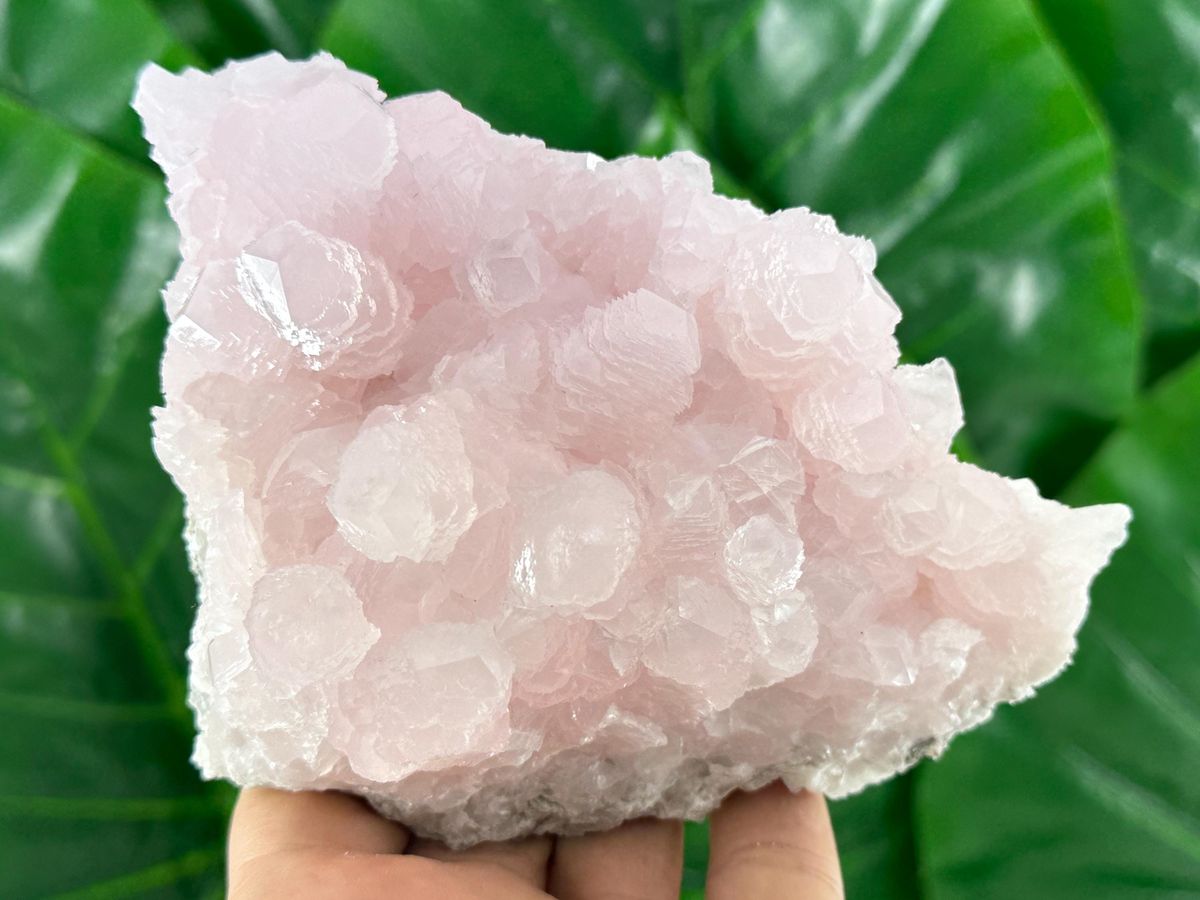
Mangano Calcite
Mangano Calcite softens Thomsonite into a more tender emotional field, especially when the heart feels guarded or bruised. The pairing encourages compassion that is quiet, restorative, and easy to receive.
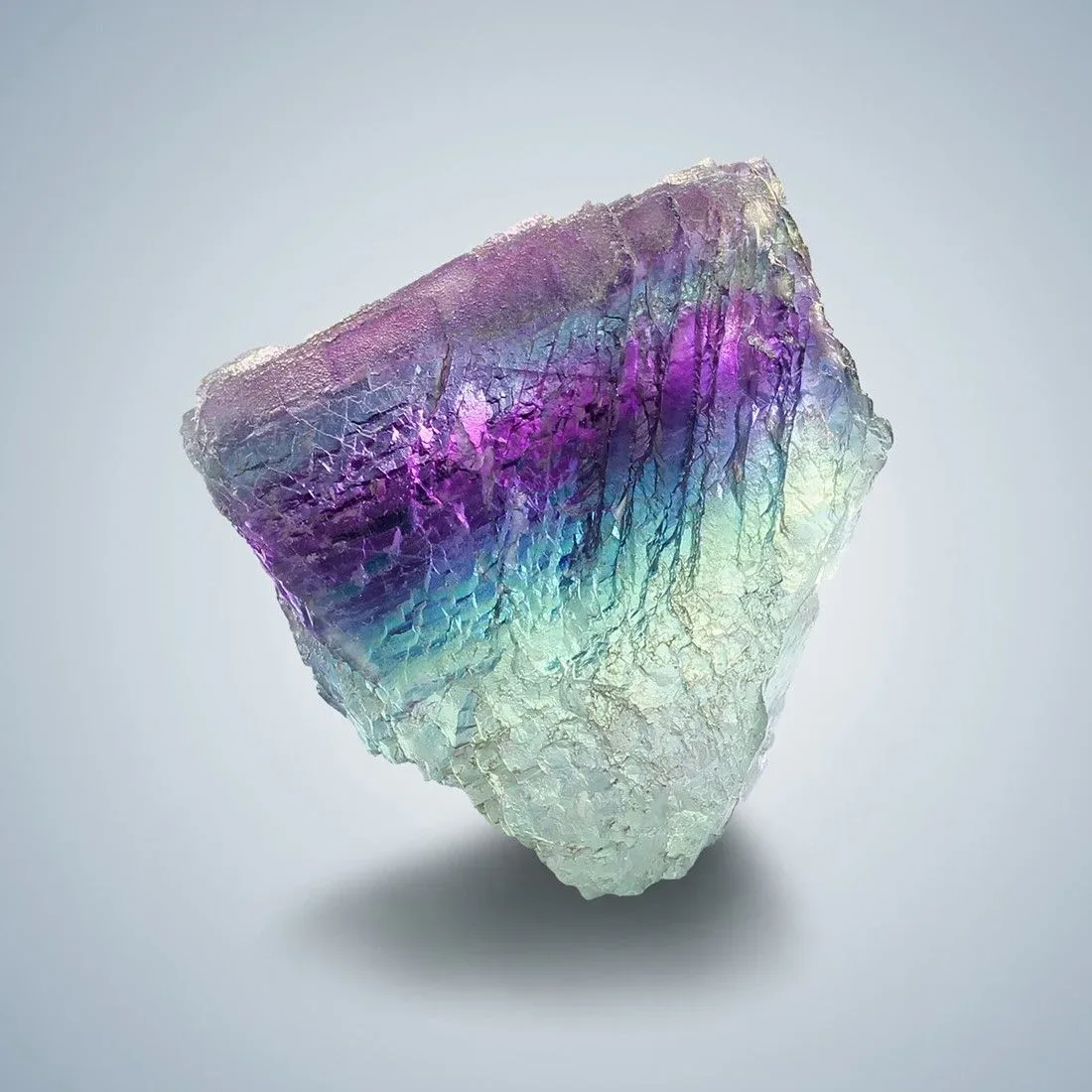
Fluorite
Fluorite gives Thomsonite a sharper line of focus, helping scattered thoughts arrange themselves into clearer patterns. Used together, they support calm decision-making, mental tidiness, and a steadier sense of what matters next.
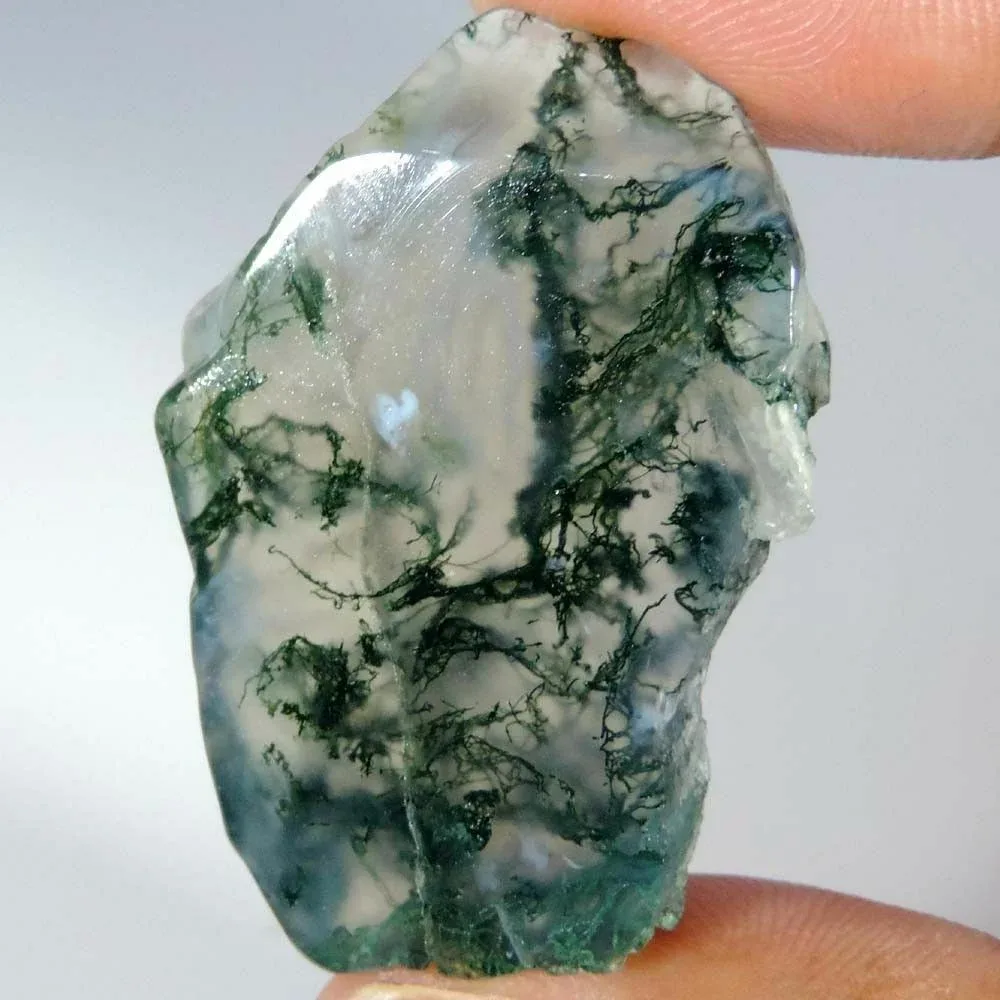
Moss Agate
Moss Agate grounds Thomsonite in patient, earth-rooted growth and keeps its subtle energy from drifting too far upward. The combination works well for gradual healing, practical renewal, and staying connected to ordinary life while inner change unfolds.
Healing
Thomsonite connects with moments when feelings gather at the surface and the nervous system wants a gentler pace. It is often chosen when sensitivity needs a clearer shape, so the heart can stay open without taking on every passing mood.
It also works with change that asks for patience rather than force. In spiritual practice, Thomsonite can help keep attention steady while the inner field adjusts, making it easier to listen, respond, and move on without carrying excess tension.
Affirmations
Hold Thomsonite at the Heart or Crown area and choose an affirmation that matches the kind of day ahead.
Say it slowly a few times, then let the words settle before taking one calm, practical step that reflects them.
- I stay open and steady
- I trust my inner guidance
- I release what is not mine
- I meet change with calm
- I speak with gentle clarity
Intention Setting
Thomsonite can help set intentions that feel thoughtful, compassionate, and realistic. It is useful when the aim is not to push harder, but to move with more awareness and less inner noise.
It also supports intentions around emotional order, especially when a situation asks for patience, clear boundaries, or a quieter response than usual.
- I welcome calm clarity
- I honour my sensitivity
- I move through change with grace
- I keep my boundaries clear
- I choose patient, honest action
Manifesting
Thomsonite supports manifesting that begins with inner alignment rather than pressure. It helps keep the mind on what is truly wanted, while softening the drift into doubt, overthinking, or scattered effort.
It is especially steady for goals tied to emotional balance, intuitive trust, and personal growth. Thomsonite can keep the intention clean so the next step feels simpler to recognise and follow.
- I move in quiet alignment
- I trust clear inner guidance
- I welcome balanced relationships
- I grow with patience and care
- I act on what feels true
Jewellery
Thomsonite jewellery works by placing the reminder where it is most needed - near the mind, the hands, the heart, or the voice. That placement can change the way the stone is felt through the day, helping thoughts settle, actions stay deliberate, and words come from a calmer centre.
General benefits: Wearing Thomsonite jewellery keeps its calm, organising presence close through the day. It can remind the wearer to breathe before reacting, keep the heart open without losing shape, and stay clear when emotions or conversations begin to blur. It is especially helpful on busy days, during change, or when a steady response matters more than a quick one.
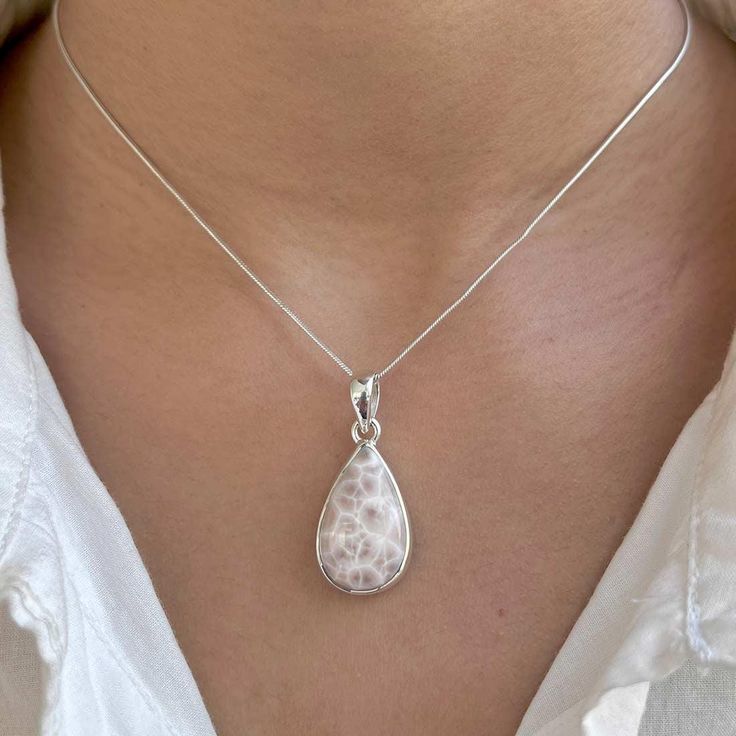
Necklace
A Thomsonite necklace sits close to the heart and can support a softer emotional rhythm through the day. It is useful when feelings need space to breathe without spilling into every decision. Worn during heartfelt talks or tender moments, it can help keep the tone compassionate and clear. The stone becomes a quiet reminder to stay open while still holding a boundary.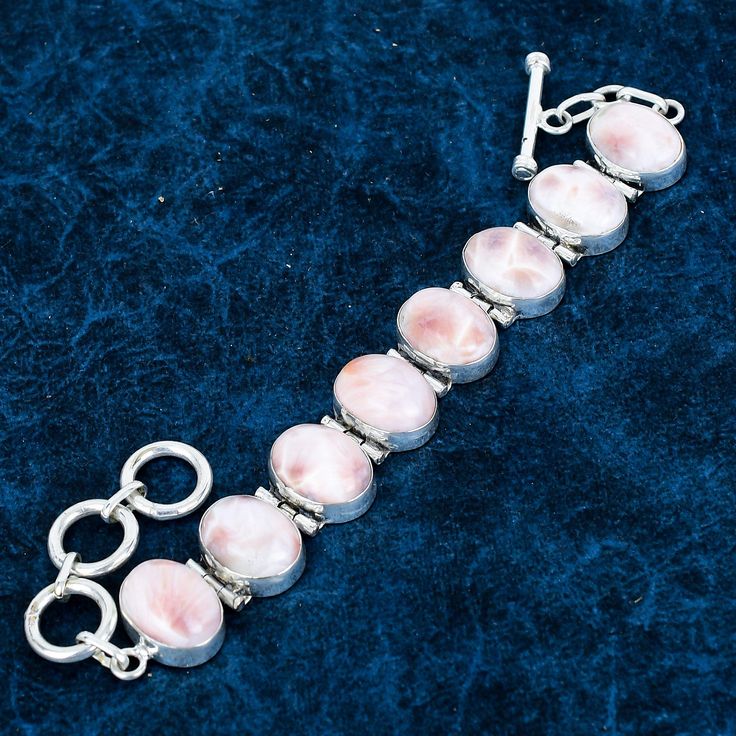
Bracelet
A Thomsonite bracelet brings the stone into the hands, where it can steady action and help slow rushed responses. Each glance at the wrist can become a small pause before speaking, typing, or deciding. It is a practical choice for days filled with movement, errands, or shifting plans. The reminder stays close enough to help the wearer act from intention rather than habit.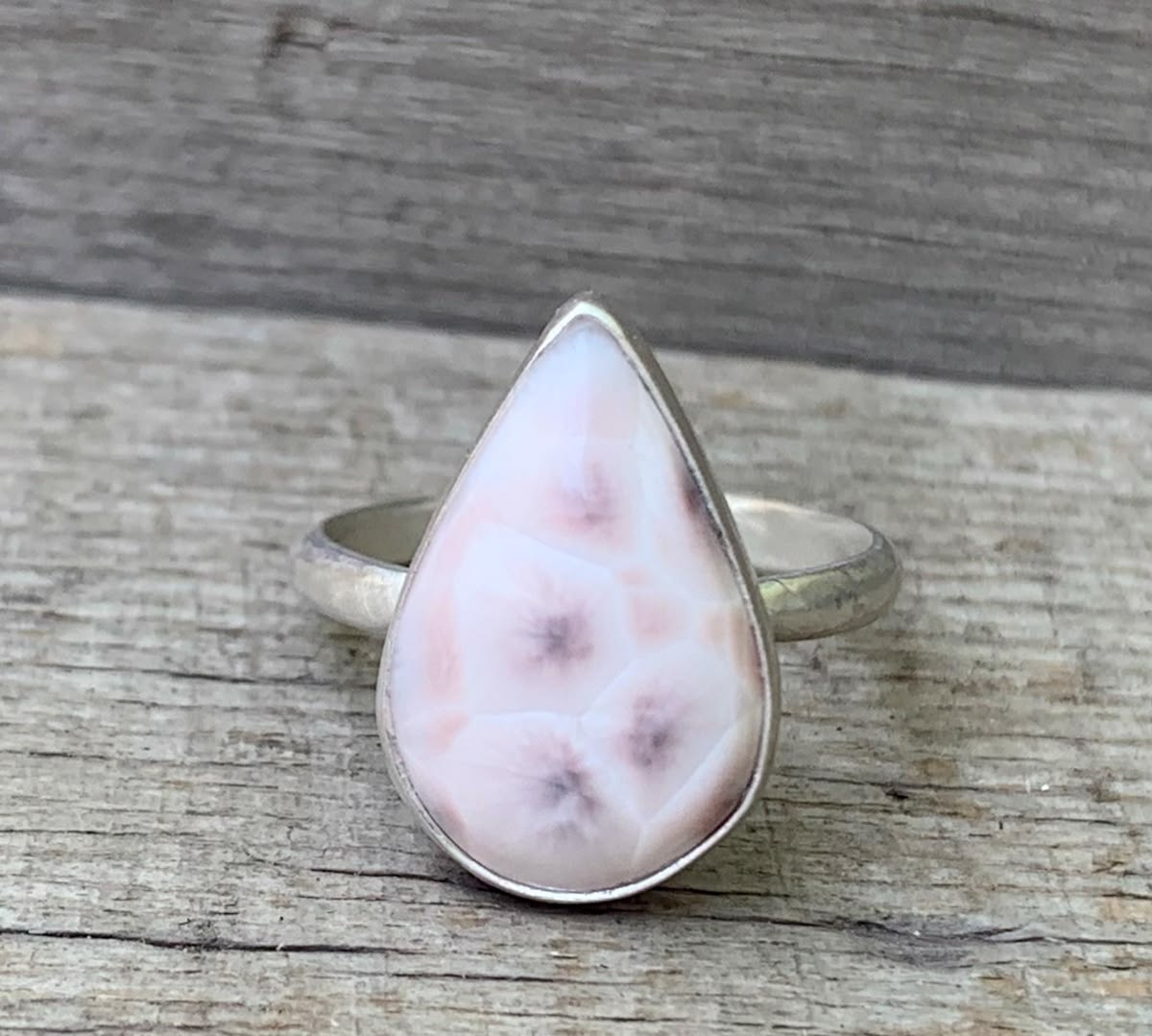
Ring
A Thomsonite ring keeps the stone in view during choices, commitments, and self-talk. It can support a more measured inner voice when doubt or sensitivity starts to cloud the moment. This placement works well for setting boundaries in a quiet, respectful way. It helps the wearer remember what feels aligned before agreeing, replying, or reaching out.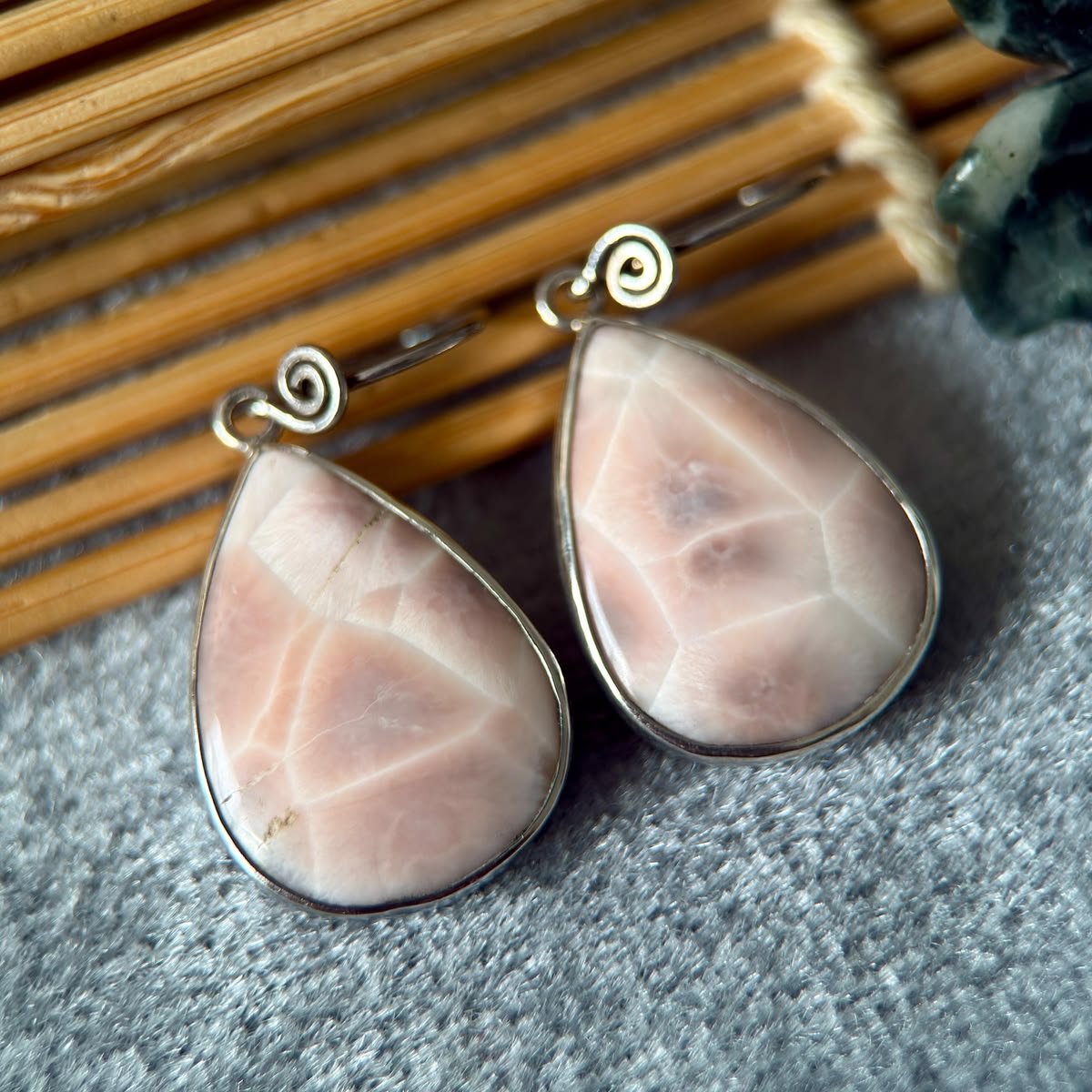
Earrings
Thomsonite earrings sit close to the head and can support clearer listening, calmer thought, and more thoughtful speech. They are especially useful in conversations that need patience, tact, or a little extra inner order. When the day asks for many replies, calls, or decisions, this placement can help keep the tone gentle and the mind less crowded. It brings the stone into the space where words are shaped before they are spoken.Forms
Different Thomsonite forms shift how its energy gathers and moves. Some feel more direct and focused, while others hold a softer, more receptive tone for quiet reflection or emotional settling.
Rough
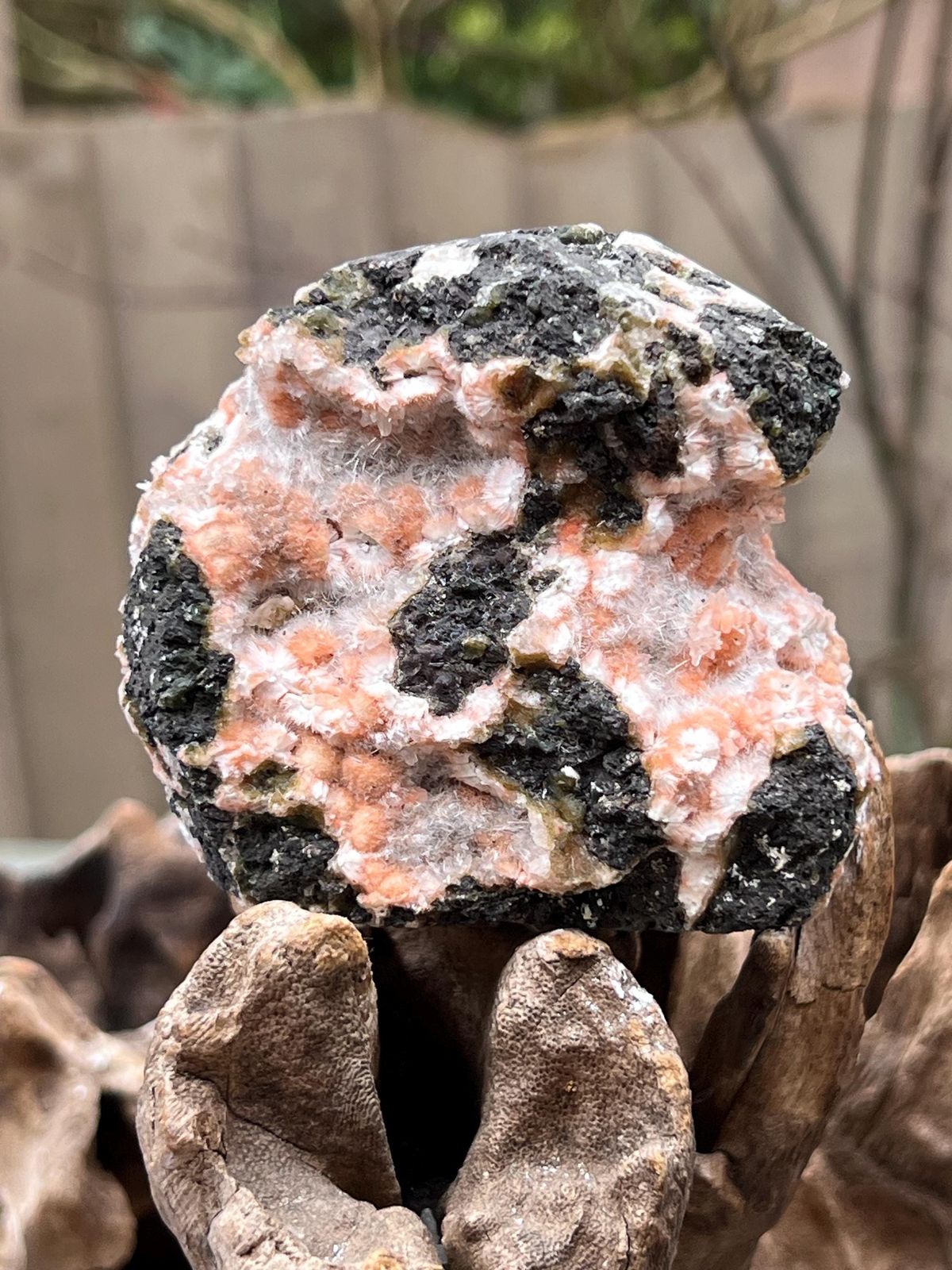
Rough Thomsonite keeps a natural, unforced feel. It is often used when the aim is simple honesty and a clear, grounded connection.
Tumble Stone
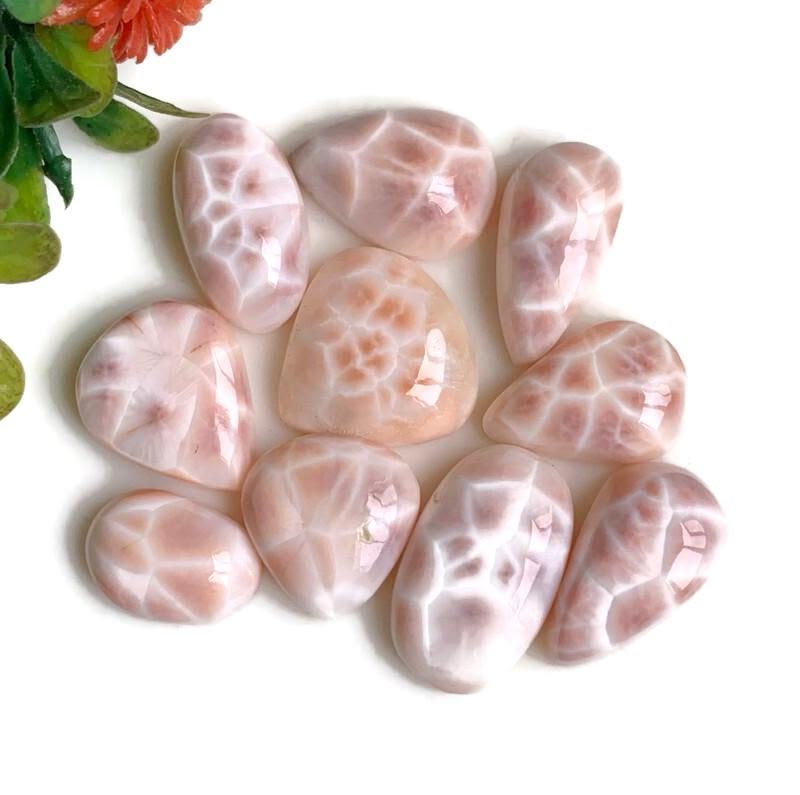
A tumble stone carries Thomsonite in a small, easy form for pockets or bags. It is handy when a gentle reminder is wanted during the day.
Heart
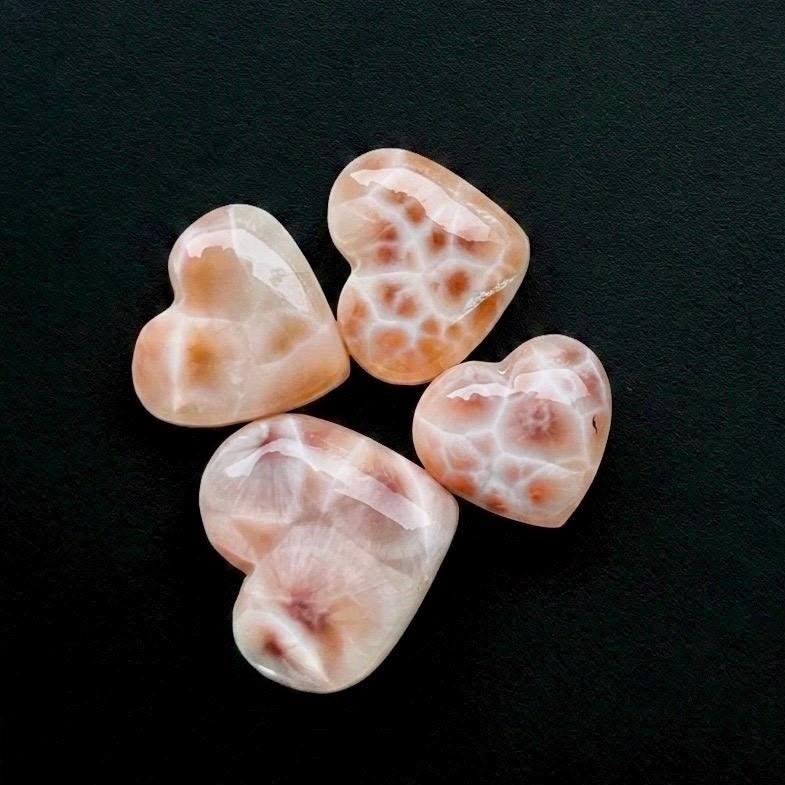
A heart form brings Thomsonite into a tender, relational space. It can support self-respect, kinder speech, and a more compassionate inner tone.
Cleansing & Charging
Cleansing Thomsonite can help clear away the residue of heavy conversations, emotional clutter, or days when sensitivity has been stretched thin. Because it is a zeolite with a delicate structure, gentle methods are best, and strong heat should be avoided.
How to cleanse Thomsonite
- Use sound cleansing with a chime, singing bowl, or soft voice to refresh Thomsonite without handling it too much.
- Pass it through light smoke from incense or sage for a brief reset, keeping the movement slow and gentle.
- Leave it in moonlight in a dry place overnight if you want a quiet cleanse that does not disturb the stone's structure.
- Set it beside selenite or clear quartz for a simple, low-contact cleanse after emotionally full days.
How to charge Thomsonite
- Place Thomsonite in indirect natural light for a short time, avoiding strong sun that could fade or stress the stone.
- Rest it near selenite or clear quartz on a clean surface to help restore its calm, receptive feel.
- Leave it in moonlight in a dry location overnight when the intention is emotional clarity and a softer inner rhythm.
- Hold it during quiet meditation and set a clear intention before returning it to use.
Where to Use
Choose places where Thomsonite can support clear feeling, gentle boundaries, and a steadier response to change.
Front door
At the front door, Thomsonite can act as a threshold stone, helping to leave the energy of the day at the edge rather than carrying it everywhere. It is a good place for a quick pause before stepping out or coming back in, especially after tense interactions. The stone can mark the shift between outside demands and a more settled inner space.
Desk
On a desk, Thomsonite supports clear thinking without harshness. It can help keep attention on one task at a time and soften the pull towards overthinking when messages, decisions, or deadlines begin to stack up. A small piece nearby can become a cue to breathe, finish one thing, and move on with less strain.
Bathroom shelf
On a bathroom shelf, Thomsonite brings a quiet reset to daily routines. It works well beside washing, brushing, or getting ready, when the aim is to clear emotional residue as well as the body. This is a good place for a stone that helps the day begin or end with more inner order.
Pocket or bag
Carried in a pocket or bag, Thomsonite becomes a portable reminder to stay centred when plans change or feelings rise quickly. It is useful for travel, errands, and social days where a small pause can prevent the mood from running ahead of the moment. The stone stays close enough to be touched, held, and used as a quiet reset.
Science
Physical properties
- Mineral class
- Tectosilicate
- Color
- White, colourless, cream, pink, peach, green, yellow, or brown
- Hardness
- 5 - 5.5
- Density
- ~2.3 - 2.4 g/cm3
- Durability
- Fair
- Thermal stability
- Low to moderate
Optical properties
- Transparency
- Transparent to translucent, sometimes opaque in compact masses
- Lustre
- Vitreous to pearly
- Refraction index
- ~1.52 - 1.54
Chemical composition
- Class
- Hydrated aluminosilicate
- Formula
- NaCa2(Al5Si5)O20·6H2O
- Group
- Zeolite, usually Thomsonite-Ca
- Magnetic
- Non-magnetic
Formation
Thomsonite is a zeolite mineral in the tectosilicate class, usually found as calcium-dominant Thomsonite-Ca, with Thomsonite-Sr recognised as the less common strontium-dominant species. It forms as a secondary mineral in cavities and fractures within basalt and other volcanic rocks, where mineral-rich groundwater circulates through the host rock and the chemistry shifts as the fluids cool.
Its crystals commonly grow in fibrous, bladed, radiating, spherical, or fan-shaped aggregates. When compact nodules are cut and polished, those internal structures can show concentric bands, eye-like markings, and starburst patterns. Thomsonite contains water within its open framework, so strong heat can drive off that structural water and alter the specimen. It can also resemble Natrolite, Mesolite, or Stilbite, which means careful identification often depends on crystal structure and composition.
Locations
- Old Kilpatrick, Scotland
- Lake Superior region, United States and Canada
- Iceland
- India
- Italy
History
Identified from Scottish mineral specimens
Early 19th century
Thomsonite was first recognised in zeolite-bearing volcanic rocks in Scotland, where its delicate fibrous structure drew the attention of early mineral collectors. Old Kilpatrick in West Dunbartonshire is regarded as the type locality for Thomsonite-Ca, giving the mineral a clear scientific anchor in Scottish geology.
Named after Thomas Thomson
19th century
The mineral was named in honour of Scottish chemist and mineralogist Thomas Thomson. His analytical work helped shape early mineral classification, and the name Thomsonite reflects that period of careful study and growing precision in mineral science.
Lake Superior material became prized
19th to 20th century
Colourful Thomsonite nodules from basalt cavities around the Lake Superior region became especially valued by collectors and lapidaries. Their radiating, concentric, and eye-like patterns made them stand out as both mineral specimens and polished ornamental stones.
Recognised as part of the zeolite group
20th century
Later mineralogical research established Thomsonite as a hydrated aluminosilicate zeolite. Modern classification distinguishes calcium-dominant Thomsonite-Ca from the less common strontium-dominant Thomsonite-Sr, placing the mineral more firmly within the wider zeolite family.
Collected as both a mineral and lapidary stone
Present day
Thomsonite remains appreciated today for its delicate specimen form and for polished pieces that reveal its internal radiating structures. It continues to attract interest from mineral collectors, lapidaries, and anyone drawn to the quiet geometry of zeolite growth.
Got questions?
We've got answers!
FAQ's
What is Thomsonite used for?
+×
Thomsonite is often chosen as a gentle stone for emotional balance, clearer thinking, and quiet personal growth. Its soft colours and radiating patterns suit reflective work, especially when a calmer, more organised inner state is wanted.
It is commonly placed near a bedside, carried in a pocket, or held during journalling and meditation. Thomsonite is also used in jewellery, where it can serve as a steady reminder to stay compassionate and clear through the day.
Is Thomsonite a zeolite?
+×
Yes - Thomsonite is a zeolite mineral. It belongs to the zeolite family of hydrated aluminosilicates, and most material sold simply as Thomsonite is the calcium-dominant variety known as Thomsonite-Ca.
Because it has a delicate structure, it is best treated gently. Strong heat should be avoided, and cleansing methods such as sound, smoke, moonlight in a dry place, or resting it with selenite or clear quartz are usually more suitable.
Which zodiac sign is connected to Thomsonite?
+×
Thomsonite is most often linked with Virgo. That connection suits its calm, orderly quality, which can feel helpful when careful discernment and steady self-improvement are the aim.
It is also associated with Mercury, so it is often chosen for thoughtful communication, practical reflection, and a quieter mental rhythm. The stone tends to support clarity without losing its soft, compassionate tone.
What chakras does Thomsonite work with?
+×
Thomsonite is associated with the Heart and Crown chakras. The Heart link reflects its gentle, compassionate side, while the Crown connection suits its more reflective and spiritually aware qualities.
In practice, it is often used when emotional openness needs to stay balanced with insight. A piece held at the chest during meditation, or kept nearby during quiet contemplation, can suit that kind of work well.
How should Thomsonite be cared for?
+×
Thomsonite is best cared for as a delicate mineral. It should be kept away from strong heat, harsh chemicals, and rough handling, and it is wise to store it separately from harder stones that could scratch it.
For cleansing and charging, gentle methods are preferred. Sound, brief smoke cleansing, moonlight in a dry location, indirect natural light, or resting it beside selenite or clear quartz are all suitable choices.